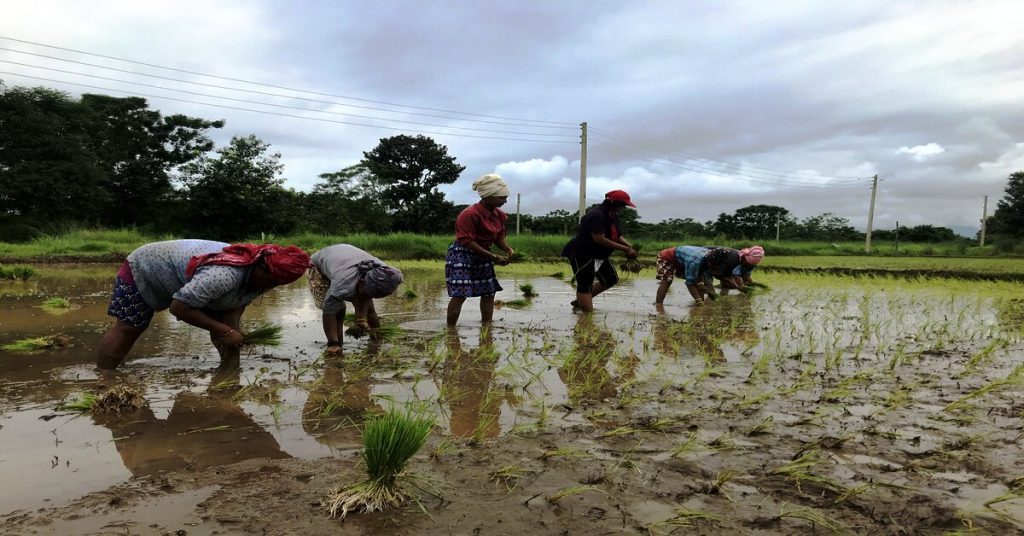
It is extremely difficult to do trekking and extreme activities during the monsoon season. However, tourists from different countries now visit Nepal to enjoy the Rice Plantation Festival (Ropai Diwas) when the monsoon rain falls.
The Ropai Diwas (festival of rice) is one of the traditional festivals of Nepal that occurs on the 15th of the Nepali month Ashad. The day is celebrated with beaten rice and yogurt (known in Nepali as Dahi Chiura).
This day holds importance for crop production in Nepal since rice is the main crop and farming is the main occupation. It is now considered a festival where people from all over Nepal plant rice, play with mud, sing, and dance in their respective fields.
Rice plantation is done mainly at the beginning of the monsoon season. However, Asar 15 is a special day and is celebrated as a festival. There is the belief that if someone touches wet mud on this day, they will be healthy, earn good omens, and get recognition.
The festival marks the beginning of the rainy season. Farmers begin planting paddy. Rice plants are planted in fields that are filled with water since rice needs a lot of water.
To encourage the nation’s rice crops to grow more efficiently, the Government of Nepal has declared the day as National Paddy Day. Many people celebrate this unique festival by playing musical instruments and singing traditional songs.
Why to Celebrate Ropai Diwas (National Paddy Day)?
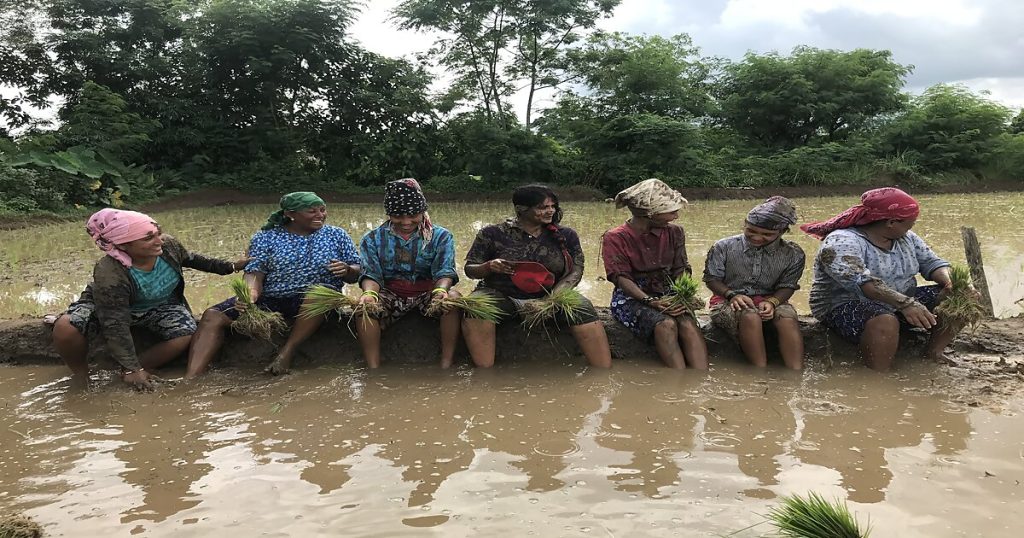
There is a strong connection between Ropain Diwas and people in all parts of the country and it has a profound effect on their social, cultural, and economic lives. Women and men gather in the morning to participate in a parade around their village before going on fields.
The rice plantation stands out as the perfect reflection of the weather, and the great message of happiness. It will be a pleasant experience for you to visit the muddy and wet fields and observe the rice plantations.
There is mutual work between men and women as various responsibilities are shared. Plowing and arranging drains, leveling the ground, and creating fine mud slurry for planting are the duties of the man, while the woman collects the seedlings and gives them to the fellows who are prepared for planting.
The day is celebrated by planting the allotted field, running through the muddy fields, splashing around in muddy water, and singing typical folk songs (Asare Geets) that describe the joys and hardships of farming.
Dahi-chiura: Another important norm
The custom of eating Dahi-chiura (beaten rice mixed with curd) is also observed on this day. Farmers and locals still eat this combination to mark Asar 15 even if the planting is not done during this day. Dahi-chiura is traditionally distributed by elders.
Dahi-chiura is a food that is considered important to eat on this day as it gives energy to the body. This combination provides strength, eases, and speeds up the rest of the farming process for tired farmers.
The epics of Ramayan and NepalaMahatmya of Skanda Puran relate stories about dahi-chiura eating culture. After Ravan abducted Sita, Lord Ram, Lakshman, and Hanuman went in search of her.
Upon reaching a river south of today’s Bhaktapur, they became hungry and ate Dahi-chiura on a banana leaf. Some people believe the same tradition is still followed today as eating Dahi-chiura on Asar 15.
Why should you participate in this festival?
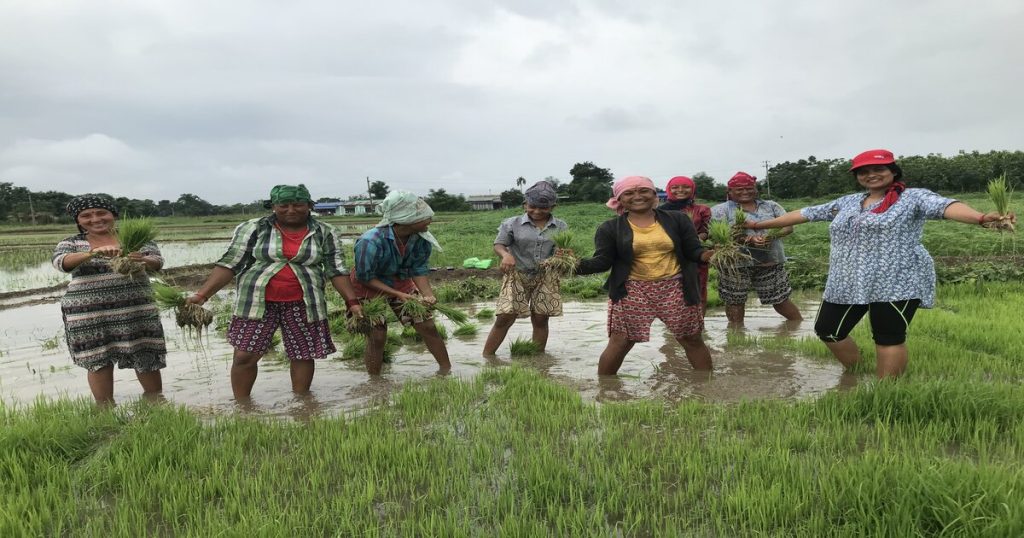
Recently, the festival has been popular with tourists visiting Nepal. Visitors have been enjoying the festival. There will be many other tourists joining you in the muddy water and you will be enjoying the day with the locals and farmers.
In recent years, Ropai Jatras have been organized in various parts of Nepal, especially in and around the capital city, Kathmandu, and the popular tourist destination, Pokhara.
The Ropai festivals are celebrated in places such as Chapagaun, Sakhu, Dhapakhel, Panjauti, Thansing, Bungamati, Kavrepalanchowk, Dhikure, Machhegaun, etc.
You will be participating in activities such as racing competitions, entertainment-based games, and live Nepali Asare duet songs that will be held throughout the day.
Getting your feet into muddy, slippery fields during a full-fledged rain might not sound appealing; however, it will certainly prove to be an unforgettable experience.
It is basically a day for you to have fun; you get soaked in the rain, sow rice saplings, play with mud, and turn the field into a dance floor. You will have the opportunity to observe traditional rice farming practices, the use of mutual labor, as well as cultural demonstrations.
Nepal’s Ropain Diwas holds unique national significance among many other celebrations. By participating in such festivals, you will not only be entertained, but you will also be able to learn about the traditional way of farming.
Participating in this agro tourism experience from the Himalayan Circuit will be an unforgettable experience for you.
No Comments yet!