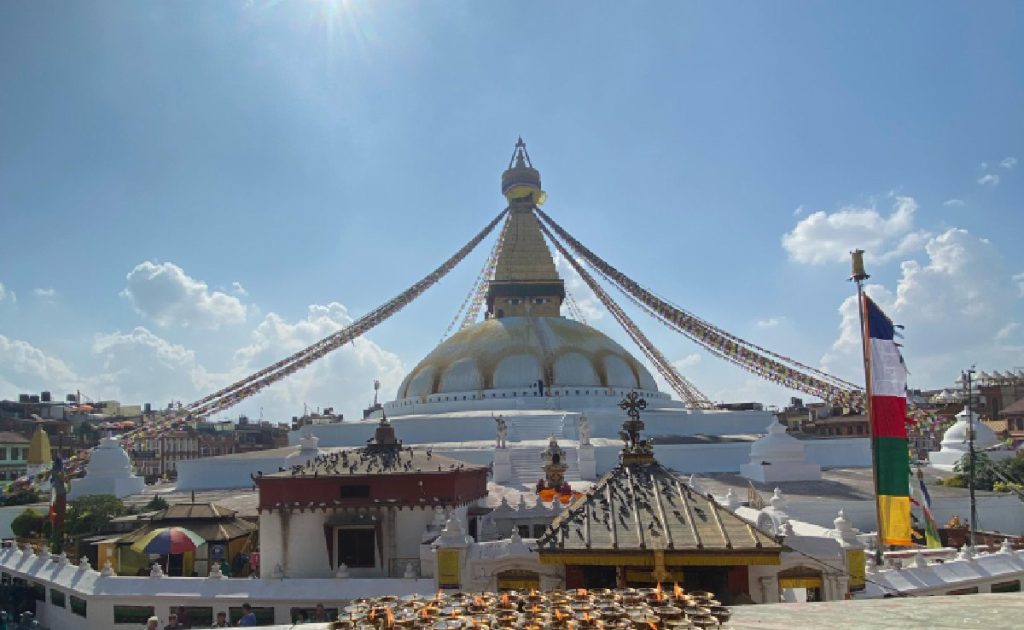
Boudhanath Stupa, one of the holiest Buddhist sites in Kathmandu, is also one of the world’s largest Stupas. Signifying the Buddha’s profound spiritual teachings and the interconnectedness of the world, Boudhanath Stupa is a symbol of the Buddha’s profound spiritual teachings.
Boudhanath Stupa is surrounded by ancient myths and legends, grabbing the attention of spiritual seekers from around the World. Numerous religious and cultural activities are regularly held at this UNESCO World Heritage Site, alongside stunning architecture and traditional designs that are awe-inspiring.
Boudhanath Stupa is a significant tourist attraction site in Kathmandu that offers a glimpse into Nepal’s spiritual heritage. The Himalayan Circuit Treks offers a spiritual journey to this legendary Boudhanath Stupa where you can explore the rich history, significance, and enduring heritage.
Boudhanath Stupa: Its symbolism
- The Boudhanath Stupa is one of Nepal’s most impressive and beautiful stupas that exhibits rich Newar art.
- The white dome of the stupa represents the watchful eyes of Lord Buddha that symbolize light and wisdom. You can see prayer flags all around the Stupa. A prayer flag fluttering in the breeze is believed to carry the hopes and prayers of devotees to the heavens.
- The Boudhanath Stupa represents the spherical World and interconnectedness. The bottom of the Stupa symbolizes the earth, the dome of the pot represents water, the spire represents air, and the umbrella symbolizes the void.
- Adopting Newar architecture, Boudhanath Stupa seamlessly combines traditional craftsmanship with spiritual symbolism. Newar craftsmanship is displayed through woodwork, soft metal, and vibrant paintings in sacred places. The triangle symbolizes the fire at the top of the stupa, the four corners represent the Buddha’s eyes of wisdom, the nose represents Nirvana, and the Nepali letter one symbolizes unity and enlightenment.
Legends behind Boudhanath:
The legends surrounding Boudhanath Stupa range from mystical tales to local folklore, and they are so fascinating as well as diverse. A variety of mythological stories surrounds stupas; adding to their already enchanting presence!!!
- Legend of Vikramjit :
According In a popular legend about Boudhanath, during a severe drought, sly astrologers suggested to King Vikramajit of the Lichchhavi dynasty that only a man with thirty-two virtues could end it.
A king ordered his son to dash to Nirkyahiti and slay a man with his eyes covered to end the drought. Later, the so-afraid son discovered that he had killed his father.
To redeem the prince’s act, the priest suggested that hen be released from Bajrayogini and a stupa built a Stupa where the hen lands. The hen landed where Boudhanath Stupa stands today, right near Ajima, which at the time was being built.
Due to a severe drought in the area, locals gathered dew to survive, so the site was called Khāsti, a combination of the Newari words for dew (“khas”) and drops (“ti”). In 1960, the stupa’s title was changed to Boudha ‘nath’ to better align with Hinduism.
- The Tibetan Belief:
The Hidden Treasure of Guru Padma Sambhavam” explains how Ma Zhyajima, a widow, approached the local king seeking permission to build a stupa for Buddha Kashyapa’s relics.
The king agreed that the stupa should be built in an area that could be covered with one buffalo’s skin, and the witty woman used buffalo skin strips to cover the stupa’s circumference.
When Samvari and her four sons built the stupa with the community’s help, all Buddhas from the past, present, and future were gathered within it and dissolved into it.
This extraordinary blessing led to the stupa being called Lhundrub Tsek, “the all-encompassing stupa.” The blessings of innumerable Buddhas physically vibrated through the surrounding area, filling local villagers with unknowable peace and serenity.
The relics of Buddha Kashyapa illuminated the stupa in golden radiant light. The miracles and exquisite beauty of the sacred structure attracted pilgrims from far away. The stupa’s spiritual energy resonated far and wide, imparting transcendental wisdom to all who crossed its path.
Significance of Boudhanath Stupa:
The sacred Boudhanath Stupa was listed in the UNESCO World Heritage Site in 1979, being recognized for its cultural heritage and historical significance. As a living testament to Nepal’s rich heritage and spiritual traditions, this historical site serves as a tangible representation of Nepal’s rich heritage.
As a symbol of peace and harmony, Boudhanath offers comfort and spiritual renewal to all who seek it, regardless of their religion. Its calm presence reminds us of the universal values of compassion and reciprocation that bind people together, regardless of the differences that may exist between them.
Embark on this sacred site to discover the hidden treasures within yourself as you walk alongside the prayer flags fluttering in the wind and the monks chanting the Buddhist mantras in a harmonious environment.
So, book your trip to this sacred site with the Himalayan Circuit Treks and let your spirit soar high connecting with the cosmic energies that resonate around this ancient pilgrimage site.