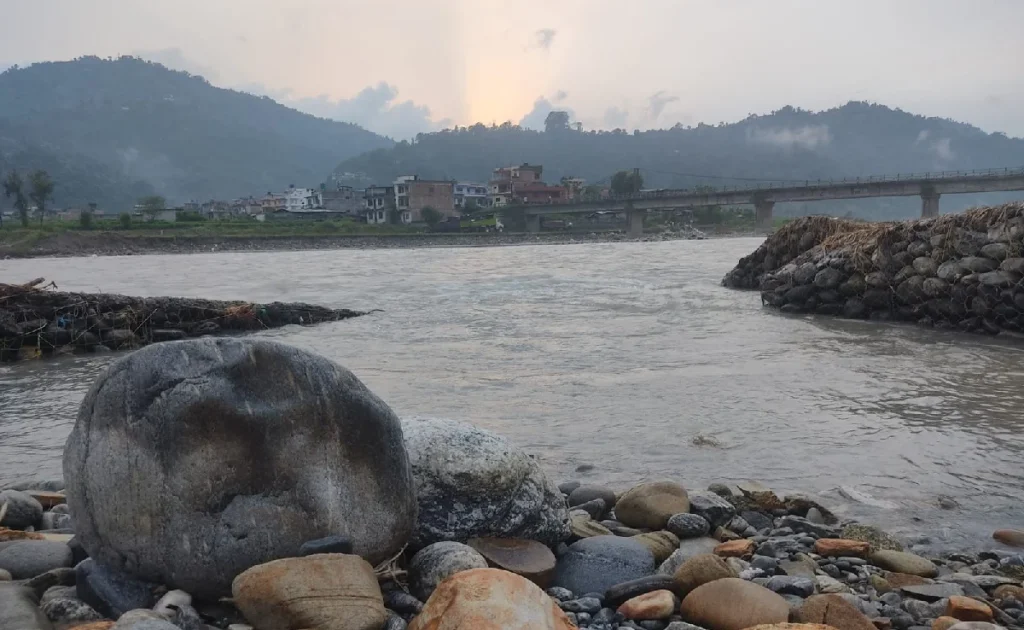
Nepal is a country of rivers, flowing from the pristine Himalayas through green hills and down to the Terai plains. Among these waterways, the Koshi River stands out as one of the most significant, shaped by the powerful tributaries of the Koshi River that originate across the Himalayan region. Formed by the meeting of major rivers like the Sun Koshi, Arun, and Tamur, the Koshi system carries both natural beauty and cultural importance as it travels from Nepal into India.
The Koshi is also called Sapta Koshi, named after the seven tributaries that come together to form it. Stretching about 720 km and draining an area of around 74,500 km² across Tibet, Nepal, and Bihar, the Koshi system is vital to the eastern region of Nepal. This blog explores the major tributaries that make the Koshi River so important.
Overview of the Koshi River System
The Koshi River is a transboundary river with seven main tributaries:
- Indrawati
- Tama Koshi
- Dudh Koshi
- Sun Koshi
- Likhu
- Arun
- Tamur
These rivers meet at Tribeni, forming the Sapta Koshi. From there, it flows south through Nepal’s Terai and continues into India.
These tributaries are the lifeblood of eastern Nepal. They carve valleys, feed forests, support farms, and connect the high mountains to the plains. Many of these rivers are also tied to spiritual and cultural stories, with names like Kausika mentioned in ancient Hindu scriptures such as the Rigveda.
Major Tributaries of the Koshi River
Arun River
- Length: ~915 km
- Contribution: ~37% of Koshi’s water
- Attractions: Arun Valley Trek, Barun Valley
The Arun River starts from the Shishapangma glacier in Tibet and enters Nepal through Sankhuwasabha district. It plays a key role in hydroelectric power generation. The surrounding area also supports diverse plants and animals.
Tama Koshi
- Length: 92 km
- Attractions: Upper Tama Koshi Hydropower Project, Jiri Gateway
Locally known as the “river of copper”, Tama Koshi originates from the Rongshar Chu and Lapchi Gang rivers near the Nepal-Tibet border. The river flows through Dolakha district, cutting narrow valleys and steep gorges. Moreover, it has high hydropower potential, significant environmental value, and a rich cultural legacy.
Dudh Koshi
- Attractions: Everest Base Camp Trek, Sagarmatha National Park
Dudh Koshi is one of the highest elevated rivers in Nepal. Its milky white water comes from glaciers in the Khumbu region near Everest. The river flows through Solukhumbu district, passing several villages along the trekking route to Everest Base Camp. Eventually, it joins the Sun Koshi to form the Sapta Koshi River.
Sun Koshi
- Attractions: Rafting, trekking in Sindhupalchok and Dolalghat
Known as the “river of gold”, Sun Koshi originates in Tibet and is fed by Himalayan snowmelt. Its steady flow makes it ideal for white-water rafting and kayaking. The river passes through Sindhupalchok, Ramechhap, and Sindhuli districts, supporting life, energy, and culture, before joining other tributaries like Tama Koshi, Bhote Koshi, and Indravati to form the Koshi River. It contributes 44% of the total water flow.
Indrawati River
- Attractions: Melamchi Valley, Sindhupalchok scenery
Though smaller, the Indrawati River is very important. It begins at 5,850 m above sea level in the high Himalayas. It flows through narrow gorges in Sindhupalchok and Kavrepalanchok districts, supporting agriculture, villages, and local ecosystems.
Bhote Koshi
- Attractions: Bhote Koshi Rafting, Bungee Jumping at The Last Resort
Bhote Koshi is famous for its speed and steep gradient. Called the Poiqu River in Tibet, it starts near the Shishapangma glacier. Flowing through deep gorges and rocky cliffs, it merges with the Sun Koshi at Bahrabise, helping form the powerful Sapta Koshi.
Likhu River
- Attractions: Local trekking, rural exploration
The Likhu River is a smaller tributary joining Sun Koshi. Though minor, it is crucial for local farming and settlements, and adds to the Koshi’s overall flow.
Cultural and Environmental Importance
These rivers are more than just water sources. They shape Nepal’s landscape, support biodiversity, and are central to cultural and spiritual life. From the glaciers near Everest to the fertile plains of Terai, each tributary tells a story. Moreover, they provide hydropower, support agriculture, and attract adventure tourism like rafting, trekking, and bungee jumping.
The Koshi River and its tributaries form a complex and vital network in eastern Nepal. From the icy glacial waters of Dudh Koshi to the rapid currents of Bhote Koshi, each river brings life, energy, and culture.
Exploring these rivers is more than geography — it is a journey into Nepal’s natural beauty and cultural heritage. Let the Koshi guide your next adventure, and discover the stories hidden in every valley with Himalayan Circuit.