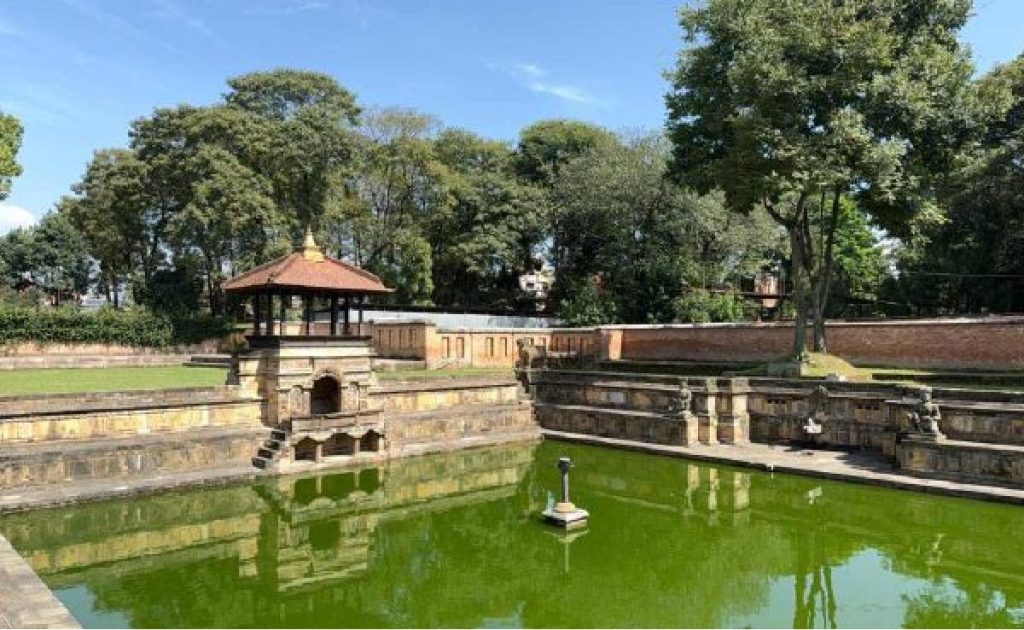
Kathmandu Valley is a picturesque city that originated in the lakes. The valley was once home to a lake filled with snakes called Nagdaha, according to mythology. Legend has it that Manjushree drained it.
Ponds were built in Kathmandu primarily to supply water to stone spouts and deep wells all year round. Indigenous people in the valley preferred to build ponds within their settlement areas to beautify the landscape and organize their activities.
Kathmandu Valley’s water system is considered one of its most impressive technological achievements. This system uses underground clay pipes to supply water to hitis (water spouts) from ponds fed by monsoon rains or water canals.
There were several ponds constructed during the architecturally rich eras of the Lichhavis (second to ninth centuries) and the Mallas (14th to 16th centuries). The valley is home to more than a hundred ancient lakes and ponds.
Some major Ponds of Kathmandu Valley include:
- Taudaha (Chobar):
Located some 6 km southwest of Kathmandu, Taudaha pond is not only of cultural significance but also has a diverse flora and fauna. “Ta” means snake and “Daha” means lake. The name is derived from tribal people in Nepal, the Newaris.
Taudaha is a pilgrimage spot both for Buddhists and Hindus in Nepal. The pond is the valleys only remaining natural lake that provides habitat to a large number of wetland birds, making it an important ecological resource.
Taudaha pond is a wetland that is recharged naturally by nearby water sources, making it a great place for a quiet, relaxing time alone or with friends. Taudaha pond also has a variety of fish and migratory birds.
- Nagdaha (Dhapakhel):
Nagdaha is a mysterious pond about 4.5 km from Satdobato, in Dhapakhel village. Nagdaha is a beautiful lake of great religious importance, believed to have been originated from a stone tap within the Gaukhureshwar temple on the north-west shore.
Nagdaha pond are known as natural habitats for migratory birds, aquatic plants and fish. The pond offers beautiful views of Phulchoki, Santaneshwar and Kotadada, as well as sunsets and sunrises. This pond can be a fascinating experience as it is surrounded by mountains, trails, forests and temples.
- Siddhapokhari (Bhaktapur):
Siddha Pokhari is a rectangular artificial lake located near Bhaktapur Durbar Square’s main entrance. Built in the 15th century, it is one of the oldest and most traditional ponds in Kathmandu.
There are intricate stone carvings and traditional architecture surrounding the pond, which is believed to have been used for religious and ceremonial purposes.
The calm and peaceful pond allows you to relax while feeding the fish and enjoy the silence. Visitors and locals alike enjoy the historical significance and beauty of Bhaktapur’s pond.
- Pim Bahal Pokhari (Patan):
Pim Bahal Pokhari is a large pond surrounded by buildings in Patan. It was built in the 14th century and is one of the most well-known historical ponds in the city. Using rainwater and the support of the community, Pim Bahal Pokhari is the only pond in the area that runs on rainwater.
Pond’s pool represents their ancestral heritage. There’s a Chandeshwari temple built in 1663 on the north side of the pond, and a stupa near Pimbahal pond. A visit to the area is worth it because of its historical significance and cultural appeal.
- Ranipokhari (Kathmandu):
Located in the heart of Kathmandu, Nepal, Ranipokhari is a historic artificial pond. There are much religious and aesthetic significance to the pond, one of Kathmandu’s most famous landmarks.
King Pratap Malla built Rani Pokhari in 1670 AD to console his grieving queen after their son was trampled to death by an elephant. The pond was sanctified by collecting water from several holy sites and confluences in Nepal and India, such as Gosaikunda, Muktinath, Badrinath, and Kedarnath.
The Ranipokhari fence features an elephant and a statue of King Pratap Malla, queen, and son. Each year, Rani Pokhari is opened on Bhai Tika, the last day of the Tihar and Chhath festivals.
- Nagpokhari (Kathmandu):
Naag Pokhari is a historic artificial pond situated on the eastern side of the Kathmandu. Queen Subarna Prabha constructed the pond during the 17th century.
About 125 feet long, 65 feet wide, and 7 feet deep, this pond has a surface area of 125 feet square. A golden snake statue is centered on a pond surrounded by a park.
- Kamalpokhari (Kathmandu)
The Kamal Pokhari Lake holds centuries of history and culture in Kathmandu, Nepal. According to legend, Kamal Pokhari was built during the Lichchhavi era. The lake has served many purposes over the centuries and is popular with Kathmandu residents.
‘Kamal Pokhari’ is more than a pond; it symbolizes Nepal’s rich heritage and history. Kamal Pokhari, a natural pond in Hattisar named for the lotus that once bloomed in its waters, has recently become the site for Chhath celebrations throughout the country, including the President.
Sacred ponds in Kathmandu Valley are more than just picturesque bodies of water – they are museums of cultural and religious history. The labyrinthine streets of Kathmandu are dotted with ponds, which stand as timeless witnesses to this enchanting region’s spiritual legacy.
Exploring these sacred ponds is a journey into Nepal’s soul, as they evoke rich mythological tales and the unwavering faith of its people. Visit these sacred ponds of Kathmandu Valley with the Himalayan Circuit trek and discover Kathmandu’s culture and spiritual heritage.
No Comments yet!