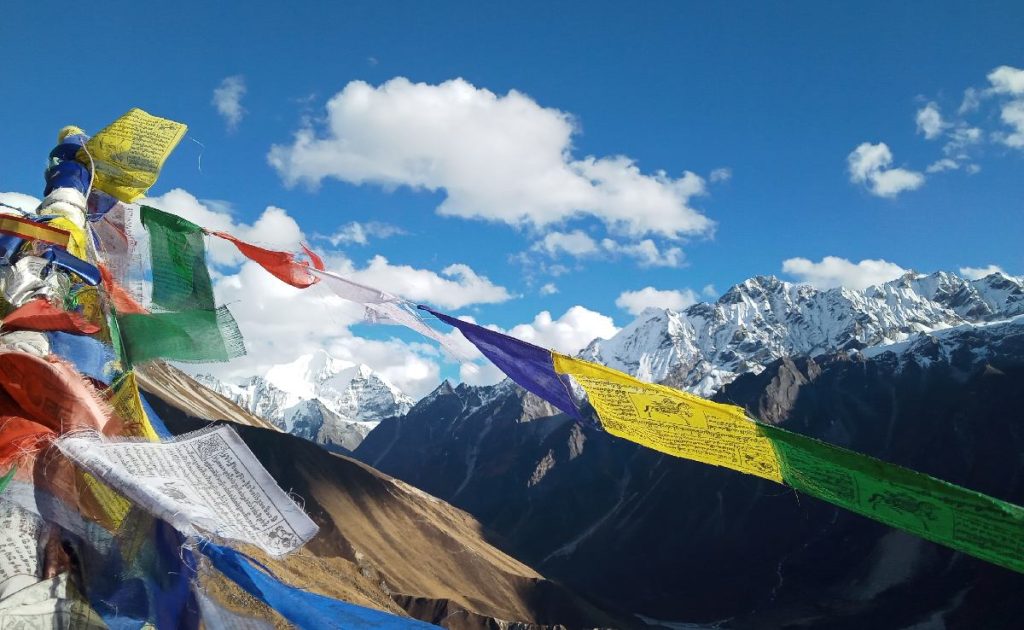
Prayer flags in Buddhism are one of the most recognizable symbols of Himalayan spiritual culture. In Nepal, you can see these colorful flags around ancient stupas, Buddhist monasteries, mountain villages, and high Himalayan trekking routes.
For many travelers, prayer flags are more than colorful decorations. They represent faith, hope, compassion, and the connection between nature and spirituality. Today, they have become an important part of Nepal’s cultural identity and a memorable sight for visitors exploring the country.
What Are Prayer Flags?
Buddhist prayer flags are colorful pieces of cloth printed with sacred symbols, prayers, and mantras. In Tibetan Buddhist traditions, people commonly refer to them as Lungta, meaning “Wind Horse.” Many practitioners believe that the wind carries the blessings and positive intentions written on the flags into the surrounding world.
People traditionally display prayer flags in two main ways. Horizontal prayer flags hang in rows between trees, buildings, mountain passes, and other high places. Vertical prayer flags hang from poles and often appear near monasteries, temples, and open spaces.
The flags often feature Buddhist symbols, images, and mantras. One of the best-known is “Om Mani Padme Hum,” a mantra closely associated with compassion.
The five colors of prayer flags also hold important traditional meanings. They connect the flags with elements of nature and different spiritual qualities:
- Blue represents the sky and space.
- White represents air and wind.
- Red represents fire.
- Green represents water.
- Yellow represents earth.
Together, these colors reflect balance, harmony, and the connection between people and the natural world.
Historical Origin of Prayer Flags
Prayer flags have a long history within the Himalayan region. Their development connects with older Himalayan traditions as well as the growth of Tibetan Buddhism. Over time, Buddhist communities incorporated prayer flags into religious practices and gave them the spiritual meaning they hold today.
Buddhist traditions spread across the Himalayan region through centuries of cultural exchange. In Nepal, prayer flags became closely connected with Buddhist communities, monasteries, stupas, and sacred mountain landscapes.
Today, you can find them throughout Nepal, particularly in areas with strong Tibetan Buddhist and Himalayan Buddhist traditions. They appear around monasteries and stupas, along trekking trails, and at mountain passes.
In many Himalayan communities, people display prayer flags as an act of devotion and goodwill. Families may put up new flags during religious festivals, ceremonies, or important moments in life. Through this tradition, they express prayers and positive wishes for themselves, their families, and others.
Spiritual Significance of Prayer Flags in Buddhism
The spiritual meaning of prayer flags lies at the heart of their importance in Tibetan Buddhist traditions. People use them to express wishes for peace, compassion, wisdom, and the well-being of all living beings.
Many practitioners believe that the wind carries the prayers and mantras printed on the flags. As the flags move, the prayers symbolically spread into the surrounding environment.
The gradual fading of the flags also carries meaning. Rather than viewing old and faded flags as something negative, Buddhist traditions can connect this natural process with impermanence, an important Buddhist principle. Wind, sunlight, and rain slowly wear down the fabric, reminding people that everything in life changes.
The constant movement of the flags can also serve as a reminder of the changing nature of life. Their presence encourages reflection on compassion, mindfulness, and the connection between people and their surroundings.
For visitors, thousands of prayer flags moving against a Himalayan landscape can create a peaceful and emotional experience. However, their significance goes much deeper than their visual beauty.
Prayer Flags in Nepal as a Cultural Attraction
Prayer flags are among the most recognizable visual symbols of Himalayan Buddhist culture. Their bright colors create a striking contrast with ancient temples, monasteries, villages, and snow-covered mountains.
Travelers can see prayer flags in many parts of Nepal. In the Kathmandu Valley, Boudhanath Stupa and Swayambhunath offer some of the most famous places to experience Buddhist culture and see prayer flags. Pilgrims, monks, local residents, and travelers visit these sacred sites throughout the year.
Prayer flags also appear along some of Nepal’s most popular trekking routes. Travelers heading toward Everest Base Camp encounter them around mountain villages, monasteries, bridges, and high-altitude landscapes. The Everest region, including places such as Namche Bazaar, offers many opportunities to see prayer flags against dramatic Himalayan scenery.
Similarly, trekkers on the Annapurna Circuit can encounter prayer flags around villages, monasteries, bridges, and mountain passes. Their presence adds a distinctive cultural character to the Himalayan landscape.
For many travelers, seeing prayer flags fluttering in the mountain wind becomes one of the memorable moments of a Nepal trip. Some visitors also purchase small prayer flags as souvenirs. However, it is important to understand their religious significance rather than treating them only as decorative objects.
Respecting Prayer Flags and Local Traditions
Although prayer flags have become popular with travelers, they remain sacred religious objects for many Buddhist communities. Visitors should therefore treat them with care and respect.
People traditionally place prayer flags in high locations so the wind can carry the prayers and positive intentions. Do not step on prayer flags or place them directly on the ground. If a flag has fallen onto a path, avoid walking over it.
Travelers should also show respect when taking photographs around monasteries, stupas, and other religious sites. Some locations may have specific customs or restrictions, so it is always better to observe local practices.
Learning about the meaning behind prayer flags can make a visit to Nepal more meaningful. Instead of seeing them simply as colorful decorations, travelers can appreciate them as part of a living cultural and spiritual tradition.
Why Are Prayer Flags Important in Nepal?
Prayer flags connect Nepal’s natural landscapes with its rich spiritual traditions. You can find them in busy areas of Kathmandu as well as in remote Himalayan villages. Their presence across such different environments shows how deeply Buddhist traditions have become part of the cultural landscape of Nepal.
For travelers, they also provide a glimpse into the beliefs and traditions of the communities they encounter during their journey. A line of flags above a mountain trail or beside a centuries-old stupa can tell a story about faith, nature, and the passage of time.
Prayer flags are much more than colorful pieces of cloth. They express prayers, compassion, hope, and positive intentions while reflecting important ideas within Tibetan Buddhist traditions.
From the ancient stupas of Kathmandu to the high mountain trails of the Himalayas, prayer flags have become an unforgettable part of the Nepalese landscape. Their movement in the wind reminds us of change, connection, and the relationship between people and nature.
For anyone exploring Nepal, taking a moment to understand the meaning behind these flags can add a deeper cultural dimension to the journey. Their colors may catch your eye first, but their spiritual and cultural significance is what makes them truly special.
No Comments yet!