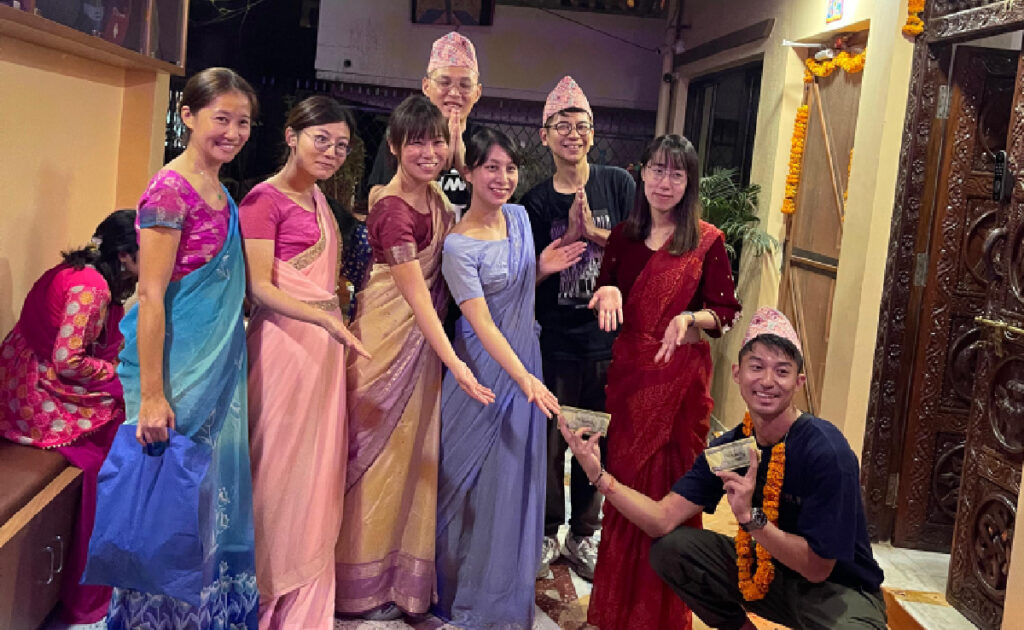
Festival in Nepal: Tihar Festival Nepal – Five-Day Festival of Lights

Tihar Festival in Nepal

Nepal shines in bright colors, flickering lamps, and joyful celebrations every year during Tihar, the five-day festival that honors life, light, and devotion. Known as the festival of lights, Tihar turns streets, homes, and temples into dazzling displays of marigold garlands, flickering diyos, and colorful rangoli patterns. Also, the festival blends faith, culture, and happiness, reflecting the rich traditions and heart of Nepal.

Celebrating Life and Light

Tihar, also called Deepawali, is a Hindu festival celebrated over five days, each honoring a different part of life. It allows people to show gratitude, respect, and devotion, not only to deities but also to animals and loved ones.

Famous Legends About Tihar

  • The Legend of Bhai Tika: Yamaraj, the god of death, once visited a sister’s home to take her brother’s life. She performed rituals, applied tika, and made offerings with devotion. Impressed by her sincerity, Yamaraj spared her brother’s life. Today, sisters continue this ritual to bless and protect their brothers.

  • The Legend of Laxmi Puja: Goddess Laxmi, the goddess of wealth, visits homes that are clean and well-lit. Families light lamps, decorate with flowers, and prepare offerings to invite prosperity and remove darkness.

  • The Legend of Lord Rama: After Lord Rama defeated Ravana in Lanka, he returned to his kingdom, Ayodhya, along with Sita and Lakshman. The people celebrated their return by lighting rows of lamps throughout the city to welcome them and drive away darkness. This tradition of lighting lamps shows the victory of good over evil and light over darkness, which continues to inspire Tihar’s glowing celebrations.

Tihar in Today’s World

Even in today’s fast-paced world, Tihar remains very meaningful. For example, Bhai Tika teaches the value of family bonds, Laxmi Puja encourages mindfulness and gratitude, and people worship animals including crows, dogs, cows, and oxen to show respect for all living beings. Furthermore, Tihar invites people to slow down, honor relationships, and reflect on the blessings often taken for granted. These long-lasting lessons, expressed through lights, rituals, legends, and songs, keep Tihar alive and meaningful for generations.

The Days of Tihar and Their Celebrations

Kaag Tihar (Crow Day)
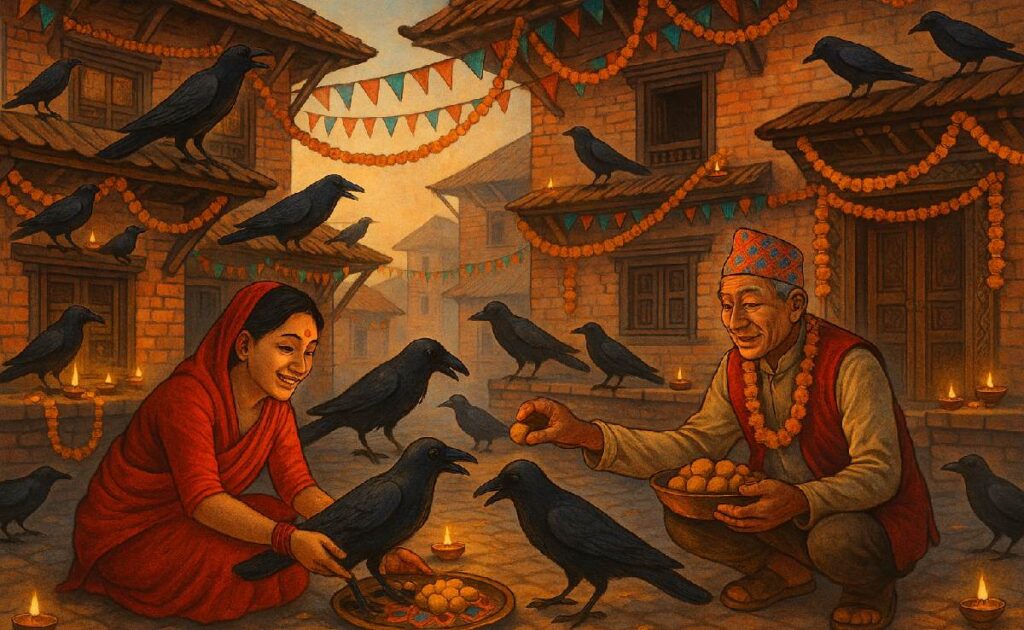
AI generated picture of Kaag tihar

Tihar begins with Kaag Tihar, dedicated to crows, believed to be messengers of death. People offer sweets and food to crows to ward off bad luck and invite blessings for the year ahead. Also, this ritual reminds us to honor nature and the creatures that share our world.

Kukur Tihar (Dog Day)
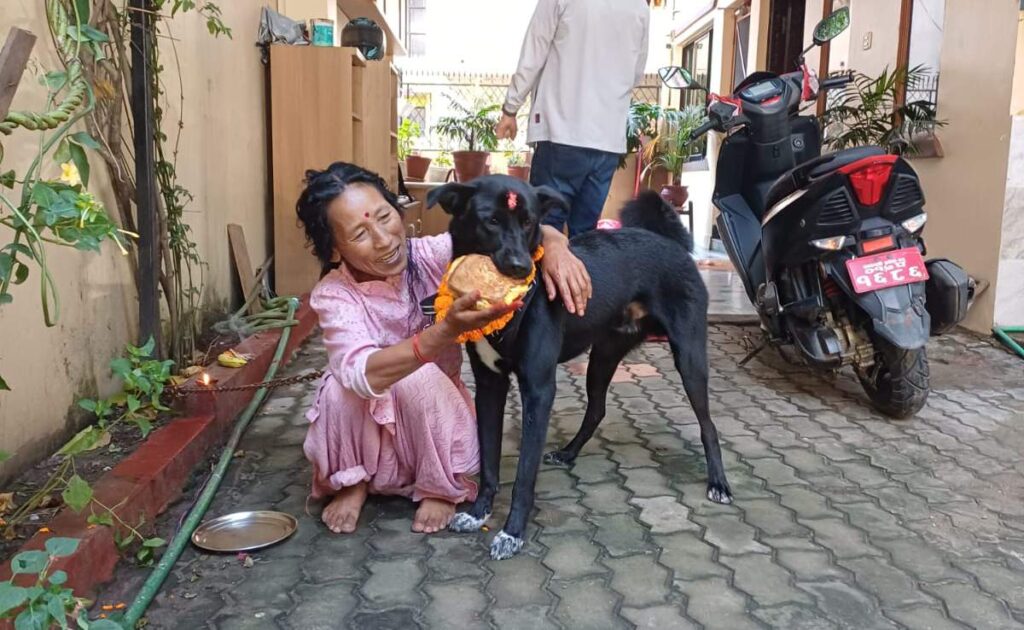
Kukur Tihar celebrates dogs for their loyalty and protection. People decorate dogs with flower garlands, tika, and special treats, showing their important role in our lives. In addition, people express gratitude to these faithful companions, recognizing the bond between humans and animals.

Laxmi Puja (Goddess of Wealth)

In the evening, Laxmi Puja fills homes with light and devotion. Families worship Goddess Laxmi, clean their houses, draw colorful rangoli patterns, and prepare traditional sweets like sel roti to invite prosperity. Laxmi enters only clean and well-lit homes, teaching mindfulness and gratitude.

Govardhan Puja and Mha Puja
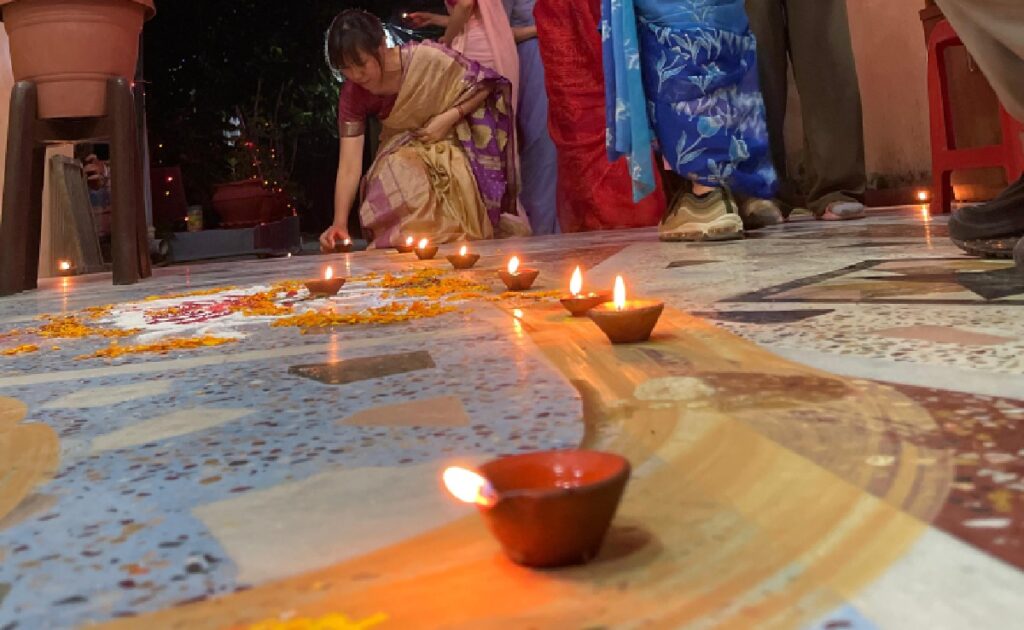
Tihar Festival in Nepal
Foreigners are enjoying their time immersing themselves in the vibrant Nepali culture during the Tihar Festival

Govardhan Puja honors oxen for their hard work in agriculture and their role in supporting human life. Among the Newar community, Mha Puja, or self-worship, symbolizes purification, self-respect, and spiritual renewal for the coming year. The day also marks the New Year according to the lunar calendar, which this year turns 1146. The Newar people call it “Nhu Daya Bhintuna”, meaning Happy New Year in their language. These rituals remind people to respect all living beings, honor cultural heritage, and celebrate new beginnings.

Bhai Tika (Siblings’ Day)
The festival ends with Bhai Tika, celebrating the sacred bond between brothers and sisters. Sisters apply multi-colored tika on their brothers’ foreheads, offer garlands, and pray for their health and prosperity, while brothers give blessings and gifts. Furthermore, the day brings laughter, feasts, and family bonding, reinforcing love, care, and protection among siblings.

Tihar 2025 Dates

  • Kaag Tihar (Crow Day): 19 October
  • Kukur Tihar (Dog Day): 20 October
  • Laxmi Puja (Goddess of Wealth): 20 October
  • Govardhan Puja and Mha Puja: 22 October
  • Bhai Tika (Siblings’ Day): 23 October

Why Visit Nepal During Tihar

Experiencing Tihar in Nepal is like stepping into a living cultural masterpiece. Streets sparkle with thousands of oil lamps, neighbourhoods echo with traditional Deusi and Bhailo songs, and homes overflow with warmth, laughter, and delicious Nepali sweets.

Tihar offers a deep experience of real Nepali traditions, rituals, and faith, beautiful sights for photographers and travelers, and unique moments like seeing animal worship, colorful rangoli, and community celebrations. Also, the festival provides a moment of reflection, reminding people of gratitude, respect, and the beauty of human and animal bonds.

Even today, the Tihar Festival of Nepal invites people to slow down, honor relationships, respect nature, and reflect on the blessings often taken for granted. In addition, these long-lasting lessons, expressed through lights, rituals, legends, and songs, keep Tihar alive and magical for generations.

Although this year’s Tihar is already underway, travelers can plan ahead for Tihar 2026. Tentative dates are: Laxmi Puja – 8 November, Govardhan Puja – 10 November, and Bhai Tika – 11 November. Visiting Nepal during the Tihar festival allows people to experience the festival in its full glory, with streets illuminated, songs echoing through neighborhoods, and homes filled with warmth, light, and tradition.

Festivals & Culture: Explore the Tihar Festival and Its Traditions in Nepal

Tihar Festival, also called Deepawali and Yamapanchak in Nepal, is the second largest Hindu festival after Dashain. The five-day festival is also known as the Festival of Lights, one of the most popular festivals in Nepal. There is a special significance to each day of the festival.

Tihar festival celebrates the victory of God over the demons and has a rich history dating back to ancient times. During this festival, cows, crows, and dogs are also worshipped as these animals are believed to be gifts from Mother Nature. Tihar also worships Goddess Laxmi, the goddess of wealth and luck.

Tihar symbolizes the victory of humanity over darkness. Therefore, it is also considered to be one of Hinduism’s most friendly and enjoyable celebrations. 

Celebrations of the Tihar Festival

Tihar Festival has no formal ceremony, and it is similar to other festivals around the world, like Christmas and New Year. The festival of lights begins with cleaning and painting houses and rooms in honor of the gods and goddesses. 

Families and merchants decorate their homes and stores with colorful lights, and fireworks are displayed in the sky at night. Nepalis pay special homage to Laxmi in the evening, the goddess of wealth and luck, as well as offer praying to the gods for prosperity and health.

After the puja, people of all ages gather in groups on the third and fourth days of Tihar and exchange singing and dancing performances on the traditional Nepali songs Deusi and Bhailo. The performers receive blessings, especially from the elderly, and are given fruit, flowers, and money.

Tihar celebrates the bond between brothers and sisters on Bhai Tika, the last day of the festival. While praying to Lord Yama, sisters pray for their brothers’ long and prosperous lives. It is also a time of reunion and greetings between friends and relatives during this festival. 

Eachy day of Tihar has its own significance:

Day 1 – Kaag Tihar: 

Kaag Tihar marks the beginning of Tihar. Kaag means crow in Nepal and is regarded as a “bad messenger”. Crows are worshipped in Nepali society as the “Messenger of Death” and people offer grains, rice, and water to the crows. They are made happy to avoid bad news in the future.

Day 2- Kukur Tihar: 

Kukur Tihar, also known as Dog Tihar, falls on the second day of the Tihar festival. Nepalis worship dogs on this day because dogs are believed to be the protectors and guides of their souls. A garland of marigold flowers is placed around their necks, and delicious food is served to them. Dog festivals are very popular among tourists, as they demonstrate the bond between humans and dogs.

Day 3- Gai Puja/ Laxmi Puja:  

Tihar’s third day celebrates Gai (Cow) Tihar and Laxmi Puja, the worship of cows and goddess Laxmi. This is a day when cows are worshipped. The rites of worshiping cows include feeding them grass, decorating them with garlands, and affixing tikas to their foreheads. Cows are worshipped to welcome good fortune and prosperity.

Afterwards, everyone prepares for the Laxmi puja by cleaning the houses, lighting deeyas, hanging lights, and praying in the evening. Offerings of sweets, fruits, and Sel Roti (sweet rice bread) are made in front of the statue or frame of Goddess Laxmi. The young girls and boys go to play deusi bhailo after the puja.

Day 4- Govardhan Puja/ Mha Puja: 

Tihar is also a time to worship the ox, regarded as an important domestic animal, especially for farmers. They are worshiped and given fresh grass to eat. Cow dung is also worshipped during Govardhan Puja as a symbolic representation of Govardhan Mountain.

A self-worshipping festival is performed by the Newar community in Kathmandu, known as Mha Puja. Newars celebrate the start of the new year by performing pujas for themselves.

Moreover, boys and girls gather together at night to play Deusi by visiting the neighborhood. It usually involves a boy singing a song and chanting some story about the Tihar festival while a group of people rally around him. For a whole night, they visit houses in the community, collect some funds, then divide them among themselves or use them for some social welfare purpose.

Day 5- Bhai Tika:  

The final day of Tihar is Bhai Tika, which is also filled with love between brothers and sisters. Sisters prepare on this day by wearing clean clothes, cooking, and preparing tikas and garlands. Meanwhile, the brothers purchase gifts for their sisters and change into their best attire.

The sister first applies a white tika base, then adds seven different colors. Following that, they are adorned with fresh garlands and given Sel rotis, milk, and sweets.

There is a great significance behind this day. Sisters present tikas and garlands to their brothers as a way of protecting them. A gift will be given to the sister as a token of appreciation for this gesture.

Final Words:

Everybody enjoys the festival, and you can experience it in Nepal. There is a wonderful smell of sel roti, a view of kites flying in the sky, and melodious voices of youths singing.

Tihar is more than just a scene of prosperous light; it represents a spiritual journey as well. Crows will lead the way, dogs will guard the entrance to the underworld, cows will help us cross the wicked river Styx, and we will go up to Yama for judgment.

Visit Nepal this year and experience the festival of lights with the Himalayan Circuit.