The discovery of Nepal’s first apsidal Buddhist temple at Tilaurakot-Kapilavastu in February 2026 provides new clarity for understanding early Buddhist urban heritage in the southern plains. Archaeologists widely recognise Tilaurakot as the capital city of the Shakya polity, closely linked to the early life of Siddhartha Gautama.
This finding introduces a previously undocumented architectural form into Nepal’s archaeological record. It also strengthens the evidence for a renewed UNESCO World Heritage nomination.
The World Heritage Committee deferred Nepal’s proposal to list Tilaurakot during its 47th session in July 2025 and requested further excavation of the apsidal structure. With new data now available, Nepal is preparing to resubmit the site at the 49th session in 2027.
For travellers interested in cultural history and archaeological landscapes, this discovery shows how layers of urban development, religious practice, and heritage policy shape Nepal’s historic sites.
Urban Layout and the Position of the Apsidal Structure
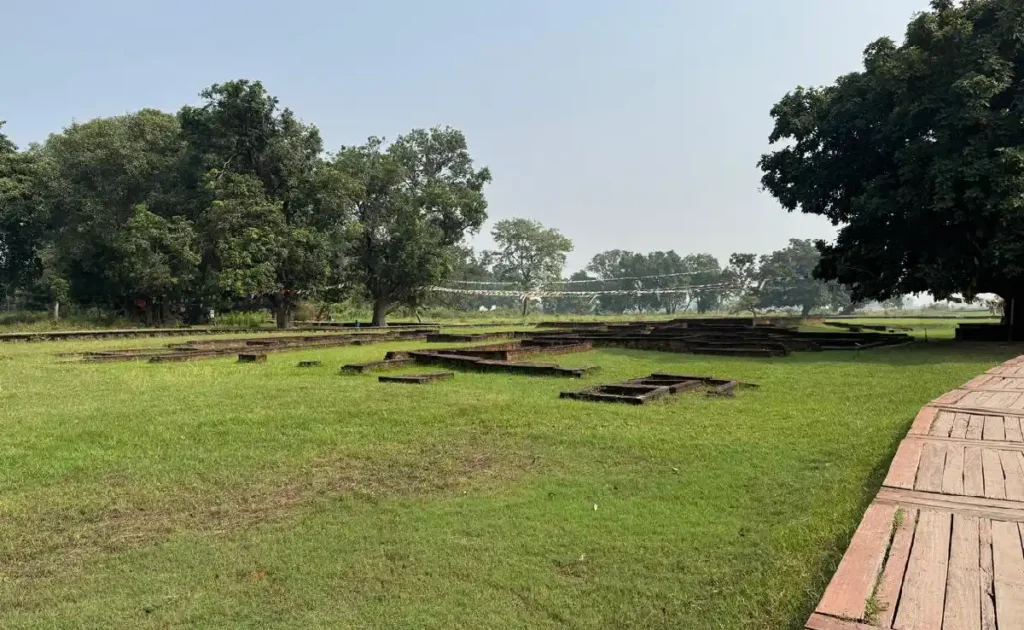
Tilaurakot-Kapilavastu stands as one of the most intact early-historic walled cities in Nepal. Excavations reveal a fortified settlement with gates, ramparts, and an organised internal layout that reflects the socio-political structure of the first millennium BCE.
Builders constructed the newly identified Tilaurakot apsidal temple at the centre of this urban plan, directly above the remains of an earlier palatial complex.
Archaeological records show that the earlier complex formed a 100 × 100 metre enclosure. Thick brick walls around 1.5 metres surround the structure. This layout suggests the space functioned as an administrative or ceremonial core of the Shakhya settlement.
After people abandoned the complex, later communities reused its elevated platform. Over time, the space became a focal point for religious activity.
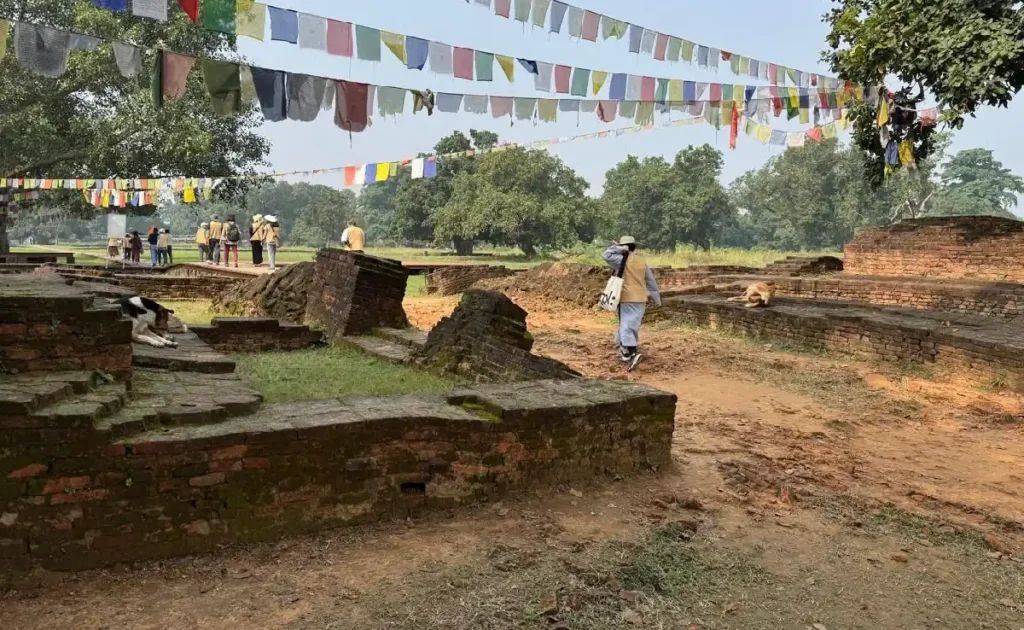
Excavations up to February 2026 confirmed the apsidal temple within the courtyard of a Buddhist monastery that developed after the decline of the original administrative centre.
Archaeologists recognise the semi-circular apsidal plan as a key feature of early Buddhist architecture in South Asia. However, researchers had not previously documented such a structure within an urban settlement in Nepal.
This discovery allows comparison with similar sites in India and Sri Lanka. Most early Buddhist communities placed apsidal temples in monastic complexes outside cities. In contrast, this example sits within an urban centre, showing how civic and religious spaces interacted in early Buddhist cities.
The research team, including the Department of Archaeology, the Lumbini Development Trust, Durham University’s UNESCO Chair, and the Nepal Archaeological Association—has played a central role in refining this interpretation.
UNESCO Nomination, Land Protection, and Site Management
The apsidal temple discovery directly supports the UNESCO World Heritage nomination process.
During the 47th session in Paris in July 2025, the World Heritage Committee requested full excavation and documentation of the temple area. In response, the excavation team intensified fieldwork. This work confirmed the apsidal structure and uncovered associated artefacts, including numerous oil lamps that indicate long-term ritual use.
To achieve UNESCO status, a site must demonstrate “Outstanding Universal Value” and show clear protection systems and long term management frameworks.
The Department of Archaeology has already begun securing land around Tilaurakot. Authorities plan to acquire 100 bighas (677263 sq.m), and they had already secured around 50 bighas by February 2026. This step helps reduce risks from agricultural expansion, settlement pressure, and infrastructure development.
National and international institutions carry out the excavation and documentation work together. Durham University’s UNESCO Chair programme provides archaeological expertise, field training, and stratigraphic analysis. The Nepal Archaeological Association also supports the scientific and technical process.
For visitors, these UNESCO procedures are visible on-site. Travellers will see controlled excavation zones, restricted areas, and active documentation work. These are standard heritage management practices rather than temporary disruptions.
Understanding these systems helps travellers experience heritage sites responsibly while recognising the importance of conservation.
Cultural Landscape, Community Context, and Long-Term Conservation
Tilaurakot lies within the Greater Lumbini Area, a region that combines archaeological importance with active community life. The landscape includes farmland, seasonal settlements, and long-standing religious traditions.
The discovery of many oil lamps in the apsidal temple area shows long-term ritual activity. Pilgrims likely continued visiting the site across different historical periods. Even after later brick structures covered the monastery and temple, the location still retains symbolic importance.
This continuity shows that heritage is not only physical architecture. Memory, belief, and long-term cultural practice also shape it.
Land protection and conservation planning influence local communities as well. When authorities include agricultural land within protected zones, they must coordinate with residents, local governments, and national heritage bodies.
Archaeological teams working at Tilaurakot often collaborate with community members. Local residents support excavation work, site protection, and cultural interpretation programmes.
For travellers, Tilaurakot functions both as a research site and a living cultural landscape. Respecting restricted zones, staying on designated paths, and recognising active excavation areas all support responsible travel.
Why This Discovery Matters for Nepal’s Heritage Future
The excavation of Nepal’s first apsidal Buddhist temple at Tilaurakot, Kapilavastu provides important evidence for understanding early Buddhist urbanism and architectural development. The structure shows how civic, administrative, and religious spaces evolved over time from palace complex to monastery courtyard.
This discovery directly addresses the recommendations that UNESCO made during the 47th session in 2025. It strengthens Nepal’s case to resubmit the Tilaurakot nomination at the 49th session in 2027.
Ongoing heritage management efforts, including land protection, excavation, and documentation reflect broader conservation frameworks in Nepal. These efforts involve cooperation between national institutions, international research partners, and local communities.
For travellers, visiting Tilaurakot is not just about seeing ruins. It is about understanding how archaeology, heritage policy, and community life interact in one of Nepal’s most important early-historic landscapes.
If you’re interested in how historical sites in Nepal are being conserved and brought back to life through traditional materials and local craftsmanship, you might also enjoy this article on the restoration of Patan Durbar Square with traditional telia bricks. It highlights how Newari heritage and centuries‑old techniques are shaping public spaces in one of the Kathmandu Valley’s most iconic UNESCO World Heritage Sites.