Kathmandu Diary: Solo Travel Adventures in Kathmandu

Holi Celebration

When you think of Nepal, what comes to mind? Majestic mountains, serene landscapes, vibrant culture, and rich history? If you’re a solo traveler, Kathmandu, Nepal’s bustling capital, should be at the top of your travel list. Recently, TripAdvisor ranked Kathmandu as the second-best destination for solo travel in the world, and it’s easy to see why. This vibrant city offers everything a solo traveler could wish for—adventure, culture, spirituality, and reflection—all wrapped up in one amazing destination.

Why Kathmandu is a Top Solo Travel Destination

Kathmandu is more than just the gateway to the Himalayas. It’s a perfect blend of spirituality, history, and modern-day adventure. Whether you’re strolling through ancient temples, exploring modern art galleries, or sipping coffee in a trendy cafe, Kathmandu offers a wide range of experiences that cater to every type of solo traveler. From its bustling streets to its peaceful temples, Kathmandu is a place where you can lose yourself and discover new parts of your own soul.

1. Kathmandu: A Safe Haven for Solo Travelers

Kathmandu stands out for being safe and welcoming for solo travelers. The city has a well-established tourist infrastructure, making it easy for those traveling alone to find affordable accommodations, local guides, and even other solo adventurers. The locals are incredibly friendly, and English is widely spoken, especially in tourist areas like Thamel.

Kathmandu’s busy, but manageable, streets offer a comforting familiarity. Whether you’re asking for directions to one of the many UNESCO World Heritage Sites or enjoying a meal at a traditional Nepali restaurant, you’ll quickly feel at home in this lively city.

2. Explore Spirituality and Culture in Kathmandu

Kathmandu is the perfect place for solo travelers seeking cultural and spiritual experiences. The city is home to several of Nepal’s most famous historical and religious sites, including:

  • Swayambhunath Stupa (Monkey Temple): For incredible panoramic views and a sense of serenity.
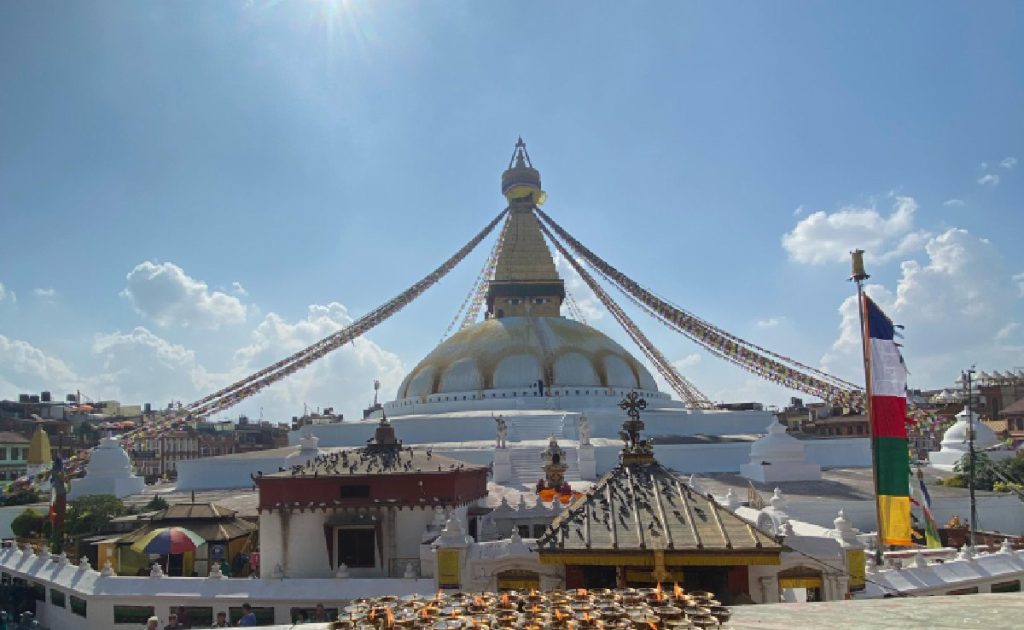
  • Boudhanath Stupa: One of the largest and most iconic stupas in the world.
  • Pashupatinath Temple: A sacred Hindu site where rituals are performed along the Bagmati River.

Each of these sacred places offers the opportunity for reflection and meditation, making Kathmandu an ideal city for personal growth and self-discovery.

3. A Thriving Adventure Hub for Solo Trekkers

For adventurous solo travelers, Kathmandu is the perfect base camp. The city is the starting point for some of the world’s most famous trekking routes, including:

  • Everest Base Camp Trek: The adventure of a lifetime to reach the foot of the world’s tallest mountain.
  • Annapurna Circuit: A stunning trek through lush forests, terraced fields, and high-altitude deserts.
  • Langtang Valley: A peaceful trek with breathtaking views and fewer crowds.

Kathmandu also offers adventure activities like paragliding in nearby Pokhara or exploring scenic hill stations like Nagarkot for a fresh perspective of the Himalayan range.

4. Meet Like-Minded Travelers in Thamel

Kathmandu’s Thamel district is a popular spot for backpackers and solo travelers from around the world. The area is full of cafes, hostels, and shops, where you can meet other like-minded adventurers. If you’re looking to connect with fellow solo travelers, Thamel is the place to be.

With a mix of budget accommodations and local food, this area offers plenty of opportunities for solo travelers to unwind, chat, and plan their next adventure.

5. Cultural Immersion at Its Best

Kathmandu offers solo travelers a chance to immerse themselves in Nepalese culture. You can:

  • Visit vibrant markets like Asan Bazaar, where you can shop for spices, textiles, and handcrafted goods.
  • Take part in cooking classes to learn how to make traditional Nepali dishes like momo and dal bhat.
  • Explore local art workshops or attend yoga retreats to connect deeper with the local lifestyle and spirituality.

Kathmandu is not just a place to see, but a place to experience—and as a solo traveler, that means endless opportunities for personal connection.

6. The Joy of Solo Reflection in Kathmandu

Kathmandu is the perfect city to find peace and solitude. Whether you’re gazing at the sunrise over the Himalayas from Nagarkot or sitting quietly by the Bagmati River, you’ll find numerous spots in Kathmandu to reflect, recharge, and find clarity.

For those seeking mindfulness and self-discovery, Kathmandu offers the right environment to slow down, take a breath, and connect with your inner self.

Tips for Making the Most of Your Solo Trip to Kathmandu

  1. Stay in Thamel: This district is full of hostels, cafes, and activities tailored for solo travelers.
  2. Hire a Local Guide: Explore Kathmandu’s historical sites with a knowledgeable guide to enhance your experience.
  3. Embrace Local Culture: Spend time exploring markets, trying local dishes, and joining cultural workshops.
  4. Go Trekking: Kathmandu is your launch point for some of the best trekking routes in the world—don’t miss the opportunity to hit the trails.
  5. Respect Local Customs: Be mindful of local traditions and dress modestly when visiting religious sites.

Conclusion: Your Solo Adventure Awaits in Kathmandu

Kathmandu is more than just a city; it’s a destination for growth, adventure, and cultural immersion. It’s where spirituality meets modern life, where ancient temples blend with bustling streets. Whether you’re looking for a spiritual retreat, an adventure-packed journey, or simply a place to reflect, Kathmandu has it all.

So, pack your bags, grab your camera, and get ready for an unforgettable solo journey in the heart of Nepal! For more information about trekking, cultural experiences, and the best solo travel tips in Nepal, visit HimalayanCircuit.Com—your ultimate guide to solo travel in Nepal.

Festivals & Culture: Maghe Sankranti Festival Celebration Guide

Maghe Sankranti festival, also known as Makar Sankranti festival, marks the beginning of the auspicious month of Magh in Nepal.  This festival honors the messenger of light, the sun, and marks the beginning of the spring season.

To fulfill their spiritual needs, people bathe in rivers like the Bagmati, Devghat, Dolalghat, Baraha Kshetra, Ridi (Kaligandaki River), Trivenighat, and others during this festival.

Families spend time together during this festival, soaking in the sun and pampering their bodies with food and oil massages – ensuring that they are well-fed and nourished during the winter months.

Maghe Sankranti is celebrated differently by different communities. For some, it marks the beginning of the New Year, while for others; it is the biggest festival of the year.

Religious importance of Maghe Sankranti festival:

It is stated in the Mahabharata that Bhisma Pitamaha, who held immense power and had control over his own death, died on this date. So, people who die on this day are considered to be liberated from the cycle of birth and rebirth. 

Ayurveda and medical science are also important aspects of Maghe Sankranti festival. The food items consumed on this day are balanced foods that strengthen the human immune system.

Weather during Maghe Sankranti while visiting Nepal:

This festival marks the end of the cold month of Poush (December) and the beginning of warmer days. On this day, the sun is supposed to start moving toward the northern hemisphere. 

During Maghe Sankranti, the skies are exceptionally clear, providing warmth to the entire nation. This is a good month for walking and hiking because visibility is good, and rain is less likely than in other seasons.

Caste who celebrate Maghe Sankranti with importance:

  • Hindu Community:

Hindu devotees take holy baths in Nepal’s auspicious rivers during the Maghe Sankranti festival. Also, they worship Lord Vishnu and perform pujas, as well as read the Hindu epic Bhagavad Gita.

Traditionally, families gather and eat meals together on this day. Brahmins and Chhetris celebrate the Maghe Sankranti festival in Nepal by inviting their married daughters and close relatives and offer them special meals.

  • Newar Community:

Maghe Sankranti festival is known as ‘Ghyo Chaku Sanhu’ by the Newar community, and it consists of ghyo (ghee), chaku with samay baji, and remembering the deceased. 

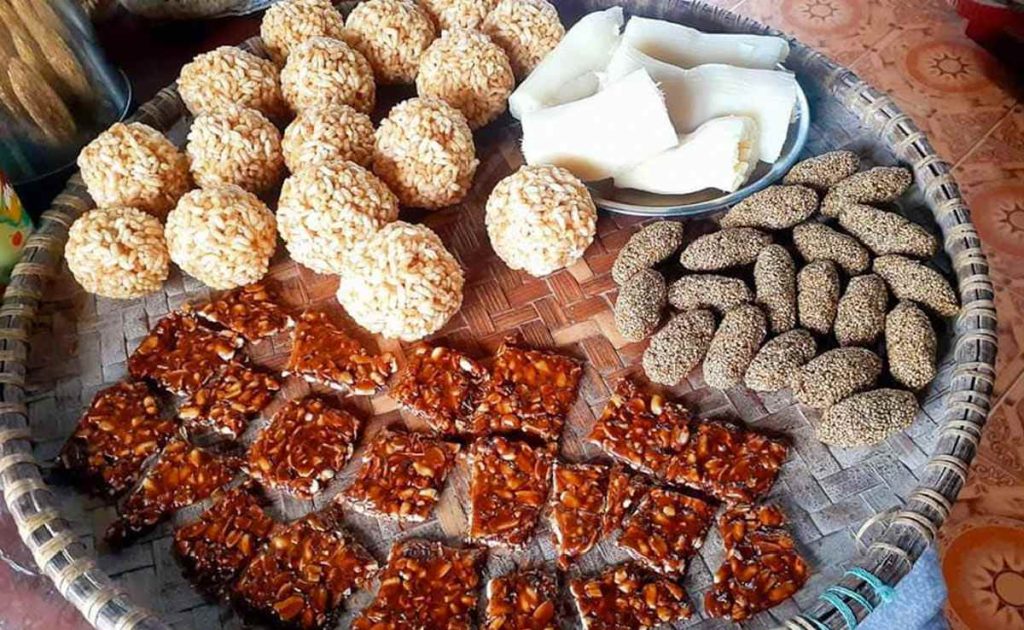
It is believed that taking a holy dip and eating vegetables, yam, sesame seed candy, and ghee on this day makes one healthier, and doing charity makes one happy. Similarly, Mild-hot edible oil is applied to the heads of juniors on this day.

  • Tharu Community: 

The Maghe Sankranti festival is one of the biggest festivals in the Tharu community, and it is also celebrated as New Year in Kailali, Kanchanpur, Banke, Bardiya, and Dang. 

Also known as the Harvest festival of Tharus and Terai, Maghi is celebrated as a joyful time following the hard work of fieldwork. 

During the festival, they perform cultural dances; wear the traditional Tharu clothes, and share food and drinks with family and friends.

  • Buddhist:

Buddhism also considers Maghe Sankranti festival to be important in some way. The Shyakas and Bajracharyas participate in a donating event known as samyak dan on this auspicious day, which typically takes place at Na: pukhu of Bhaktapur. 

  • Kirat Community:

The Maghe Sankranti festival day is celebrated by the Kirat community as ‘Yele Dhung’, which means New Year in Kirat. This day celebrates the invasion of the Kathmandu valley by the Kirant king Yalambar.

Feasts during Maghe Sankranti:

Molasses, ghee, sweet potatoes, cassava, etc, are among the major delicacies prepared during Maghe Sankranti festival in Nepal. The feasts are organized differently by different communities based on their cultures and traditions.

It is believed that the consumption of these foods, i.e. Gheu Chakku, Tilko Laddoo, Spinich, and yam during the cold weather will help us become healthier and warmer.

Places where you can visit during Maghe Sankranti:

  • You can visit Tundikhel in Kathmandu, where people organize various cultural events. 
  • You can visit rivers (such as the Triveni, Bagmati, Mahakali, etc.) that hold religious significance. 
  • You can participate in the bullfighting festival in Nuwakot, where tamed bulls compete against one another under the eyes of many spectators. 
  • Take part in some feasts on the streets of Kathmandu. 
  • Attend a local Tharu feast in Chitwan and take a holy dip in Devghat. 

The festival of Maghe Sankranti is celebrated by wishing a healthy, prosperous future to everyone through various enchantments and religious recitations. 

Get a taste of Nepal’s most exciting and frenetic festival by booking your trip with the Himalayan Circuit.

Wildlife & Nature: Memorable Bird Watching Experiences in Nepal

The bird-watching tour in Nepal is a great way to relax and enjoy nature, as well as the opportunity to see different birds from your naked eye or with the help of modern equipment such as binoculars and telescopes.

A wide variety of bird species can be observed throughout Nepal, from the sweltering plains of Koshi Tappu, Chitwan, and Bardiya to the mountainous regions of Everest and Annapurna.

The bird-watching tour gives you the chance to see wild animals and explore the local culture and traditions, as well as explore rare bird species and explore some of the famous national parks.

Tour Highlight:

  • Enjoy bird watching around Kathmandu city.
  • Enjoy bird watching in Chitwan National Park, Shuklaphanta National Park and Bardiya National Park.
  • Enjoy jungle adventures such as elephant rides, canoe rides, and jungle hikes.
  • Spectacular bird watching in Koshi Tappu Wildlife Reserve.
  • Walking through the village and jungle.
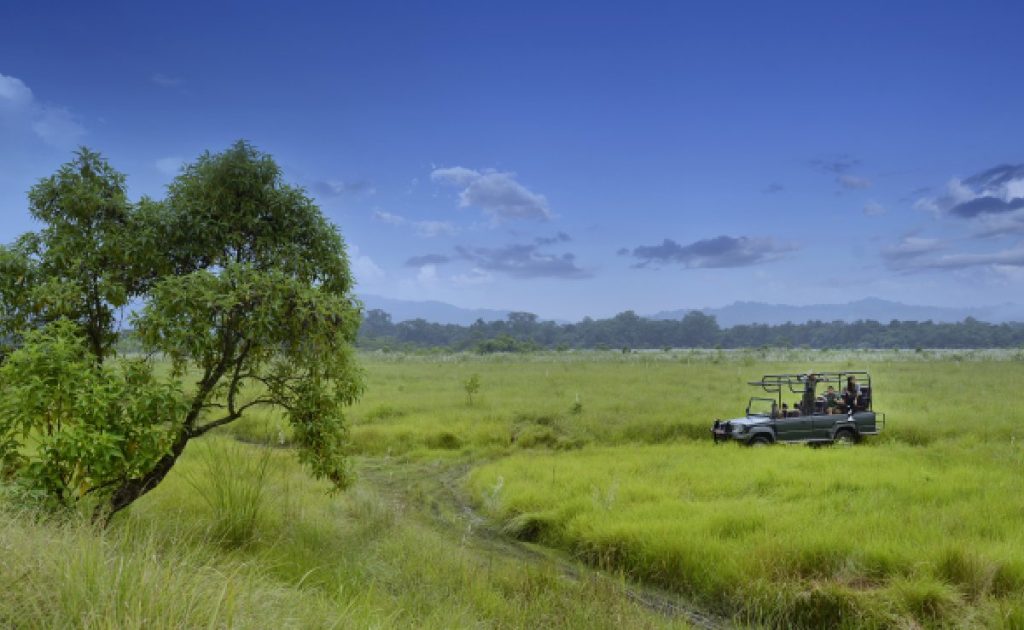
  • Wilderness jeep safari within the national park.
  • Take a walk through marshes, discover island sandbanks, and explore the inaccessible sandbanks.
  • Enjoy and capture the beautiful flora and fauna.

The Himalayan Circuit Treks presents you some of the best bird watching destinations in Nepal:

  • Around Kathmandu Valley:

The Kathmandu Valley is home to 500 species of birds, which can be spotted in areas like Shivapuri, Nargarjun, Pulchoki, Raniban, Chobhar, Taudaha, Nagdaha, and Manohara. 

The bird-watching experience in Kathmandu is wonderful, as hiking enthusiasts and adventure seekers can also be entertained, and bird watching allows you to see incredible scenery, including mountain views, wildlife exploration, interactions with local communities, and cultural and traditional experiences.

You can observe a variety of birds in the Kathmandu Valley, including raptors, pochards, common pochards, Herons, Kingfishers, Ibisbill, mallards, northern pintails, ferruginous gadwalls, northern shovelers, and many more.

  • Shivapuri National Park:

Known as Nepal’s biodiversity hot spot, Shivapuri National Park has 318 species of birds, making it an excellent place for bird watching.  You can easily spend a whole day or most of the morning in the park enjoying natural forest and birds that make the park very lively.  

Among the birds you can see in the park are Long-tailed Mountain Thrush, Northern Eagle Owl, White-rumped Vulture, Maroon Oriole, Large Hawk-Cuckoo, Red-billed Blue Magpie, Hodgeson’s Bush, Chestnut-headed Bee-Eater, Black Eagle and many more.

  • Chitwan National Park:

The Chitwan National Park is a birdwatchers’ paradise, home to many resident and migrant bird species.  Known for extensive wildlife, the Chitwan Bird Watching Tour takes you to the wonderland situated in the Lower Region of Nepal called Chitwan which is home to massive 544 bird species. 

Chitwan National Park is one of the world’s best places to observe and study rare birds.  Among the birds you can see in the park are Ferruginous Pochards, Grey-headed and Lesser Fish Eagles, White-tailed Eagles, Great Hornbills, Black-bellied Terns, Pallid Harriers, Lager Falcons, Darters, and Painted and many more.

  • Koshi Tappu Wildlife Reserve:

A birding tour in the Koshi Tappu wildlife reserve in Nepal would be a great way to see some very interesting birds. This reserve with scrub grassland and deciduous riverine forest is home to more than 450 species of birds so far.

Among the birds you can see in the reserve are 20 species of duck, herons, Indian nightjar, dusky eagle owl, black-headed cuckoo shrike, white-tailed stonechat, and striated grassbird, Black Ibis, Honey Kites, Ospreys and many more.

  • Shuklaphanta National Park:

Get a glimpse of the rich and diverse flora and fauna of Suklaphanta National Park with the Himalayan Circuit Treks. The Shuklaphanta National Park, established in 1969, is located in the Kanchanpur district in the extreme southwest of the Terai. It covers an area of 305 square kilometers.

  • Bardiya National Park:

Visit densely wooded areas, lakes, and rivers near Badia National Park to spot birds and animals, spend an entire day in the jungle watching different kinds of birds.

Among the birds you can see in this park are Bengal florican, golden-headed cisticola, white-rumped vulture, jungle prinia, silver eared mesia, sarus crane, and many more

Spending a holiday in Nepal can be one of the best ways to enjoy your vacation and explore the mystical lands of Nepal where vibrant wildlife and ecosystem thrive immensely. 

Nepal is not only a country of majestic mountains but also a birdwatcher’s paradise. For those who enjoy the sounds of birds chirping in a green colossal forest as the background to their experiences, bird watching is one of the most popular wildlife experiences in Nepal. 

For those who enjoy the sounds of birds chirping in a green colossal forest as the background to their experiences, bird watching is one of the most popular wildlife experiences in Nepal.

Wildlife & Nature: National Parks for an Exciting Wildlife Safari

An exciting wildlife safari in Nepal offers beautiful scenery and a unique wildlife adventure experience for nature lovers, birdwatchers, and wilderness enthusiasts. You can enjoy a wildlife safari after trekking in Nepal and enjoy the surroundings of jungles, which is an excellent place to spend time with your family. 

A visit to Nepal, the Himalayan nation, will not only offer mountain trekking and white-water rafting trips, but also jungle safaris in magnificent national parks. The country is home to 14 national parks and wildlife reserves, many of which are tropical jungles teeming with exotic birds and diverse wildlife.

Taking a wildlife safari in Nepal gives you the chance to see the rarest and most endangered wildlife on the planet.  A Jungle Safari tour in Nepal is best enjoyed between March and April, September, October, November, and December, making it the perfect adventure for travelers of all ages.

A number of national parks in Nepal provide fantastic opportunities for wildlife safaris where you can observe a wide array of flora and fauna in their natural habitats. A wildlife safari tour in Nepal can last from 2 days to 7 days, depending on the preferences and schedules of visitors.

Here is a list of Nepal’s most popular wildlife safaris:

  • Chitwan National Park:

Chitwan National Park is a UNESCO World Heritage Site established in 1973 and the most visited National Park for wildlife safari in Nepal.  The Chitwan National Park is mostly covered by tropical and subtropical moist deciduous forests including grasslands, riverine forests, and sal forests. 

The Chitwan National Park is a protected jungle area full of wildlife, including the iconic Royal Bengal Tiger, one-horned rhinoceros, Asian elephants, and a variety of birds. 

You can enjoy jungle safaris, elephant rides, and nature walks at Chitwan National Park as well as bird watching, canoeing, and viewing wildlife such as tigers, rhinoceroses, and elephants.

You can stay at hotels such as Meghauli Serai (Taj Safari), Tigerland Safari Resort, Barahi Jungle Lodge and Green Mansions Jungle Resort around Chitwan National Park. 

  • Bardia National Park:

Located in Nepal’s far-western region, the Bardia National Park is renowned for its rich floral diversity and is a hidden gem for wildlife lovers. This park established in 1988 is an excellent place to observe Bengal tigers, elephants, leopards, and even the endangered Gangetic dolphin.

The park offers Jeep safaris, boating, and rafting, bird watching, overnight camping, and treehouses for those who want to explore the park’s diverse habitats, such as salt forests and grasslands. Additionally, Bardia offers the chance to explore traditional villages and experience Tharu culture.

The majority of Bardia National Park is covered by subtropical moist deciduous forests and riverine forests. You can stay at hotels such as Tiger Tops Karnali Lodge, Bardia Jungle Cottage, Rhino Lodge & Hotel Bardia, Nepal Wildlife Resort, and Bardia Adventure Resort around Bardiya National Park.

  • Koshi Tappu Wildlife Reserve:

Koshi Tappu Wildlife Reserve established in 1976 is regarded as a birdwatcher’s paradise.  Known to be home to over 485 species of birds, including migratory birds and endangered species, Koshi Tappu offers a unique opportunity to experience Nepal’s avian wonders. 

Koshi Tappu Wildlife Reserve consists primarily of wetlands, grassland, and riverine forest. The reserve offers boating and elephant and wild buffalo tracking, along with rafting on the Sapta Koshi River and dolphin watching along the Gangetic River.

Koshi Tappu Wildlife Reserve is primarily made up of wetlands, grasslands, and riverine forests. You can stay at hotels such as Koshi Tappu Wildlife Camp, Koshi Camp, and Koshi River Resort around Koshi Tappu Wildlife Reserve.

  • Sagarmatha National Park:

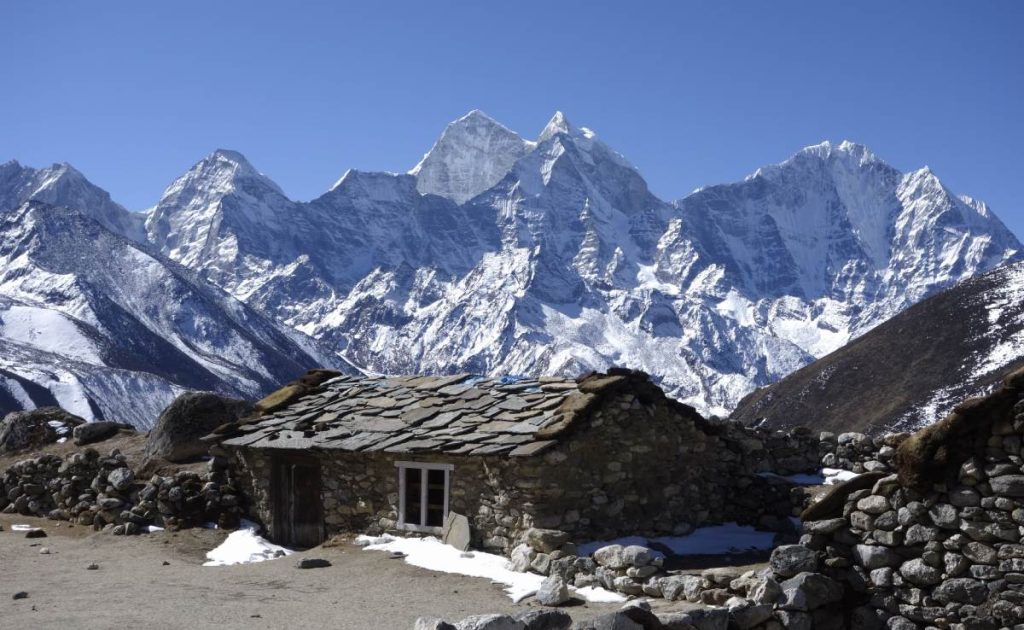
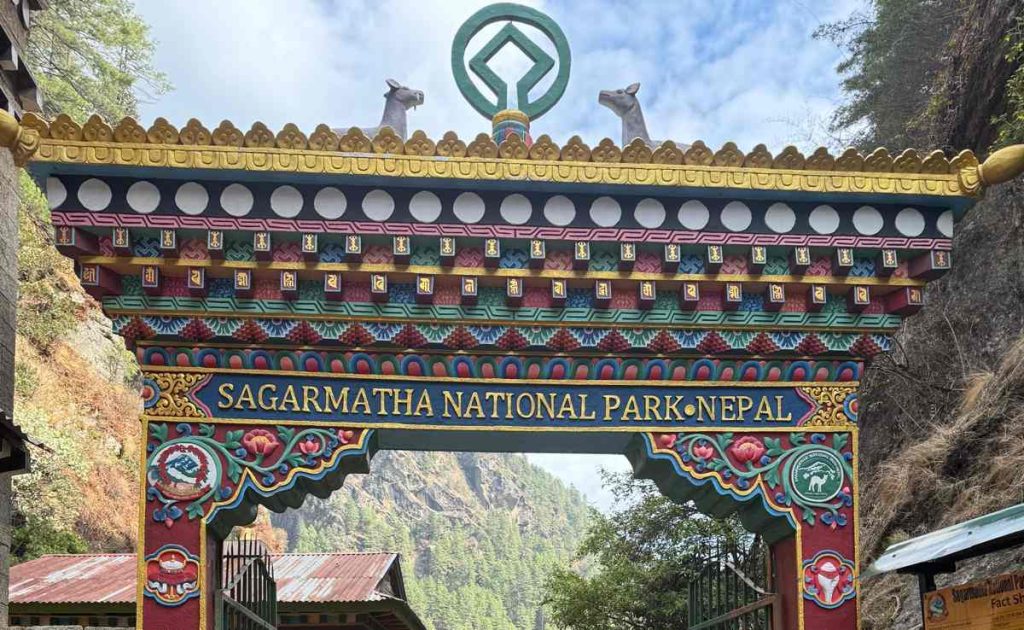
Sagarmatha National Park, founded in 1976, is known for its incredible views of Mount Everest, but it also is home to a variety of wildlife. There is a variety of wildlife in this national park in the Khumbu region of Nepal, such as Himalayan musk deer, snow leopards, and Himalayan tahr.

The park’s trails offer a great chance to spot elusive wildlife surrounded by stunning alpine scenery. Sagarmatha National Park includes forests of birch, rhododendron, and juniper trees, as well as subalpine and alpine vegetation.

Sagarmatha National Park is renowned for its Himalayan landscapes and Mount Everest, and offers trekking opportunities to see its unique mountain ecosystems. You can stay at hotels such as Yeti Mountain Home, Lukla, Hotel Everest View, Himalayan Lodge and Tashi Delek Lodge around Sagarmatha National Park.

  • Langtang National Park:

The Langtang National Park is Nepal’s first Himalayan national park established in 1976, and is the perfect place to experience a wildlife safari. The park is home to deer, monkeys, and the endangered red panda and Himalayan black bear.

Enjoy a trek through the Langtang Valley, surrounded by snow-capped peaks, and explore the park’s lush forests and alpine meadows. You can visit ancient monasteries along the way and experience the local Tamang culture.

There are various types of forests in Langtang National Park, including subtropical, temperate, and alpine forests, and common tree species include oak, maple, rhododendron, and pine.

Langtang National Park has diverse flora and fauna, as well as scenic landscapes and hiking trails for those who enjoy trekking and hiking. You can stay at hotels such as Langtang View Resort, Hotel Red Panda and Langtang Ri Hotel & Lodge around Langtang National Park.

  • Makalu Barun National Park:

The Makalu Barun National Park established in 1992 is an ideal choice for those who are looking for a wildlife safari that is truly remote and adventurous. Located in Eastern Nepal, this park is home to rare and elusive species like the red panda and clouded leopard.

The Makalu Barun National Park features diverse vegetation, including oaks, rhododendrons, firs, and junipers, as well as subtropical, temperate, and alpine forest types. Here you can enjoy the pristine beauty of the park, from towering peaks to dense rhododendron forests, as you trek through challenging terrain.

The Makalu Barun National Park offers a unique jungle experience with pristine wilderness, where you can hike through dense forests, catch sight of glacial lakes, and explore high-altitude meadows. 

You can stay at hotels such as Makalu Homestay, Sherpa Guide Lodge, and Makalu View Lodge around Langtang National Park.

There are diverse safari experiences to choose from in Nepal’s national parks and wildlife reserves, making it an ideal destination for wildlife enthusiasts of all ages. Every destination in Nepal gives a unique glimpse into the country’s rich biodiversity, from the dense jungles of Chitwan to the remote wilderness of Bardia.

With Himalayan Circuit Treks, you can experience exotic wildlife while also supporting conservation efforts and local communities. Get ready to explore Nepal’s wild wonders when you pack your binoculars, camera, and sense of adventure.

Wildlife & Nature: Explore Chitwan National Park, a UNESCO Site

The Chitwan National Park in Nepal’s southern belt offers a perfect balance between wildlife viewing and cultural exploration. It is a wonderful example of how nature provides a delicate balance between human interaction and the beauty of the natural world.

The Chitwan National Park is home to a wide range of activities, including elephant rides, jungle safaris, canoeing, elephant bathing, canoeing, jungle walks, elephant breeding centers, tharu cultural programs, watching the sunset from the riverbank, bird watching, etc. 

There is also a diverse range of vegetation in the park, including tropical and subtropical forests, grasslands, and freshwater wetlands. This park has over 500 species of birds, as well as a Bengal tiger, Asian elephant, leopard, sloth bear, and crocodile, among others.

Overview of Chitwan National Park

Located in Nepal’s Terai region, in the south-central part of the country, the Chitwan National Park has a total area of 932 square kilometers. Chitwan is a land with unique flora and fauna and has one of the last populations of single-horned Asiatic rhinoceros, as well as Bengal Tigers.

Besides the wildlife and ecosystem of Chitwan National Park, the Tharu people have lived there for centuries and have contributed greatly to the conservation of the park’s culture, customs, and way of life.

You can enjoy guided nature walks in the national park and learn about its plants and animals. The park also offers opportunities for you to experience the culture and traditions of the Tharu people by visiting their traditional villages and participating in cultural activities.

History of Chitwan National Park

The Chitwan National Park was established in 1973 as Nepal’s first national park. The park was created to protect wildlife and natural resources and to conduct research and conservation. 

The Chitwan National Park was designated a World Heritage Site by UNESCO in 1984 based on its ecological, cultural, and recreational importance. Additionally, the park is part of the Chitwan-Annapurna Landscape, which is vital to biodiversity conservation and sustainable development.

Things to do in this World Heritage Site

  • You can explore the park’s wildlife and diverse ecosystems on an elephant safari or in a jeep.
  • You will have a great time bird-watching in Chitwan as the park has over 500 different species of birds. 
  • See the wide variety of wildlife in the park, including tigers, rhinoceroses, crocodiles, birds, and mammals.
  • Take a drive through the park in a jeep for a different perspective.
  • Explore the Rapti River in a canoe or raft and see crocodiles and other aquatic creatures.
  • Discover Tharu culture and traditions by visiting nearby villages.
  • Visit the Elephant Breeding Center to observe baby elephants up close and learn about elephant conservation.
  • Explore the park’s diverse flora and fauna on a guided nature walk or hike. 
  • Swim with the elephants in Rapti River and get up close to these gentle giants.
  • Observe the Tharu stick dance and cultural show performed by the locals.

The significance of Chitwan National Park’s status as a UNESCO Natural Heritage Site:

  • A Sanctuary of Biodiversity

There is a wide variety of flora and fauna in Chitwan National Park. Its lush forests, grasslands, and wetlands are a haven for countless species, such as Bengal tigers, one-horned rhinoceros, Asian elephants, and a variety of birds. 

The park’s diversity can be attributed to several factors, such as intact ecosystems and its commitment to conservation efforts.

  • Successes in conservation:

The UNESCO status of Chitwan National Park honors its outstanding conservation achievements, which have been instrumental in saving endangered species, like the one-horned rhinoceros. 

This success story demonstrates how conservation initiatives can have a positive impact by restoring habitats, combating poaching, and engaging communities.

Cultural Heritage Preservation: 

The Chitwan National Park is famous for its biodiversity, but it is also home to indigenous communities, such as the Tharu. Tharu’s rich cultural heritage has been preserved through sustainable tourism practices and community involvement. 

Immerse yourself in the traditions of the Tharu people, witnessing their unique art, music, dance, and cuisine. Besides the natural heritage of Chitwan National Park, it also protects the cultural diversity of the country.

Ecotourism and Sustainable Practices:

The eco-friendly lodges and resorts within Chitwan National Park adhere to sustainable principles, including using renewable energy, managing waste, and supporting local communities. 

Following sustainable tourism practices will minimize your environmental impact while you experience Chitwan National Park’s wonders. 

With guided safaris, nature walks, and bird-watching tours, you can discover the park’s diverse flora and fauna while maintaining the ecosystem’s integrity.

A UNESCO Natural Heritage Site, Chitwan National Park is a testament to Nepal’s commitment to preserving its natural and cultural heritage, reflecting the country’s commitment to preserving its rich heritage. 

This park is a model for maintaining the delicate balance of humans and nature due to its thriving biodiversity, successful conservation efforts, sustainable tourism practices, and community involvement.

The Himalayan circuit offers the chance to make unforgettable memories while experiencing Chitwan’s wilderness serenity while traversing Nepal’s natural heritage.

Spiritual & Wellness: Sacred Ponds – A Journey of Peace in Kathmandu

Tourism association in Nepal

Kathmandu Valley is a picturesque city that originated in the lakes. The valley was once home to a lake filled with snakes called Nagdaha, according to mythology. Legend has it that Manjushree drained it.

Ponds were built in Kathmandu primarily to supply water to stone spouts and deep wells all year round. Indigenous people in the valley preferred to build ponds within their settlement areas to beautify the landscape and organize their activities. 

Kathmandu Valley’s water system is considered one of its most impressive technological achievements. This system uses underground clay pipes to supply water to hitis (water spouts) from ponds fed by monsoon rains or water canals. 

There were several ponds constructed during the architecturally rich eras of the Lichhavis (second to ninth centuries) and the Mallas (14th to 16th centuries). The valley is home to more than a hundred ancient lakes and ponds.

Some major Ponds of Kathmandu Valley include:

  • Taudaha (Chobar):

Located some 6 km southwest of Kathmandu, Taudaha pond is not only of cultural significance but also has a diverse flora and fauna. “Ta” means snake and “Daha” means lake. The name is derived from tribal people in Nepal, the Newaris.

Taudaha is a pilgrimage spot both for Buddhists and Hindus in Nepal. The pond is the valleys only remaining natural lake that provides habitat to a large number of wetland birds, making it an important ecological resource. 

Taudaha pond is a wetland that is recharged naturally by nearby water sources, making it a great place for a quiet, relaxing time alone or with friends. Taudaha pond also has a variety of fish and migratory birds.

  • Nagdaha (Dhapakhel):

Nagdaha is a mysterious pond about 4.5 km from Satdobato, in Dhapakhel village. Nagdaha is a beautiful lake of great religious importance, believed to have been originated from a stone tap within the Gaukhureshwar temple on the north-west shore.

Nagdaha pond are known as natural habitats for migratory birds, aquatic plants and fish. The pond offers beautiful views of Phulchoki, Santaneshwar and Kotadada, as well as sunsets and sunrises. This pond can be a fascinating experience as it is surrounded by mountains, trails, forests and temples.

  • Siddhapokhari (Bhaktapur):

Siddha Pokhari is a rectangular artificial lake located near Bhaktapur Durbar Square’s main entrance. Built in the 15th century, it is one of the oldest and most traditional ponds in Kathmandu. 

There are intricate stone carvings and traditional architecture surrounding the pond, which is believed to have been used for religious and ceremonial purposes. 

The calm and peaceful pond allows you to relax while feeding the fish and enjoy the silence. Visitors and locals alike enjoy the historical significance and beauty of Bhaktapur’s pond.

  • Pim Bahal Pokhari (Patan):

Pim Bahal Pokhari is a large pond surrounded by buildings in Patan. It was built in the 14th century and is one of the most well-known historical ponds in the city. Using rainwater and the support of the community, Pim Bahal Pokhari is the only pond in the area that runs on rainwater.

Pond’s pool represents their ancestral heritage. There’s a Chandeshwari temple built in 1663 on the north side of the pond, and a stupa near Pimbahal pond. A visit to the area is worth it because of its historical significance and cultural appeal.

  • Ranipokhari (Kathmandu):

Located in the heart of Kathmandu, Nepal, Ranipokhari is a historic artificial pond. There are much religious and aesthetic significance to the pond, one of Kathmandu’s most famous landmarks. 

King Pratap Malla built Rani Pokhari in 1670 AD to console his grieving queen after their son was trampled to death by an elephant. The pond was sanctified by collecting water from several holy sites and confluences in Nepal and India, such as Gosaikunda, Muktinath, Badrinath, and Kedarnath.  

The Ranipokhari fence features an elephant and a statue of King Pratap Malla, queen, and son. Each year, Rani Pokhari is opened on Bhai Tika, the last day of the Tihar and Chhath festivals. 

  • Nagpokhari (Kathmandu):

Naag Pokhari is a historic artificial pond situated on the eastern side of the Kathmandu. Queen Subarna Prabha constructed the pond during the 17th century.

About 125 feet long, 65 feet wide, and 7 feet deep, this pond has a surface area of 125 feet square. A golden snake statue is centered on a pond surrounded by a park. 

  • Kamalpokhari (Kathmandu)

The Kamal Pokhari Lake holds centuries of history and culture in Kathmandu, Nepal. According to legend, Kamal Pokhari was built during the Lichchhavi era. The lake has served many purposes over the centuries and is popular with Kathmandu residents.

‘Kamal Pokhari’ is more than a pond; it symbolizes Nepal’s rich heritage and history. Kamal Pokhari, a natural pond in Hattisar named for the lotus that once bloomed in its waters, has recently become the site for Chhath celebrations throughout the country, including the President.

Sacred ponds in Kathmandu Valley are more than just picturesque bodies of water – they are museums of cultural and religious history. The labyrinthine streets of Kathmandu are dotted with ponds, which stand as timeless witnesses to this enchanting region’s spiritual legacy.

Exploring these sacred ponds is a journey into Nepal’s soul, as they evoke rich mythological tales and the unwavering faith of its people. Visit these sacred ponds of Kathmandu Valley with the Himalayan Circuit trek and discover Kathmandu’s culture and spiritual heritage.

Spiritual & Wellness: Ganeshthan – A Spiritual Journey in Kathmandu

The city of Kathmandu has many monuments, temples, monasteries, and stupas associated with its traditions and cultures. A beautiful city surrounded by hills and an idyllic landscape, this city has a rich history and is the epitome of art. 

Lord Ganesh, also known as the god of wisdom, is one of the most revered of all gods and is worshipped with much devotion and fervor. The presence of his divine presence ushers in wisdom, knowledge, and prosperity for devotees. 

Kathmandu Valley is home to many ancient Ganesh temples, which have provided spiritual inspiration and solace for centuries. Ganesh temples can be found throughout the valley, each with its own religious and traditional significance. 

So, let’s embark on a journey with Himalayan Circuit Treks to explore these mystical temples and discover Nepal’s deep-rooted reverence for Lord Ganesha. The major Ganesh temples in Kathmandu Valley includes:

  • Ashok Binayak Temple (Maru Ganesh):

A Hindu temple called Ashok Binayak (Vinayaka) is located in Maru Tole on the eastern side of Kathmandu Durbar Square. Hindus worship Lord Ganesh here as the god of luck. Maru means “does not have” in the Newari language, which came from this temple. 

The temple is small but holds great significance culturally and religiously. According to legend, devotees who offer 21 or 108 sesame laddus to this temple will receive their wishes. Also, it is believed that worshipping Ganesha will ease one’s grief. 

On Tuesdays and special occasions, such as Dashain and Indra Jatra, the statue is covered with a metallic cover made of silver and other metals. 

  • Chandra Binayak (Rakta Binayak):

Chandra Binayak (Vinayak) temple, also known as Chabhil Ganeshthan, is considered one of the four famous Binayakas of the valley. The temple is located on the main street of Chabahil, Kathmandu, very close to the Chabahil stupa. 

Chandra Binayak is also known as Rakta Binayak, “rakta” means blood, and Chandra Binayak is believed to cure diseases and external injuries. Devotees often visit this temple on Tuesdays as it is Lord Ganesh’s day.

Since Ganesh is a popular Hindu deity, Hindus begin every good deed by praying to him. Those who worship Chandra Binayak are always happy and healthy.

  • Surya Binayak:

Surya Binayak (Vinayak) is a Hindu temple located on the southern hill of Bhaktapur district, Nepal. The temple is believed to be a very old Ganesh temple (about 1500 years ago during the Lichhavi period by King Vishnu Dev Barma) and it has great historical and cultural significance. 

According to legends, Surya Binayak Ganesh temple is known as the curing god, especially for deaf and dumb children. Ganesh is often prayed to by newlywed couples, students, and businessmen after fulfilling their wishes at this temple by distributing 108 laddus (one of his favorite sweets).

  • Jal Binayak:

The Jal Binayak (Vinayak) temple is located in Chobhar of Kathmandu Valley, built in 1602 by Shiva Singh Malla. The temple has a roofed structure with very artistic struts and lion and mouse statues set in front.

According to the legends, the stone idol of Lord Ganesh emerged from the water at Jal Binayak temple. The idol was therefore called Jal Binayak, as Jal means water.

The temple attracts thousands of devotees who visit to take Lord Ganesh’s blessings and remove their obstacles in life.

  • Kamaladi Ganesh Temple:

Kamaladi Ganesh is also known as White Ganesh and is a prominent Ganesh temple in Kathmandu valley. On Tuesdays, there are thousands of people in the temple, making it feel like a festival day. The people believed that the main deity of the temple was found in the paddy fields. It was discovered that the idol was one of the Kathmandu Valley Pitha Ganeshas.

There is a regular pooja held in the temple every morning with flowers, tika (vermillion powder), rice, lights, and other items used in poojas. Every evening, the temple holds an evening aarati, which means offering lights to Lord Ganesh. Visiting the temple is possible at any time of year, especially on Tuesdays.

  • Karya Binayak Temple:

The Karya Binayak Temple is a Hindu temple in Lalitpur District, about 10 kilometers south of Kathmandu. ‘Karya Binayak’ means ‘Work Ganesh’ (Karya = Work and Binayak = Ganesh). 

According to legend, Karya Binayak was established to bring good luck to the Rato-Machindranath temple that was about to be built. Karya Binayak is brought to Rato Machindranath and revolved three times around the temple before being brought to the Priest’s home.

It is common for people to worship Karya Binayak before beginning any new project, work, or endeavor. According to faith, Tuesday and Saturday are auspicious days to visit the temple.

Other major Ganesh temples in Kathmandu Valley:

There are some other Ganesh temples in Kathmandu Valley that includes: Tindhara Ganesh Temple, Kopeshwor Ganesh Temple, Ranipokhari Ganesh Temple, Siddhi Ganesh Temple, Sano Gaucharan Ganesh Temple, and Lokanthali Ganesh Temple.

Ganesh temples in the Kathmandu Valley are more than just places of worship; they are sanctuaries of peace, devotion, and spiritual awakening. The ancient temples in Nepal bear witness to Nepalese faith and reverence for Lord Ganesha.

You can gain an understanding of Nepalese people’s respect for Lord Ganesha by exploring these sacred shrines and traversing the labyrinthine streets of Kathmandu. The divine presence of God offers solace, hope, and belonging to all who seek it.

You will have a deeper connection with the divine when you visit these temples when you nurture your faith with love and devotion. So, get ready to visit the Ganesh temples around Kathmandu valley with Himalayan Circuit Treks to seek Lord Ganesh’s blessings.

Wildlife & Nature: Explore the Rhinoceros in Nepal’s National Parks

Nepal is one of the most stunningly beautiful countries in Asia with gorgeous landscapes, pristine mountains, and a wealth of wildlife. Nepal is home to a variety of fascinating species, but the rhinoceros stands out as a major tourist attraction. 

Tourists from all over the world visit Nepal to witness the rhinoceros, one of its most popular tourist attractions. The natural beauty of Nepal and the abundance of wildlife make it an ideal location for those who love nature and animals.

One-horned rhinoceros are one of the rarest and most endangered animals in the world, and Nepal is fortunate enough to be one of the few countries where they are preserved in their natural habitat. 

Chitwan National Park, situated over 370 square miles in Nepal’s southern plains, provides a sanctuary for these critically endangered animals. The park houses more than 600 rhinoceroses, making it a popular wildlife destination.

Tourists flock to Chitwan National Park to see the majestic Rhinos roaming freely, and there is no doubt that they are the park’s most famous celebrity. The majority of hotels in Chitwan have a Rhino statue to attract more guests, as the statue of the Rhino is believed to attract more guests.

Cultural Significance:

Rhinoceroses are considered sacred animals in Nepalese culture, and their presence is deeply ingrained in folklore and tradition. The locals believe that spotting a rhino is good luck and protection against evil spirits. 

One-horned rhinoceros in Nepal’s Chitwan National Park is especially revered as a manifestation of Lord Ganesh, the elephant-headed deity who symbolizes prosperity and wisdom. Hinduism associates the rhinoceros with many gods, including Lord Vishnu and his mount, Indra, and the king of gods.

Traditionally, rhinoceros are portrayed as symbols of strength and endurance in songs and dances such as Deuda and Bela. There is a cultural significance to rhinoceroses that extends beyond mythology to conservation efforts since rhinoceros conservation contributes not only to biodiversity protection but also to the preservation of Nepal’s cultural heritage.

The presence of these majestic creatures in Nepal is a major attraction for tourists, who flock to the country in order to witness them up close and immerse themselves in the heritage of Nepal.

Ecological Importance:

The rhinoceros is not just an icon of Nepal’s culture, but also an indispensable member of its ecosystem, as herbivores, rhinoceroses disperse seeds and maintain the balance of the ecosystem. 

The rhino not only contributes to wildlife conservation but also protects and maintains its habitat. They contribute significantly to the conservation and development of grasslands and their ecosystems.

Rhinos mainly feed on grasses, which control vegetation growth and maintain mosaic landscapes within their territories. Their grazing activities affect plant community structures and enhance nutrient distribution. 

Moreover, the animals disperse seeds through digestion, thereby aiding forest regeneration. Protecting rhinoceros populations in Nepal is therefore crucial for the preservation of biodiversity and sustainable ecological processes.

Breathtaking wildlife experiences:

You can see a variety of wild animals in their natural habitat on a trip to Nepal, which is a unique opportunity for wildlife enthusiasts. Visitors to the park can see rhinoceroses along with elephants, Bengal tigers, and countless bird species while they are on their safari in the park.

Awe-inspiring pictures of these endangered giants can be found at Chitwan and Bardia, two of the country’s lush national parks. If you embark on an elephant-back safari through dense grasslands and marshes, there is a good chance that you will see rhinoceroses grazing peacefully or paddling in rivers.

Additionally, Nepal’s commitment to wildlife conservation creates even greater interest in rhinoceros sightings, since the Nepalese government has taken strict measures to protect this endangered species. 

Several anti-poaching units, habitat management programs, and community conservation programs have led to the increase in rhino populations in recent years. The wildlife of Nepal is being actively protected, which makes it a popular destination for eco-conscious tourists.

The rhinoceroses in Nepal have become a major tourist attraction due to their cultural significance, ecological importance, and breathtaking wildlife experiences.

Taking a Rhinoceros tour in Nepal offers wildlife enthusiasts the opportunity to experience close encounters with rhinos, while at the same time contributing to the ongoing conservation efforts in Nepal.

So, on your next vacation, visit Nepal and enjoy wildlife viewing at Chitwan National Park with Himalayan Circuit Treks for a wildlife tour that gives you the opportunity to see these majestic creatures in their natural setting.

Spiritual & Wellness: Narayan Temple – Spiritual Journey in Kathmandu

In ancient times, it was believed there were more temples in Kathmandu than houses, as well as more statues of gods and goddesses than people. Kathmandu Valley’s rich culture with over 6000 temples, majestic buildings, monuments, arts, museums, etc makes it one of the world’s greatest cultural destinations.

Narayana Temple is located among the thriving and culturally vibrant streets of the Kathmandu and comes to represent the rich cultural heritage of the region. Due to its rich history, magnificent architecture, and peaceful atmosphere, the ancient temple is a significant place of worship for pilgrims from around the World.

Lord Vishnu, one of the major deities of Hinduism, is worshipped in many temples around Kathmandu, including Budhanilkantha Temple and the four famous Narayana temples dedicated to his Narayana form. According to the legends, the four Narayan temples at the four corners of the city are believed to protect the valley from evil. 

According to legends, in ancient times, to ensure Kathmandu’s prosperity, the rulers ordered the placement of Vishnu/Narayan Shrines at all cardinal points of Kathmandu valley from which the gods could watch and protect the valley. Here are the lists of 5 major Vishnu temples located in Kathmandu valley. 

  • Budhanilkantha Temple at the base of Shivapuri Hill

The Budhanilkantha Temple is a Hindu open-air temple dedicated to Lord Vishnu located below Shivapuri Hill in Kathmandu Valley. The temple, also called Narayanthan, is dedicated to Lord Vishnu, and you can see a floating statue of Lord Vishnu surrounded by water on all sides.

The Lord Vishnu stands five meters (17 fits) tall and is enshrined in a tank thirteen meters (43 fits) long with his legs crossed and his sleeping body resting on Ananta’s coils and 11 hooded heads. Vishnu holds four symbols in his four hands: the Shankha as a conch shell, the Chakra as a disc, the Gada as a club, and the Padma as a lotus flower.

There are thousands of pilgrims visiting the temple every year during Haribondhini Ekadashi on the 11th day of the Hindu month of Kartik (October – November). Every year, Budhanilkantha also holds a big fair to mark the auspicious dates of Ekadashi, Harishayani, and Haribodhini, which mark the Hindu belief of Lord Vishnu’s four-month sleep.

  • Changu Narayan Temple at Bhaktapur:

The Changu Narayan Temple lies about 15 kilometers east of Kathmandu in the Bhaktapur district of Nepal and is a UNESCO World Heritage Site. The Changu Narayan Temple is among the finest examples of Lichhavi art and architecture in Nepal, and it is also the oldest temple in the country.

The Changu Narayan Temple is treasure hub with statues, inscriptions, and ornaments, and is a popular tourist destination and pilgrimage site. The carvings of Lord Vishnu’s eleven avatars and other deities simply provide a visual delight.

Changu Narayan Temple is a unique example of Hindu and Buddhist religious sites coexisting with symbolic and artistic values closely tied to legends, rituals, and festivals. The temple is often visited during Harishayani Ekadashi in Ashadh and Haribodhini Ekadashi in Kartik by many devotees. However, you can the temple all year round.

  • Ichangu Narayan at Nagarjun Hill

There are many hidden gems in the Kathmandu Valley, and Ichangu Narayan is certainly one of them. The Ichangu Narayan temple is situated about 3km northwest of Swayambhunath. It is dedicated to Vishnu in his incarnation as Narayan, which means ‘the eternal man’. 

This temple is magnificent and has an extremely peaceful and authentic atmosphere. In addition, the path to Ichangu Narayan is very nice and well-preserved. This temple can be visited all year long, but it becomes spectacular during Tihar when marigold flowers bloom on the perfectly bent hills. 

  • Bishankhu Narayan at Godawari

Bhishankhu Narayan at Godawari, Kathmandu is said to have been built between 43-143 AD by Lichhavi king Haridutta Varma at Bandegoun. The object of worship is a plain rock at this temple, which is relatively simple. There are rich water resources around the temple, as well as thick forests surrounding it.

In the temple, there is a tiny gap between the rocks where the locals believe that you can determine your status as a sinner based on the stone. The gap is said to create either gluttony or arrogance in those who get stuck in it. 

During the festival of Thulo Ekadashi in Kartik, the temple is particularly popular among local devotees. However, you can visit the temple all year round as the view from this temple is scenic and pleasant.

  • Shesh Narayan Temple at Pharping

Sheshnarayan temple lies under a cliff face just outside the medieval town of Pharping, sharing its boundary with Rigzin Drubte Ghatshal monastery, the oldest Buddhist monastery in the town. This combination of sacred sites in the same place explains why religion has been tolerated in Nepal since the beginning of time.

A few statues carved during the Licchavi period are on display in the courtyard, including lively representations of Garuda and Hanuman. There are many koi carp in the surrounding ponds, as well as an arch-framed image of Aditya, which is submerged in the water. You can visit the temple all year around. 

The Narayan Temple of Kathmandu Valley combines history, architecture, and spirituality in a mesmerizing way. The ancient walls of this place and the sacred air that fills the air make you part of a lifelong narrative that transcends space and time. 

Whether you are a history enthusiast, architecture enthusiast, or spiritual seeker, you will find that visiting the Narayan Temple is an unforgettable experience that will transport you back in time. So, explore the religious aspect of Nepal, visiting the Narayan Temples of Kathmandu valley with the Himalayan Circuit Treks. 

Festivals & Culture: Chhath Parva – Festival to Worship the Sun God

Chhat is a four-day festival celebrated by the people of Terai region of Nepal each year during the month of Kartik-Mangsir (October – November) on the fourth day of the lunar calendar to commemorate the Sun-god. This festival celebrates the rising and setting of the sun. 

A celebration of this festival is held to thank God for supporting life on earth and to ask for the blessings of God’s divine Sun god and his wife. The Hindu religion believes that the sun provides health benefits, progress, positivity, prosperity, longevity, and well-being. 

Nepalese celebrate Chhath mostly in the Terai region, which involves holy baths, fasting, abstinence from drinking water (Vratta), standing in water for long periods of time, and making prayers to the setting and rising suns.

The rising and setting sun are worshiped according to Vedic tradition. There is also a belief that bathing and worshipping the Sun heals skin diseases. Furthermore, Chhath practice improves the immune system of the devotee.

History of Chhath Puja

A Chhath Puja is an occasion dedicated to purity, devotion, and offering prayers to Sun God. Its origin is uncertain, but certain beliefs associate it with the Ramayana and Mahabharata epics.

It is believed that Lord Rama initiated Chhath Puja. Lord Rama and Sita observed a fast in honor of the Sun god upon returning to Ayodhyana. The ritual is subsequently evolved in Chhath Puja.

Karna, a famous character from the Mahabharata, is said to be the child of the Sun god and Kunti. It is beleived that Karna used to offer prayers while standing in the water. Another story mentions how Draupadi and the Pandavas also performed similar pujas to restore their kingdom.

Rituals Involved in Chhath Puja

  • First day: Nahaye Khaye (first day):

Nahaye Khaye marks the beginning of Chhat Parva, which means bathing and eating. The day is celebrated by cleaning houses, taking baths, and offering prasad to the sun god. Following the offering to Lord Suriya, the whole family eats prasad together.

  • Second Day: Rasiaav-Roti or Rasiya Roti:

Chhath Parva’s second day is known as Rasiya Roti or Rasiaav Roti, and it is one of the hardest days of the festival. Devotees do not eat or drink anything until sunset. 

As the sun sets on the second day of the festival, devotees break their fast by eating Kheer (rice pudding), Puris, and fruits after presenting offerings to the setting sun in large bodies of water. 

The fast continues for two more days without even drinking water.

  • Third Day: Sandhya Arghya:

Families and worshipers prepare offerings or “Prasad” at home for the main day of the festival, which is preceded by pujas around the home. Devotees worship the setting sun on this day and make offerings reflecting their beliefs. 

Families and worshipers decorate the Arghya with fruits, thekuas, and rice laddus to be offered to the setting sun during the Chhath puja performed along the banks of various water sources during this day. 

The devotees also offer jal (‘holy water’) and milk to the setting sun, and after the sun has been worshipped, they perform a Varta Katha and sing songs about Chhathi Maiya. 

Fasts are not broken on this day, and are continued until the next day.

  • Fourth day: Usha Arghya:

On the final day of the festival, families, and worshippers visit riverbanks before sunrise to offer “Prasad” to the rising sun. Devotees take elders’ blessings after offering prayers to the Sun. The festival concludes after the offerings have been presented and the fast has been broken.

It’s Significance in Nepalese culture

Originally celebrated by the Mithila community in the Terai region of Nepal, Chhath Puja is one of the great festivals that Nepalese love and respect. 

Chhat pujas not only bring harmony to society but are also eco-friendly, as they don’t add pollution to the environment. Instead, they appreciate the natural resources, like rivers, being cleaned and decorated.  

Practicing Chhath Puja will help in healing the soul and bringing mental purity and peace as well as educating us about respecting what nature has given us freely. The Sun is worshipped at sunrise and sunset, as the Sun’s safe radiation boosts the body’s immunity power during that time.

Devotees can also attain mental peace through Chhath Puja, which eliminates all the negative energy and rage, as well as experience healing and purification through prayer.

Final Words:

Visit Nepal during October/November if you want to experience the charm of Chhath Puja. Enjoy the joy of Tihar, the festival of lights, and then take part in Chhath Puja alongside devotees. Experience Nepal’s festivals, cultures, traditions, and way of life during the festival season with the Himalayan Circuit.


Nepal Diary: Discover the Top 5 Must-Visit Destinations in Nepal

Nepal is a country located in the Himalayas, attracting both adventurers and culture enthusiasts. As we approach 2024, this captivating country is more alluring than ever. Featuring the highest peaks in the world, including Annapurna and Everest, and a vibrant mix of cultures, Nepal offers visitors a variety of experiences to choose from.

The Himalayan Circuit Trek reveals the top 5 destinations for those seeking new horizons that promise an immersive and unparalleled journey. You can discover Nepal’s hidden gems and evolving landscapes, regardless of whether you are an avid trekker, history buff, or spiritual seeker.

  • Rara Lake: Serenity amidst the Wilderness:

Imagine yourself sitting peacefully on the shore of a beautiful lake, listening to the beautiful sounds of birds in the background, and feeling the cold wind of the Himalayas. Rara Lake is such hidden gem that you should not miss out. A visit to Rara Lake allows you to explore pristine wilderness of Rara National Park through scenic trails. It’s time to discover vibrant flora, encounter wildlife, and experience a diverse ecosystem by immersing yourself in nature.

Located in Nepal’s northwestern region, Rara Lake is an ideal destination for those seeking solitude in the pristine wilderness. Rara Lake is the largest lake in Nepal and lies within Rara National Park. Traveling to Rara Lake can be done by scenic flight, jeep or trekking. 

During a clear day, you can enjoy a stunning view of the lake’s crystalline waters reflecting the surrounding mountains and snow-capped peaks. Camping beside the lake, gazing at the stars, and interacting with the locals offers an unforgettable experience of solitude and natural beauty.

  • Illam: Enjoy a fresh cup of tea

Located in eastern Nepal, Illam is one of the most picturesque hill stations, with stunning tea gardens. A visit to Ilam Tea Garden offers unforgettable visual cultural, as well as an educational experience where you can admire the beauty and lush vegetation of Kanchenjung and learn about ancient farming traditions.

Ilam is considered a paradise by nature lovers and tea enthusiasts. Known as the “Tea Garden of Nepal”, Ilam is known for its sprawling tea Garden covered in hills. 

You can take a guided tour of the tea gardens and watch the tea being processed closely. Moreover, Ilam offers trekking opportunities in Mai Pokhari Lake and Tinjure Milke Jaljale mountain range. Experience the local lifestyle and spend the night at a tea factory for a truly memorable experience.

  • Gosaikunda Lake- Pilgrimage and High-altitude Adventure:

The holy GosaiKunda Lake is a popular destination for Hindus and Buddhists, and is famous for its scenic and breathtaking beauty. Holy GosaiKunda Lake Trek is an ideal short trek for those with limited time and looking for an authentic Himalayan experience. This is a pilgrimage journey to sacred lakes and pristine nature to achieve inner peace and a soulful experience.

With an altitude of 4,380 meters, the holy lake of Gosaikunda is not only a destination; it’s a journey, and an adventure rolled into one. A journey to the holy lake of Gosaikunda passes through dense forests, picturesque villages against a backdrop of snow-capped mountains. The combination of high altitude travel and cultural immersion makes the trip a unique and spiritually rich experience. The best time to trek the trails is in the summer, when the trails are decorated with vibrant rhododendrons.

  • Bandipur: A Crown Jewel of Nepal

Bandipur is one of the hidden gems of central Nepal, with traditional Newari architecture, breathtaking Himalayan scenery, and beautiful countryside walks. Bandipur is the perfect destination for those looking for a hassle-free vacation in the Himalayas leaving the rest of the world behind. Also, it’s a great place to stop and see the Nepalese countryside while driving between Pokhara and Kathmandu.

With its preserved cultural heritage and traditional architecture, this well-preserved city in the foothills of the Himalayas evokes an old-world charm and one can take a leisurely stroll through streets lined with historic buildings and luxury hotels. The Annapurna and Dhaulagiri ranges can be seen from a vantage point of the city. You can involve in various activities in Bandipur like paragliding, hiking, or just enjoying the tranquility of the surrounding mountains. Bandipur is a testament to Nepal’s commitment to sustainable tourism, offering an authentic experience without compromising its cultural value.

Tansen: A Cultural Oasis in the Hills

Tansen is one of the popular cities of Nepal that is famous for its natural beauty and is also considered as a cultural center. Known for its cobbled streets, medieval architecture and vibrant local life, this hidden gem is a treasure trove of old World charm. Tansen is also famous for handicrafts, textiles, organic coffee, Dhaka clothes, and Karuwa, among others.

The major attractions of Tansen include its ancient culture, beautiful Newar houses and tall views of the Himalayas like Dhaulagiri in the north-west, Annapurna in the north and Manaslu in the north-east. Here you can stroll along the banks of the Kali Gandaki River and visit the Rani Mahal, the main attraction of the city. An ancient palace that tells stories of a bygone era can be explored at Tansen Durbar. The city is also a pot of multiculturalism, where many cultures coexist in harmony.

Ultimately, Nepal’s beauty lies not only in its breathtaking scenery but also in the richness of its traditions and the warmth of its people. Himalayan Circuit Treks welcomes you on a journey  in Nepal  that will leave a lasting impression.

Traveling isn’t just about the places you go; it’s about the experiences you’ve gathered and the relationships you’ve built. So pack your bags, embrace the unknown, and let Nepal work its magic on you. The Himalayas await a year filled with discoveries, adventures, and unforgettable moments.

Festivals & Culture: Explore the Tihar Festival and Its Traditions in Nepal

Tihar Festival, also called Deepawali and Yamapanchak in Nepal, is the second largest Hindu festival after Dashain. The five-day festival is also known as the Festival of Lights, one of the most popular festivals in Nepal. There is a special significance to each day of the festival.

Tihar festival celebrates the victory of God over the demons and has a rich history dating back to ancient times. During this festival, cows, crows, and dogs are also worshipped as these animals are believed to be gifts from Mother Nature. Tihar also worships Goddess Laxmi, the goddess of wealth and luck.

Tihar symbolizes the victory of humanity over darkness. Therefore, it is also considered to be one of Hinduism’s most friendly and enjoyable celebrations. 

Celebrations of the Tihar Festival

Tihar Festival has no formal ceremony, and it is similar to other festivals around the world, like Christmas and New Year. The festival of lights begins with cleaning and painting houses and rooms in honor of the gods and goddesses. 

Families and merchants decorate their homes and stores with colorful lights, and fireworks are displayed in the sky at night. Nepalis pay special homage to Laxmi in the evening, the goddess of wealth and luck, as well as offer praying to the gods for prosperity and health.

After the puja, people of all ages gather in groups on the third and fourth days of Tihar and exchange singing and dancing performances on the traditional Nepali songs Deusi and Bhailo. The performers receive blessings, especially from the elderly, and are given fruit, flowers, and money.

Tihar celebrates the bond between brothers and sisters on Bhai Tika, the last day of the festival. While praying to Lord Yama, sisters pray for their brothers’ long and prosperous lives. It is also a time of reunion and greetings between friends and relatives during this festival. 

Eachy day of Tihar has its own significance:

Day 1 – Kaag Tihar: 

Kaag Tihar marks the beginning of Tihar. Kaag means crow in Nepal and is regarded as a “bad messenger”. Crows are worshipped in Nepali society as the “Messenger of Death” and people offer grains, rice, and water to the crows. They are made happy to avoid bad news in the future.

Day 2- Kukur Tihar: 

Kukur Tihar, also known as Dog Tihar, falls on the second day of the Tihar festival. Nepalis worship dogs on this day because dogs are believed to be the protectors and guides of their souls. A garland of marigold flowers is placed around their necks, and delicious food is served to them. Dog festivals are very popular among tourists, as they demonstrate the bond between humans and dogs.

Day 3- Gai Puja/ Laxmi Puja:  

Tihar’s third day celebrates Gai (Cow) Tihar and Laxmi Puja, the worship of cows and goddess Laxmi. This is a day when cows are worshipped. The rites of worshiping cows include feeding them grass, decorating them with garlands, and affixing tikas to their foreheads. Cows are worshipped to welcome good fortune and prosperity.

Afterwards, everyone prepares for the Laxmi puja by cleaning the houses, lighting deeyas, hanging lights, and praying in the evening. Offerings of sweets, fruits, and Sel Roti (sweet rice bread) are made in front of the statue or frame of Goddess Laxmi. The young girls and boys go to play deusi bhailo after the puja.

Day 4- Govardhan Puja/ Mha Puja: 

Tihar is also a time to worship the ox, regarded as an important domestic animal, especially for farmers. They are worshiped and given fresh grass to eat. Cow dung is also worshipped during Govardhan Puja as a symbolic representation of Govardhan Mountain.

A self-worshipping festival is performed by the Newar community in Kathmandu, known as Mha Puja. Newars celebrate the start of the new year by performing pujas for themselves.

Moreover, boys and girls gather together at night to play Deusi by visiting the neighborhood. It usually involves a boy singing a song and chanting some story about the Tihar festival while a group of people rally around him. For a whole night, they visit houses in the community, collect some funds, then divide them among themselves or use them for some social welfare purpose.

Day 5- Bhai Tika:  

The final day of Tihar is Bhai Tika, which is also filled with love between brothers and sisters. Sisters prepare on this day by wearing clean clothes, cooking, and preparing tikas and garlands. Meanwhile, the brothers purchase gifts for their sisters and change into their best attire.

The sister first applies a white tika base, then adds seven different colors. Following that, they are adorned with fresh garlands and given Sel rotis, milk, and sweets.

There is a great significance behind this day. Sisters present tikas and garlands to their brothers as a way of protecting them. A gift will be given to the sister as a token of appreciation for this gesture.

Final Words:

Everybody enjoys the festival, and you can experience it in Nepal. There is a wonderful smell of sel roti, a view of kites flying in the sky, and melodious voices of youths singing.

Tihar is more than just a scene of prosperous light; it represents a spiritual journey as well. Crows will lead the way, dogs will guard the entrance to the underworld, cows will help us cross the wicked river Styx, and we will go up to Yama for judgment.

Visit Nepal this year and experience the festival of lights with the Himalayan Circuit.

Wildlife & Nature: Exploring the Rich Biodiversity of Nepal

With its breathtaking landscapes and rich biodiversity, Nepal attracts nature enthusiasts from around the world. There are a variety of natural wonders in this enchanting country, from dense forests in the Terai to soaring peaks in the Himalayas. 

The natural wealth of Nepal captivates and inspires with its towering mountains, lush forests, mighty rivers, and serene wetlands. Nepal’s bio-diversity tours are more than just an adventure; they are experiences that will transport you into the heart of nature. 

Explore Nepal’s diverse landscapes on this fascinating journey, where every step reveals a new wonder of nature. Embrace the serenity of Nepal’s natural wonders, and experience a truly unforgettable bio-diversity tour with the Himalayan Circuit treks.

Major Highlights:

  • Experience Nepal’s incredible biodiversity through a guided tour that takes you to various protected areas and national parks.
  • Observe Bengal tigers, one-horned rhinos, and Asian elephants in their natural habitats.
  • Discover over 900 bird species, including the endangered Bengal florican and the exquisite Impeyan pheasant.
  • Hike through lush forests and alpine meadows to discover the vibrant flora, such as orchids and rhododendrons.
  • Discover the rich wildlife and conservation efforts of Chitwan National Park and Bardia National Park.
  • Discover the thrill of spotting snow leopards and Himalayan black bears in the Himalayas.
  • Enjoy Nepal’s unique connection with bio-diversity while immersing yourself in its cultural heritage.
  • Participate in community-based conservation initiatives and learn about sustainable practices that protect biodiversity.
  • Take part in educational programs and workshops to gain a deeper understanding of Nepal’s biodiversity.
  • Enjoy breathtaking landscapes, colorful birds, and rare species on your Nepal bio-diversity tour by taking stunning photographs.

Geographical Diversity

Nepal provides a broad range of contrasting landscapes, from snow-capped Himalayan peaks in the north to lush green valleys and plains in the south. Known as the highest peak in the world, Mount Everest stands proudly in Nepal, attracting adventurers and mountaineers alike.

The geographical diversity of Nepal allows for breathtaking scenery and unique adventure tourism opportunities. Trekking, mountaineering, paragliding, river rafting, and other activities are available, allowing visitors to immerse themselves in the country’s diverse natural beauty.

Nepal’s geographic diversity reflects its natural splendor. Nepal’s landscapes offer an unforgettable experience, from the towering peaks of the Himalayas to the fertile plains of the Terai. No matter what you seek in Nepal: adventure, tranquility, or simply a connection with nature, the country’s contrasting landscapes are guaranteed to leave a lasting impression. 

So, book your trip with the Himalayan Circuit Treks and experience Nepal’s spectacular geographical diversity.

Flora and Fauna 

From the lowlands to the peaks of the country, the country has a diverse geography that supports a diverse population of animals and plants.

Nepal has over 6,000 species of flowering plants, including rare orchids and colorful rhododendrons that cover the hillsides. Diverse tree species like sal, teak, and chir pine thrive in the forests, providing a verdant haven for countless animals.

Nepal is a paradise for wildlife enthusiasts. The country is home to over 900 bird species, making it an ideal birdwatching destination. Nepal is home to a variety of avian wonders, including the endangered Bengal florican and the majestic Himalayan Monal.

Discovering Nepal’s flora and fauna is an enchanting experience that exposes us to the wonders of nature. Nepal’s rich biodiversity not only captivates our senses but also emphasizes the importance of preserving it.

Protected Areas:

The Nepali government recognizes the importance of protecting its natural heritage and thus has established a network of protected areas, including national parks, wildlife reserves, conservation areas, and hunting reserves. 

Chitwan National Park, a UNESCO World Heritage Site, is renowned for its conservation efforts and is the home of the one-horned rhinoceros and Royal Bengal tigers. Another UNESCO site, Sagarmatha National Park, encompasses Mount Everest and exhibits high-altitude flora and fauna, including the Himalayan tahr.

Experience spectacular wildlife and awe-inspiring landscapes while supporting conservation efforts in Nepal’s protected areas. Nature walks and observing wildlife are examples of responsible tourism practices that contribute to preserving these ecosystems.

Nepal offers a variety of ecosystems and habitats, making it a wonderful destination for adventurers and nature lovers. From the dense jungles of the Terai to the majestic peaks of the Himalayas, Nepal offers a wide variety of bio-diversity tours. 

Experiencing stunning landscapes and unique wildlife allows us to appreciate and conserve the beauty of nature as well as understand the importance of preserving and conserving these delicate ecosystems. 

So, pack your bags, explore the splendor of Nepal’s biodiversity, and create lifetime memories. With the Himalayan Circuit treks, you can explore the wonders of Nepal’s biodiversity and leave an indelible mark on your heart and soul.

Kathmandu Diary: Local Sacred Temples in Kathmandu Valley

When you think of Kathmandu Valley temples, you probably think of Pashupatinath, Nyatapola, or Kaasthamandap; however, when you’re in the city of temples, there are more temples in the city than you realize.

There are pagoda-style temples, monasteries, and stupas all over Kathmandu, and can be found just around the corner in every local community. Although they are not as well known as the Pashupatinath Temple or Swoyambhunath Stupa, Nepalese worship them as deities and guardians.

Although Nepal’s famous temples have hosted diverse ethnic groups, races, and traditions, they have maintained religious tolerance to the fullest extent. A Buddhist pilgrim site and a Hindu pilgrim site are both in the same area, as are Christians and Muslims exchanging smiles and living together.

This blog will showcase a few of those temples and highlight their significance to local communities:

  • Maitidevi:

The Maiti Devi Bhagwati Temple is located between Delhi Bazaar and Gyaneshwor and has been worshiped and maintained by Newar Vajracharyas for generations. The temple has been hosting morning and evening pujas with local priests and community members conducting pujas and other cultural activities.

Devotees come here mainly on Tuesdays, Wednesdays, and Sundays as devotees believe they will get what they ask for from Mathidevi during these days. Devotees believe that worship at this temple brings happiness to the mind and fulfills the desires of the heart.

Every year, a special fair is held here on the day of the dog festival, the ninth day of Dashain and Chaite Dashain. Decorated with many lights during Dashain, the temple is very beautiful and pleasant to visit.

  • Naxal Bhagawati:

Naxal Bhagwati is a temple dedicated to the Naxal goddess in Kathmandu, attracting hundreds of devotees every day. As one of Nepal’s most famous and oldest heritages, the Naxal Goddess is also known as Satya Swaroopini, meaning truth incarnate.

Also, Naxal is Goddess Aryamata, who fulfills all the wishes of her devotees. According to legend, the Temple of Women’s Consciousness is a shrine that encompasses concepts of sexuality, gender, and spirituality from East and West

It is also considered the ninth manifestation of the Naxal goddess Lord Durga and is visited by a large number of devotees during Dashain, especially during Asthami. Naxal Goddess Durga is known to protect her devotees from the manifestation of evil energies and evil spirits.

  • Shova Bhagawati:

Shobha Bhagawati is a shrine dedicated to the Hindu goddess Bhagawati in Kathmandu, Nepal. The temple of Shova Bhagawati is one of Nepal’s most important Shakti peeths. During Dashain, many devotees visit the temple and offer animal sacrifices on Navami, the ninth day of Dashain. 

The name ‘Shobha’, which is derived from Sanskrit, also refers to everything offered by ‘brightness’ or ‘32 lachin’. As the name suggests, the goddess Shobha is considered to be the goddess of perfection and glory. Goddess Shobha Bhagavati is believed to fulfill the wishes of her devotees.

Hindus regard Goddess Shova Bhagwati as a very powerful goddess who can fulfill the wishes of any of her devotees. The temple is a three-storey building with a copper roof and a bastion of all characteristics surrounding the temple and it is very beautiful and beautiful.

  • Ganesh temple, Gairidhara:

The Kamaladi Ganesh Temple near the Ghantaghar (Clock Tower) is dedicated to the Hindu god Ganesha, who is known for helping devotees clear obstacles. The temple also has small monuments dedicated to Durga, Mahadev, and Krishna Buddha and a beautiful pagoda-style structure.

The temple is packed with people on Tuesday, an auspicious day when devotees offer prayers to Lord Ganesha. Additionally, locals are also known to visit the temple when starting a new business, buying a new home, or buying a car to bless their success and happiness.

  • Bhatbhateni Temple Mothaa: Dyaa:

Located just across the Naxal Bhat Bhatbhaeni Street, it is very popular among Hadigaon residents and locals. The temple has rich wooden beams and an impressive exterior with stained glass panels depicting members of the Brahmayani and Astamatrika sects (goddess sects).

On the walls of the second floor, you can see home furnishings being offered, which are believed to inspire desire. In addition, they worship a Brahmin couple, and their blessings are known to cure children of their diseases.

It is believed that worshiping this temple will cure diseases of children, evil spirits and ghosts. There are many other deities in this beautiful temple. Every Sunday and Thursday, this temple is packed with worshippers.

The journey through the local sacred temples of the Kathmandu Valley is a pilgrimage for the soul. Exploring the local sacred temples of Kathmandu Valley provides insight into Nepal’s spiritual essence and highlights the profound interconnection of its varied cultural and religious traditions. 

The sacred temples of the Kathmandu Valley represent the soul-stirring beauty of Nepal’s cultural and spiritual mosaic, leaving an indelible mark on those who visit them. Experience Nepal’s rich tapestry of heritage through the Himalayan Circuit Treks to witness its soul, embodied in sacred stones, bright prayer flags, and unwavering devotion to its people.

Wildlife & Nature: Explore Tiger Tracking Adventures in Nepal

Tiger in Bardia National Park

Nepal is not just a country full of mountains and temples, but it’s also a country full of wildlife, so tiger tracking tours are perfect for adventure and nature lovers. Among the most thrilling jungle experiences in Nepal are tiger tracking in Chitwan National Park, Bardia National Park and Koshi Tappu Wildlife Reserve.

You can view the flora and fauna and learn about the historical heritage and culture along with watching wild animals and scenery while relaxing. Tiger tracking tours in Nepal primarily focus on observing animal tracks, signs, and sounds, particularly the sounds of tigers. 

The diverse ecosystems and protected areas of Nepal make it the perfect destination for tracking and observing Bengal tigers in their natural habitat. With this tiger tracking tour, you’ll experience some exhilarating moments and improve your tracking abilities.

In this blog, the Himalayan Circuit Treks aims to explore three popular tiger tracing destinations in Nepal: Bardiya National Park, Chitwan National Park, and Koshi Tappu Wildlife Reserve.

Tiger Tracing Tour in Bardiya National Park:

A Bardia tiger tracking tour offers jungle walks, elephant safaris, bird watching, and canoeing. Along with a Tiger tracking tour, you will also experience elephant bathing, traditional shows, dances, and many other activities.

Since this trip is especially conducted in Bardia National Park, it will include an active exploration of the park’s diverse wildlife, especially the Bengal tiger. As the national park was originally set aside for hunting, Bardia National Park is remote, challenging, and offers wildlife a unique adventure.

The trip is ideal for those who are passionate about animals and would like to learn more about them. A visit to Bardia National Park will allow you to spot the Royal Bengal Tiger, among other beautiful animals, including Wild Elephants, great one-horned rhinos, black bucks and swamp deer. 

The Tiger Tracking Tour includes not only tiger tracking adventures, but also other jungle activities within the national park, such as river safaris, jeep safaris, the traditional Tharu dance within the hotel or resort, and many more activities that will enhance your senses.

Tiger Tracing Tour in Chitwan National Park:

A haven for wildlife enthusiasts and nature lovers alike, Chitwan National Park is renowned for its rich biodiversity, but one species stands out among all of them – the majestic Bengal tiger. Experience a tiger tracing tour in Chitwan National Park if you’re looking for an unforgettable adventure.

The park is listed as a UNESCO World Heritage site and offers a rare opportunity to see Bengal tigers in their natural habitat. A park guide and tracker will assist you in exploring the park’s lush forests, grasslands, and riverine landscapes while providing information about their conservation efforts.

There are many exciting wildlife experiences on a Chitwan Tiger Tracking Tour, including elephant bathing, sunset watching, and jeep safaris in addition to tiger tracking. In addition, the itinerary includes a visit to a Tharu community and a breeding center for elephants and crocodiles.

If you’re looking for an exciting adventure, where you can observe the beauty of the Bengal tiger up close, Chitwan National Park awaits you. Experience the enchanting jungles and the roar of the wild to awaken your spirit of exploration and conservation.

Tiger Tracing Tour in Koshi Tappu Wildlife Reserve:

Koshi Tappu Wildlife Reserve is a hidden gem for nature lovers and wildlife lovers in Nepal’s Terai region. It’s known for its amazing variety of avian species and its wetlands, but it’s also home one of the most elusive and magnificent creatures on the planet: the Bengal tiger. 

You’ll discover the reserve’s remarkable diversity of wildlife as you explore its lush grasslands and marshlands. Koshi Tappu Wildlife Reserve guarantees an unforgettable Tiger Tracing Tour experience for those who embark on it.

You can observe an array of wildlife in their natural habitat as you traverse the reserve’s extensive network of trails. A tiger encounter is the ultimate goal of the tour, but it offers so much more, from the tranquil wetlands to the mesmerizing sounds of birds, to just being immersed in nature’s embrace.

The Koshi Tappu Wildlife Reserve offers more than just an adventure; it provides the opportunity to experience nature at its purest. It is the beauty and resilience of these magnificent creatures that inspire us in our appreciation of the complexity of the animal kingdom.

Religious significance of Tiger in Nepal:

The tiger is a symbol of strength, power, and ferocity, attributes associated with Durga, the goddess who rides a tiger and is revered as fierce and protective. Worshipers seek Durga’s blessings for courage and protection by worshiping the tiger as a manifestation of her.

Manjushree is also associated with the tiger in some regions of Nepal, and it represents his courage and strength as he overcomes obstacles on his spiritual journey.

Nepal reveres tigers as sacred animals and depictions of them appear in religious art, sculpture, and temple carvings as symbols of divine power. The conservation of tigers plays a powerful cultural and spiritual role in Nepal, where nature, religion, and humanity must be balanced through tiger conservation.

Efforts in the tiger Conservation:

The Nepalese government has taken significant steps to preserve tigers, which further contributed to the growth of tigers in this country. This iconic species has been protected through various initiatives implemented by the government and conservation organizations.

Nepal’s tiger conservation efforts are focused on providing tigers with a safe haven and sustaining their populations within protected areas such as national parks and wildlife reserves. Additionally, the government has stepped up law enforcement and conservation programs at the community level to curb poaching.

With the importance of international support for tiger conservation, Nepal has welcomed renowned personalities like Leonardo DiCaprio to raise awareness. He was able to observe the conservation efforts underway in Nepal during his visit, and he expressed his support for these efforts as well as brought tiger conservation to the attention of a global audience.

How to protect tigers?

A number of measures need to be taken to protect tigers. The International Union for Conservation of Nature (IUCN) provides guidelines and strategies for tiger’s conservation. A number of national parks and wildlife reserves have been established in Nepal to protect tigers and their habitats, including Bardia and Chitwan.

Promoting Tiger Tracking Tourism:

Developing responsible and sustainable practices is crucial for promoting Tiger Tracking Tourism. The number of tourists should be limited, trained guides should be used, and maintaining a safe distance from the animals is essential for minimizing disturbance to tigers.

Himalayan Circuit Treks’ Tiger Tracking Tourism contributes to the country’s tourism revenue and promotes its image as a wildlife conservation destination. 

Himalayan Circuit Treks provides well-managed and ethical tiger tracking experiences to visitors in order to contribute to the economy and conservation of the country.

Final Words:

The Tiger Tracing Tour destinations in Nepal not only offer the thrill of tracking tigers, but also offer a chance to experience the incredible biodiversity and rich cultural heritage of the country. 

So, pack your bags, grab your binoculars, and prepare for an unforgettable experience in the land of Himalayas booking your Tiger Tracing Tour with the Himalayan Circuit Treks.