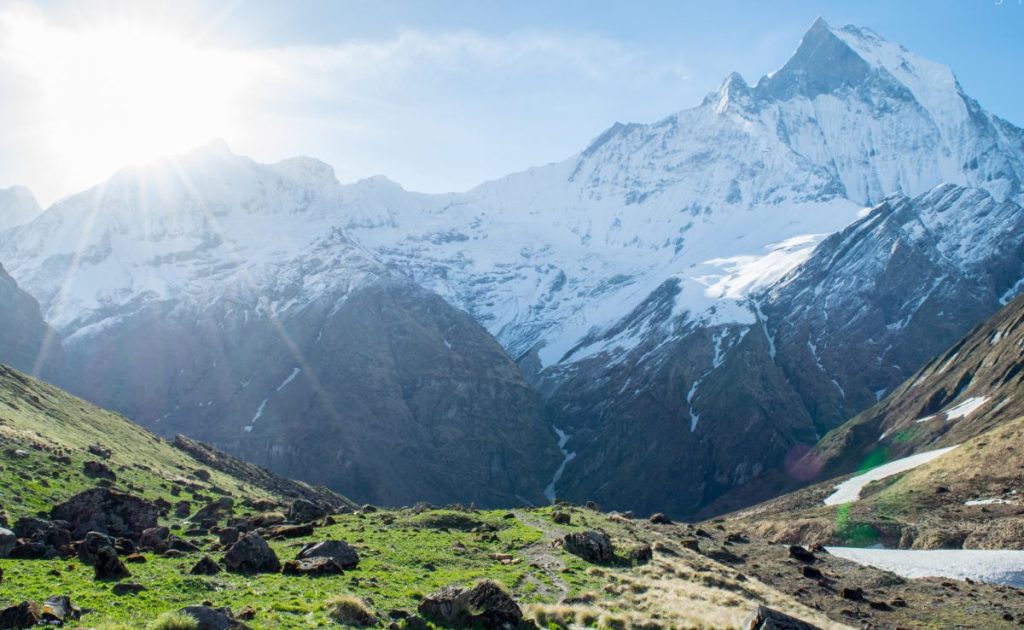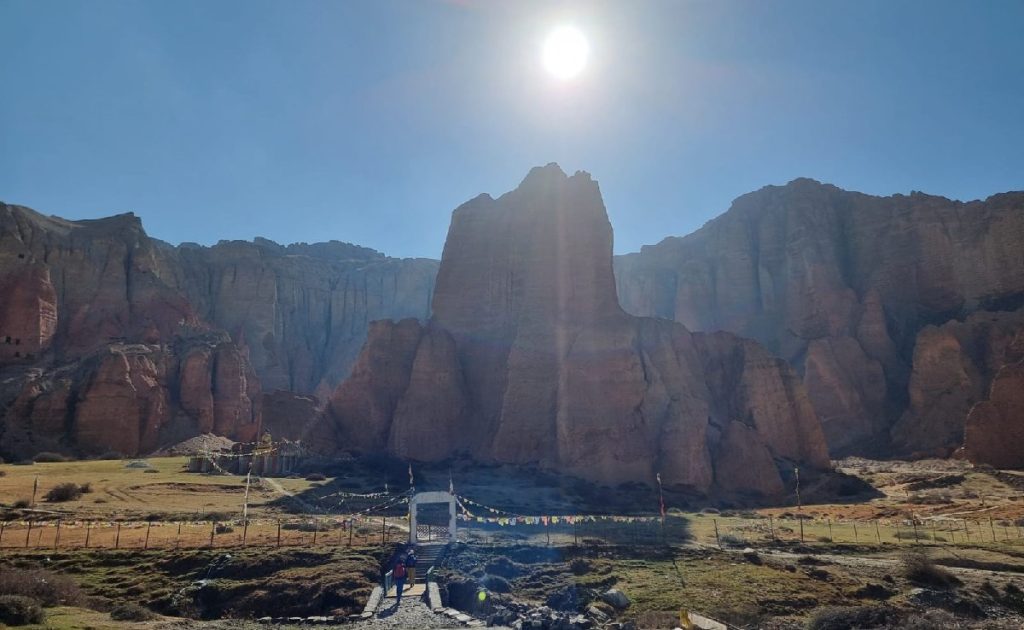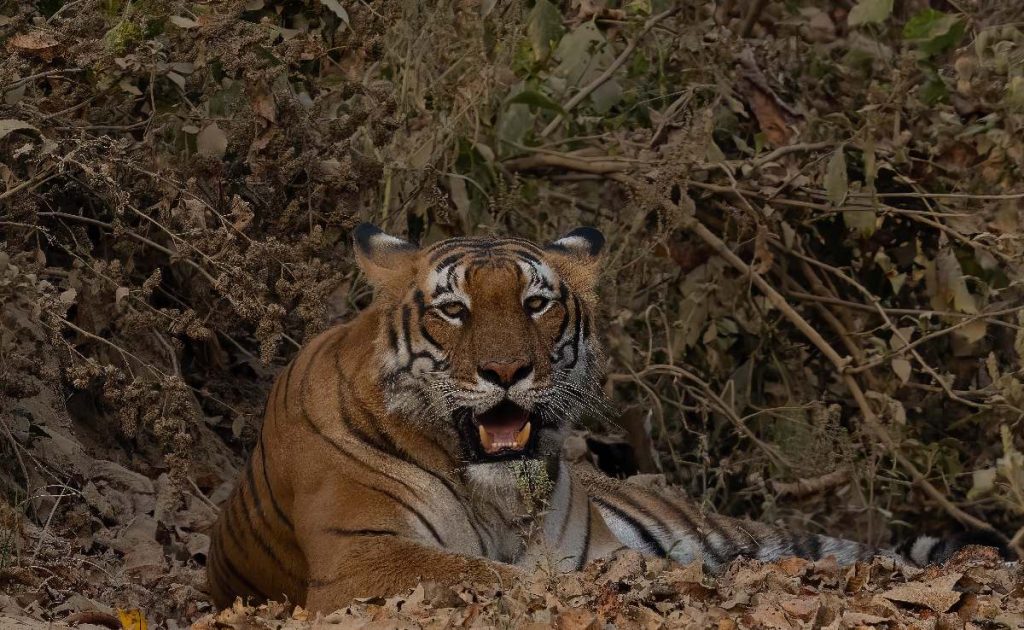
For many international travellers, Nepal is synonymous with the Himalayas, Everest, and trekking. Yet there is another side of Nepal that deserves global attention: a country of dense forests, grasslands, wetlands, rivers, rhinoceroses, crocodiles, elephants, vibrant local communities, and a Nepal tiger population that has become one of the world’s greatest wildlife conservation success stories.
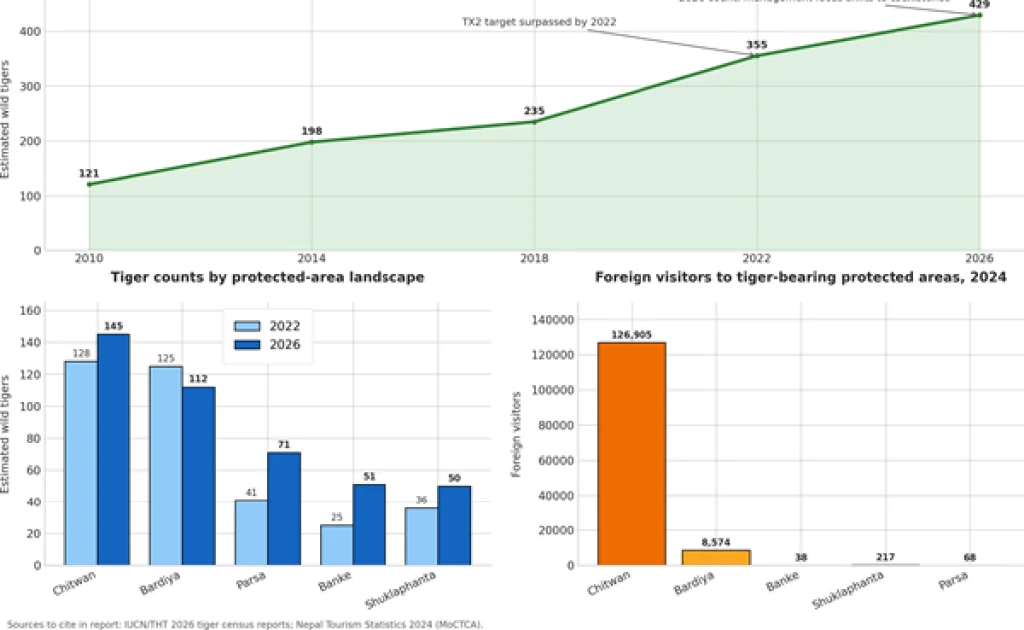
In 2026, Nepal announced that its wild tiger population had reached 429 individuals, up from 355 in 2022 and approximately 121 around 2010. This extraordinary recovery has positioned Nepal as one of the world’s leading examples of large carnivore conservation at a national scale.
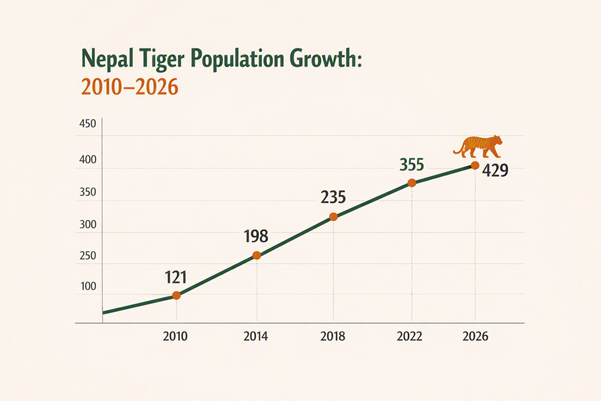
Figure 1. Nepal’s tiger population growth from approximately 121 in 2010 to 429 in 2026.
The Journey from 121 to 429 Tigers
Nepal’s tiger recovery did not happen overnight. Over more than a decade, government agencies, conservation organisations, local communities, researchers, and protected-area managers worked together to restore habitats, strengthen conservation measures, improve monitoring systems, and protect wildlife corridors.
The results have been impressive:
- Around 121 tigers in 2010
- 198 tigers in 2014
- 235 tigers in 2018
- 355 tigers in 2022
- 429 tigers in 2026
This achievement also contributed to Nepal becoming one of the first countries to surpass the global TX2 target, which aimed to double tiger numbers from 2010 levels.
Where Are Nepal’s Tigers?
The tiger population is concentrated within Nepal’s Terai Arc Landscape, one of South Asia’s most important conservation regions.
According to the 2026 census:
| Protected Area | Estimated Tigers, 2026 |
| Chitwan National Park | 145 |
| Bardiya National Park | 112 |
| Parsa National Park | 71 |
| Banke National Park | 51 |
| Shuklaphanta National Park | 50 |
Distribution of Nepal’s estimated tiger population across major protected areas in 2026.
Together, these protected areas form an interconnected conservation landscape supported by forests, wildlife corridors, buffer zones, and local communities.
A Different Way to Experience Nepal
The tiger story also highlights something many travellers overlook: Nepal is not only a mountain destination. It is also a world-class wildlife destination.
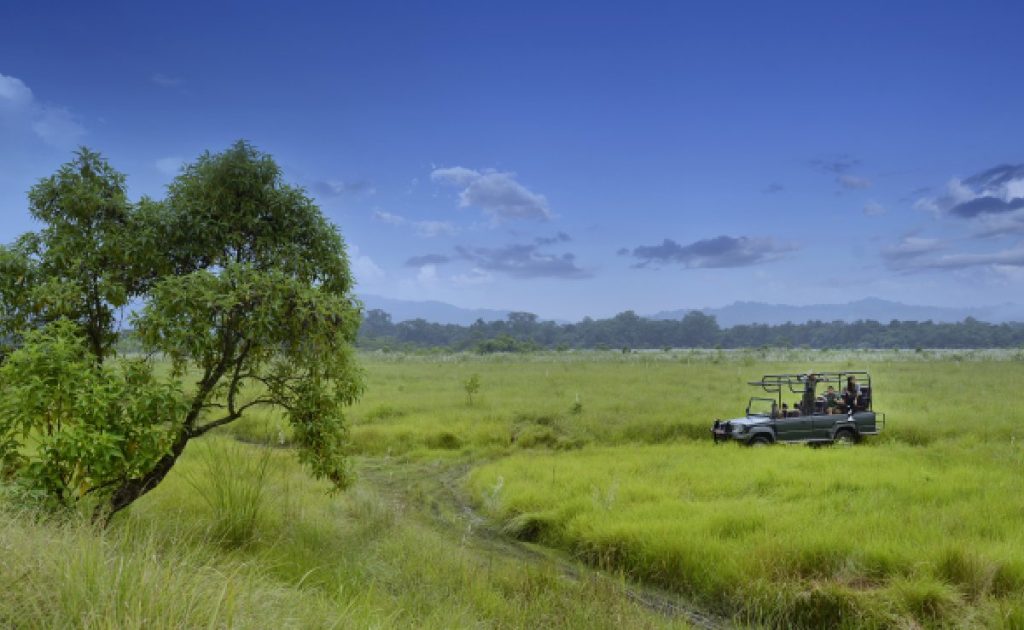
National parks such as Chitwan and Bardiya offer opportunities to experience:
- Jeep safaris
- Jungle walks
- Birdwatching
- Canoe excursions
- Wildlife interpretation programmes
- Community and homestay experiences
- Nature photography journeys
For travellers seeking meaningful encounters with nature, these landscapes reveal a completely different side of Nepal.
Why Conservation Matters for Tourism
Conservation success increases the attractiveness of a destination. At the same time, tourism can help support conservation when designed responsibly.
The report highlights how wildlife tourism can benefit local communities through guiding services, homestays, local food production, handicrafts, transportation, and tourism-related enterprises. Buffer-zone communities in places such as Amaltari and other community-based tourism destinations have demonstrated how biodiversity can create local economic opportunities while encouraging stewardship of natural resources.
This relationship creates a positive cycle: healthy ecosystems support wildlife, wildlife attracts visitors, visitors generate local income, local communities gain incentives to protect the landscape, and the landscape becomes stronger for future generations.
Regenerative Wildlife Tourism Cycle: Healthy ecosystems support wildlife recovery; wildlife attracts responsible visitors; visitors generate local livelihoods; local livelihoods strengthen community stewardship; and community stewardship protects the landscape for future generations.
Responsible Wildlife Travel in Nepal
Seeing a tiger in the wild is an extraordinary experience. However, responsible wildlife tourism is about much more than a tiger sighting.
At Himalayan Circuit, we believe responsible wildlife travel should include:
- Respecting park regulations and conservation guidelines
- Supporting local guides and communities
- Choosing ethical wildlife experiences
- Avoiding disturbance to animals
- Focusing on learning and interpretation rather than guaranteed sightings
- Appreciating the wider ecosystem, including birds, wetlands, forests, grasslands, and local cultures
A successful wildlife journey is measured not only by what is photographed, but by what is understood.
Beyond Tiger Recovery: The Era of coexistance
Perhaps the most important message emerging from Nepal’s conservation success is that the story is evolving. The challenge today is no longer whether Nepal can recover its tiger population, but whether people and wildlife can continue to coexist while maintaining healthy habitats, functioning corridors, community wellbeing, and sustainable tourism opportunities.
That is why the future of Nepal’s wildlife tourism is increasingly linked to regenerative tourism, an approach that supports ecosystems, strengthens communities, and creates meaningful visitor experiences at the same time.