Kathmandu Diary: Local Sacred Temples in Kathmandu Valley

When you think of Kathmandu Valley temples, you probably think of Pashupatinath, Nyatapola, or Kaasthamandap; however, when you’re in the city of temples, there are more temples in the city than you realize.

There are pagoda-style temples, monasteries, and stupas all over Kathmandu, and can be found just around the corner in every local community. Although they are not as well known as the Pashupatinath Temple or Swoyambhunath Stupa, Nepalese worship them as deities and guardians.

Although Nepal’s famous temples have hosted diverse ethnic groups, races, and traditions, they have maintained religious tolerance to the fullest extent. A Buddhist pilgrim site and a Hindu pilgrim site are both in the same area, as are Christians and Muslims exchanging smiles and living together.

This blog will showcase a few of those temples and highlight their significance to local communities:

  • Maitidevi:

The Maiti Devi Bhagwati Temple is located between Delhi Bazaar and Gyaneshwor and has been worshiped and maintained by Newar Vajracharyas for generations. The temple has been hosting morning and evening pujas with local priests and community members conducting pujas and other cultural activities.

Devotees come here mainly on Tuesdays, Wednesdays, and Sundays as devotees believe they will get what they ask for from Mathidevi during these days. Devotees believe that worship at this temple brings happiness to the mind and fulfills the desires of the heart.

Every year, a special fair is held here on the day of the dog festival, the ninth day of Dashain and Chaite Dashain. Decorated with many lights during Dashain, the temple is very beautiful and pleasant to visit.

  • Naxal Bhagawati:

Naxal Bhagwati is a temple dedicated to the Naxal goddess in Kathmandu, attracting hundreds of devotees every day. As one of Nepal’s most famous and oldest heritages, the Naxal Goddess is also known as Satya Swaroopini, meaning truth incarnate.

Also, Naxal is Goddess Aryamata, who fulfills all the wishes of her devotees. According to legend, the Temple of Women’s Consciousness is a shrine that encompasses concepts of sexuality, gender, and spirituality from East and West

It is also considered the ninth manifestation of the Naxal goddess Lord Durga and is visited by a large number of devotees during Dashain, especially during Asthami. Naxal Goddess Durga is known to protect her devotees from the manifestation of evil energies and evil spirits.

  • Shova Bhagawati:

Shobha Bhagawati is a shrine dedicated to the Hindu goddess Bhagawati in Kathmandu, Nepal. The temple of Shova Bhagawati is one of Nepal’s most important Shakti peeths. During Dashain, many devotees visit the temple and offer animal sacrifices on Navami, the ninth day of Dashain. 

The name ‘Shobha’, which is derived from Sanskrit, also refers to everything offered by ‘brightness’ or ‘32 lachin’. As the name suggests, the goddess Shobha is considered to be the goddess of perfection and glory. Goddess Shobha Bhagavati is believed to fulfill the wishes of her devotees.

Hindus regard Goddess Shova Bhagwati as a very powerful goddess who can fulfill the wishes of any of her devotees. The temple is a three-storey building with a copper roof and a bastion of all characteristics surrounding the temple and it is very beautiful and beautiful.

  • Ganesh temple, Gairidhara:

The Kamaladi Ganesh Temple near the Ghantaghar (Clock Tower) is dedicated to the Hindu god Ganesha, who is known for helping devotees clear obstacles. The temple also has small monuments dedicated to Durga, Mahadev, and Krishna Buddha and a beautiful pagoda-style structure.

The temple is packed with people on Tuesday, an auspicious day when devotees offer prayers to Lord Ganesha. Additionally, locals are also known to visit the temple when starting a new business, buying a new home, or buying a car to bless their success and happiness.

  • Bhatbhateni Temple Mothaa: Dyaa:

Located just across the Naxal Bhat Bhatbhaeni Street, it is very popular among Hadigaon residents and locals. The temple has rich wooden beams and an impressive exterior with stained glass panels depicting members of the Brahmayani and Astamatrika sects (goddess sects).

On the walls of the second floor, you can see home furnishings being offered, which are believed to inspire desire. In addition, they worship a Brahmin couple, and their blessings are known to cure children of their diseases.

It is believed that worshiping this temple will cure diseases of children, evil spirits and ghosts. There are many other deities in this beautiful temple. Every Sunday and Thursday, this temple is packed with worshippers.

The journey through the local sacred temples of the Kathmandu Valley is a pilgrimage for the soul. Exploring the local sacred temples of Kathmandu Valley provides insight into Nepal’s spiritual essence and highlights the profound interconnection of its varied cultural and religious traditions. 

The sacred temples of the Kathmandu Valley represent the soul-stirring beauty of Nepal’s cultural and spiritual mosaic, leaving an indelible mark on those who visit them. Experience Nepal’s rich tapestry of heritage through the Himalayan Circuit Treks to witness its soul, embodied in sacred stones, bright prayer flags, and unwavering devotion to its people.

Adventure Sports: Bhotekoshi River Rafting Adventure in Nepal

The Bhotekoshi River Rafting Tour is a perfect getaway for people seeking an adventure of a lifetime. The tour takes you through a breathtaking landscape, with glistening peaks and lush forests. It’s an experience that will leave you with memories that last a lifetime.

Bhotekoshi River is one of the most popular rafting destinations in Nepal. It originates from the Tibetan plateau and flows through the steep and narrow gorges of the Himalayas. The river is known for its challenging rapids, stunning scenery, and adrenaline-pumping adventure.

Getting to the Bhote Koshi River is easy from Kathmandu, which is a scenic 3 hour drive along the Pasang Lahamu Highway to Lamosanghu, where the river begins, and Dolalghat where it ends. 

The experts and experienced rafters find Bhotekoshi River to be the best place to experience thrilling and adventurous white water rafting in Nepal. 

Bhotekoshi river rafting tour highlights:

Bhotekoshi River Rafting tour in Nepal is a thrilling adventure that promises an unforgettable experience. Here are some highlights of the tour:

  • Challenging rapids: Bhotekoshi River is known for its challenging rapids, ranging from Class III to Class V. The rapids are steep and technical, providing an adrenaline-pumping experience for adventure enthusiasts.
  • Stunning scenery: The tour takes you through a picturesque landscape, with towering peaks, lush forests, and deep gorges. The river passes through remote villages, offering a glimpse into the local culture and traditions.
  • Experienced guides: The rafting tour is conducted under the guidance of experienced and trained rafting guides who are familiar with the river’s course and rapids. They ensure your safety and provide instructions on how to navigate through the rapids.
  • Adventure activities: Apart from rafting, the tour offers several adventure activities, including cliff jumping and swimming in the river’s crystal-clear waters. These activities provide an additional thrill to the rafting experience.
  • Cultural immersion: The tour allows you to immerse yourself in the local culture and traditions. You get to interact with the local people, taste the local cuisine, and learn about their way of life.

Bhotekoshi River Adventure Activities:

Nepal is one of the most popular countries for rafting and kayaking in the water sports arena. The rivers here provide great rafting and kayaking opportunities due to their natural state. 

The beauty and wilderness of Bhote Koshi serve the needs of thousands of tourists every year. Bhotekoshi originates in Tibet’s glaciers. There is also a large variety of flora and fauna on the site. 

As you ride along the high-speed, bumpy track, you will be treated to greenery, landscapes, and gorges. A lifetime experience of thrill and excitement awaits you on the Bhote Koshi River when you raft it.

Bhotekoshi River Rafting tour in Nepal offers a variety of adventure activities that can be enjoyed alongside the thrilling rafting experience. Here are some of the adventure activities that you can participate in during the tour:

  • Cliff Jumping: Cliff jumping is an activity that involves jumping off a cliff into the river’s clear waters. It’s a thrilling experience that offers an adrenaline rush and adds to the overall excitement of the tour.
  • Canyoning: Canyoning involves descending through the narrow and steep canyons with the help of ropes and other equipment. This adventure activity offers a unique and exciting way to explore the river’s terrain and natural beauty.
  • Swimming: The crystal-clear waters of the river offer an excellent opportunity for swimming. You can take a dip in the water and swim along with the river’s flow, enjoying the stunning scenery that surrounds you.
  • Bungee Jumping: Bungee jumping is an adventure activity that involves jumping off a high platform while being connected to a bungee cord. The tour includes a stop at the Last Resort, where you can experience the thrill of bungee jumping from a height of 160 meters.
  • Rock Climbing: Bhotekoshi River Rafting tour also offers rock climbing activities for adventure enthusiasts. The tour takes you to the natural rock formations around the river, where you can test your skills and strength.

Itinerary:

The tour starts with a scenic drive from Kathmandu to the rafting site. On the way, you’ll pass through picturesque villages and stunning landscapes, giving you a glimpse of the country’s rich cultural heritage.

After reaching the rafting site, you’ll receive a safety briefing and get your rafting gear, including a life jacket, helmet, and paddle. The guides will then give you an overview of the rafting course and the rapids you’ll encounter during the tour.

The Bhotekoshi River has rapids ranging from Class III to Class V, making it one of the most challenging rafting destinations in Nepal. You’ll navigate through steep drops, technical rapids, and powerful currents, all under the guidance of experienced rafting guides.

The tour takes about three to four hours, depending on the water level and the group’s skill level. During the tour, you’ll also get a chance to jump off high cliffs and swim in the crystal-clear waters of the river.

After the tour, you’ll enjoy a delicious lunch on the riverbank, and the guides will share their experience and stories from the tour. You can also take a dip in the river to cool off after the adrenaline rush of rafting.

Best Season for Bhotekoshi River Rafting:

The best season for Bhotekoshi River Rafting tour in Nepal is during the months of September to December and March to May. 

During these months, the weather is mostly dry, and the river water level is high due to snow melting from the Himalayas. The rapids are more challenging and exciting during this time, providing an adrenaline-pumping experience for adventure enthusiasts.

In September to December, the weather is clear, and the air is crisp, with moderate temperatures during the day and cold nights. The water level of the river is high, providing excellent conditions for rafting. The river’s surroundings are lush green, with blooming wildflowers and a picturesque landscape.

March to May is another excellent season for Bhotekoshi River Rafting tour. The weather is warm, and the river is high with the melting of snow from the Himalayas. The landscape is green, with blooming rhododendron flowers, which adds to the overall beauty of the region.

Bhotekoshi River Rafting Tour is a perfect getaway for adventure seekers looking for an adrenaline-pumping experience. 

The tour offers a perfect blend of stunning scenery, challenging rapids, and cultural immersion, making it a memorable experience for anyone who loves adventure. 

So, pack your bags, grab your gear, and get ready for the adventure of a lifetime with the Himalayan Circuit.


Festivals & Culture: Dashain Festival – A Major Celebration in Nepal

Hindus in Nepal celebrate Dashain every year for fifteen days, making it the most auspicious and long festival. The festival occurs between September and October during the autumn season.

The Dashain festival is also known as Vijaya Dashami, and it is celebrated by Hindus in Nepal and Nepalese diaspora worldwide.

Dashain Festival brings families together, and markets fill with shoppers buying gifts and clothing. A variety of animals are prepared for slaughter as an offering to the deity, such as goats, sheep, buffalos, chickens, and ducks. 

The majority of businesses and firms remain closed during the festival. Dashain is a festival in Nepal celebrated by the entire country gathering with their families and friends.

History of Dashain Festival:

Dashain, one of the largest festivals in Nepal, has a rich history dating back thousands of years. This festival commemorates the triumph of good over evil spirits or demons according to Hindu mythology.

According to Hindu mythology, Goddess Durga won a war against the evil spirit Mahishasur that lasted for nine days, despite the demon’s power, despite the demon’s power, Durga was victorious. 

On the tenth day, Maa Durga killed the demon and triumphed over him, symbolizing the victory of good over evil. Dashain is also related to Ramayana’s victory over Ravana, according to Hindu beliefs.

How are different days in Dashain?

Dashain festival, which lasts 15 days, is celebrated with great joy and excitement. Among the fifteen days, the first, seventh, eighth, ninth, tenth, and fifteenth are the most important.

Day 1: Ghatasthapa

“Ghatasthapana” marks the beginning of Dashain and involves placing a Kalash (metal pot) in honor of Goddess Durga, covering it with cow dung, and planting barley seeds. Afterward, Kalash is placed in the center of a rectangular sand block, and the rest of the sand is seeded as well.

Day 7: Fulpati or Saptami

During this day, Fulpati (holy leaves from bel trees, Ashok trees, sugar cane, etc.) are brought to Hanuman Dhoka, where the Dasain Ghar (main court) and Mui Kot (main gate) are located. This day is celebrated with a majestic fua-de-joy by the Nepalese Army at Tudikhel.

Day 8: MahaAshtami

This day is considered Kal Ratri, and animal sacrifices are held at different temples and shrines honoring the Goddess Durga.

Day 9: MahaNawami

This day, Hanuman Dhoka Mul Kot Dashain Ghar and other temples dedicated to Goddess Durga perform a special puja. Animals are sacrificed, and weapons are worshipped. Taleju temple at Hanuman Dhoka is only open once a year on this day.

Day 10: Vijayadashami

The tenth day of Dashain is known as Dashami, which is the main day of the celebration. On this day, elders offer tika (rice, yoghurt, and vermilion), jamara, and blessings of success and well-being to the younger. 

This day brings family members and relatives together for celebrations, greetings, exchanges of greetings, receiving tikas and jamaras, wearing new clothes, eating delicious foods, playing swings, and having fun.

Day 15: Kojagrat Purnima

Kojagrat Purnima is the fifteenth and last day of Dashain, which is the full moon day. Kojagrata means “who is awake”. A Hindu god of wealth, Laxmi, is believed to come to earth on this particular day and give wealth to people who are awake throughout the night.

How do People Celebrate the Dashain Festival in Nepal?

There are numerous celebrations throughout Nepal that you can attend to learn more about Nepal’s religious culture, such as flying Dashain kites, buying new clothes, eating meats, playing swings, and playing cards.

  • The practice of kite-flying is believed to be an important way to remind the gods not to rain any longer. The pure blue sky is filled with colorful kites of various sizes and shapes during the Dashain Festival when people of all ages fly kites with cheerful laughter and happiness. 
  • Dashain is celebrated by playing cards with family and friends and joking around.
  • Dashain Holidays are an important time for shopping and buying new clothes, particularly in rural areas where people buy new clothes and goods during the holiday season. The festive season brings discounts in almost all of the country’s stores, which makes shopping more appealing.
  • A number of exhibitions and festivities will also be held in small bazaars during Nepal’s biggest festival, including ferries wheels and traditional swings. In the cities, you’ll also find commercial exhibitions.

Why is Dashain such a grand festival to Nepalese?

As Dashain approaches, one can observe clear skies, kids running around in their new clothes, and families gathered under the same roof. Moreover, schools and colleges are closed because Dashain is widely observed and it’s great to have children around.

People who live far away save money, buy gifts, and visit their loved ones in their villages. There is a sense of harmony formed by the Dashain festival as it brings everyone together. 

Dashain Festival means purchasing new clothes, and curtains, cleaning the house and eating delicious food. Dashain is enjoyed by everyone regardless of their age since this festival is enjoyed by everyone.

Final Words:

Dashain Festival Tour in Nepal is organized as a cultural tour during the national festival Dashain. By observing the faiths, festivals, and joys of Nepali people, this program allows you to gain an understanding of Nepal and Nepalese culture.

Himalayan Circuit organizes everything for you if you are planning a tour of Nepal during Dashain and want to celebrate in the village or in town.

Spiritual & Wellness: Discover the History of Rani Pokhari

Rani Pokhari Pond, originally known as the Nhu Pukhu Pond or New Pond in Nepal, is a historic artificial pond in Kathmandu. It dates back to the 17th century and is located on the eastern side of the city limits.

The pond has both religious and aesthetic significance in Kathmandu. The Rani Pokhari was built by King Pratap Malla, one of the most prominent monarchs under the Malla dynasty in Nepal, in 1670 AD.

East of Ranipokhari is a clock tower and a Tri Chandra college. West of Rani Pokhari is the Durbar High School, built by Junga Bahadur Rana and one of the oldest in Nepal. Ratna Park and Biswajyoti Cinema are also located north and south of the pond.

This pond was constructed as a means of comforting Pratap Malla’s grieving queen after his son passed away. The pond was sanctified by several holy places within Nepal and India, including Gosaikunda, Muktinath, Badrinath, and Kedarnath.

History of Ranipokhari:

The pond was built by King Pratap Malla to appease his mourning queen after her eldest son Chakravartendra Malla died in 1725 BS. A statue of Pratap Malla and his sons Mohipaten Malla and Chakravartendra Malla was also built on the south bank of the pond. 

After the temple gate collapsed in the 1990 BS earthquake, Juddhashamsher gave the Ranipokhari temple its current appearance. The temple was once again severely damaged by a 7.8 magnitude earthquake on Baisakh 12, 2072 BS. 

The reconstruction work was inaugurated by President Bidhya Devi Bhandari on Baisakh 12, 2073 BS, one year after the earthquake. Currently, the reconstruction of the temple has been completed in Kartik 2077 BS.

Cultural & Religious Significance:

Ranipokhari holds immense cultural and rеligious significance for the people of Kathmandu. The pond area is considered sacred and it is a popular site for religious and cultural activities. It is surrounded by a beautiful and intricately designed railing adding to the spiritual ambiance.

Annually during the Chhath festival, dеvotееs gather at Ranipokhari to offer prayers to the setting sun and create a sеrеnе and picturesque scene. The pond is also an integral part of various religious processions and events making it a focal point for cultural and spiritual activities in the city.

Balgopaleshwor Temple is only open once every year on Bhaitika, so people without brothers or sisters to exchange Tihar tika visit the temple to receive and offer Bhaitika. Traditionally, those without siblings or those who are unable to visit their sisters because of various reasons reach the temple to receive Bhaitika.

Myth related to Ranipokhari:

According to legend, King Pratap Malla always bathed in Ranipokhari after the pool was constructed and a statue of him was kept on an elephant. When the king came to bathe in the pool, he met a little girl and fell in love with her. The girl became pregnant as a result of the intercourse between her and the king. 

Observing that the king was also losing weight. They became worried and searched for the cause of the king’s weight loss, and discovered that the king was having an affair with the little girl. Additionally, they learned that the little girl was pregnant. 

Upon discovering their love story, brothers and Guru Purohits tried to control that little girl using different techniques. Finally, they built the gigantic elephant with the idols of a king, queen, and prince on it and placed the fetus of a pregnant little girl on its foot. 

Legend has it that the idol was constructed in such a way that if the front foot of the elephant trampled the baby and fetus, it would not hurt again.

Highlights and Attractions of the Place:

  • This pond is surrounded by the Rani Pokhari Temple, a magnificent pagoda-style temple dedicated to Lord Shiva. There is a beautiful blend of Nepali and South Indian architecture in the temple, which exhibits exquisite craftsmanship.
  • Ranipokhari provides a tranquil environment amidst the city’s hustle and bustle. The pond attracts many visitors looking to escape the hustle and bustle of city life and enjoy the peaceful surroundings.
  • Rani Pokhari has historical and cultural significance, as well as impressive architecture, which makes it a favorite destination for photographers. A scenic lake and its surrounding areas provide excellent photographic opportunities.

To conclude, Ranipokhari is more than just a pond; it is a reflection of Kathmandu’s historical, cultural, and architectural heritage. Ranipokhari remains a jewel in the heart of the city, inviting all to delve into the rich tapestry of Nepal’s past in the presence of its serenity and intricacies.

Pokhara Diary: Best Luxury Hotels and Stays for Your Pokhara Trip

Pokhara, a beautiful city nestled in the lap of the Himalayas, is a popular tourist destination in Nepal. It is known for its breathtaking natural beauty, serene lakes, and the magnificent Annapurna mountain range. 

There are many luxury accommodations in Pokhara that offer a range of amenities and services to make your stay comfortable and memorable. From luxurious rooms with stunning views to fine dining restaurants, these accommodations have it all. 

One of the main attractions of the luxury accommodations in Pokhara is the stunning views they offer. Many of these accommodations are located on the hillside, providing panoramic views of the city and the surrounding mountains.

If you are looking for a luxurious and comfortable stay in Pokhara, then you should definitely consider staying in one of the luxury accommodations. 

The Himalayan Circuit presents you some of the best luxury accommodations in Pokhara that are sure to make your stay a memorable one.

Introduction: Sunshine Resort Pokhara is a luxurious hotel located in the beautiful city of Pokhara. For travelers who wish to relax and take in the scenic beauty of the Himalayas, this is an ideal accommodation.

Location: The hotel is located in the tranquil neighborhood of Lake Side, just a few minutes’ walk from the famous Fewa Lake. It is surrounded by lush green forests, offering a peaceful and serene atmosphere.

Rooms: Sunshine Resort Pokhara offers well-appointed rooms with modern amenities, including air conditioning, flat-screen TVs, and private bathrooms with hot water. The rooms are spacious, comfortable, and elegantly decorated, ensuring a comfortable stay for you.

Hotel category: The hotel is categorized as a luxury resort, offering world-class facilities and services to its guests.

Uniqueness: The hotel’s unique feature is its location, which offers stunning views of the Himalayan mountain range. The hotel also has a beautiful garden where you can relax and enjoy the natural beauty of the surrounding area.

Attraction near to these accommodations: The hotel is located near many popular tourist attractions, including Fewa Lake, World Peace Pagoda, Mahendra Cave, and Devi’s Fall. You can easily explore these attractions and enjoy the natural beauty of the area.

Specialty: The hotel’s specialty is its exceptional service and attention to detail. The staff is friendly and accommodating, ensuring that guests have a memorable stay.

Shopping: The hotel is located near many shopping areas, including the local market and the Pokhara Shopping Center. You can explore these areas and buy souvenirs and other items to take back home.

  • Sarangkot Mountain Lodge: 

Introduction: Sarangkot Mountain Lodge is a cozy accommodation nestled in the foothills of the majestic Himalayas, offering breathtaking views of the Annapurna range and the Pokhara Valley.

Location: The lodge is located in Sarangkot, a village in the Kaski district of Nepal, about 12 km from the city of Pokhara.

Rooms: The lodge has well-appointed rooms that offer modern amenities like en-suite bathrooms, comfortable beds, and free Wi-Fi. The rooms are tastefully decorated and provide stunning views of the Himalayan range.

Hotel category: Sarangkot Mountain Lodge is a mid-range hotel, offering comfortable and affordable accommodations to travelers.

Uniqueness: The lodge is unique in its location, surrounded by lush green forests and towering mountain peaks. It provides a peaceful and serene environment to travelers who want to escape the hustle and bustle of city life.

Attraction near to these accommodations: The lodge is located close to several popular tourist attractions like the World Peace Pagoda, Phewa Lake, and the Bindhyabasini Temple. It also provides easy access to several hiking trails in the Annapurna region.

Specialty: The lodge specializes in providing personalized services to its guests. The friendly staff goes out of their way to ensure that the guests have a comfortable and memorable stay. The lodge also organizes several activities like guided hikes, mountain biking, and paragliding for the adventurous traveler.

Shopping: The lodge is located in a small village, and there are limited shopping options nearby. However, you can purchase souvenirs and handicrafts at the nearby Pokhara city, which is known for its vibrant markets and shopping areas.

  • Bar Peepal Resort: 

Introduction: Bar Peepal Resort is a beautiful resort located in Pokhara, Nepal. Surrounded by lush greenery and overlooking the serene Phewa Lake, this resort offers a perfect getaway from the hustle and bustle of city life.

Location: The resort is located in the heart of Pokhara, just a few minutes away from the famous Fewa Lake. The location is ideal for tourists who wish to explore the city’s natural beauty and cultural heritage.

Rooms: The resort features well-appointed rooms that are designed to provide you a comfortable and relaxing stay. Each room is equipped with modern amenities such as air conditioning, flat-screen TV, minibar, and free Wi-Fi.

Hotel category: Bar Peepal Resort is a luxurious 4-star hotel that offers top-notch services and facilities for you. The resort is known for its exceptional hospitality and personalized services.

Uniqueness: What sets Bar Peepal Resort apart from other hotels in Pokhara is its breathtaking location, surrounded by lush greenery and offering stunning views of the Phewa Lake. The resort also features a beautiful garden where you can relax and unwind.

Attractions near to these accommodations:

There are several attractions near the resort, including the famous Fewa Lake, Devi’s Fall, World Peace Pagoda, and the International Mountain Museum.

Specialty:

The resort’s specialty is its fine dining restaurant, which offers a wide range of Nepali and international cuisines. The restaurant uses only the freshest and highest quality ingredients to ensure a memorable dining experience.

Shopping:

Near the resort are a number of shops and markets where you can indulge in some shopping. The Lakeside Market is a popular shopping destination, offering a variety of souvenirs, handicrafts, and clothing.

  • Temple Tree Resort & Spa: 

Introduction: Temple Tree Resort & Spa is a luxurious hotel located in the beautiful city of Pokhara, Nepal. The hotel is known for its tranquil surroundings and stunning views of the Annapurna mountain range.

Location: The Temple Tree Resort & Spa is situated in the heart of Pokhara, just a few minutes away from the famous Fewa Lake. 

Rooms: The hotel features 47 spacious and elegantly designed rooms that offer all the modern amenities and comfort to the guests. Each room is tastefully decorated with a mix of traditional and contemporary elements, and comes equipped with air conditioning, flat-screen TV, minibar, and private bathroom.

Hotel category: Temple Tree Resort & Spa is a 4-star hotel that offers world-class amenities and services to its guests. It is a popular choice among both leisure and business travelers, as it offers a perfect blend of comfort and convenience.

Uniqueness: One of the unique features of Temple Tree Resort & Spa is its traditional Nepali architecture and decor, which gives the hotel a distinctive charm and character. The hotel also has a beautiful garden with exotic plants and flowers, creating a serene and peaceful atmosphere.

Attraction near to these accommodations: The hotel is located close to several popular tourist attractions, including the Fewa Lake, World Peace Pagoda, International Mountain Museum, Davis Falls, and Gupteshwor Mahadev Cave.

Specialty: The Temple Tree Resort & Spa is known for its exceptional hospitality and personalized services. You can take advantage of a variety of hotel facilities and services, such as the hotel’s spa, swimming pool, fitness center, and on-site restaurant.

Shopping: The hotel is located in a prime location that offers easy access to several shopping areas and markets. The Lakeside Market, Pokhara Handicraft Center, and Old Bazaar are some of the popular shopping areas near the hotel.

  • Rupakot Resort: 

Introduction: Rupakot Resort is a beautiful accommodation option located in Pokhara, Nepal. The resort provides a peaceful and serene environment, surrounded by lush greenery and beautiful landscapes.

Location: Rupakot Resort is situated on a hilltop in Rupakot, just a short drive away from Pokhara city center. 

Rooms: The resort offers a variety of comfortable and spacious rooms, including standard rooms, deluxe rooms, and suites. All rooms are elegantly decorated and equipped with modern amenities to ensure a comfortable stay.

Hotel category: Rupakot Resort is a luxury hotel, offering world-class facilities and services.

Uniqueness: You can enjoy breathtaking views of the surrounding mountains and valleys from the resort’s unique hilltop location. The resort also offers a range of outdoor activities, including hiking, trekking, and mountain biking, making it an ideal destination for adventure enthusiasts.

Attraction near to these accommodations: The resort is located close to several popular tourist attractions, including the World Peace Pagoda, Phewa Lake, and the Bindhya Basini Temple.

Specialty: Rupakot Resort is known for its exceptional hospitality, personalized service, and attention to detail. There are a variety of facilities and services available at the resort, including a spa, swimming pool, restaurant, and bar.

Shopping: The resort is located in a peaceful and secluded area, away from the hustle and bustle of the city. However, you can explore the local markets and shops in Pokhara city center, which is just a short drive away from the resort.

Pokhara is a beautiful city in Nepal that offers a range of luxury accommodation options for travelers looking for comfort, style, and convenience. From lakeside resorts to hilltop retreats, the city has something to suit every taste and budget. 

Whether you’re looking for a romantic getaway or an adventure-filled vacation, the best luxury accommodation in Pokhara is sure to exceed your expectations. 

So, pack your bags, embark on an adventure and book your stay with Himalayan Circuit for a getaway that promises to be unforgettable. Get ready to indulge in the best that Pokhara has to offer and create memories that will last a lifetime!

Kathmandu Diary: Discover the Best Day Hikes in Kathmandu Valley

Nepal is a magical country where you can enjoy nature, wildlife, and breathtaking views. The tall mountains and Himalayan beauty provide breathtaking view. These peaks are also a paradise for adventurers, and you can always find hikers and mountaineers eager to conquer them.

The Kathmandu valley can still be explored by walking for one or two days if you don’t have the time or fitness for trekking. A trip to sub-alpine forests and a quiet ambiance is the perfect way to escape daily stress. The hikes can be done in one day, and are ideal for older and younger hikers alike.

A hike is your best bet if you’re in Kathmandu for just a few days but still wants to get a whiff of mountain air – they’re inexpensive, noteworthy, gorgeous, and great for your health! 

The Himalayan Circuit offers the 10 best hiking trails around Kathmandu valley, so you can pick the one you like best. So, get your hiking boots on!

  • Nagarkot – Changu Narayan Hiking:

Nagarkot – Changu Narayan hiking is a popular hike in Kathmandu Valley that combines scenic views of the Himalayas with cultural heritage sites. The trek starts in Nagarkot, a hill station famous for its sunrise views over the Himalayas, and ends in Changu Narayan, an ancient Hindu temple dedicated to Lord Vishnu. 

The trail passes through terraced fields, traditional villages, and dense forests, offering a unique blend of natural beauty and cultural richness. Hiking this easy trail is best suited to escaping the daily hustle and bustle of daily life and requires moderate physical fitness.

  • Shivapuri Hiking:

Shivapuri Hiking is a popular trek in Kathmandu Valley that takes you through the Shivapuri National Park, located on the northern outskirts of Kathmandu. The trek offers a mix of natural beauty and cultural significance, as you pass by forests, traditional villages, and Hindu temples. 

This hike starts and ends in Kathmandu and can be completed in a day or two, depending on your pace. It is a relatively easy trek and suitable for people of all ages and fitness levels. The trek provides scenic views of the Kathmandu valley, the Himalayas, and diverse flora and fauna of the national park.

  • Chisapani Hiking:

Chisapani Hiking is a hike in Kathmandu Valley that offers stunning views of the Himalayas and a chance to experience rural life. The trek starts from Sundarijal, on the outskirts of Kathmandu, and ends in Chisapani, a hilltop village located near the border with Tibet. 

The trail passes through dense forests, traditional villages, and terraced fields, providing a unique blend of natural beauty and cultural richness. The hike is typically completed in 2-3 days and is considered relatively easy, making it suitable for people of all ages and fitness levels. 

The highlight of the trek is the panoramic views of the Himalayas, including peaks such as Langtang Lirung, Ganesh Himal, and Annapurna.

  • Champadevi Hiking:

Champadevi Hiking is a hike in Kathmandu Valley that takes you to the top of Champadevi Hill, located on the outskirts of Kathmandu. The trek offers scenic views of the Kathmandu valley and the Himalayas, as well as a chance to experience rural life in the surrounding villages. 

The trail passes through dense forests, traditional villages, and terraced fields, providing a unique blend of natural beauty and cultural richness. The trek can be completed in a day and is considered relatively easy, making it suitable for people of all ages and fitness levels. 

The top of Champadevi Hill provides panoramic views of the Himalayas and the Kathmandu valley, making it a popular destination for sunrise and sunset views. Additionally, the hill is also a pilgrimage site for Hindus and Buddhists, and there are several temples and shrines located at the top.

  • Nagarjuna Hiking (Jamacho):

Nagarjuna Hiking (Jamacho) is a popular hike in Kathmandu Valley that takes you to the top of Nagarjuna Hill, located near the village of Jamacho. The trek offers scenic views of the Kathmandu valley and the Himalayas, as well as a chance to experience rural life in the surrounding villages. 

The trail passes through dense forests, traditional villages, and terraced fields, providing a unique blend of natural beauty and cultural richness. The trek can be completed in a day and is considered relatively easy, making it suitable for people of all ages and fitness levels. 

The top of Nagarjuna Hill provides panoramic views of the Himalayas and the Kathmandu valley, making it a popular destination for sunrise and sunset views. Additionally, the hill is also a pilgrimage site for Buddhists, and there is a Buddhist monastery located at the top.

Hiking around the Kathmandu valley is the perfect way to experience Nepal in all its glory, as it is cheaper, easier, faster, and sometimes even more rewarding than trekking. 

Get away from your busy schedule next time you’re in Nepal by taking a hike with the Himalayan circuit. Take a walk around Kathmandu and make some unforgettable memories! Get off the beaten path!

Rara Lake Tour

Rara Lake, the deepest and biggest freshwater lake in Nepal, is a hidden treasure deep within the Himalayas, making it an ideal spot for relaxing and enjoying nature. You will discover incredible landscapes, diverse natural features, and authentic culture during your visit to this hidden gem of Nepal.

A Rara lake tour is a less crowded eco-tourism destination in the heart of a natural haven in Nepal. Here you can experience an off-road tour of Nepal, which shows the typical lifestyle, culture, and scenery of the country, all of which are quite different from the rest.

A unique combination of incredible beauty that will captivate hikers and tourists alike, the National Park surrounds the lake with pine, spruce, juniper, and coniferous forests, including rare and vulnerable species, and offers incredible views of the snowcapped Himalayan milky peak at its top.

Rara Lake is one of Nepal’s least-explored regions, yet it offers mind-blowing natural beauty. A rise in tourist flow can benefit the local economy and improve the quality of life for locals. The promotion of steamy jungles, sparkling lakes, snowcapped mountains, spectacular scenery, and cultural diversity will attract tourists and provide income for local communities.

Tour Highlights:

  • Visit Rara Lake and enjoy its scenic beauty and tranquility.
  • Explore the rich biodiversity of Rara National Park.
  • Enjoy a tour through magnificent pine, birch, and rhododendron forests. 
  • Several activities are available around Rara Lake, including horseback riding, biking, jungle safaris, and boating. 
  • A scenic drive to Nepal’s deepest and largest lake.

Things to do in Rara:

  • Get the amazing view of Park boating in Rara Lake:

Boating can be a fun, and relaxing way to enjoy nature surrounded by the beautiful Rara Lake. There is an absolutely breathtaking view of the hills, jungles, and clear sky here.

You can enjoy the beautiful view of Rara, the largest lake in Nepal, and its surrounding mountain greenery and variety of fish and water plants while boating in the clear water.

  • Take a hike to observe nature at its best:

You can hike nearby hills for more close-up views of the mountain and the lake, and you will meet amazing and friendly people in this area. Also, hiking in Rara Lake offers the opportunity to see rare birds and wildflowers that exist only in that area.  

While hiking, you will also be able to see the surrounding area and the amazing view of nature without being disturbed by any artificial or other interference. Visiting this site provides the opportunity to be very close to nature and experience God’s creation in its original form.

Hiking and walking through this area with your friends and enjoying the greenery and different flora and fauna will be a great experience for anyone who really loves nature and its beauty.

  • Sightseeing:

If you would like to see various types of plants and animals in one place, you can visit the area’s national park. Also, the lakeside view and greenery hills make this place very popular.

The largest lake in the country is shaped and sized in such a striking way that it provides peace for the viewer’s eyes. Walking or riding a horse through the national park gives us an interesting view of the park.

It is also possible to see a variety of flower types, birds, and insects. Additionally, a deep blue freshwater lake and a green forest make it ideal for taking pictures of the scenery or mountains.

  • Set the hammock and sleep in tent:

After traveling for a whole day, you may appreciate the warmth of a campfire after facing the cold mountain breeze. I think it would be interesting to have a campfire with a group of friends, where you can involve in singing and dancing as well.

Get a sleeping bag, find a shady spot, have some drinks and relax. If you don’t have a tent of your own, you can rent a room or tent at one of the nearby hotels. The beauty of the mountains and the stellar sky make camping the ideal activity for those who seek true luxury 

  • Jungle Safari:

Jungle safaris provide you with an opportunity to see different kinds of animals, birds, and plants throughout the jungle.

A jungle safari gives you the opportunity to get up close and personal with different animals and plants.

Best time to visit Rara Lake:

The biggest and deepest freshwater lake in Nepal is Rara Lake. The area is beautiful and serene throughout the year, making it a fascinating place to visit. This region offers mind-blowing natural beauty along with cultural value, lifestyle, and rural settlements.

Traveling to this natural wonder will take about two weeks, starting in Kathmandu, during which you will see scenic views and a variety of animals. Embark on a trip to the highest lake in Nepal with the Himalayan Circuit and make your dreams come true.

Langtang Valley Trekking

Trekking through the Langtang Valley offers one of Nepal’s most scenic routes, and it was once the favorite of trekkers seeking outstanding landscapes, authentic culture, and heartwarming hospitality in delightful guest houses.

A journey through Langtang valley gives you the opportunity to see dramatic Langtang Himalayan ranges, cattle grazing meadows, streams, rhododendron and pine forests, and Buddhist cultural sites.

Langtang Valley Trek is a fantastic family trek in Nepal that offers a variety of experiences for all ages. The trek offers the best views of the trans-Himalayan landscape, the Tibetan plateau, and Tibetan culture and traditions. 

The Langtang Valley Trek route offers a more leisurely experience than other trekking routes, as it ascends gradually through rocky farmlands and dense subtropical Langtang forests, making it suitable for old and young trekkers alike.

Moreover, the trek offers spectacular views of different peaks including Langtang Lirung, Langtang Ri, Changbu, Langshisha Ri, Gangchenpo, Yala Peak and many other neighboring peaks. 

Trip Highlight:

  • Magnificent Panorama Scenarios:

The trip takes you through sparsely populated and remote parts, but the breathtaking views of the Langtang Lirung (7324m), Gangchempo (7205m), Porong Ri (7292m), and Yala peak (5520m) leave you speechless.

Additionally, the glacier moraine vistas will provide you with an excellent view of Langtang Lirung, which stands out beautifully against the clear blue sky.

  • Perfect Family Trekking Route in Nepal:

Langtang valley is ideally suited for families with children who wish to take them away from the hectic pace of everyday life. 

Family treks in Langtang Valley are short and well-maintained, allowing you and your children to experience pristine nature and culture.

  • Kyanjin Gompa (3870m):

Kyanjin Gompa is a great place to discover hidden natural beauty in the Langtang Valley. In the village, you can also find monasteries and a cheese factory that makes some of the best cheese around Langtang. 

You will gain a deeper understanding of the locals’ lives through a visit to Kyanjin village or Kyanjing gompa. Interacting with the local communities and taking photos of their children are among the trek’s highlights.

  • Langtang National Park (Buffer Zone):

A popular park among nature lovers, Langtang National Park blends natural scenery and a colorful bounty of wildlife, including a variety of flora and fauna. 

There are several types of wildlife you can see in the Langtang Valley Trek, including red pandas, snow leopards, Himalayan Thars, wild sheep, and yaks. 

There are also more than 250 species of birds at the Himalayan Park, including the Himalayan Monal and Satyr Tragopan.

This beautiful park gives you a chance to see the wild vegetation of Nepal in its natural habitat while also being surrounded by lush natural beauty.

  • Culture and festival of Tamangs:

Among the main settlements in the valley are the Tamang, Sherpa, and Bhote tribes, each with a unique culture reflected in their homes, monasteries, and chortens. 

The valley is home to a wide variety of cultures, customs, rituals, and perspectives on life. The Langtang valley trek offers a chance to experience the exquisite beauty of this valley.

  • Sacred Gosainkunda Lakes (4,380 Metres):

There is a holy lake called Gosainkunda in Langtang, which is one of the highlights of this region. Saraswati Kunda, Bhairab Kunda, Surya Kunda, Naga Kunda, and Gosainkunda are among the most fascinating and popular lakes in the region.

Further, Gosainkunda is also worshipped on special occasions by Hindus and Buddhists. In addition, Langtang Tamang Heritage Trek offers you the best chance to experience local religion, culture, and festivals.

Alternative Treks around the Langtang Valley:

There are a number of popular trekking routes surrounding the Langtang valley trek, such as Tamang Heritage Trail, Langtang Valley Ganjala Pass Trek, Helambu Circuit Trek, and Pangsang Pass with Rubby Valley Trek. 

The Langtang valley trek is best to explore the sacred Gosaikunda Lake through Gosainkunda Pass Trek, and Gosainkunda Lake Trek.

Langtang Valley Trek: When is the best time to trek?

It is best to trek the Langtang Valley Trek during the fall season (September – mid-December) and spring season (March-May). The climate is moderate and pleasant, and the views are beautiful, but it can still be very cold at night. 

The Langtang Valley Trek is also enjoyable in spring when the evergreen forest is awash with Rhododendron blossoms. Even in summer and winter, Langtang National Park is a great place to hike.

The Himalayan Circuit invites you to escape the crowds of the city and explore unknown remote lands. 

The Himalayan Circuit offers Langtang Valley Treks to take you to a world that’s full of sweeping vistas, soaring peaks, and mysterious forests.

Best Luxury Accommodation in Kathmandu Valley

The Kathmandu Valley is a stunning destination with a rich history, culture, and beautiful environment. It is the capital city of Nepal, which is home to many ancient temples, palaces, and monuments listed as World Heritage Sites.

With its serene beauty, it has become a popular tourist destination, and there are several luxury accommodations available for travelers looking to indulge in a bit of pampering during their stay.

If you’re planning to visit Kathmandu Valley and are looking for a luxurious stay, you’re in the right place! There are a number of high-end hotels, resorts, and boutique accommodations that make your stay as comfortable as possible.

From stunning views of the Himalayas to top-notch spas, restaurants, and bars, these accommodations are perfect for travelers who want to experience the best of Kathmandu Valley while enjoying the lap of luxury. 

In this blog post, the Himalayan Circuit presents you some of the best luxury accommodations in Kathmandu Valley that are sure to make your stay a memorable one.

  • Baber Mahal Vilas – The Heritage Hotel:

Baber Mahal Vilas is a luxurious heritage hotel located in the heart of Kathmandu. It was once the palace of Rana Prime Minister, Chandra Shumsher JBR, and has now been converted into a hotel that offers guests an authentic Nepalese experience.

Location: The hotel is located in the Baber Mahal Revisited complex, which is in the old part of Kathmandu. It is close to many tourist attractions such as Swayambhunath Stupa and Pashupatinath Temple.

Rooms: The hotel has 13 rooms and suites, which are categorized as Deluxe Rooms, Junior Suites, and Royal Suites.

Hotel category: 5 Star range.

Uniqueness: The hotel is unique in its architecture, as it is a heritage property that has been restored to its former glory. It offers guests an opportunity to experience traditional Nepalese hospitality in a luxurious setting.

Attraction near to these accommodations: Swayambhunath Stupa, Pashupatinath Temple, Kathmandu Durbar Square, and Boudhanath Stupa.

Specialty: The hotel offers guests a range of facilities such as a spa, a rooftop terrace, and a restaurant that serves authentic Nepalese cuisine.

Shopping: The hotel is close to the old market of Asan, where you can go to shop for traditional Nepalese handicrafts and souvenirs.

  • Kathmandu Marriott Hotel: 

The Kathmandu Marriott Hotel is a modern, luxurious hotel that is located in the heart of Kathmandu. It offers guests a range of facilities and services that cater to both business and leisure travelers.

Location: The hotel is located in Naxal, which is a short distance from many tourist attractions such as Swayambhunath Stupa and Kathmandu Durbar Square.

Rooms: The hotel has 214 rooms and suites, which are categorized as Deluxe Rooms, Executive Rooms, and Suites.

Hotel category: 5 Star range.

Uniqueness: The hotel is unique in its modern design and facilities, which include a fitness center, an outdoor pool, and a spa.

Attraction near to these accommodations: Swayambhunath Stupa, Kathmandu Durbar Square, Boudhanath Stupa, and Narayanhiti Palace Museum.

Specialty: The hotel offers guests a range of dining options, including a rooftop bar and a restaurant that serves international cuisine.

Shopping: The hotel is close to Thamel, which is a popular tourist area that offers a range of shopping options for traditional handicrafts and souvenirs.

  • Hyatt Place Kathmandu: 

Hyatt Place Kathmandu is a modern hotel that offers comfortable accommodation and excellent amenities. 

Location: The hotel is located in the center of Thamel, a popular tourist area that is known for its shopping and nightlife. 

Rooms: The hotel has 151 rooms and suites, which are categorized as Standard, View, and Suite. 

Hotel category: 5 Star range. 

Uniqueness: The hotel is unique in its modern design and facilities, which include a fitness center, an outdoor pool, and a rooftop bar. 

Attraction near to these accommodations: The hotel is located near many popular tourist attractions such as Swayambhunath Stupa, Kathmandu Durbar Square, and Boudhanath Stupa. 

Specialty: The hotel offers guests a range of dining options, including a restaurant that serves international cuisine and a bar that specializes in cocktails. 

Shopping: The hotel is located in Thamel, which is a popular area for shopping for traditional handicrafts and souvenirs.

  • Gokarna Forest Resort: 

Gokarna Forest Resort is a luxury resort that offers guests a peaceful retreat from the hustle and bustle of the city. 

Location: The hotel is located in the Gokarna Forest Reserve, which is a protected area on the outskirts of Kathmandu. 

Rooms: The hotel has 100 rooms and suites, which are categorized as Deluxe, Executive, and Suite. 

Hotel category: 5 Star range. 

Uniqueness: The hotel is unique in its location within a peaceful forest reserve and its facilities, which include a golf course, a spa, and an outdoor pool. 

Attraction near to these accommodations: The resort is located near the Pashupatinath Temple and the Boudhanath Stupa. 

Specialty: The hotel offers guests a range of dining options, including a restaurant that serves Nepalese cuisine and a bar that specializes in cocktails. 

Shopping: While shopping options may not be readily available within the resort, fear not, for the local market is a hidden gem waiting to be explored. While shopping options may not be readily available within the resort, fear not, for the local market is a hidden gem waiting to be explored.

  • Basera Boutique Hotel: 

Basera Boutique Hotel is a small luxury hotel that offers guests a personalized experience. 

Location: The hotel is located in Lazimpat, which is a quiet residential area that is close to the city center. 

Rooms: The hotel has 50 rooms and suites, which are categorized as Deluxe and Suite. 

Hotel category: Comfort range- 4 Star. 

Uniqueness: The hotel is unique in its small size and personalized service. 

Attraction near to these accommodations: The hotel is located near many popular tourist attractions such as Swayambhunath Stupa, Kathmandu Durbar Square, and the Garden of Dreams. 

Specialty: The hotel offers guests a range of dining options, including a restaurant that serves Nepalese and international cuisine. 

Shopping: The hotel is located near the city center, which offers many shopping options for traditional handicrafts and souvenirs.

Treat yourself to an unparalleled retreat in the mesmerizing Kathmandu, where an extensive range of lodging alternatives caters to the requirements of all kinds of travelers, without regard to their budget or inclination.

Let Himalayan Circuit be your guide as you embark on a journey to uncover the breathtaking wonders of nature, admire the majestic Himalayan ranges, and immerse yourself in the charm of quaint villages. 

The time to act is now – secure your flights to Kathmandu today and prepare to be captivated by its picturesque beauty.

Rhododendron View Trek

Rhododendron blooming in the mountain.

Nepal is a trekker’s paradise with a variety of trekking routes that showcase its stunning landscapes, cultural diversity and rich biodiversity. The scenic walk offering the most spectacular views of the Nepalese Himalayas is made even more spectacular by the presence of rhododendrons.

The constant throughout your Rhododendron View Trek connecting these areas is the fascinating variety of rhododendrons. These colorful and patterned flowers dominate the landscape and enhance the walk with their ethereal beauty.

You can enjoy a trek through the beautiful villages of Magar and Gurung surrounded by breathtaking mountains. The trail takes you through dense rhododendron forests filled with birds and langurs and deep, lush tropical valleys.

The best time to enjoy this trek is during the Nepalese summer from March to April, when the rhododendrons are in full bloom, adding to the beautiful colors of the Himalayan backdrop.

The Rhododendron Trek takes you through forested trails, over rivers, and over suspension bridges as well as climbing and descending several times. There will be 5 to 6 hours of trekking every day, requiring good physical fitness and strength. No prior trekking experience is necessary, but if you have one, it will surely help you.

Major Attractions:

  • A variety of rhododendrons decorate the trail, including reds, pinks, whites, and purples. The entire region comes alive with color during the flowering season.
  • You’ll have spectacular views of the Himalayas, such as Annapurna, Dhaulagiri, Machapuchare (Fishtail), etc., as you trek along this trail.
  • The opportunity to visit a traditional village and interaction with the locals offers you a chance to gain a deeper understanding of the Nepalese culture and heritage.
  • Rhododendron View Trek takes you along quieter, less crowded trails, allowing you to enjoy an immersive, tranquil experience.
  • The variety of terrains makes hiking more enjoyable, from dense rhododendron forests to terraced fields, alpine meadows, and slopes covered with rhododendrons.
  • The stunning scenery, vibrant flora and local people make this trip a great place to capture memories through photographs.

The Himalayan Circuit Treks invites you to traverse a breathtaking landscape connected with vibrant rhododendrons blooming in colors which is a truly mesmerizing experience

Excursions to Annapurna region, Milke Danda regionand Makalu Barun National Park will take you through rhododendrons, dense forests and breathtaking landscapes.

Annapurna Rhododendron View Trek: A Sunrise Spectacle

Located in the Annapurna region, this trek is known for its breathtaking views of Dhaulagiri (8,167 m) and Annapurna (8,091 m), Khopra Danda (3,670 m), and Muldai Peak (3,638 m).

Ghorepani, Tadapani, Mulde Hill, Mohare Danda have many colorful rhododendron flowers, which are supposed to be the best rhododendron view trek in Annapurna

Climbing Annapurna in spring gives you the chance to walk through picturesque villages, terraced farms and thick rhododendron forests to see vibrant flowers in bloom

Milke Danda: Tranquility and Solitude

The Milke Danda tour offers a contrasting experience of solitude and silence. You will pass through remote villages and scenic landscapes that make you feel close to nature on this trail.

Milke Danda offers more than just visual appeal as it also provides a window into the local culture. Highlights of the area are its dense rhododendron forests, with bright yellow, pink and white flowers that create a dreamlike atmosphere.

The warmth and hospitality of the villagers will give you an insight into their traditional way of life. Sharing stories with locals and tasting authentic Nepali food is a journey of outside and inside exploration.

Makalu Barun National Park: Where Wilderness Thrives

This trek takes you to the beautiful Makalu Barun National Park which is a haven for nature lovers and adventurer enthusiast. This National Park is home to a variety of flora and fauna, including rare orchids and red pandas.

Walking in the park is challenging but rewarding because of the rugged terrain and biodiversity. Rhododendron-studded mountains, lush meadows and snow-capped lakes surround this pristine wilderness.

You are surrounded by a panoramic backdrop of Makalu and Everest throughout your journey. Being completely surrounded by untouched nature is both humbling and invigorating.

The Rhododendron View Trek promises an unforgettable journey through some of the most beautiful landscapes in the country. This tour offers travelers a journey to reflect our adventurous spirit and love of nature, from breathtaking sunrises on Annapurna to serene Milke Danda to wilderness in Makalu Barun National Park.

Stunning mountain views, rhododendrons, and natural wonders make this trek a must-see for trekking enthusiasts. So, pack your bags, put on hiking boots and get ready for an adventure journey with Himalayan Circuit Treks to see the natural wonders that Nepal has to offer.

Trishuli River Rafting Tour in Nepal

Trishuli River Rafting Overview:

Trishuli River rafting is a popular adventure activity in Nepal that involves navigating rapids in a rubber raft on the Trishuli River. The river, which originates from the Himalayas, offers a mix of calm and challenging rapids, making it suitable for both beginners and experienced rafters. 

The rafting trip typically takes half a day to several days and covers a distance of approximately 20-70 km, depending on the itinerary. Along the way, you can enjoy scenic views of the surrounding landscape and encounter local wildlife such as monkeys and birds.

The Trishuli River offers excellent rafting opportunities without the challenges of giant rapids, but with some really exciting rapids, beautiful scenery, and a peaceful atmosphere.

The river has several exciting rapids such as Snail’s nose, Teendevi, Cotton Pony, Ladies Delight, Malekhu, Monkey, Monsoon, Upset, Surprise, S-Bend, Highway, Monsoon, and Pinball Rapids. 

There are ample opportunities for you to explore this river’s ultimate challenges as well as to enjoy its calm flowing waters. Take a rafting trip to Trishuli with Himalayan Circuit, as we offer everything you need for a fun and exciting trip.

Tour Highlights:

Trishuli River rafting tour offers a unique adventure experience with various highlights, including:

  • Scenic beauty: You can enjoy panoramic views of the lush Nepalese landscape, including terraced rice fields and towering mountains.
  • Thrilling rapids: Rafting on the Trishuli River will provide you with an exciting experience thanks to its varying levels of rapids.
  • Wildlife encounters: You may encounter local wildlife such as monkeys and birds, adding to the adventure.
  • Cultural experiences: You will have the opportunity to stop at local villages, interact with local people and spend a night in a home-stay during a multi-day rafting trip, giving you an inside look at Nepal’s traditional way of life.
  • Adventure activities: In addition to rafting, many Trishuli River rafting packages include additional adventure activities such as hiking, camping, and kayaking.
  • Fun and camaraderie: The beautiful natural setting of Trishuli River will allow you to bond with your fellow adventurers and create memories to last a lifetime.

Itinerary:

Day 1: Travel approximately 3-4 hours to the rafting starting point:

Trisuli River rafting is one of the best options for beginners, experts, and amateurs of all ages in Nepal. The Trisuli offers amazing and adventurous rafting experiences, and is easy to reach from Kathmandu. 

Taking a private tourist vehicle for 3 to 4 hours from Kathmandu will bring you to the rafting start point, 85 kilometers away. Once you’ve been briefed about the raft and river, you’ll face class 2 or 3 rapids before stopping for lunch. 

Following lunch, the white water meets a class 2 to 3. Upon completion of the rafting, you will travel back to Kathmandu. Rafting in Trisuli is filled with all sorts of pleasures, surprises, and fun while flowing with the fresh water.

Day 2: Breakfast and Departure:

First day you will enjoy a few class 2 or 3 rapids called “UPSERT RAPID” or “SURPRISE RAPID” and enjoy campfire BBQ, DJ dance party at riverside, and next day after lunch you will enjoy thrilling rafting for almost 3 hours until you are driven back to Kathmandu.

Best Time for Trishuli River Rafting Package:

Trishuli River rafting package is best taken during September, October, November, February, March, April, and May when the water level is high, providing optimal conditions for rafting and the water remains calm and clear.

Besides rafting, you can visit Trishuli, 365 days a year for other recreational activities. Trishuli is a great place to enjoy the night from your tent during the monsoon season when the river is high and the rapids are high.

Trishul River Rafting Difficulty:

The difficulty level of Trishuli River rafting depends on several factors, including the time of year, water flow and rapids, and the experience of the rafters. 

Generally, the river is considered to have a moderate difficulty level, with rapids ranging from Class II to Class III. Class II rapids are relatively calm with small waves and straightforward channels, making them suitable for beginners. 

Class III rapids are more challenging, with larger waves, tight turns, and more technical navigation, requiring more experienced rafting skills. 

The river is generally considered safe for rafting, but it’s always recommended to go with a licensed and experienced guide for a safe and enjoyable trip.

Embark on Himalayan Circuit’s rafting trip over the Trisuli River to experience the bliss of a perfect one-day adventure. An exhilarating trip along the river will take you through scenic valleys and impressive gorges, making it a lifetime experience.

You will enjoy the delightful beauty of the Trishuli River on your rafting trip as you cut rapids and explore awe-inspiring gorges as you follow the course of the river.


The best local delicacies of Nepal

Nepal, a land of staggering natural beauty, sky-touching mountains, and rich cultural diversity is also a treasure trove of culinary delights. The best local delicacies allow you to enjoy a symphony of flavors that will leave a lasting impression when you visit the country.

A variety of local dishes, influenced by geography, traditions, and warmth, are available in this enchanting country, whether you’re craving spicy street food or hearty mountain cuisine. Whether you stroll through Kathmandu or trek through Annapurna, Nepali cuisine reflects its culture, geography, and history.

You can experience an enriching and enjoyable trip through Nepal’s best local delicacies no matter whether you’re a foodie looking for bold and spicy flavors, a culture enthusiast looking for Nepal’s traditions, or a traveler just hoping to absorb the essence of Nepal.

Let’s explore the best local delicacies of Nepal, where every dish reflects tradition, innovation, and the warmth of Nepalese hospitality.

Dal Bhat: The Heart of Nepali Cuisine

The staple food of Nepal, Dal Bhat, is the perfect combination of steamed rice with tasty lentils. Typically, Dal Bhat is accompanied by a vegetable curry (tarkari), a combination of spicy vegetables, greens, and sometimes meat or fish. 

Dal Bhat can be prepared in several ways, but what makes it special is how it can adapt to local tastes and preferences, allowing Nepali chefs and home cooks to demonstrate innovative skills by adding their own twist.

You can find the Dal Bhat set in many restaurants across the country served with variety of side dishes.

Dhido: The Humble Cornmeal Dish

Dhido is a traditional Nepalese dish made mostly from buckwheat (fapar), millet (kodo), wheat flour or barley flour. Typically, Dhido meal is accompanied by gundruk (stewed greens), vegetable curry, and sometimes meat or fish.

This simple, yet nutritious dish is popular in rural areas of Nepal, and it stands out from the rural culture of Nepal due to its distinct taste and uniqueness, making it one of the best dishes the country has to offer.

You can find the Dhido set in many restaurants across the country served with variety of side dishes.

Momos: The Iconic Dumplings

Momo is a popular delicacy of Nepal made with all-purpose dough and filled with meat or vegetables. Inspired by Tibetan dumpling, momos are usually stuffed with grilled chicken, beef, or pork and seasoned with lots of spices.

Momos are served with fire-roasted tomatoes or cooling yogurt, enhancing the overall experience. Whether you enjoy momos as a quick snack or as a meal in a local restaurant, the delicious delicacy captures the spirit of Nepali comfort food.

You can find Momos in almost every part of the country and is one of Nepal’s most preferred delicacies.

Newari Cuisine: The Flavors of Kathmandu Valley

The Newari cuisine served in Kathmandu Valley is an authentic and flavorful part of Nepal’s culture. The typical Newari meal consists of rice and lentils, mashed potatoes, gundruk (fermented leafy greens), and various pickles. 

Newari cuisine explores the history and culture of the Kathmandu Valley, making it an integral part of your culinary exploration. With the rise of Nepalese cooking, Newari food has become the most popular and important part of Nepali cuisine.

A variety of restaurants in Kathmandu serve Newari cuisine, contributing to the authenticity and distinctiveness of this culture. 

Sel Roti: The Crispy Rice Doughnut

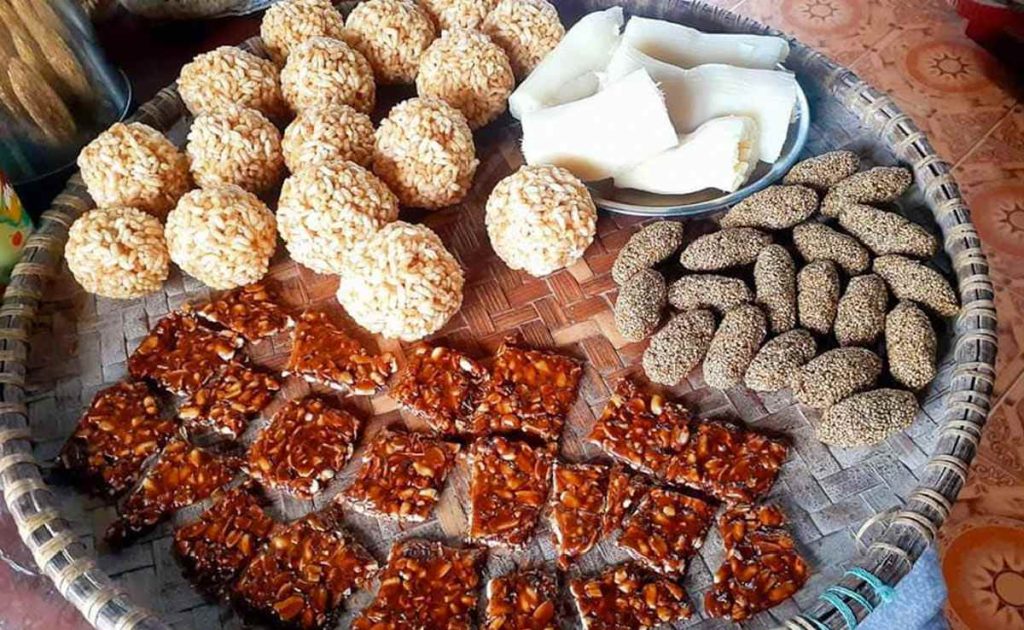
Sel Roti is a traditional ring-shaped rice dish that has a sweet flavor and is extremely unique because it combines the crisp texture of a donut with rice’s subtle taste. A combination of rice flour, sugar, and yogurt makes the crispy outside of this deep-fried treat and the soft inside.

Sel Roti is the traditional Nepalese sweet loved by most Nepalis and is a mandatory part of holiday celebrations such as Dashain, Tihar, Teej, weddings, and bratabandhas. During major festivals, it is often served with tea or yogurt and often served with the main course.

Sel Roti is often served at community homestays and local restaurants.

Gundruk: The Fermented Delight

Gundruk is a traditional Nepalese dish made with fermented and dried leafy vegetables such as ray sag, mustard leaves, radish leaves, and cauliflower, resulting in a dark brown sour product. This versatile food item can be served as an appetizer, a side dish, or even soups and curries. 

Gundruk is also a wonderful source of probiotics and essential nutrients, as it shows off the resourcefulness of Nepali cuisine, which has used preservation techniques to maximize the use of seasonal ingredients.

The Gundruk is served with traditional Nepali dishes Dal Bhat and Dhido, as well as with Newari cuisine (gundruk ko achar).

Nepal’s local delicacies are diverse and flavorful, that reflects the country’s rich culinary heritage and its ability to innovate while staying true to its traditions. 

You can find a variety of tasty cuisines that will satisfy any craving you may have with Nepali local delicacies. Whether it is the iconic momos, the flavorful Newari cuisine, or other local delicacies, Nepali local cuisine leaves no taste unsatisfied.

Enjoy the unique flavors of Nepal as you embark on a trip with Himalayan Circuit Treks to this beautiful country while also exploring its majestic landscapes.

Experiential trip to a Hindu Temple

Nepal is blessed with breathtaking landscapes and a profound sense of spirituality, which are embodied in an abundance of ancient temples that stand as timeless symbols of culture and devotion. 

Nepali culture is deeply rooted in Hinduism, which consists of a vast tapestry of rituals, beliefs, and practices that are woven into its history and identity. There is a spirituality that resonates throughout the Hindu Temple of Nepal where tradition fuses with modernity.

The experimental tour of the Hindu Temple of Nepal takes you on an immersive adventure, offering a glimpse into the temple’s architecture, spiritual essence, vibrant ceremonies, and warm community. You will gain a deeper understanding of Nepali Hinduism through the stories and myths that surround this sacred space.

In this blog, the Himalayan Circuit aims to take you on a journey through one of Nepal’s most sacred and enchanting Hindu temples, discovering its mystical allure that has attracted pilgrims for centuries.

Trip Highlights:

  • Visit the Pashupatinath Temple dedicated to Lord Shiva, the most significant Hindu pilgrimage site.
  • Visit some of Nepal’s major Hindu pilgrimage sites.
  • Visit ancient cities of Nepal that offers unique art and architecture.
  • Explore history and culture of Nepal.
  • Enjoy cable car ride during your visit to Manakamana Temple.
  • Opportunity to immerse yourself in the peace and tranquility of Nepal.

Pashupatinath Temple:

Pashupatinath Temple is one of the major pilgrimage sites for Hindus and is located on the banks of the sacred Bagmati River in Kathmandu. This temple dedicated to Lord Shiva represents Nepal’s cultural, religious, and architectural heritage.

You will be greeted by ornate pagoda-style architecture featuring intricate wooden carvings, as well as devotees, priests, and sadhus praying, meditating, and performing rituals as you approach the temple. 

A visit to Pashupatinath Temple is not only a spiritual experience but also an opportunity to experience Nepal’s unique blend of ancient and modern traditions.

Muktinath Temple:

Muktinath Temple dedicated to Lord Bishnu is situated in the Mustang district and stands at an elevation of 3710m above sea level. Muktinath Temple built as a pagoda-style structure is a sacred pilgrimage site for both Hindus and Buddhists. 

The Muktinath temple is clean and bare, but the spiritual power that surrounds the area is truly magical. The outer courtyard of Muktinath temple has 108 bull face taps where devotees take baths with the belief of bringing salvation after death.

The journey to Muktinath is often rigorous and involves trekking and driving over difficult terrain, but the reward of reaching this sacred temple is a spiritual awakening like no other.

Manakamana Temple:

The Manakamana Temple situated in the Gorkha district stands on a 1300-meter hill and is a sacred place of the Hindu Goddess Bhagwati, an incarnation of Parvati. This pagoda-style temple dedicated to Bhagwati is believed to fulfill devotees’ wishes who worship her with a pure heart.

A thrilling ride on a cable car above the lush valleys of the Gorkha district takes you to the Manakamana Temple. Devotees make the arduous journey to seek the blessings of the goddesses in the temple with the hope of prosperity, good health, fertility and success.

The vibrant atmosphere created by bell sounds, incense, lush forests, panoramic views, and the sight of pilgrims making offerings leaves a lasting impression on travelers.

Bindabasini Temple:

The Bindhyabasini temple, the oldest temple in Pokhara, sits 3002 feet above sea level gazing at the glorious Himalayan range. The temple dedicated to a Bhagawati goddess is believed to protect the city. 

Pokhara’s Bindhyabasini temple is of great religious significance to locals and has even become a world-renowned Hindu pilgrimage destination. As an embodiment of strength and devotion, devotees flock to Bindabasini Temple to pray for their families and well-being.

The temple’s setting against the majestic Annapurna Range adds to its divinity and grandeur, as does the spectacular view of Pokhara Valley from the temple.

Dakshinkali Temple:

Dakshinkali temple dedicated to the goddess Kali and located about 22 km from Kathmandu is one of the most sacred Hindu temples in Nepal. The temple is dedicated to Goddess Kali “the goddess of time, death, and destruction.”

As a beautiful example of traditional Nepalese architecture, Dakshinkali Temple honors Kali and represents the Newari style of architecture. A fierce and powerful aura surrounds this temple, where devotees offer sacrifices to ask for blessings and favors from the goddess. 

A visit to Dakshinkali Temple offers an opportunity to witness a different aspect of Hinduism and its deep-rooted connection to nature and spirituality.

Budhanilkantha Temple:

The Budhanilkanta temple in Budhanilkantha is renowned for its awe-inspiring statue of Lord Vishnu reclining on Ananta, a cosmic serpent. A colossal image, carved from a single stone, exudes a sense of serenity and divinity throughout the entire temple complex.

The location of this temple in the foothills of Shivpuri adds a sense of holiness where you can enjoy the sense of peace and tranquility that fills this place. This magnificent temple depicts cosmic harmony and the preservation of the universe, and it attracts a large number of devotees to seek blessings and offer prayers.

The idol and surrounding gardens at Budhanilakantha Temple provide breathtaking views for those seeking peace and meditative experiences.

Visiting these Hindu temples in Nepal is like taking a journey of the soul, experiencing devotion, culture, and nature’s beauty while learning about Nepalese culture and spirituality. 

These temples offer a profoundly enriching experience for everyone; whether you seek serenity, adventure, or a deeper understanding of Hinduism. 

Come and experience Nepal’s cultural diversity, scenic landscapes, and warm hospitality on an experiential trip to a Hindu temple with Himalayan Circuit Treks.


National Parks for Trekking in Nepal

kids doing the jeep safari

The national parks of Nepal offer sweeping vistas, unique wildlife, and breathtaking landscapes, which are ideal backdrops for trekking, Nepal’s most popular activity. A number of Nepal’s largest mountains are found in beautiful national parks, including Everest, Langtang, and Makalu.

There are some of the most breathtaking landscapes in the world to trek in Nepal, making it a paradise for trekkers. The trek often passes through Nepal’s spectacular national parks, which have diverse flora and fauna and a rich cultural heritage. 

Himalayan Circuit Treks offers trekking tours in National Parks of Nepal, including:

National Park Mammals Birds Plants Adventure activities 
Sagarmatha National Park red panda, snow leopard, musk deer, Himalayan tahr, marten, Himalayan mouse hare (pika) 118 species Pine and hemlock forests dominate the lower altitudes of the park, while fir, juniper, birch, rhododendron, scrub, and alpine plants dominate the higher altitudes. Mountaineering, trekking, and wildlife viewing
Khaptad National Park 23 species 287 species 567 flowering plants Bird-watching, trekking, and wildlife viewing
Shey Phoksundo National Park A snow leopard, gray wolf, musk deer, blue sheep, goral, great Tibetan sheep, Himalayan tahr, leopard, jackal, and Himalayan black bear. There are six reptiles and 29 butterfly species in the park, including Paralasa nepalaica, the world’s highest-flying butterfly. 200 species 286 species of flora and fauna Trekking, cultural tours and wildlife viewing
Makalu-Barun National Park 88 species 433 species 25 species of rhododendron, 47 types of orchids, and 56 rare plants Mountaineering, trekking, and wildlife viewing
Rara National Park 20 species 241 species fir, pine, and birch, rhododendron, hemlock, oak, juniper and spruce Boating, trekking, and wildlife viewing


Sagarmatha National Park:

The Sagarmatha National Park, which lies 135 km from Kathmandu, is surrounded by peaks such as Mount Everest and deep gorges as well as Himalayan glaciers. A UNESCO World Heritage Site since 1976, Sagarmatha National Park is one of the most scenic masterpieces of the country.

While trekking to Sagarmatha National Park one can experience a wide range of mountain ranges, rich flora and fauna, birds, culture, tradition, and mixed beauty of nature. Most people view Mount Everest from a scenic flight instead of climbing it, while others trek to lower elevations or hike to base camp.

Sagarmatha National Park is best visited from October to November and March to May, and during these seasons you will be blown away by its incredible beauty.

Khaptad National Park:

The Khaptad National Park in Nepal offers a wilderness experience unparalleled by any other national park in the country. Khaptad region of Nepal is home to a variety of wildlife, making it the ideal trekking destination for those who want to experience nature, biodiversity, and vegetation at its best.

A unique trekking experience awaits you in the Khaptad region, which is located in a subtropical and analpine climate zone. Furthermore, the park offers breathtaking views of Mount Api and Saipal in western Nepal, as well as Khaptad Dahaa (lake), Nag Dhunga, and Upper Tribeni.

Trekking around Khaptad is best between March and May, September to November and during the full moon in July and August when Hindu pilgrims visit Khaptad Baba Ashram.

Shey Phoksundo National Park:

Shey Phoksundo National Park, the largest and only trans-Himalayan park in Nepal, offers a diverse landscape that ranks among the most scenic in the world. The Shey Phoksundo Lake is one of the most famous tourist attractions in the the National Park, and it is relatively easy to trek to this place.

Trekking around Phoksundo National Park provides incredible views, natural settlements, and mind-blowing scenery. A Lower Dolpo or Shey Phoksundo trek gives you the opportunity to experience Nepal’s most beautiful landscapes while immersing yourself in pristine natural environments.

Trekking through Shey Phoksundo National Park between March and May, September to November, will offer you breathtaking views and an opportunity to explore its wilderness.

Makalu-Barun National Park:

Makalu Barun National Park located in Eastern Nepal, is a truly unique destination for wildlife enthusiasts and nature lovers alike due to its rich and diverse natural environment, including more than 441 bird species and 78 mammal species.

Makalu Base Camp is a challenging but rewarding trek that offers a chance to explore untouched wilderness in Makalu Barun National Park. The trek is long, varied, and quite strenuous, but it is suitable for experienced hikers and nature lovers who prefer pristine nature over crowds.

It is best to trek around Khaptad between March and May and September to November when the weather is consistent enough for hikers to fully appreciate every aspect of the area.

It is best to trek around Khaptad between March and May and September to November when the weather is consistent enough for hikers to fully appreciate every aspect of the area.

Rara National Park:

Ratra National Park is located in Nepal’s north-western region, within Jumla and Mugu districts, and covers 106 square kilometers (41 square miles). In the park, you’ll find snow-capped mountains such as Ruma Kand (3731 m), Chuchemara Peak (4039 m), and Malika Kand (3444 m), which are home to a wide variety of plants and animals.

Among the trek’s highlights is Rara Lake, which winds peacefully through juniper, spruce, and pine glades and remains less crowded and largely untouched than many of its counterparts. There are views of the Himalayas in one direction, while the pristine waters of Rara Lake complement the scenery in the other direction.

You can trek around Rara National Park from February to April and October to November if you’re looking for an adventure in the wilderness.

From the highest mountains to serene lakes and diverse wildlife, Nepal’s national park offer trekkers of all skill levels and interests the chance to experience nature in its purest form.

Prepare yourself for an unforgettable adventure through Nepal’s national parks by putting your boots on, packing your bags, and getting ready to set off.

Annapurna Base Camp Trek

Two Trekkers holding himalayan circuit Banner in Annapurna Base Camp

An Annapurna Base Camp Trek is one of the most beautiful treks in Nepal, which offers a diverse landscape, fascinating mountain vistas, as well as beautiful ethnic villages which preserve their ancient traditions and culture.

You will enjoy the beautiful panoramic views of Annapurna Massif and Dhaulagiri Range framed by dense forests of rhododendron, pine and oak trees sheltering diverse species of wildlife and vegetation on your trek to Annapurna Base Camp. 

A beautiful view of silvery peaks greets you as you hike through ABC trek. While hiking through scenic greenery, snow-covered mountains and rhododendron forests, you’ll experience what it’s like to live in the moment.

Trekking the ABC trail is an excellent way to experience the Himalayas, as well as the hospitality of the Nepalese people. The Annapurna Base Camp trek offers a variety of natural landscapes, steep, rugged mountains, and beautiful scenery. 

Himalayan Circuit offers the ABC trek with the following highlights:

Annapurna Base Camp Trek Highlights:

  • Natural Experience: 

You will find yourself in green surroundings from the start of your ABC trek. It is certainly a peaceful nature walk to the base camp that offers a soothing experience of the outdoors. 

The sight of the rising sun behind the Himalayas reflecting the colors cast upon the mountains is nothing short of magnificent. The sunrise over the mountains is definitely a worthwhile adventure to experience early in the morning.

A breathtaking view of the mountains awaits you in the sanctuary of the mountains. This is a once-in-a-lifetime experience to be at the wonderful base camp and enjoy the breathtaking views.

  • People and Culture: 

Several ethnic groups can be seen along the Annapurna Base Camp trek route, including Brahmans, Chhetris at lower elevations, and the Mongoloid Himalayan people in the Himalayas who preserve their culture and traditions to this day.

Annapurna Base Camp is highly popular for its cultural aspect as you can encounter some of the most culturally rich villages in the Annapurna region such as Ghandruk, Tadapani, Dhampus, and Ghorepani. 

These villages have truly wonderful people who consider their guests to be gods and are always prepared to help them. ABC trek also takes you to Gurung Museum, where you experience their culture, tradition, cultural dress, and jewelry.

  • Hot springs:

Hot springs in Nepal are an ideal place to bathe while on a trek, and the natural hot springs of the Annapurna Base Camp trek rank high among trekkers. If you take ABC trek, make sure you take a dip in the hot springs. 

A great spring bath and scenic views can be found at most tea houses during Annapurna Base Camp trek. Bathing in the hot springs of Jhinu Danda, which lies on the Modi river bank, is believed to heal muscle aches and bruises. 

The sight of cascading waterfalls and hot spring baths makes you forget about the fatigue you experienced during your trek.

Why you’ll love this trip?

  • You are going to be blown away by the number of mountain ranges you will see, each with its own scenic beauty, which adds to the overall experience of the ABC trek.
  • An early morning hike to Poon Hill will allow you to witness a magical sunrise over the Annapurna ranges. 
  • Besides experiencing breathtaking views of the world’s highest mountain, the Annapurna base camp trek also offers a unique opportunity to observe the culture, tradition, and lifestyle of the local people. 
  • You will experience beautiful Himalayan wildlife and flora, unique topography and landscapes, gorges between mountains, Glacier Rivers and lakes, and typical Nepali villages on this trek. 
  • Annapurna Base Camp Trek can be combined with many trekking trails inside the Annapurna Conservation Area Project area, making it one of the most diverse trekking routes in Nepal including Poon hill, Mardi Base camp and even high adventure with Annapurna Circuit.
  • You can relax after your Annapurna Base Camp Trek in Pokhara by cruising along Phewa Tal (Lake) or getting a relaxing massage to rejuvenate your tired legs.

Annapurna Base Camp Trekking Route:

Annapurna Base Camp Trek begins in Syauli Bazar, a short drive from Pokhara. As you hike through the forest, you’ll also pass through fascinating traditional villages like Ghandurk and Chhomrong Gurung.

You will pass through stands of rhododendron trees and bamboo trees on your way to Chhomrong Gurung village. You will notice that the vegetation has thinned and the gorge has narrowed as you approach Hinku Cave.

Snow-covered ridges plunge from Hiunchuli on the left and Machhapuchhre on the right along this trail. Upon entering the sanctuary, you will see a huge amphitheater surrounded by snow-covered mountains.

Snow-capped mountain like Hiunchuli, Annapurna South, Barahi Shikhar, Annapurna I, Tent Peak, Singachuli, Glacier Dom, Gangapurna, Annapurna III, and Machhapuchhre awaits you at ABC Trek Route making the trip worthwhile and fulfilling. 

Jhinu Hot Spring is the next stop on your trek to Pokhara after this imaging view.

Annapurna Base Camp Trek: How difficult is it?

The trek is very moderate, and if you are in good health and have reasonable fitness, you can complete it without much difficulty. 

You do not need any prior trekking experience to complete this trek. The journey can be accomplished by any age group with a little determination and fitness. 

The trek is one of the most popular in Nepal and is moderately challenging but easier and shorter than other high-altitude treks, like Everest Base Camp, Makalu Base Camp, Kanchanjunga and Manaslu Base Camp. 

When to trek?

There are two best seasons for Annapurna Base Camp Trek: mid-September to November (autumn) and March to May (spring). June to August (monsoon) are rainy months, but it’s best for botanists because it has clear skies. 

Rhododendrons bloom during the months of March, April, and May, making your ABC trek a grand spectacle. 

A short hike to the ABC Trek Route offers you great opportunities for experiencing its beauty. If you want to avoid crowds, trek during the winter (December – February). 

The mornings are usually cold, but not unbearable and the days are usually warm during day hikes and most days have a clear sky with fantastic views.

The Annapurna Base Camp Trek is one of the best adventures of a lifetime that offers a true cultural, natural, and spiritual experience through the vantage points, settlements, and sacred places.

We invite you to join the Himalayan Circuit on the ABC trek to enjoy natural beauty and experience the true essence of the Himalayas.

Ropai Diwas: Unique festival tour of Nepal

ropai diwas

It is extremely difficult to do trekking and extreme activities during the monsoon season. However, tourists from different countries now visit Nepal to enjoy the Rice Plantation Festival (Ropai Diwas) when the monsoon rain falls.

The Ropai Diwas (festival of rice) is one of the traditional festivals of Nepal that occurs on the 15th of the Nepali month Ashad. The day is celebrated with beaten rice and yogurt (known in Nepali as Dahi Chiura). 

This day holds importance for crop production in Nepal since rice is the main crop and farming is the main occupation. It is now considered a festival where people from all over Nepal plant rice, play with mud, sing, and dance in their respective fields.

Rice plantation is done mainly at the beginning of the monsoon season. However, Asar 15 is a special day and is celebrated as a festival. There is the belief that if someone touches wet mud on this day, they will be healthy, earn good omens, and get recognition.

The festival marks the beginning of the rainy season. Farmers begin planting paddy. Rice plants are planted in fields that are filled with water since rice needs a lot of water. 

To encourage the nation’s rice crops to grow more efficiently, the Government of Nepal has declared the day as National Paddy Day. Many people celebrate this unique festival by playing musical instruments and singing traditional songs.

Why to Celebrate Ropai Diwas (National Paddy Day)?

paddy plantation

There is a strong connection between Ropain Diwas and people in all parts of the country and it has a profound effect on their social, cultural, and economic lives. Women and men gather in the morning to participate in a parade around their village before going on fields.

The rice plantation stands out as the perfect reflection of the weather, and the great message of happiness. It will be a pleasant experience for you to visit the muddy and wet fields and observe the rice plantations. 

There is mutual work between men and women as various responsibilities are shared. Plowing and arranging drains, leveling the ground, and creating fine mud slurry for planting are the duties of the man, while the woman collects the seedlings and gives them to the fellows who are prepared for planting. 

The day is celebrated by planting the allotted field, running through the muddy fields, splashing around in muddy water, and singing typical folk songs (Asare Geets) that describe the joys and hardships of farming.

Dahi-chiura: Another important norm

The custom of eating Dahi-chiura (beaten rice mixed with curd) is also observed on this day. Farmers and locals still eat this combination to mark Asar 15 even if the planting is not done during this day. Dahi-chiura is traditionally distributed by elders.

Dahi-chiura is a food that is considered important to eat on this day as it gives energy to the body. This combination provides strength, eases, and speeds up the rest of the farming process for tired farmers.

The epics of Ramayan and NepalaMahatmya of Skanda Puran relate stories about dahi-chiura eating culture. After Ravan abducted Sita, Lord Ram, Lakshman, and Hanuman went in search of her. 

Upon reaching a river south of today’s Bhaktapur, they became hungry and ate Dahi-chiura on a banana leaf. Some people believe the same tradition is still followed today as eating Dahi-chiura on Asar 15.

Why should you participate in this festival?

rice plantation

Recently, the festival has been popular with tourists visiting Nepal. Visitors have been enjoying the festival. There will be many other tourists joining you in the muddy water and you will be enjoying the day with the locals and farmers.

In recent years, Ropai Jatras have been organized in various parts of Nepal, especially in and around the capital city, Kathmandu, and the popular tourist destination, Pokhara.

The Ropai festivals are celebrated in places such as Chapagaun, Sakhu, Dhapakhel, Panjauti, Thansing, Bungamati, Kavrepalanchowk, Dhikure, Machhegaun, etc. 

You will be participating in activities such as racing competitions, entertainment-based games, and live Nepali Asare duet songs that will be held throughout the day.

Getting your feet into muddy, slippery fields during a full-fledged rain might not sound appealing; however, it will certainly prove to be an unforgettable experience. 

It is basically a day for you to have fun; you get soaked in the rain, sow rice saplings, play with mud, and turn the field into a dance floor. You will have the opportunity to observe traditional rice farming practices, the use of mutual labor, as well as cultural demonstrations. 

Nepal’s Ropain Diwas holds unique national significance among many other celebrations. By participating in such festivals, you will not only be entertained, but you will also be able to learn about the traditional way of farming.

Participating in this agro tourism experience from the Himalayan Circuit will be an unforgettable experience for you.