Nepal Diaries: Rhododendrons, Festivals, and the Spirit of Spring

Hike from Dhampus to Australian Camp

March is one of the best months to visit Nepal. Winter slowly gives way to spring, rhododendrons bloom along the hillsides, and trekking trails look inviting. The combination of mild warmth, clear skies, and beautiful landscapes makes March ideal for sightseeing, cultural experiences, and outdoor adventures.

Whether you are a first-time visitor, traveling with family, or planning to combine city tours, short treks, and wildlife exploration, March offers something for everyone.

Weather in March

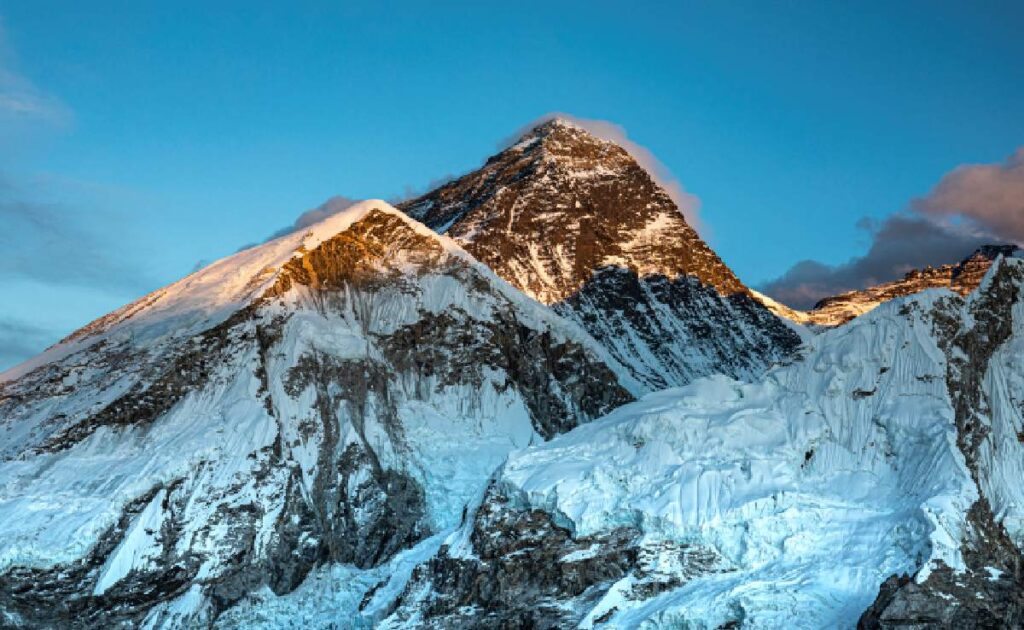
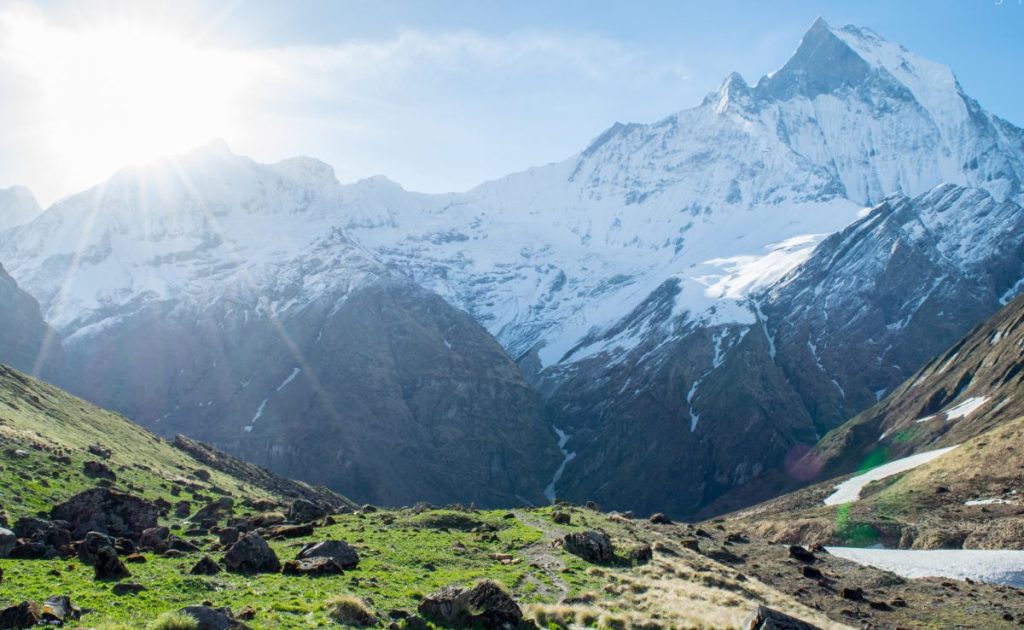
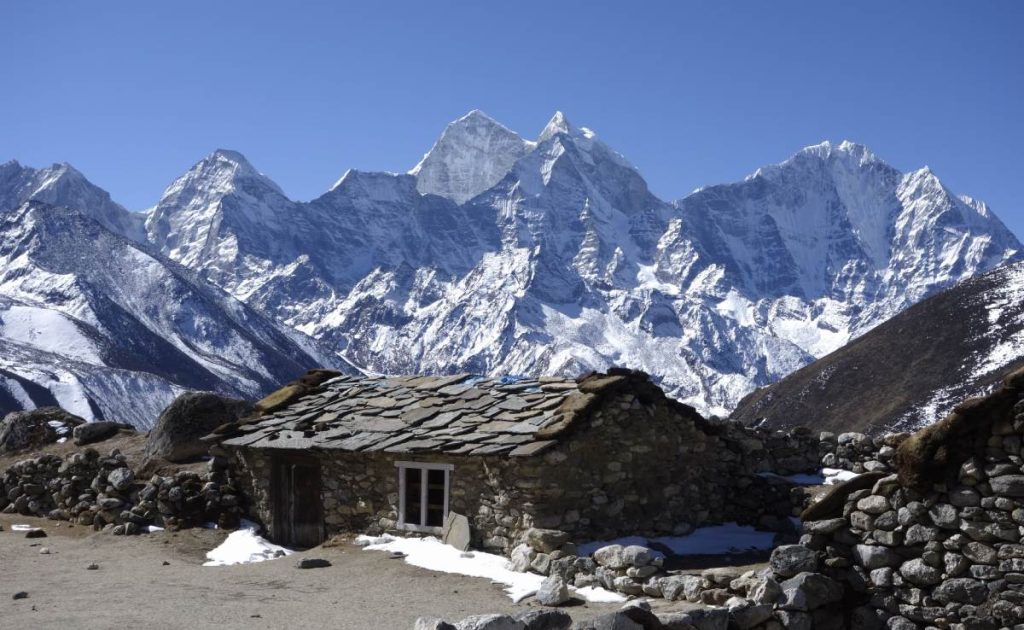
Himalayan peaks in Nepal – Nepal best travel destination

March marks the beginning of spring in Nepal. Daytime temperatures in Kathmandu and the mid-hills range from 18°C to 25°C, making sightseeing very comfortable. Early mornings and evenings are cooler, especially in Kathmandu, Pokhara, Chitwan, and other major cities.

Skies are generally clear, and trekking trails are safer than in icy winter months. You may experience short spring showers toward the end of the month, so a light rain jacket can be useful. In the mountains, unexpected cold or new snowfalls can occur, so pack warm hats and gloves if you plan to explore higher elevations.

Trekking and Outdoor Activities

Everest Base Camp Trek

March is one of the best months for trekking in Nepal. Weather is stable, trails are clear, and crowds are moderate.

Tips: Start hikes early to avoid afternoon haze, dress in warm layers, and monitor snow conditions in higher passes. If you’re new to the region, hiring a local guide is recommended for flexibility and safety.

Festivals and Cultural Events

Holi Celebration

March is lively with colorful festivals:

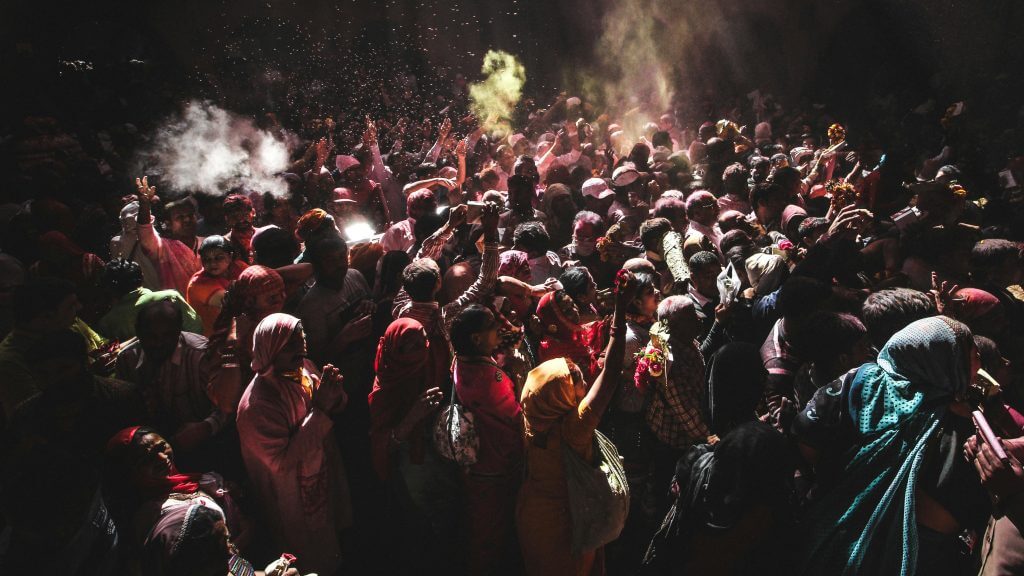
  • Holi, the Festival of Colors: Kathmandu, Patan, and Pokhara transform into playful clouds of color. Join in, but protect your camera and wear clothes you don’t mind getting messy.
  • Local Jatras and Temple Fairs: Smaller festivals happen in hill towns and around the Kathmandu Valley. These are excellent opportunities to experience Newar culture and try seasonal sweets.

Ask your hotel or guide about local events so you can join respectfully, dress modestly, and buy colors from trusted shops.

Wildlife and Nature Experiences

If you want a break from the mountains, visit Nepal’s Terai lowlands in March.

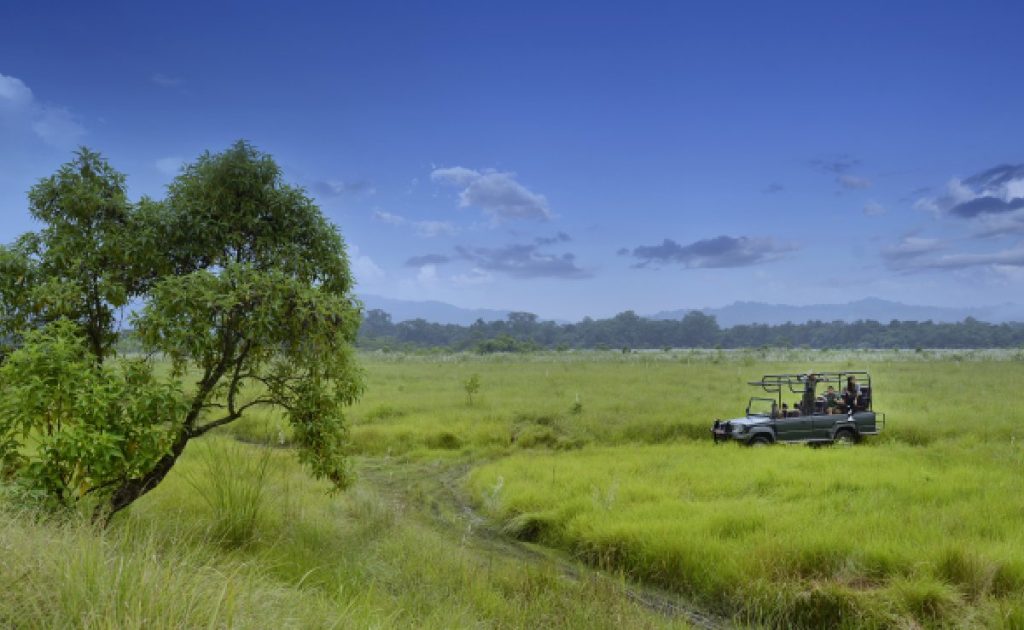
  • Chitwan and Bardiya National Parks: Clear skies and warmer days make wildlife spotting easier. Look for rhinos, tigers, deer, gharials, and a variety of birds.
  • Mountain Flora: In the hills and mountains, rhododendrons and wildflowers bloom, making treks even more scenic.

Spring is perfect for hikes around Pokhara or the Kathmandu Valley. Don’t forget your binoculars and follow park regulations to protect wildlife.

Travel Tips for March

  • Pack layers: T-shirts for midday, fleece or jackets for evenings, and windproof outerwear for hiking.
  • Footwear: Good trekking boots are essential, as some trails may be wet or muddy.
  • Sun protection: Higher altitudes mean stronger UV rays. Bring sunscreen, sunglasses, and a hat.
  • Protect valuables: Use zip-lock bags or dry bags for phones and cameras, especially during festivals.
  • Cash: ATMs work in major towns, but bring cash for mountain lodges.
  • Flights: Check domestic flight schedules; weather can still cause delays.

So, is March a good time to visit Nepal? Absolutely. You can enjoy pleasant sightseeing weather, ideal trekking conditions, blossoming hillsides, and colorful festivals all in one trip.

March allows for a well-rounded itinerary, a few days of city tours in Kathmandu, trekking in Annapurna or Langtang, and a wildlife trip in Chitwan can all fit together.

Be flexible with the weather, pack your gear wisely, and experience the beauty and culture of Nepal this March with Himalayan Circuit.

Nepal Diary: Exploring Nepal Solo – Adventures, Culture & Safety

Solo travel in Nepal is more than a trend—it’s a personal journey filled with freedom, culture, and self-discovery. In 2025, both TripAdvisor and Much Better Adventures confirmed what many travelers already know: Nepal ranks among the best destinations in the world for solo adventurers. With its welcoming people, peaceful atmosphere, and breathtaking landscapes, it offers a rare mix of adventure and serenity. Moreover, the country provides independent travelers with both safety and meaning.

Recognized Worldwide

The global spotlight on Nepal continues to shine.
According to Much Better Adventures, the country holds the #7 spot among the Top Solo Adventure Travel Destinations 2025.
Meanwhile, TripAdvisor ranked Kathmandu #2 on its list of Best Solo Travel Destinations 2025.

Together, these rankings highlight how Nepal perfectly balances natural beauty, adventure, and cultural connection.

Why Nepal is Perfect for Solo Travelers

Safe • Peaceful • Respectful

The cultural value of Atithi Devo Bhava (“Guest is God”) lies at the heart of Nepali hospitality. Solo travelers often experience genuine warmth and respect from locals. While exploring villages or hiking in the hills, you might be offered tea, directions, or even a meal—often given from the heart, with no expectation in return. This kindness fosters a feeling of safety and belonging throughout the journey.

Peace-Loving & Welcoming

People in Nepal are known for their friendliness, calm nature, and sense of community. Violent crime against tourists is extremely rare, and the overall environment feels peaceful and respectful. Furthermore, English is widely spoken in tourist areas, especially among guides and hotel staff, making communication simple.
Additionally, the hostel and guesthouse culture helps solo travelers meet others easily—turning strangers into travel companions.

Top Destinations for Solo Travelers in Nepal

Kathmandu Valley

Solo Travelling in Nepal

Wander through UNESCO World Heritage temples, colorful streets, and spiritual landmarks. You might join a walking tour, learn to cook Nepali dishes, or attend a yoga or meditation class. Because of this variety, Kathmandu offers both excitement and peaceful reflection.

Chitwan & Bardiya National Parks

Set off on thrilling jungle safaris where you can spot rhinos, elephants, and even tigers. These well-organized tours are ideal for solo travelers, as they allow you to join small groups while staying independent. In turn, it’s a wonderful way to connect with both nature and fellow explorers.

Pokhara

The city by the lake offers calm and adventure in perfect balance. Enjoy paragliding, boating, or simply watching sunsets over Machhapuchhre. The lakeside cafés create the perfect setting to meet new friends or enjoy quiet moments alone. Because of its laid-back vibe, Pokhara remains a favorite among solo travelers.

Lumbini

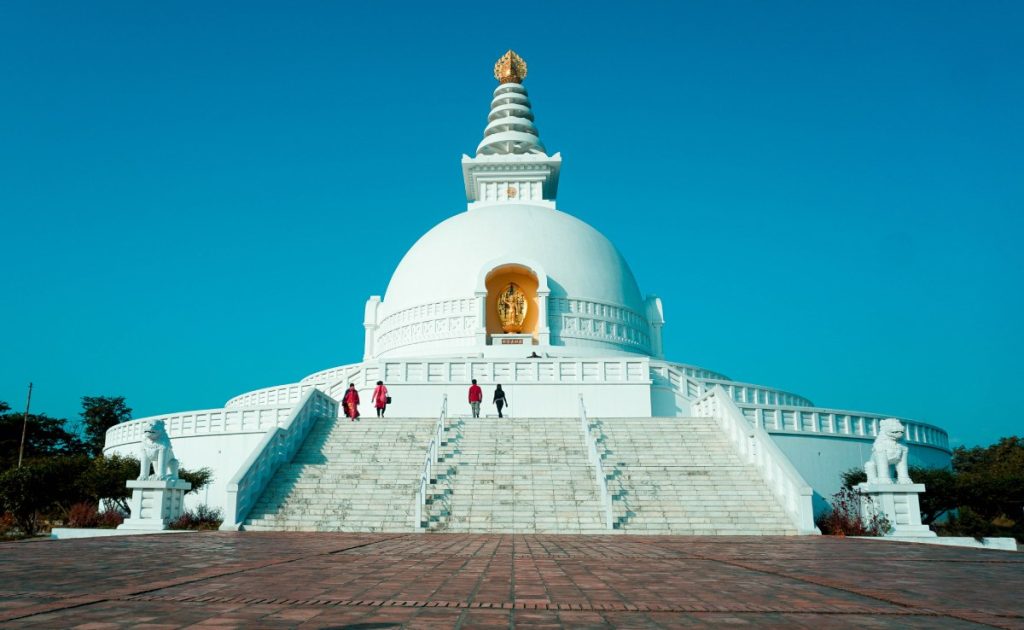
Lumbini Peace Stupa

The birthplace of Buddha invites you into an atmosphere of peace and reflection. This quiet town is ideal for solo visitors seeking spiritual depth and historical insight. Consequently, Lumbini offers a calm escape from Nepal’s busier regions.

Ghorepani–Poon Hill Trek

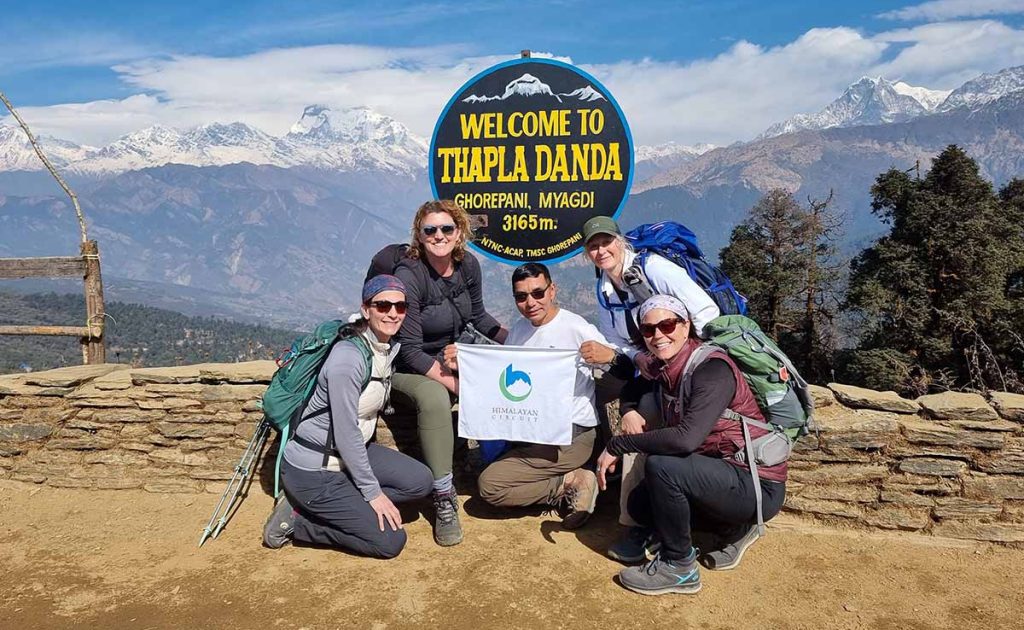
4 Clients with 1 Guide in Thapla Danda

Short, scenic, and sociable—this trek is ideal for independent hikers. Trails are well-marked, and guesthouses are easy to find, ensuring a safe and comfortable experience. Therefore, many solo trekkers choose Poon Hill as their first Himalayan adventure.

Embrace the Nepali Culture

Cultural Etiquette

A simple “Namaste” (palms together) goes a long way in showing respect. Remove shoes before entering temples or homes, avoid pointing feet toward people or sacred objects, and don’t touch anyone’s head. Bargaining in local markets is normal—just smile and stay polite. These small gestures help you connect more deeply with Nepali people.

Food for Solo Travelers

Eating alone in Nepal is easy and enjoyable. Restaurants offer diverse menus, and many street food stalls (choose clean ones) serve delicious, freshly made snacks. Be sure to try dal bhat, momo, and a cup of Masala Chiya (Milk tea with various spices) ! In many cases, sharing a meal leads to friendly conversations with locals or other travelers.

Meeting Fellow Travelers

Hostels, trekking lodges, and cafés are natural meeting spots. Participating in yoga retreats, workshops, or group hikes also helps build friendships on the road. As a result, solo travel in Nepal rarely feels lonely—many travelers leave with new lifelong friends.

Your Solo Journey, Perfected by Himalayan Circuit

Traveling solo doesn’t mean traveling alone. At Himalayan Circuit, we design private, personalized adventures tailored to solo explorers. Our goal is to make every step of your journey safe, smooth, and unforgettable.

  • Tailored itineraries: Crafted to match your interests, pace, and comfort.
  • Trusted local guides: Friendly, knowledgeable, and supportive.
  • Safe stays & transport: Carefully selected for quality and security—including female-friendly guesthouses.
  • Authentic experiences: Meaningful interactions with locals and Nepali culture.
  • 24/7 support: Our team is always available to assist you throughout your trip.

Time to Answer the Himalayas’ Call

If you’ve been dreaming of traveling solo in Nepal, now is the perfect time. Book your flight, arrive in Kathmandu, and let your story unfold. The country has a special way of calling travelers back—again and again—with its mountains, culture, and kindness.

We thank Much Better Adventures, TripAdvisor, and global travel experts for recognizing Nepal as one of the world’s best solo destinations.

Begin Your Solo Adventure with Himalayan Circuit

Are you ready to explore Nepal on your own terms?
Contact us to start planning your Himalayan journey today.
>Travel smart. Travel safe. Travel solo—with us.

Namaste & Welcome!

Nepal Diary: January in Nepal – Winter Treks, Culture & Festivals

Everest Region Trek: Lukla to Tengboche Adventure

Nepal is a destination for all seasons. Visiting Nepal in January offers a unique perspective on the country’s culture, landscape, and way of life. January is one of the coldest months in Nepal. With bright skies, fewer travelers than during peak season, and snow-capped mountains, January is ideal for anyone seeking peace and authenticity.

Visitors can enjoy cultural treasures in the Kathmandu Valley, short winter treks, and festivals like Maghe Sankranti. Mild destinations such as Pokhara and Chitwan provide a warmer escape from the cold hills and mountains.

Weather in January

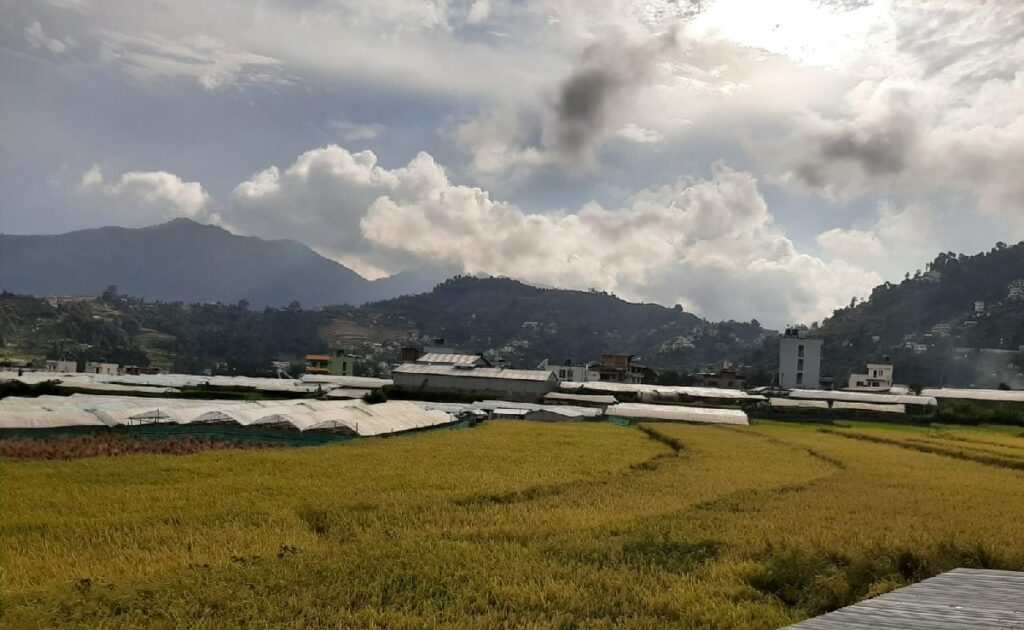
Photo shows fields with the hills of Kathmandu in the background, capturing a calm January scene in Nepal

January mornings and evenings in Nepal are cool, especially in the highlands. Days are usually clear and sunny.

  • Kathmandu Valley: Daytime temperatures range from 8°C to 15°C, while nights can drop to 2°C.
  • Pokhara: Temperatures range from 8°C to 17°C.
  • High-altitude areas (Langtang, Ghorepani): Temperatures can drop below zero, with occasional snowfall.

Despite the cold, the crisp air and clear skies offer incredible Himalayan views. Travelers should prepare for fluctuating conditions, especially if trekking or climbing at high altitudes.

Travel Conditions

Travel in January is generally smooth, but mountain passes may close temporarily due to snow. Roads connecting Kathmandu, Pokhara, and Chitwan remain open, though morning fog can delay flights in the Terai plains.

Domestic flights to mountain regions, like Kathmandu to Lukla, may sometimes be canceled. Tourist services operate normally, and fewer visitors often mean lower prices.

If you plan to trek, hire experienced guides and porters. Following a well-planned itinerary ensures a safe and enjoyable winter experience.

Best Places to Visit in January

Kathmandu Valley – Cultural Sightseeing

Nepal in January
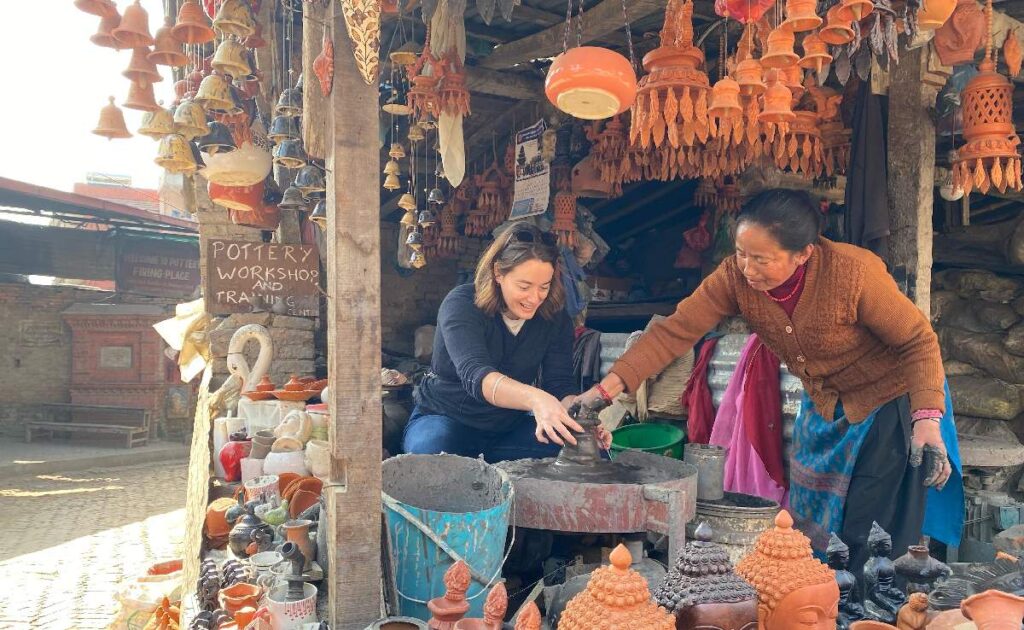
A traveler learning pottery in Nepal, a hands-on cultural experience to enjoy during a January visit

The cool weather makes sightseeing comfortable. Visit UNESCO World Heritage Sites such as Durbar Squares, Pashupatinath Temple, Boudhanath Stupa, Swayambhunath Stupa, and Changunarayan. You can also hike to hill stations surrounding the valley for beautiful views.

Pokhara – Mild Climate & Mountain Views

Sunrise from Poon Hill, a popular spot for magnificent sunrise views

Pokhara offers mild temperatures and stunning views of Machhapuchhre and Mt. Annapurna. Activities in January include:

  • Hiking to Sarangkot for sunrise
  • Visiting caves and waterfalls
  • Boating in Phewa Lake
  • Enjoying local nightlife

Chitwan National Park – Wildlife Safari

10 Day Nepal Itinerary
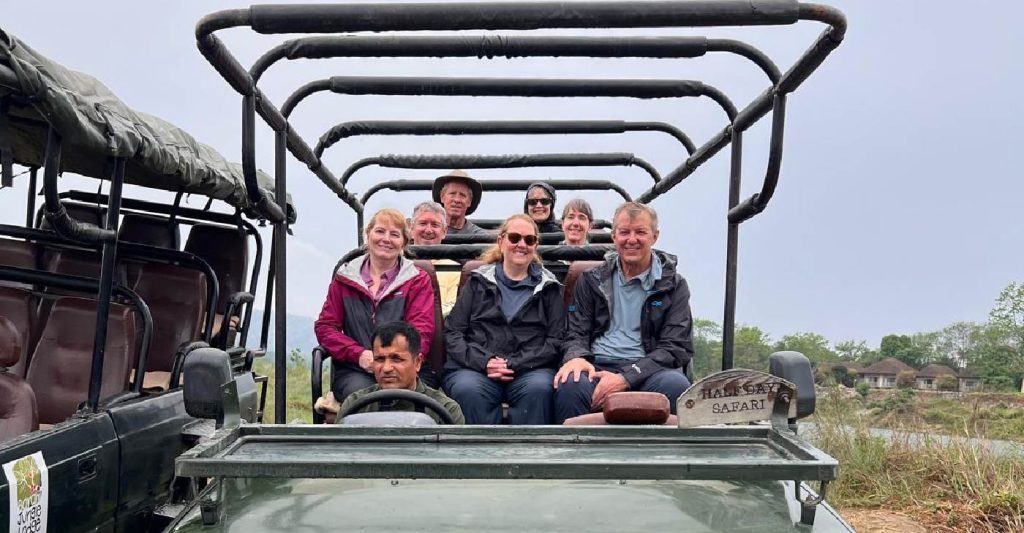
Chitwan Jungle Safari in the month of January

Chitwan provides a warmer climate for a jungle adventure. Activities include:

  • Elephant Safari and Bathing
  • Canoe Ride
  • Jungle Walk

Short Winter Treks

High-altitude treks are challenging in January. However, short treks like Ghorepani Poon Hill and Langtang Valley are accessible. These routes offer incredible Himalayan views and snow-dusted landscapes with lower weather risks.

Festivals and Cultural Highlights

Maghe Sankranti is a major January festival. It marks the start of longer days. Families celebrate with traditional foods like til laddoo, yam, chakku (molasses), sweet potatoes, and ghee for energy and warmth.
Worshippers may bathe in holy rivers such as Bagmati or Narayani. Tamang and Gurung communities also celebrate local New Year traditions. These festivals give visitors a deeper understanding of Nepal’s culture.

What to Pack

Prepare for cold temperatures, especially when trekking. Recommended items include:

  • Thermal innerwear, down coats, fleece jackets
  • Durable trekking shoes, gloves, hats, scarves
  • Casual warm clothes for Kathmandu and Pokhara
  • Lighter wear for Chitwan’s mild climate

Trekkers should also bring a high-quality sleeping bag, sunglasses, sunscreen, lip balm, medicines, reusable bottles, and power banks.

Final Words

January offers a peaceful and authentic Nepal experience. Visitors can enjoy:

  • Winter mountain views
  • Restful stays in Pokhara
  • Wildlife encounters in Chitwan
  • Cultural immersion through festivals like Maghe Sankranti

With proper preparation, January is a perfect time for travel, adventure, and exploring Nepal’s natural and cultural beauty. Fewer crowds and lower prices make it even more appealing.

Festival in Nepal: Tihar Festival Nepal – Five-Day Festival of Lights

Tihar Festival in Nepal

Nepal shines in bright colors, flickering lamps, and joyful celebrations every year during Tihar, the five-day festival that honors life, light, and devotion. Known as the festival of lights, Tihar turns streets, homes, and temples into dazzling displays of marigold garlands, flickering diyos, and colorful rangoli patterns. Also, the festival blends faith, culture, and happiness, reflecting the rich traditions and heart of Nepal.

Celebrating Life and Light

Tihar, also called Deepawali, is a Hindu festival celebrated over five days, each honoring a different part of life. It allows people to show gratitude, respect, and devotion, not only to deities but also to animals and loved ones.

Famous Legends About Tihar

  • The Legend of Bhai Tika: Yamaraj, the god of death, once visited a sister’s home to take her brother’s life. She performed rituals, applied tika, and made offerings with devotion. Impressed by her sincerity, Yamaraj spared her brother’s life. Today, sisters continue this ritual to bless and protect their brothers.

  • The Legend of Laxmi Puja: Goddess Laxmi, the goddess of wealth, visits homes that are clean and well-lit. Families light lamps, decorate with flowers, and prepare offerings to invite prosperity and remove darkness.

  • The Legend of Lord Rama: After Lord Rama defeated Ravana in Lanka, he returned to his kingdom, Ayodhya, along with Sita and Lakshman. The people celebrated their return by lighting rows of lamps throughout the city to welcome them and drive away darkness. This tradition of lighting lamps shows the victory of good over evil and light over darkness, which continues to inspire Tihar’s glowing celebrations.

Tihar in Today’s World

Even in today’s fast-paced world, Tihar remains very meaningful. For example, Bhai Tika teaches the value of family bonds, Laxmi Puja encourages mindfulness and gratitude, and people worship animals including crows, dogs, cows, and oxen to show respect for all living beings. Furthermore, Tihar invites people to slow down, honor relationships, and reflect on the blessings often taken for granted. These long-lasting lessons, expressed through lights, rituals, legends, and songs, keep Tihar alive and meaningful for generations.

The Days of Tihar and Their Celebrations

Kaag Tihar (Crow Day)

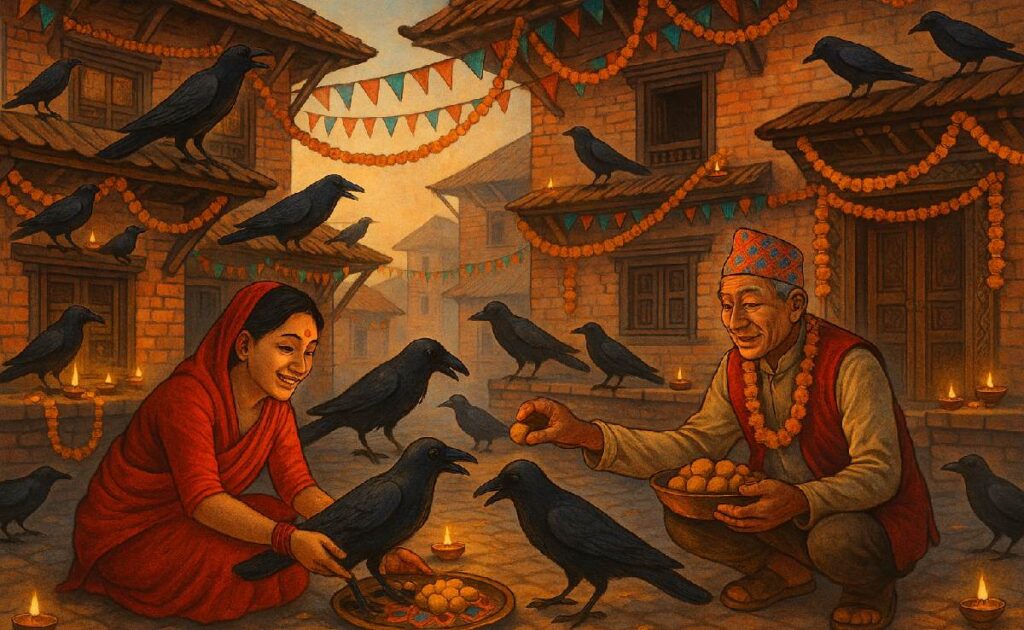
AI generated picture of Kaag tihar

Tihar begins with Kaag Tihar, dedicated to crows, believed to be messengers of death. People offer sweets and food to crows to ward off bad luck and invite blessings for the year ahead. Also, this ritual reminds us to honor nature and the creatures that share our world.
Kukur Tihar (Dog Day)

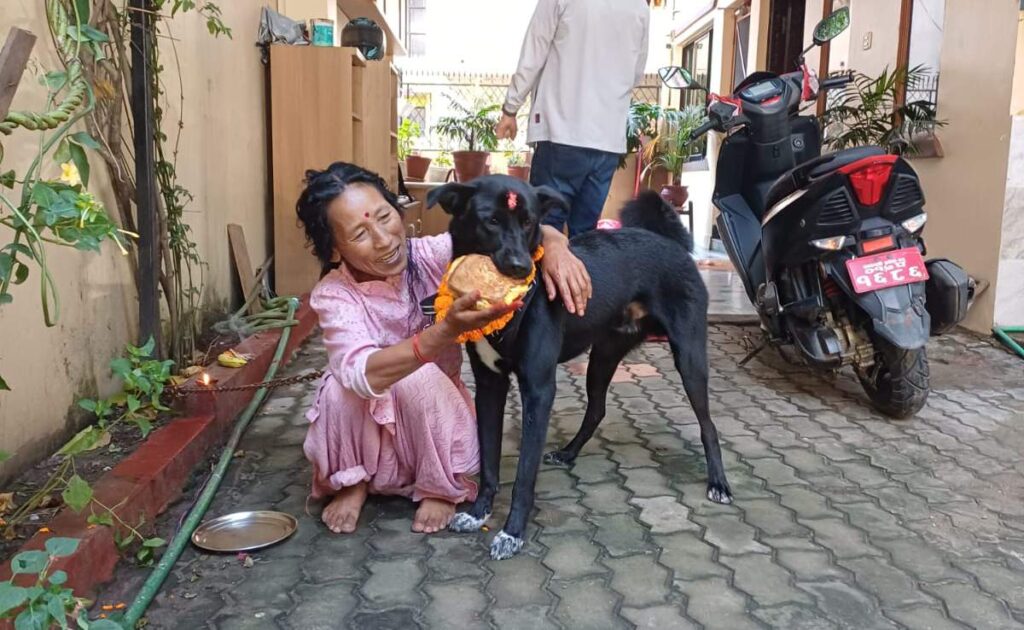
Kukur Tihar celebrates dogs for their loyalty and protection. People decorate dogs with flower garlands, tika, and special treats, showing their important role in our lives. In addition, people express gratitude to these faithful companions, recognizing the bond between humans and animals.

Laxmi Puja (Goddess of Wealth)

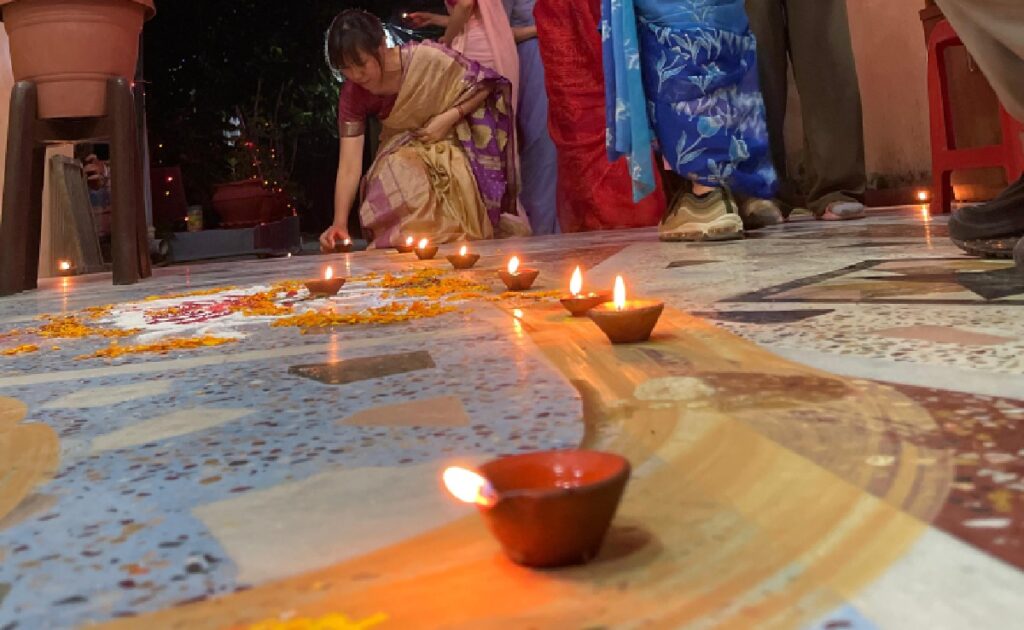
In the evening, Laxmi Puja fills homes with light and devotion. Families worship Goddess Laxmi, clean their houses, draw colorful rangoli patterns, and prepare traditional sweets like sel roti to invite prosperity. Laxmi enters only clean and well-lit homes, teaching mindfulness and gratitude.

Govardhan Puja and Mha Puja

Tihar Festival in Nepal
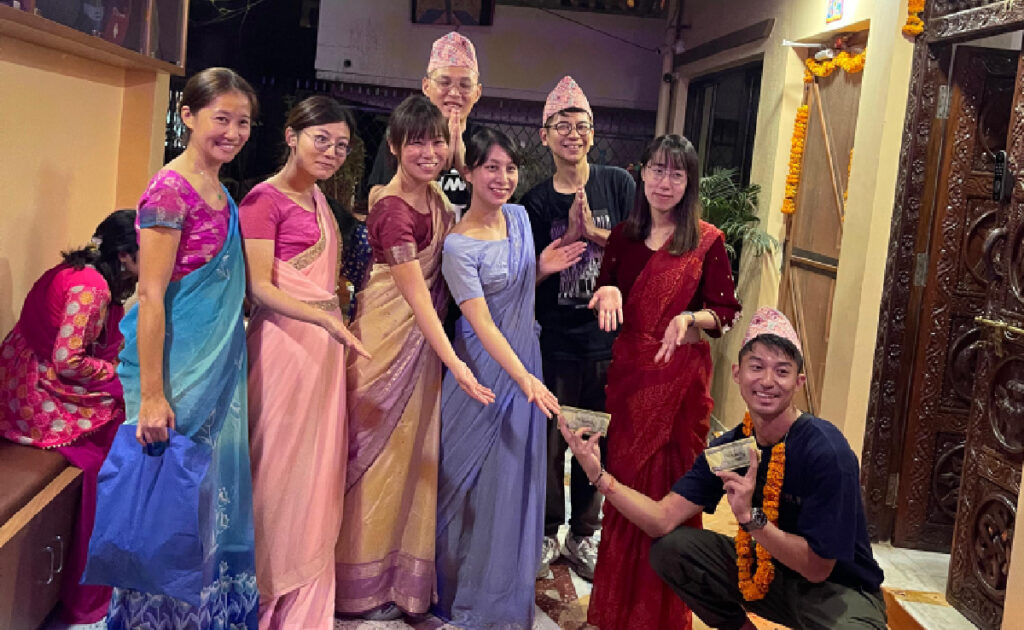
Foreigners are enjoying their time immersing themselves in the vibrant Nepali culture during the Tihar Festival

Govardhan Puja honors oxen for their hard work in agriculture and their role in supporting human life. Among the Newar community, Mha Puja, or self-worship, symbolizes purification, self-respect, and spiritual renewal for the coming year. The day also marks the New Year according to the lunar calendar, which this year turns 1146. The Newar people call it “Nhu Daya Bhintuna”, meaning Happy New Year in their language. These rituals remind people to respect all living beings, honor cultural heritage, and celebrate new beginnings.

Bhai Tika (Siblings’ Day)

The festival ends with Bhai Tika, celebrating the sacred bond between brothers and sisters. Sisters apply multi-colored tika on their brothers’ foreheads, offer garlands, and pray for their health and prosperity, while brothers give blessings and gifts. Furthermore, the day brings laughter, feasts, and family bonding, reinforcing love, care, and protection among siblings.

Tihar 2025 Dates

  • Kaag Tihar (Crow Day): 19 October
  • Kukur Tihar (Dog Day): 20 October
  • Laxmi Puja (Goddess of Wealth): 20 October
  • Govardhan Puja and Mha Puja: 22 October
  • Bhai Tika (Siblings’ Day): 23 October

Why Visit Nepal During Tihar

Experiencing Tihar in Nepal is like stepping into a living cultural masterpiece. Streets sparkle with thousands of oil lamps, neighbourhoods echo with traditional Deusi and Bhailo songs, and homes overflow with warmth, laughter, and delicious Nepali sweets.

Tihar offers a deep experience of real Nepali traditions, rituals, and faith, beautiful sights for photographers and travelers, and unique moments like seeing animal worship, colorful rangoli, and community celebrations. Also, the festival provides a moment of reflection, reminding people of gratitude, respect, and the beauty of human and animal bonds.

Even today, the Tihar Festival of Nepal invites people to slow down, honor relationships, respect nature, and reflect on the blessings often taken for granted. In addition, these long-lasting lessons, expressed through lights, rituals, legends, and songs, keep Tihar alive and magical for generations.

Although this year’s Tihar is already underway, travelers can plan ahead for Tihar 2026. Tentative dates are: Laxmi Puja – 8 November, Govardhan Puja – 10 November, and Bhai Tika – 11 November. Visiting Nepal during the Tihar festival allows people to experience the festival in its full glory, with streets illuminated, songs echoing through neighborhoods, and homes filled with warmth, light, and tradition.

Homestay in Nepal – Dalla, Where Culture Meets Conservation

Nepal’s Terai region is a land of contrasts—lush jungles filled with wildlife, traditions rooted in community, and inspiring stories of change. At the heart of this vibrant landscape lies Dalla Homestay, a community-based tourism initiative that lets travelers experience the wild beauty of Bardiya National Park while living alongside the welcoming people of Dalla.

With Himalayan Circuit’s newest offering, you can now take part in a journey that goes beyond sightseeing—connecting nature, culture, and purpose.

The Birth of Dalla Homestay: A Story of Community Innovation

Dalla Homestay Bardia

The story of Dalla is not only about tourism—it is about revival, empowerment, and vision. According to WWF Nepal, the change began when conservation efforts started in the village. With WWF’s support, the people of Dalla restored degraded forests and protected wildlife habitats. As a result, a new idea emerged: why not invite the world to see this transformation firsthand?

Through dialogue and collective action, the community created Dalla Homestay. Today, 20 households host travelers, offering not just rooms but also stories, smiles, and a sense of belonging.

Key outcomes of this change include:

  • Cleaner villages through organized waste management
  • Women’s empowerment, with many now leading in hospitality and enterprise
  • Sustainable income, with tourism revenue supporting education, health, and local development

In short, Dalla’s journey is a living example of how local action and global awareness can work together to create meaningful change.

Bardiya National Park: Nepal’s Untamed Wilderness

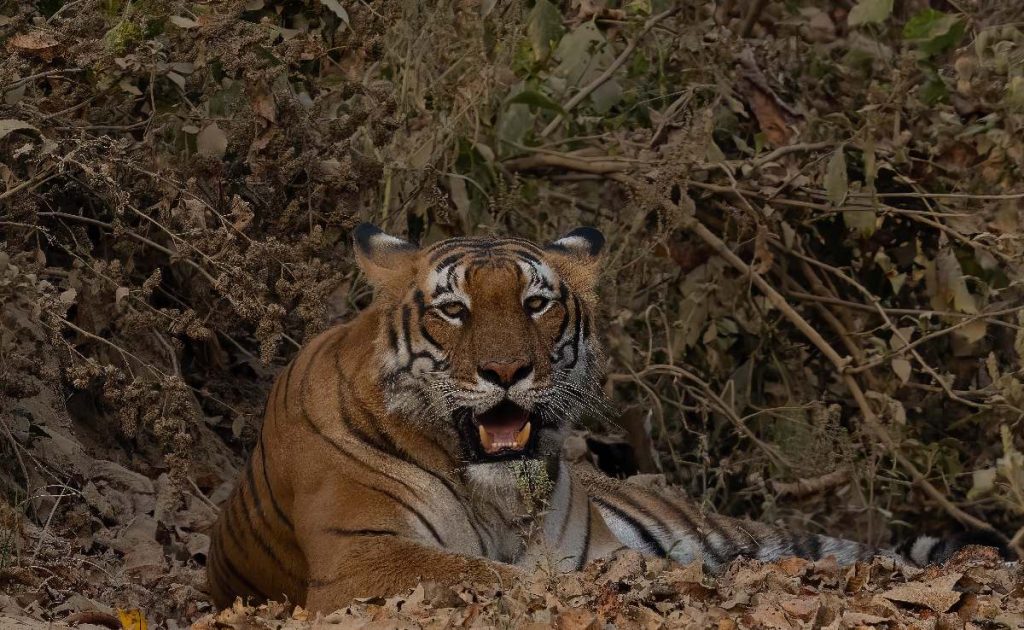
Tiger in Bardia National Park

Covering more than 968 square kilometers, Bardiya National Park is Nepal’s largest protected area in the Terai. It was first established as the Karnali Wildlife Reserve in 1976. Later, when 1,500 households were relocated, nature was given the space to thrive.

Today, Bardiya is home to some of the world’s most iconic species, including:

  • Royal Bengal Tigers—one of the best places in Nepal to spot them in the wild
  • One-horned Rhinos—thriving thanks to strong conservation efforts
  • Asian Elephants, Gangetic Dolphins, and more than 400 bird species

Visitors can enjoy jeep safaris, river excursions, birdwatching, and guided jungle walks. At the same time, they learn about the delicate balance between conservation and community life.

What to Expect at Dalla Homestay

Staying at Dalla Homestay is more than just accommodation—it is a cultural exchange. Guests stay in traditional Tharu homes, eat local cuisine made from fresh ingredients, and take part in daily village life.

Activities include:

  • Cultural performances with Tharu music and dance
  • Cooking classes led by local hosts
  • Nature walks guided by community members
  • Storytelling evenings around the fire

Each family has been trained in hospitality. Therefore, you enjoy comfort while still experiencing authenticity.

Why Choose Dalla Homestay with Himalayan Circuit?

Himalayan Circuit has always championed responsible tourism. With Dalla Homestay, we continue our mission to connect travelers with meaningful experiences that support local communities and protect natural heritage.

By choosing this journey, you:

  • Support grassroots conservation
  • Empower local women and youth
  • Experience Nepal beyond the tourist trail

Book Your Journey Today

Your stay at Dalla Homestay Bardiya is more than a visit—it’s a contribution to conservation and community. So, are you ready to explore Bardiya’s wild heart and Dalla’s warm soul?

Learn more & book now

Patan Durbar Square Restoration Revives Newari Heritage

telya bircks in Patan

A Cultural Renaissance in the Heart of Lalitpur

Sunlight now dances on the glossy red surface of freshly laid telia bricks, giving Patan Durbar Square a glow it hasn’t had in decades. This recent Patan Durbar Square restoration in the heart of Lalitpur celebrates both beauty and authenticity, while reviving pride in Newari heritage.

A Living Museum of Temples and Traditions

Patan Durbar Square

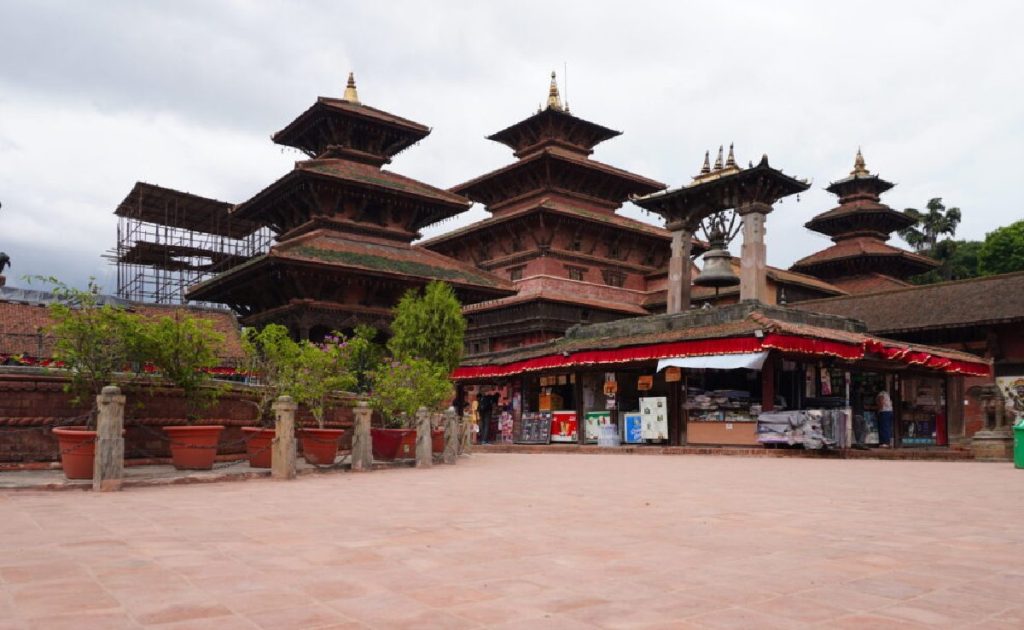
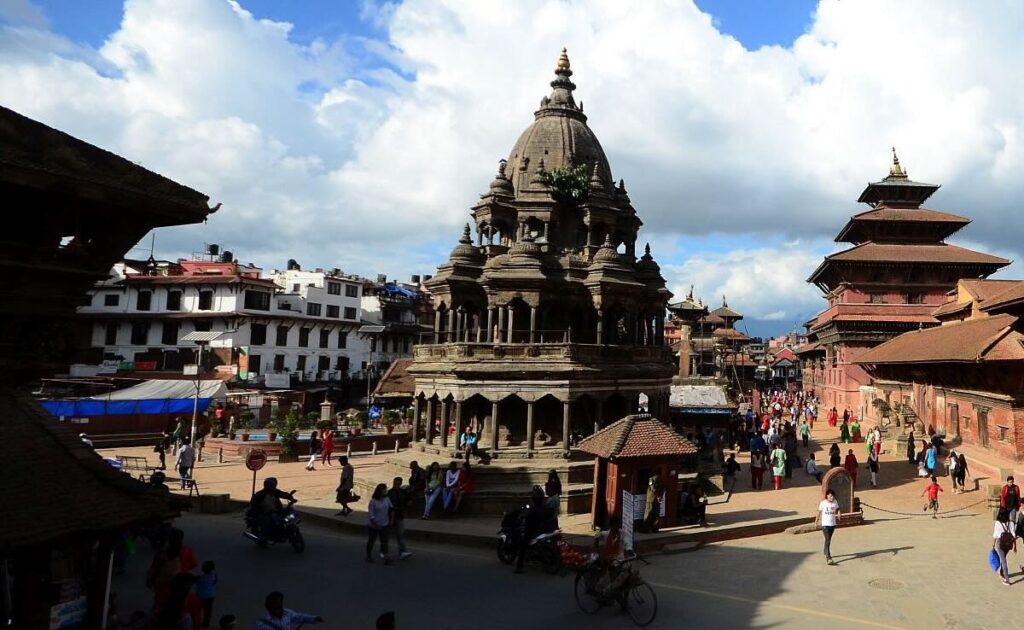
Patan Durbar Square is often described as an open-air museum, and for good reason. Its temples, courtyards, and palaces reflect the artistry and devotion of the Newar civilization, especially during the Malla period.

Among its treasures are:

  • Krishna Mandir – a stone-carved Shikhara-style temple, unique in the valley.
  • Hiranya Varna Mahavihar (Golden Temple) – a Buddhist monastery rich in ritual and symbolism.
  • Bhimsen Temple – honoring the deity of trade and commerce.
  • Taleju Bhawani Temple – blending royal authority with spiritual reverence.

These monuments aren’t relics. Locals still worship here, gather in the courtyards, and pass traditions from one generation to the next.

Telia Bricks: Restoring Authenticity

The Patan Durbar Square restoration shows how traditional materials like telia bricks can bring heritage sites back to life. Craftsmen laid telia bricks—used since the Malla era—across pedestrian paths, temple courtyards, and public spaces. People prize these bricks for their durability, water resistance, and reddish sheen. Their finish not only withstands the monsoon but also blends well with the valley’s intricate wood and stone carvings.

The project cost about NPR 15.2 million and also raised the ground level by four inches. This subtle change improved drainage and accessibility while preserving the square’s original character.

Visitors notice the difference immediately. Walking barefoot or in shoes across the new surface, you feel the firmness underfoot and see how the colors and textures now flow seamlessly together.

A Valley-Wide Cultural Revival

Patan’s renewal reflects a broader movement across the Kathmandu Valley. Cities like Lalitpur, Bhaktapur, and Kathmandu are once again using traditional materials in public spaces—from falchhas (resting places) to community courtyards and temple surroundings.

These projects support local artisans, strengthen cultural identity, and show that tradition has a place in modern life. Travelers benefit too, as each step through these spaces feels more authentic—less like reconstruction, more like living history.

What It Means for Locals, Travelers, and Nepal’s Legacy

Locals regain pride and renew their connection to centuries-old traditions. Travelers enjoy a more immersive and authentic experience of Newari architecture. As for Nepal’s legacy, it sets a sustainable example of conservation—one that honors the past while building for the future.

Patan Durbar Square now shines again—not just as a historic site, but as a reminder that preserving tradition is also a way of moving forward.

First Trip to Bhutan: Explore Culture, Nature & Tranquility

A Journey of Culture, Connection, and Himalayan Tranquility

By Himalayan Circuit | Travel Story by Mr. Anish Neupane, Managing Director of Himalayan Circuit
Date: 22 July 2025

A Dream Realized: From Kathmandu to the Land of the Thunder Dragon

This travel story is personally shared by our Managing Director, Mr. Anish Neupane, who recently went on his first trip to Bhutan to experience its cultural depth, spiritual richness, and tranquility. His reflections capture the essence of Bhutan while also highlighting the strong bond he has built with our trusted partner, Mr. Tashi Tobgay of Unique Bhutan Adventure.

After years of close partnership and cross-border collaboration, Mr. Neupane finally set foot in the Kingdom of Bhutan—a land known for its peaceful landscapes, spiritual richness, and commitment to happiness over materialism. Although he has worked with his Bhutanese partner, Mr. Tashi Tobgay, since 2010, this was his first personal visit to experience the country’s essence from the inside out.

Here, in his own words, he shares the beginning of that journey:

Taking Off from Kathmandu

My journey began on the morning of 22nd July 2025. I left Kathmandu’s Tribhuvan International Airport at 8:26 AM, and soon the plane climbed into the sky. Along the way, I enjoyed spectacular views of the Himalayan giants.

From the left-hand side of the plane, I could clearly see:

  • Mount Everest (8,848.86 m / 29,031.7 ft)
  • Makalu (8,485 m / 27,838 ft)
  • Lhotse (8,516 m / 27,940 ft)

The mountains were breathtaking. Then, as the plane continued, I felt as if I were on a private air tour. This experience set the tone for what would become a deeply fulfilling journey.

Touching Down in Paro: Bhutan’s Gateway

The excitement of my first trip to Bhutan grew as we neared Paro. Soon, I landed at Paro International Airport at 10:00 AM. The airport is surrounded by forested hills and traditional houses, nestled in a narrow valley at an elevation of 2,225 meters (7,300 feet). From the moment I stepped out of the plane, the peaceful energy of Bhutan was noticeable.

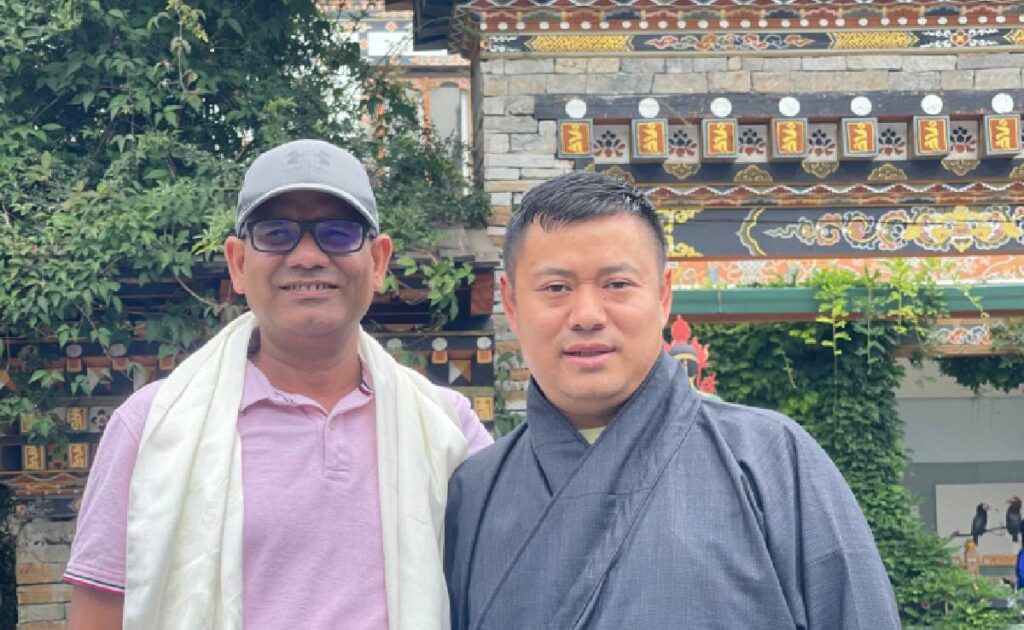
After clearing immigration, I was warmly greeted by Mr. Tashi Tobgay, founder of Unique Bhutan Adventure and my trusted local partner. Although we had shared a long-standing business relationship and hosted him in Nepal several times, this was my first opportunity to join him on his home ground.

Greeted in Bhutanese way at the first time visit in Bhutan

Next, before heading to the capital, we stopped for a short coffee break by the Paro River. The crisp mountain air, traditional architecture, and sound of flowing water created a perfect, peaceful welcome.

Scenic Drive to Thimphu and Warm Bhutanese Hospitality

After the coffee break, we drove 45 kilometers (28 miles) to Thimphu, Bhutan’s capital, at an elevation of 2,334 meters (7,657 feet). Along the way, the roads wound through pine forests and riverside trails, offering beautiful views at every turn.

We also visited Depsi, where Mr. Tobgay is developing a local ironworks facility to support small-scale industry and sustainable construction. Seeing his commitment to Bhutan’s future was truly inspiring.

At his home, I was warmly received by his wife Choki and their three daughters. They welcomed me in the traditional Bhutanese way with a khada (white scarf) and a homemade welcome cake. Later, we shared a hearty Bhutanese lunch full of authentic flavors and warmth.

Exploring Thimphu: Culture, Conservation & City Life

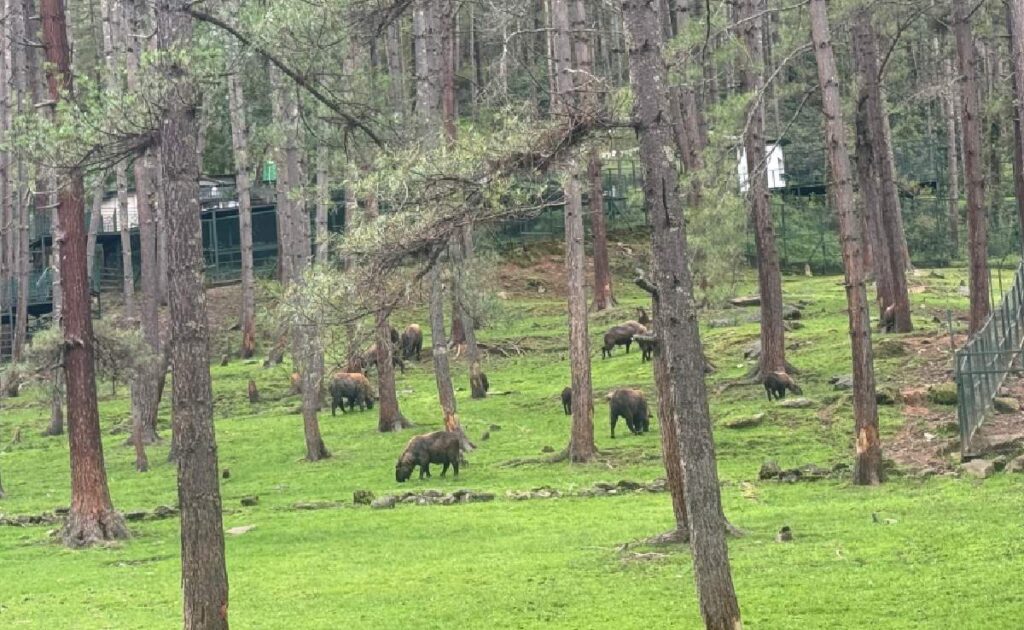
Later that afternoon, I visited the Motithang Takin Preserve, a wildlife sanctuary home to the Takin, Bhutan’s rare and beloved national animal. Located at 2,650 meters (8,694 feet), the preserve offered a calm forest setting where I could connect with nature and see Bhutan’s dedication to conservation.

Next, I explored central Thimphu, wandering through local markets, handicraft shops, and hotels. This gave me a sense of both local lifestyle and tourism infrastructure. Mr. Tobgay also introduced me to his wholesale appliance store, showing the range of his entrepreneurial ventures in Bhutan.

Bhutan’s national animal, the Takin, at Motithang Preserve.

Throughout the city, traditional architecture blends seamlessly with modern elements. The absence of traffic lights speaks volumes about Bhutan’s focus on simplicity, order, and balance.

Reflections: A Personal and Professional Milestone

This first day in Bhutan was far more than sightseeing. It became a moment of reflection, relationship, and realization. Bhutan’s values—compassion, simplicity, and harmony—are not just ideals; they are practiced in everyday life.

This journey strengthened my bond with Unique Bhutan Adventure and reaffirmed why I am proud to offer Bhutan as one of Himalayan Circuit’s signature destinations. This day was only the start of a rich journey through Bhutan’s valleys, monasteries, and communities—experiences I am excited to share with travelers seeking depth, purpose, and peace.

Highlights from My First Day in Bhutan

  • Flight from Kathmandu to Paro (400 km / 248 mi) with panoramic Himalaya1n views
  • Arrival at Paro International Airport (2,225 m / 7,300 ft elevation)
  • Warm welcome by Mr. Tashi Tobgay, Unique Bhutan Adventure
  • Coffee by the Paro River
  • Visit to Depsi and local ironworks project
  • Traditional Bhutanese lunch and hospitality at a local family home
  • Visit to Motithang Takin Preserve (2,650 m / 8,694 ft elevation)
  • Exploring Thimphu markets, hotels, and cultural spaces

Plan Your Bhutan Journey with Himalayan Circuit

If you’re planning your first trip to Bhutan, let it be a journey of connection, not just travel. At Himalayan Circuit & Unique Bhutan Adventure, we specialize in personalized, culturally immersive Bhutan experiences designed with local insight and years of partnership. From scenic valleys and ancient monasteries to local family stays and peaceful treks—your Bhutan story begins here.

connect@himalayancircuit.com
WhatsApp: +977 9851121494
www.himalayancircuit.com

Come, join Himalayan Circuit and experience Bhutan—the Himalayan kingdom where happiness is a way of life.


Unique Experiences: How Federalism Impacts Nepal’s Tourism

Federalism in Nepal

In 2015, federalism in Nepal was officially adopted, marking a significant milestone after years of political challenges. This change introduced a new era of hope and opportunity by decentralizing power among three levels of government: federal, provincial, and local. Each tier now holds distinct responsibilities, including managing development priorities such as tourism—an essential pillar of Nepal’s economy.

Beyond administrative tasks like planning and budgeting, federalism in Nepal has encouraged governments to engage more with local communities to craft policies that reflect regional identities and needs. Consequently, tourism is evolving to become more inclusive and community-driven. No longer confined to traditional hubs like Kathmandu and Pokhara, it is flourishing across Nepal’s diverse provinces.

Understanding Nepal’s Federal Structure

Federalism in Nepal establishes a framework comprising one federal government, seven provincial governments, and 753 local governments, each with clearly defined roles. The federal government oversees national policies, while provincial governments address regional issues. Local governments manage the everyday needs of their communities.

This division enhances service efficiency and accountability, enabling each government level to operate autonomously yet collaboratively. Striking this balance supports national unity while empowering local autonomy, allowing Nepal to effectively serve its diverse population.

The Impact of Federalism on Tourism

Federalism empowers provinces to develop tourism strategies tailored to their unique strengths. This autonomy allows regions to promote local attractions, improve infrastructure, and foster community-based initiatives such as homestays and trained local guides. As a result, tourism is becoming more dispersed and sustainable, offering authentic experiences beyond the well-known destinations.

Below is an overview of how each province is utilizing federalism to shape its tourism landscape:

1. Koshi Province: Adventure and Authenticity

Everest Region Trek: Lukla to Tengboche Adventure
The majestic peaks of the Everest Region lie in Koshi Province.

Home to iconic peaks like Everest, Kanchenjunga, and Makalu, Koshi Province is renowned as an adventure tourism hotspot. However, tourism development here is marked by careful planning and community involvement. Improved infrastructure and connectivity are opening remote areas to visitors, while initiatives like homestays ensure that tourism benefits local residents. This approach preserves the region’s adventurous spirit and fosters meaningful travel experiences.

2. Madhesh Province: Cultural Richness and Wildlife

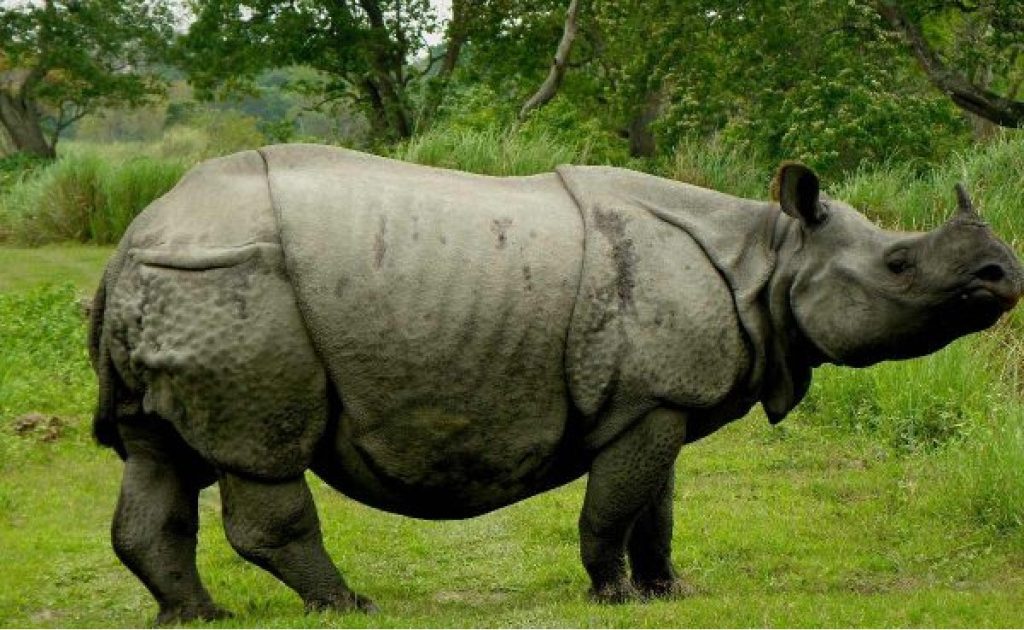
Rhino in Chitwan National Park
The endangered one-horned rhinoceros (Gainda), spotted in Chitwan National Park, which lies in Madhesh Province.

Madhesh Province offers a different but equally valuable tourism experience. Known for its vibrant cultural festivals, historic towns, and warm hospitality, it reflects Nepal’s diverse heritage. The province’s lowland Terai region is home to important wildlife reserves, including parts of the Chitwan National Park, attracting nature lovers and safari enthusiasts. Though tourism here is still developing, Madhesh holds great potential to enrich Nepal’s overall travel offerings.

3. Bagmati Province: Preserving Cultural Heritage

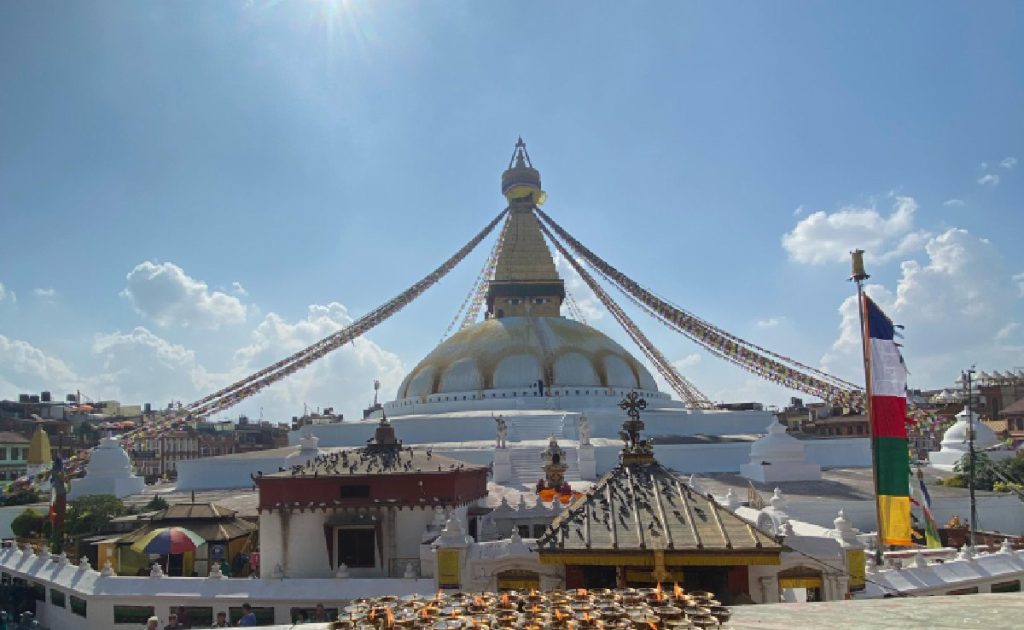
Boudhanath Stupa
 The largest dome-shaped stupa in the world, Boudhanath Stupa, lies in Bagmati Province. 

Bagmati Province, which includes the Kathmandu Valley, is Nepal’s cultural heartland. It boasts ancient temples, palaces, and UNESCO World Heritage Sites that chronicle Nepal’s rich history. Coordinated efforts between provincial and federal authorities have led to restoration projects and enhanced visitor facilities. These developments are helping cultural tourism thrive while safeguarding the valley’s historic character and offering a welcoming environment for visitors.

4. Gandaki Province: Embracing Eco-Friendly Tourism

4 Clients with 1 Guide in Thapla Danda
With the Annapurna range behind them, clients enjoy the beauty of Gandaki Province.

Gandaki Province captivates with its natural beauty, from serene lakes to the Annapurna trekking circuit. Here, tourism development prioritizes environmental conservation. Upgraded infrastructure and trekking routes have improved accessibility, while eco-friendly initiatives such as waste management programs and eco-lodges promote sustainable tourism. This balance ensures that the province’s natural charm remains intact for future generations.

5. Lumbini Province: Nurturing Spiritual Tourism

Lumbini Peace Stupa
Located in Lumbini Province, the World Peace Stupa of Lumbini stands as a symbol of harmony and devotion.

As the birthplace of Buddha, Lumbini Province holds profound spiritual significance. It attracts pilgrims and visitors from around the world. Recent investments in transportation, visitor centers, and heritage preservation enhance the visitor experience while respecting the area’s sacred character. This thoughtful development supports a sustainable model that honors Lumbini’s cultural and spiritual legacy.

6. Karnali and Sudurpashchim Provinces: Unlocking Hidden Potential

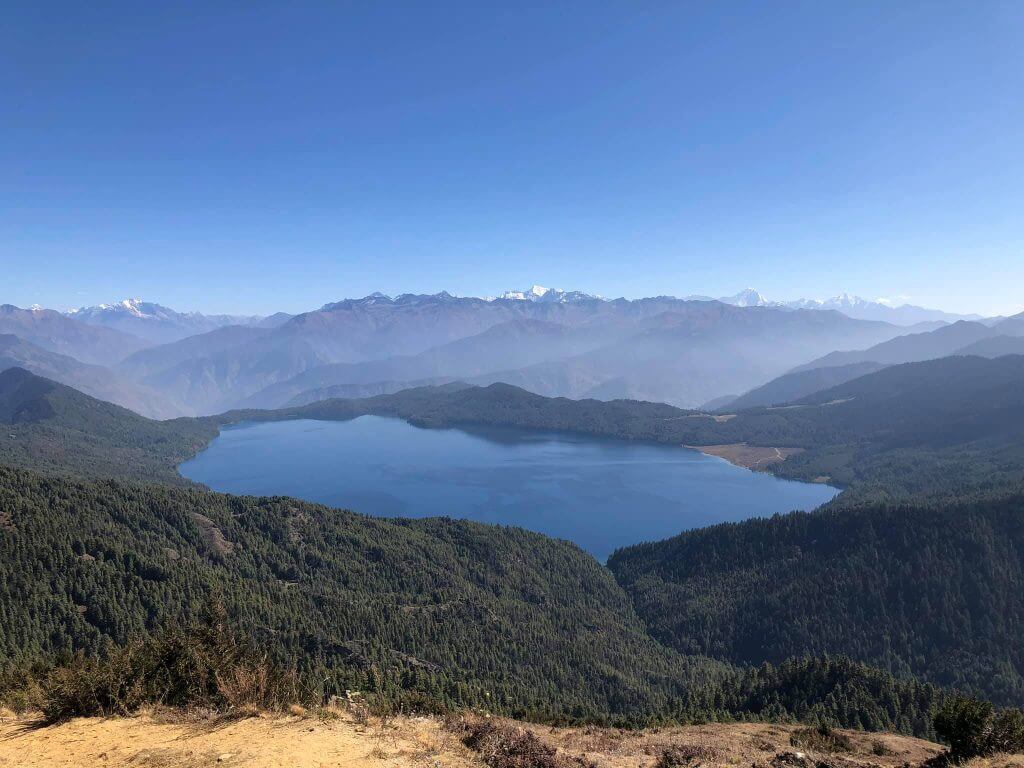
Rara Lake
The largest fresh water lake of Nepal, Rara lake, which lies in the Karnali Province

Karnali and Sudurpashchim, known for their vast rural landscapes and untouched natural beauty, have long remained off the beaten path. Recent infrastructure improvements and community skill-building programs are gradually opening these provinces to tourism. This growth is intentionally paced to preserve cultural integrity and environmental sustainability, fostering inclusive economic development that benefits local communities.

Looking Ahead: A Harmonious Future for Tourism in Nepal

Federalism in Nepal has paved the way for a more balanced and responsible approach to tourism. When all levels of government collaborate effectively, investments can be targeted to revive heritage sites, protect natural resources, and create authentic experiences that showcase each region’s unique character. This unified effort transforms Nepal’s diverse landscapes into a cohesive narrative of sustainable tourism, ensuring that the benefits of growth reach every corner of the country.

If you seek to explore Nepal beyond the usual routes, discover the stories and cultures woven into each province. Experience the country through journeys that reflect its true spirit and local pride.

Unique Experiences: Mardi Himal Tree Planting for Nature and Community

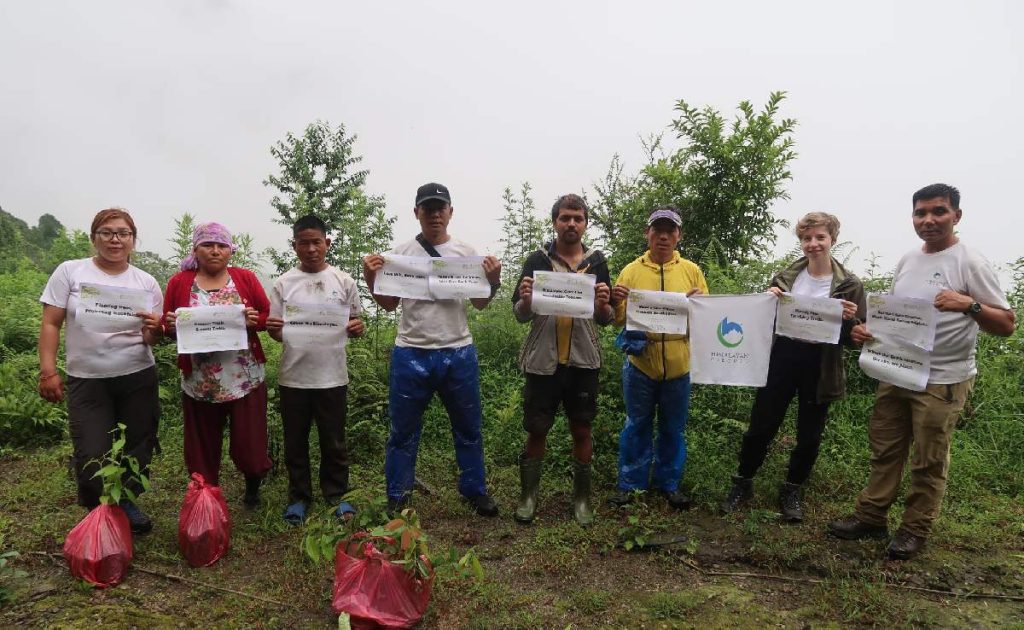
Mardi Himal Tree Planting initiative

Protecting the Himalayas and Supporting Communities

On July 5–6, 2025, Himalayan Circuit led a Mardi Himal tree planting initiative to help preserve the fragile Himalayan environment and support local communities. With deforestation and global warming threatening the region, planting trees has become more important than ever. This project not only contributes to environmental conservation but also provides meaningful work for our trekkers during the off-season when tourism slows down.

Choosing the Right Trees and Location

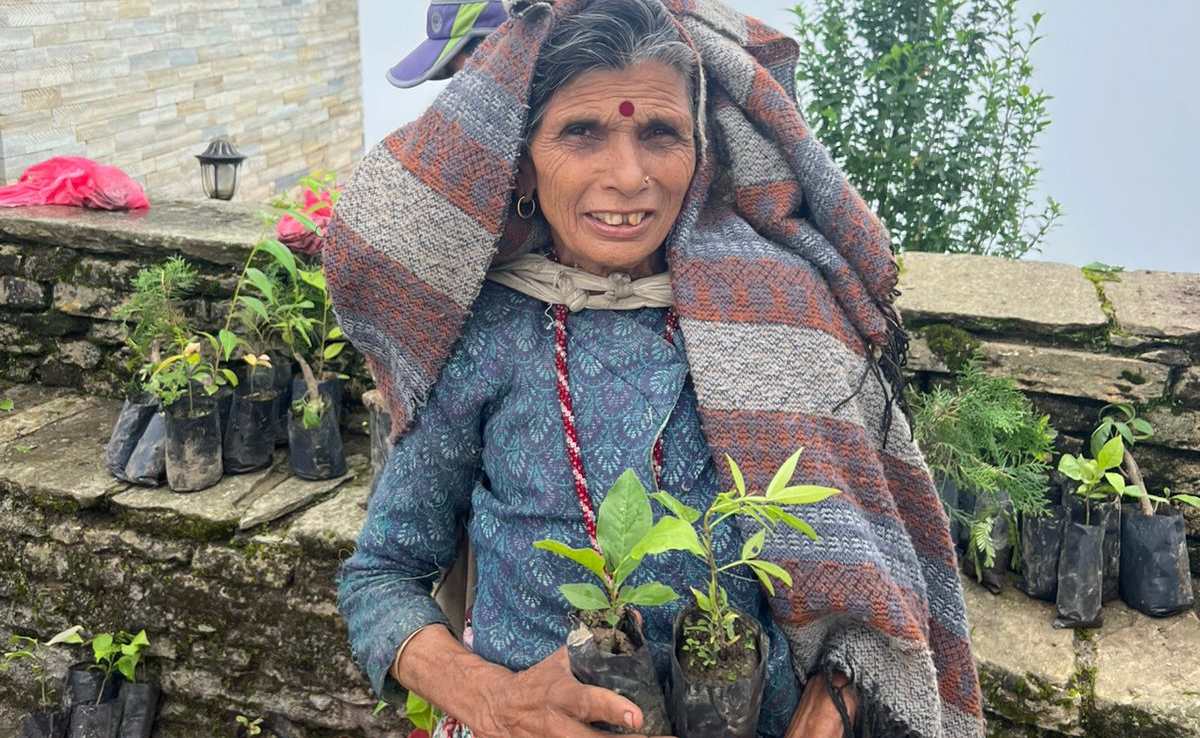
Local People Participating in Tree plantation.
With gentle hands and deep roots, a grandmother joins the Mardi Himal reforestation — a true symbol of community commitment.

The trees were grown in a nursery run by the Pokhara Division Forest Office. Out of 280 seedlings planned, over 250 strong native trees were selected. These included Rhododendron (Nepal’s national flower), White Frangipani (Champ), Cinnamon, and Black Pepper (Timur).

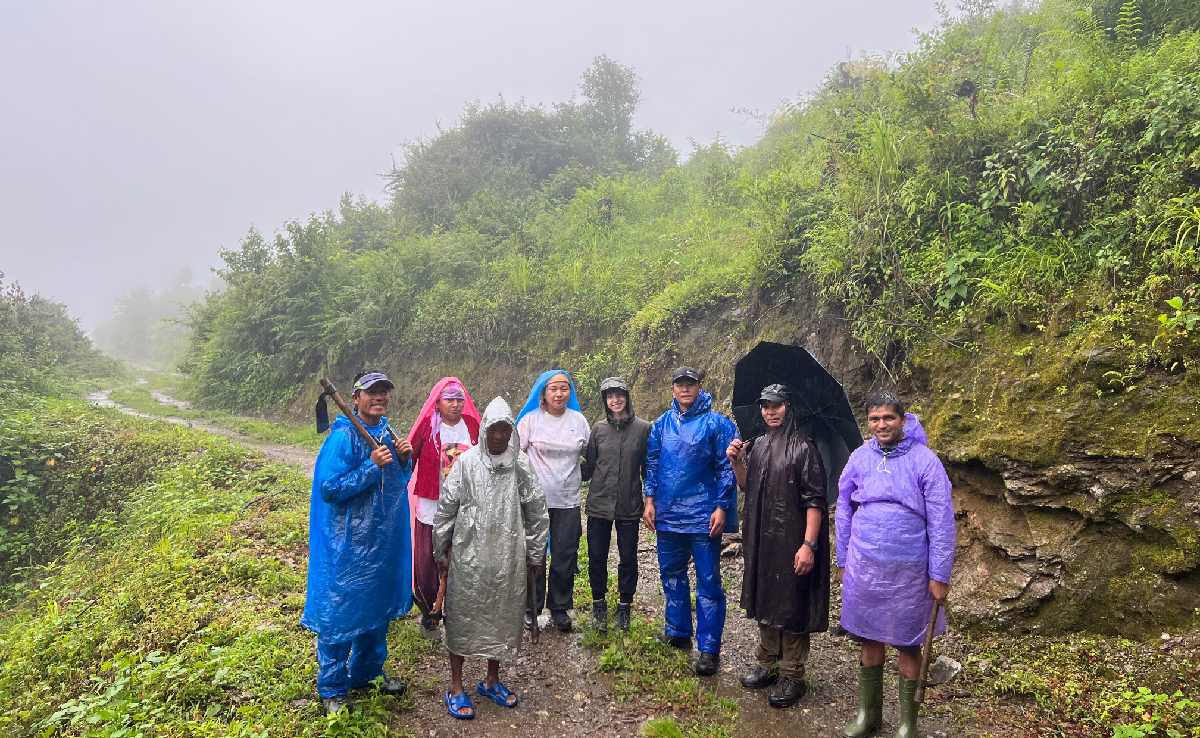
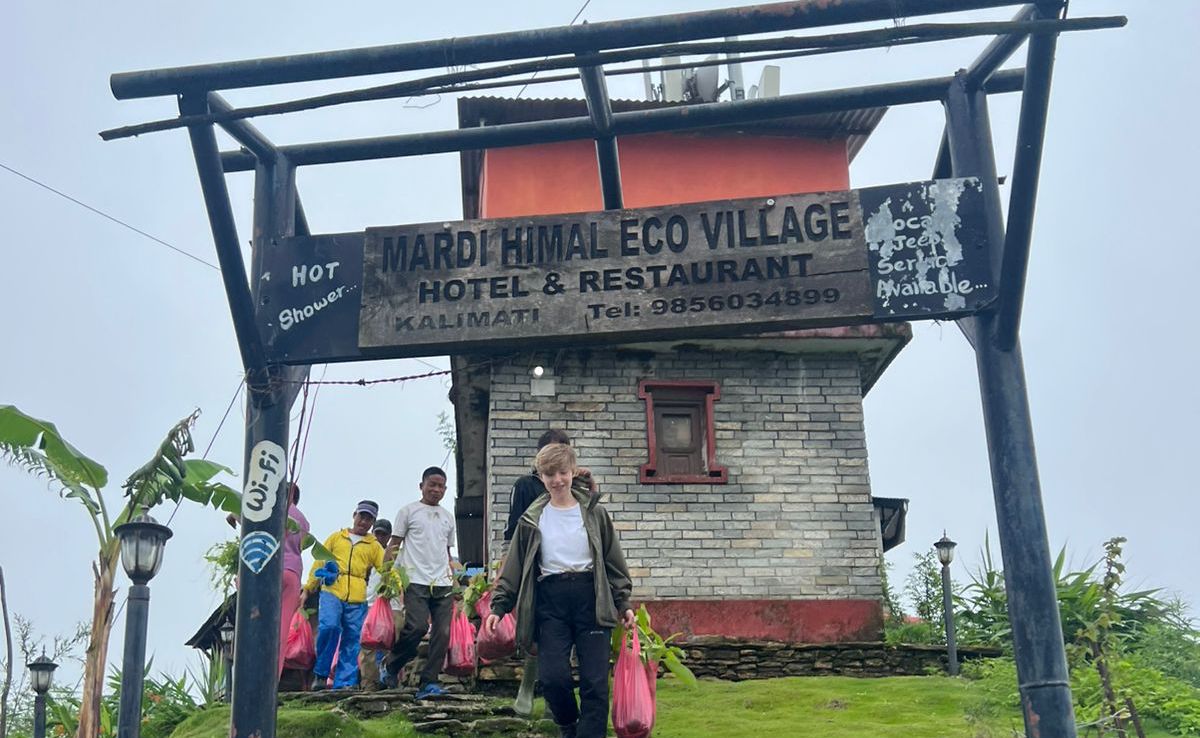
The timing was perfect because monsoon rains help young trees grow. We planted the trees in Kalimati (“black soil”), a fertile area along the Mardi Himal Trek. Our team, led by Sanu Bhujel, worked with the Mardi Himal Eco-Village Hotel. This sustainable community grows organic food such as corn and rice. They helped us find good spots safe from cattle grazing.

Expert Tips from a Local Trekkers

One of our trekkers, Sagar, from the Kirant community, shared his tree-planting tips:

  1. Dig a hole about one foot deep in soft soil.
  2. Remove grass nearby because it grows fast and traps heat.
  3. Leave 3 to 4 meters distance between each tree.
  4. Most importantly, “Smile and enjoy the moment.”
Tree pleantation in Mardi himal route
Sagar in action — planting not just trees, but a deeper connection between people, nature, and the mountains we call home.

Building Strong Community Bonds

Connecting community through sustainability
The faces behind the work — each smile a reminder of what’s possible when communities and nature come together.

During two busy planting days, strong bonds formed between our team and the local community. The Eco-Village promised to care for the trees by adding organic fertilizer and trimming grass. Sanu will visit again in six months to check on their growth.

Looking Ahead

Mardi Himal eco lodge
Mardi Himal Eco-Village Lodge — a true partner in sustainability, where organic farming, local wisdom, and conservation come together.

We ended the project with a warm farewell ceremony. It reminded us all of our shared duty to protect nature and build a Green and White Himalaya. We thank everyone who helped. We look forward to planting more trees next year with even more people.

Special thanks to Freedy, a key contributor to this project, for sharing her experience and insights during the tree-planting initiative.

As a side note, the Mardi Himal Eco-Village is also a fantastic spot for birdwatchers. It hosts over 125 bird species, including some endangered ones. You can learn more on their Instagram page.

Nepal Travel News: Best Time to Visit with a Month-Wise Plan

Flute

Wondering about the best time to visit Nepal?

Here’s the truth — every month is the best time to visit in Nepal because it offers something completely different. One moment you’re trekking through snowy Himalayan trails, and the next, you’re dancing in a colorful festival, sipping tea in a peaceful hill town, or spotting rhinos deep in the jungle.

At Himalayan Circuit, we believe that one trip is never enough to truly experience Nepal. That’s why we’ve put together a month-by-month travel guide — showing you the best places to visit, the top festivals to enjoy, and the unique experiences waiting for you throughout the year.

Month Destination/Activity Why Visit? Key Festival(s) Image
January Kathmandu Valley Heritage Tour Crisp air, great visibility, fewer crowds. Swasthani Puja, Maghe Sankranti
February Chitwan National Park Safari Best wildlife viewing during dry season. Maha Shivaratri kathmandu-and-chitwan-10-day-tour
March Annapurna Foothills Trek Colorful hills, clear skies. Holi – Festival of Colors Himalayan peaks in Nepal – Nepal best travel destination
April Bhaktapur & Nagarkot Sunrise New Year celebrations + spring vibes. Bisket Jatra Himalayan peaks in Nepal – Nepal best travel destination
May Bandipur & Gorkha Heritage Tour Cooler hill escape, cultural depth. Buddha Jayanti  Bandpur
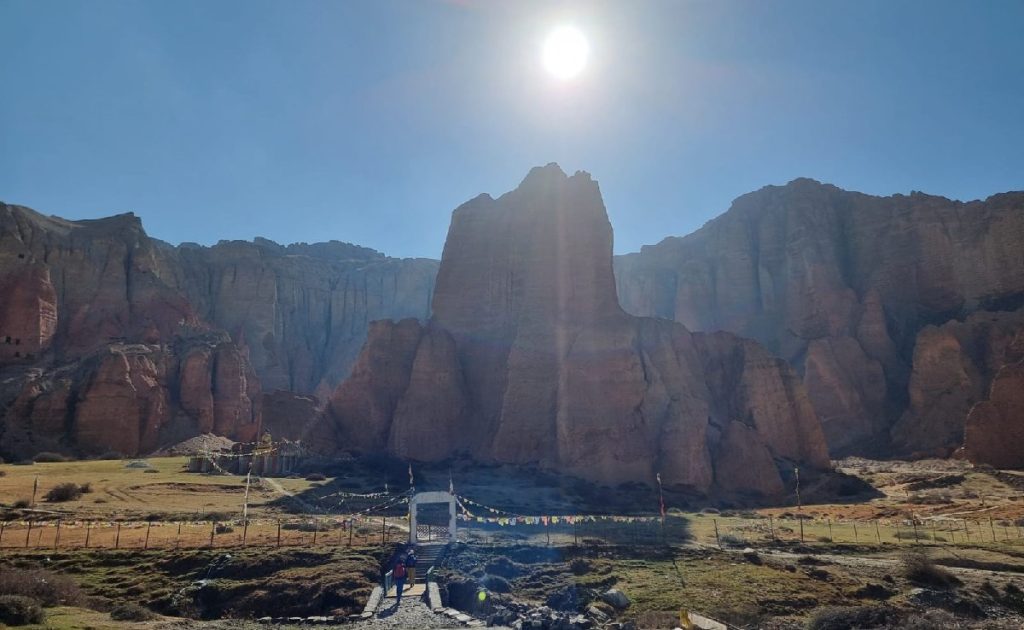
June Upper Mustang Trek Rain-shadow region, unique landscapes. Tiji Festival Upper Mustang
July Pokhara Lakeside & Sarangkot Fewer tourists, vibrant nature. Ropain Jatra Ropai Jatra
August Helambu Trek Lush landscapes, fewer crowds. Gai Jatra Chispani
September Langtang Valley Trek Rejuvenated trails, clear skies. Indra Jatra
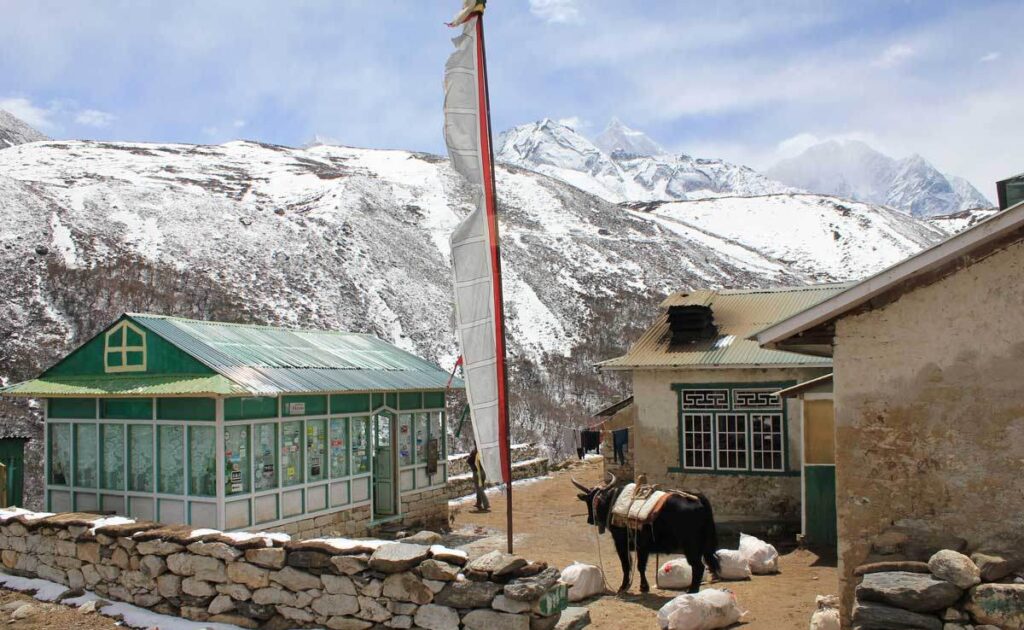
October Everest Base Camp Trek Peak trekking conditions. Dashain Everest Base Camp Trek
November Lumbini & Bardia National Park Ideal wildlife and spiritual tourism mix. Tihar Tiger in Bardia National Park
December Ilam Tea Gardens & Eastern Hills Winter serenity without the chill. Mani Rimdu Ilam Chiya Bagaan

A Country That Changes With the Seasons

Nepal is more than just Everest and temples — it’s a 12-month journey waiting to unfold. From east to west, each region offers its own magic, shaped by the rhythm of nature and Nepal’s deep-rooted culture. For example, you might be trekking among blooming rhododendrons in March, chasing tigers in the jungles of Bardia in November, or sipping fresh tea in the hills of Ilam in December. No matter when you visit, there’s always something exceptional happening here.

Travel Better with a Local Partner

As a result, planning the right trip at the right time can make your experience even more meaningful. That’s where we come in. As a local tour operator, Himalayan Circuit is your trusted companion in discovering Nepal authentically. Whether you’re coming in spring or winter, we’ll help you plan a journey that aligns with the best each month has to offer. Because here in Nepal — every month is a good month to visit.

Nepal Diary: Airport Arrival Guide – What You Need to Know

Airport arrival procedure in Nepal

First Impressions: Welcome to Nepal

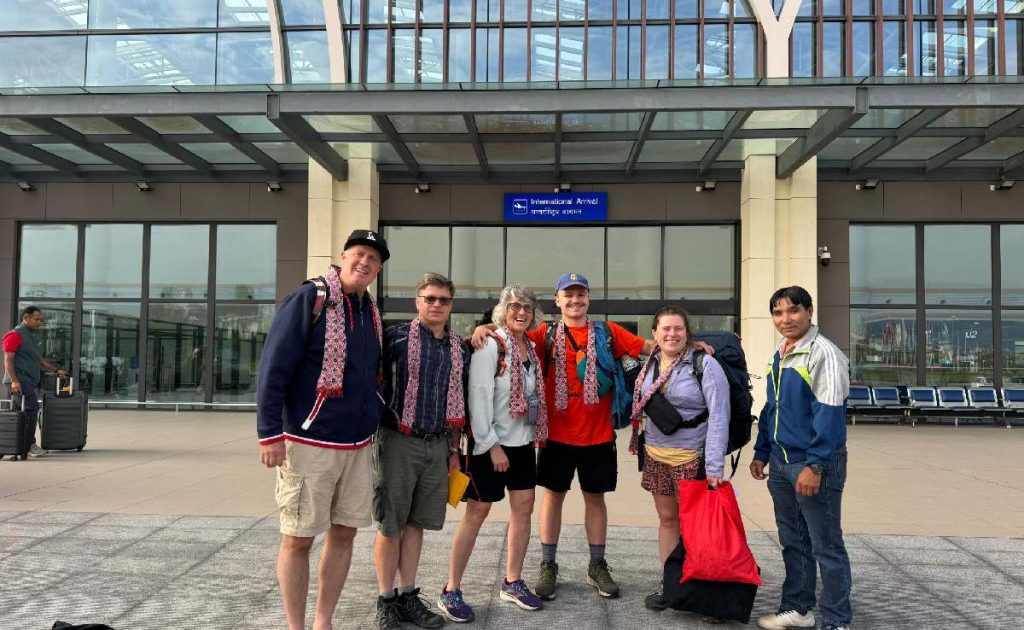
The airport arrival procedure in Nepal can be overwhelming for first-time visitors. Tribhuvan International Airport in Kathmandu is the main entry point, and understanding what to expect—from visa on arrival to hotel check-in—makes your journey smoother and stress-free.

Nepal is a land where towering mountains meet timeless traditions. Your first encounter with it usually begins at Tribhuvan International Airport in Kathmandu, where most travelers land.

The airport can get busy. But knowing what to expect will help you move through the process with ease. This guide by Himalayan Circuit walks you through everything—from immigration and baggage claim to SIM cards and hotel check-in.

At the Airport: What to Expect

As your plane descends into Kathmandu, you’ll see green hills and distant snowy peaks. The airport itself is small and lively, filled with voices from across the world.

After deplaning:

  • If you already have a visa, go to the “Foreigners with Visa” desk.
  • If not, use the visa machines, then head to “Foreigners without Visa”, pay your visa fee, and continue to immigration.

VIsa Machines

Immigration and Passport Control

Passport control is the next stop. During peak season, expect a short wait. Otherwise, the process is simple.

Join the correct queue—one for Nepali citizens, and one for foreigners. Keep these ready:

  • Your passport
  • Arrival form
  • Visa or visa payment receipt

Once the immigration check is complete, the next step in the airport arrival procedure in Nepal is collecting your luggage at the baggage claim area.

Baggage Claim and Customs

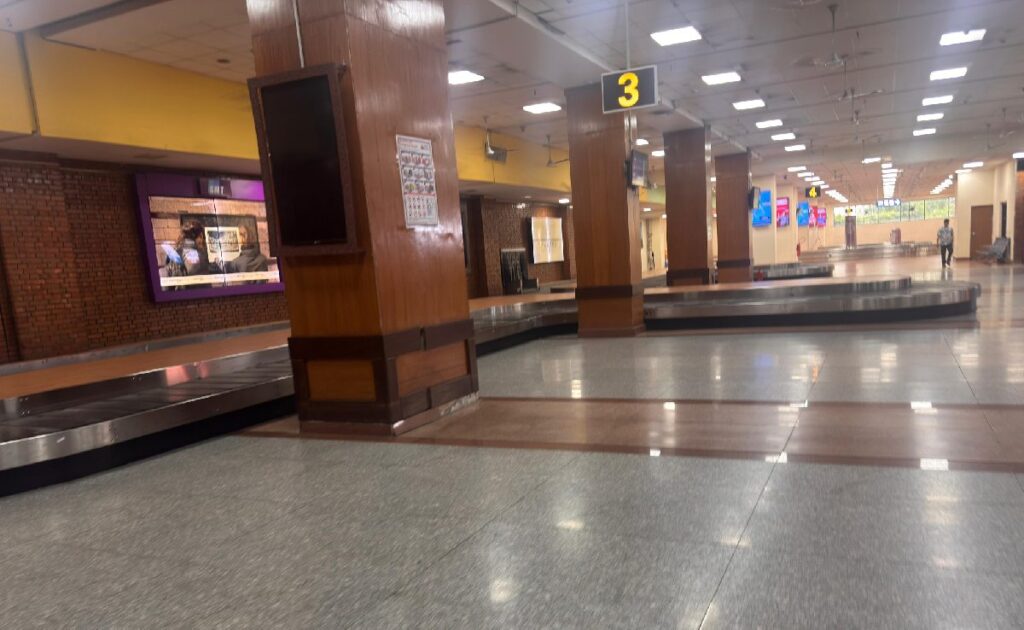
The baggage claim area is basic but functional. Look for your flight number on the screens above the belts. Keep in mind:

  • Sometimes only one belt works
  • Bags may show up on a different belt

Avoid paying porters unless you want help—trolleys are free. For lost or damaged luggage, go to the airline service desk nearby.

At customs, follow the:

  • Green channel if you have nothing to declare
  • Red channel if you’re carrying items like expensive electronics or large cash amounts

Random checks can happen, so keep receipts for valuable items.

Exiting the Airport: Transport and Help

After customs, you’ll exit through the arrival gate. Here, you’ll see:

  • Hotel representatives
  • Taxi counters with fixed rates

It’s safer and easier to book through official counters or your hotel, rather than bargaining outside.

Safety and Security Tips

Nepal is generally safe. Still, be smart:

  • Keep your passport and cash secure
  • Don’t share personal info with strangers
  • Ask for help only from uniformed staff, tourist police, or information desks

Currency Exchange and SIM Cards

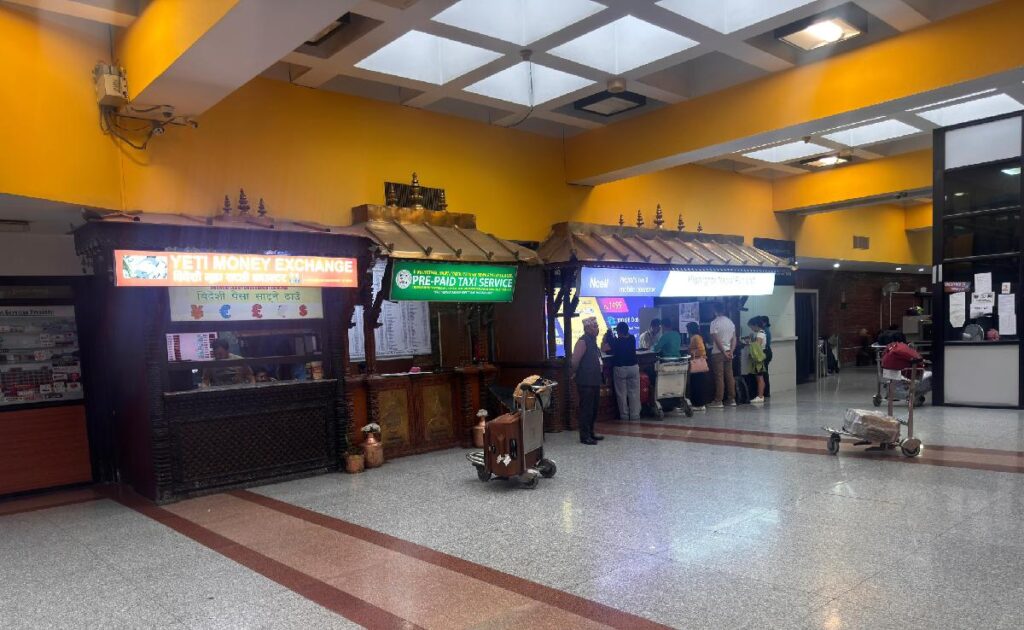
Currency exchange booths and ATMs are available inside the airport. The rates may not be the best, but they’re fine for small amounts.

Before leaving, visit a telecom booth for a local SIM card. Ncell and NTC are the main providers. Skip the tourist packages—they cost more. A regular SIM should be around NPR 150.

Hotel Check-in

Once you’ve exchanged currency and bought your SIM, head to your hotel. Have your passport and booking confirmation ready. Most hotels will need them to register your stay.

Arriving in a new country is the start of a fresh adventure. While Nepal’s airport process may seem a bit formal, it’s designed to keep things smooth and secure.

With the right info in hand, you’ll move through the airport with confidence—and start focusing on what really matters: the beauty, culture, and warm hospitality that Nepal has to offer.

Nepal Diary: Bhutan, Tibet & Nepal – A Cultural Explorer

Multi country tour - Nepal, Bhutan and Tibet

Multi country trips with Nepal are a remarkable way to explore the Himalayas. Combining Nepal with nearby countries like Bhutan and Tibet makes the journey even more enriching.

With smooth travel connections and close borders, visiting these destinations from Nepal is both convenient and secure. Tibet lies to the north of Nepal, while Bhutan is a short distance east of India. Together, these countries offer stunning mountain landscapes, ancient monasteries, rich cultural traditions, and heritage that feels untouched by the modern world.

Nepal’s central location in South Asia makes it the ideal starting point for exploring the region.

Best Multi-Country Trips from Nepal

Nepal, Bhutan, and Tibet Tour

This journey takes you through three of the most inspiring destinations in Asia within a single itinerary.

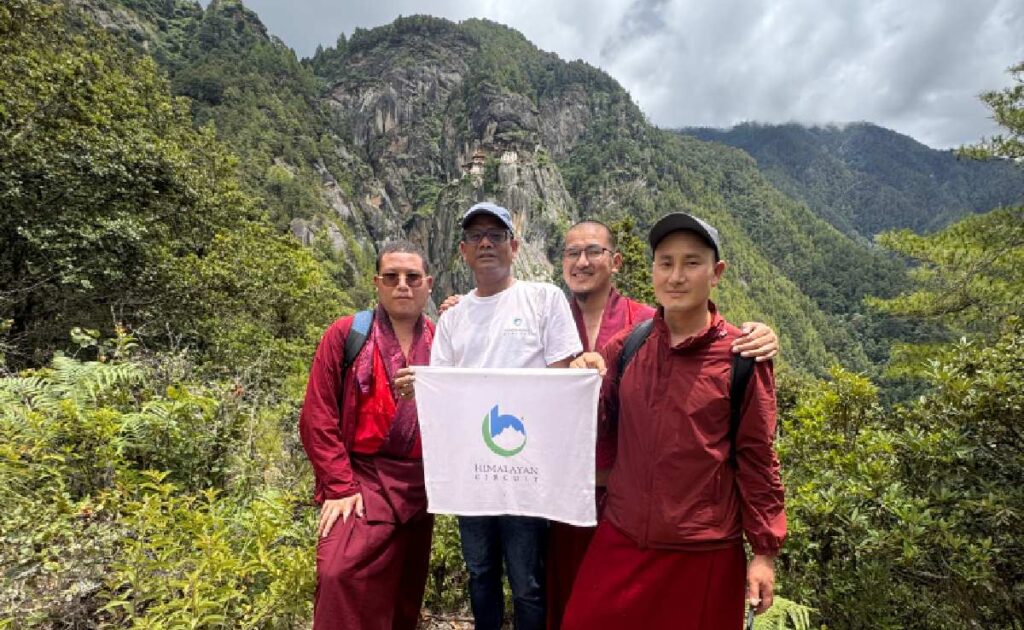
Begin in Nepal, where you can explore the heritage sites of Kathmandu, witness sunrise views from Sarangkot in Pokhara, and enjoy a wildlife safari in Chitwan. Then fly to Bhutan, where peaceful monasteries, dramatic valleys, and the famous Tiger’s Nest hike await. After Bhutan, continue to Tibet, where you’ll visit UNESCO World Heritage sites in Lhasa, admire the beauty of Yamdrok Lake, and experience deep spiritual traditions.

This tour blends natural beauty, cultural depth, and spiritual experiences into one seamless journey.

Nepal and Bhutan Tour

Nepal and Bhutan Tour

This tour brings together ancient temples, quiet monasteries, and dramatic Himalayan scenery.

In Bhutan, visit fortress monasteries like Punakha Dzong, explore the iconic Tiger’s Nest near Paro, and enjoy the calm atmosphere of Thimphu. Bhutan’s peaceful spirit offers a deep sense of serenity.

Before reaching Bhutan, Nepal welcomes you with vibrant energy. You’ll visit sacred sites, take in views of snowcapped peaks, and even trek in the mountains. Together, Nepal and Bhutan create a unique experience filled with culture and timeless beauty.

Nepal and Tibet Tour

Nepal Tibet Tour

This tour combines the cultural richness of Nepal with the spiritual depth of Tibet.

In Nepal, explore the ancient cities of Kathmandu, Bhaktapur, and Patan. Their architecture and traditions offer a true taste of Nepali heritage. After that, travel overland or by flight to Tibet, often called the “roof of the world.” Visit Lhasa’s iconic sites like Potala Palace and Jokhang Temple, and explore Barkhor Street’s bustling market life.

Beyond Lhasa, discover Yamdrok Lake, the historic town of Gyantse, and Rongbuk Monastery near Everest Base Camp. This tour offers a deep connection to both land and spirit.

Nepal and India Buddhist Circuit Tour

Lumbini

This trip is designed for those seeking to follow the path of the Buddha across Nepal and India.

Start in Nepal with spiritual sites like Boudhanath and Swayambhunath in Kathmandu. Then visit Lumbini, the birthplace of Lord Buddha, where you can explore ancient ruins and international monasteries.

Cross into India to continue the journey through major Buddhist pilgrimage sites. In Bodhgaya, visit the Bodhi Tree where Buddha attained enlightenment. Explore other important sites like Sarnath, Rajgir, and Kushinagar, each rich with historical and spiritual significance.

Simikot Kailash Tour

Nepal- Kailash tour

The Simikot to Kailash tour is a unique blend of adventure, culture, and spiritual discovery.

Begin in the remote northwest of Nepal, trekking through villages and forests before reaching the Tibetan plateau. The highlight of the tour is the sacred Mount Kailash Kora, a pilgrimage route respected by Hindus, Buddhists, Jains, and Bon followers.

Along the way, you’ll see prayer flags fluttering in the wind, peaceful monasteries, and the sacred Lake Manasarovar. This journey offers deep spiritual meaning and connection with nature.

Travel Logistics and Tips

  • Nepal offers a visa on arrival, but permits for Bhutan and Tibet must be arranged in advance through registered tour operators.

  • The best travel seasons are March to May and September to November, when the weather is stable and views are clear.

  • Direct flights from Kathmandu are available to Paro (Bhutan), Lhasa (Tibet), and major cities in India.

  • In remote areas, ATMs may not be available, so it’s best to carry enough local currency.

  • Pack warm clothes, comfortable walking or trekking shoes, and any essential gear.

  • Make sure your travel insurance includes high-altitude coverage and emergency evacuation.

  • Hiring experienced local guides can enhance your experience, especially with permits, language, and cultural understanding.

  • Respect local customs and dress modestly, especially at religious sites and monasteries.

Multi-country trips from Nepal are made easy by the region’s close geography and well-established travel routes. From the peaceful highlands of Tibet to the serene monasteries of Bhutan and the sacred sites of northern India, these journeys blend naturally.

Each destination brings its own unique character, but together they create a smooth and deeply rewarding travel experience. With thoughtful planning and the right support, you can explore this region in a way that is immersive, meaningful, and unforgettable.

Pack your bags and get ready for an inspiring multi-country journey from Nepal with Himalayan Circuit—an experience you’ll cherish for a lifetime.

Nepal Travel News: The International Airports in Nepal

Airport arrival procedure in Nepal

International airports in Nepal are playing a major role in reshaping the country’s tourism landscape. With the addition of modern gateways in Pokhara and Bhairahawa, Nepal is more connected than ever

However, things are changing. Nepal is now improving its aviation sector to support its growing tourism. The openings of Pokhara International Airport and Gautam Buddha International Airport in Bhairahawa have made travel easier and more direct.

These new airports help share tourism benefits across the country. They reduce travel time, support local economies, and allow visitors to reach different parts of Nepal more easily.

In this blog, The Himalayan Circuit gives you a detailed look at Nepal’s existing and upcoming international airports.

1. Tribhuvan International Airport – Kathmandu’s Main Gateway

Tribhuvan International Airport, once called Gauchaur Airport, is Nepal’s oldest and busiest international airport. Renamed in 1955, it’s located in Kathmandu, the heart of Nepal’s political and cultural life.

TIA has a 3,350-meter runway and connects Nepal to over 40 cities in 17 countries. Major airlines like Qatar Airways and Turkish Airlines operate flights here.

Thanks to its central location, travelers can quickly access key attractions such as Swayambhunath (Monkey Temple), Pashupatinath Temple, Patan, and Bhaktapur. These UNESCO World Heritage Sites are just a short drive away.

Moreover, TIA is the main starting point for treks to the Everest, Langtang, and Annapurna regions.

2. Bhairahawa’s Gautam Buddha International Airport

In May 2022, Gautam Buddha International Airport opened in Bhairahawa. Named after Lord Buddha, who was born nearby in Lumbini, this is Nepal’s second international airport.

The airport lies about 270 kilometers from Kathmandu. Its 3,000-meter runway and modern terminal can handle large planes and many passengers. This makes travel more convenient for both domestic and international tourists.

Because it is close to the Indian border, this airport offers easy access to southern Nepal. Its biggest advantage is its direct connection to Lumbini, a spiritual hub and UNESCO site.

In addition, travelers can explore Kapilvastu Museum and Chitwan National Park, both nearby.

3. Pokhara International Airport – Nepal’s New Tourism Hub

Pokhara International Airport, opened in 2023, is another major addition to Nepal’s aviation system. Built with help from China, this airport replaces the older domestic terminal.

It meets international standards with longer runways and upgraded terminals. As a result, reaching Pokhara—one of Nepal’s top tourist cities—is now quicker and more comfortable.

The airport is useful for those heading to the Annapurna region or Muktinath Temple. Visitors can also enjoy local highlights like Phewa Lake, Sarangkot, World Peace Pagoda, and Begnas Lake.

4. The Future of International Airports in Nepal – Nijgadh

Nijgadh International Airport is a proposed airport in Bara District, about 150 kilometers from Kathmandu. This large-scale project is being planned to reduce traffic at TIA.

It is expected to have one of the longest runways in South Asia and will handle millions of travelers every year. The goal is to create a major travel hub for the eastern and central Terai region.

The airport will also improve access to places like Parsa National Park and Gadhimai Temple, helping promote tourism and development.

Nepal’s international airports in Nepal plays a key role in tourism, trade, and cultural exchange. As more airports open and old ones improve, travel becomes smoother and more accessible.

For visitors, this means shorter trips, fewer layovers, and easier access to Nepal’s top destinations. In short, these gateways are shaping a more connected and welcoming future.

With every new flight, Nepal opens up a little more—inviting the world to experience its beauty, culture, and adventure.

Nepal Diary: Road Trip Highlights from Kathmandu to Chitwan

Travel is more than just moving from one place to another — it’s about embracing new destinations, cultures, and experiences. So why rush when every mile offers something worth exploring? The 175 km Kathmandu to Chitwan road trip via the Prithvi Highway captures this perfectly. It offers a journey that is as rewarding as the destination itself.

This route connects the vibrant urban life of Kathmandu with the serene natural beauty of Chitwan. Along the way, it weaves through cultural landmarks, religious sites, and scenic landscapes. Therefore, the journey becomes a memorable part of any Nepal adventure.
Here are some of the best spots and activities along the Kathmandu to Chitwan road trip:

Chandragiri Hills

Start your journey with a peaceful walk at Chandragiri Hills. The panoramic views of the Himalayas are spectacular from here. In addition, visit the Bhaleshwar Mahadev Temple, which adds a spiritual touch to the surroundings. For adventure seekers, a cable car ride over the lush forests offers sweeping views of Kathmandu Valley. You can also opt for a short hike to enjoy the natural beauty.

CHandragiri hills

Manakamana Temple

The Manakamana Temple is a perfect cultural and spiritual stopover along the Prithvi Highway. Dedicated to the goddess Bhagawati, this hilltop temple is popular among devotees. A scenic cable car ride from Kurintar takes you to the temple. From here, you can enjoy panoramic views of the Trishuli River and surrounding hills.

Trishuli River Rafting

For a burst of adventure, consider rafting on the Trishuli River. Half-day and full-day rafting trips are available along the highway. Travelers can float past terraced fields, rolling hills, and scattered villages. This activity, therefore, adds the right amount of thrill and scenic charm to your trip.

Rafting in Seti River

Malekhu

Take a break in Malekhu, a riverside town known for its local fish delicacies. You can enjoy freshly caught fish from the Trishuli River, prepared with local spices. In addition, small shops here offer snacks, fruits, and handmade goods reflecting local culture.

Jalbire Waterfall

Located near Mugling, Jalbire Waterfall (also known as Lamo Jharna) is a beautiful 60-meter cascade surrounded by lush greenery. After a long drive, this spot offers a refreshing break. You can dip in the cool waters, listen to birdsong, and immerse yourself in nature.

Devghat

Just before reaching Chitwan, consider a side trip to Devghat. It is a revered pilgrimage site where the Trishuli and Kali Gandaki rivers meet. Known for its mythological and spiritual significance, Devghat is home to ashrams, Sanskrit schools, and temples. In fact, it’s especially popular during Makar Sankranti. This site offers a glimpse into Nepal’s deep-rooted Vedic traditions.

The Kathmandu to Chitwan road trip, with its cultural stops and scenic diversions, is one of the best ways to experience Nepal’s diverse landscapes and heritage. From the calm of Chandragiri Hills at the start to the wildlife safaris of Chitwan at the end, this route lets you slow down and truly connect with Nepal — its people, nature, and spirit.

Take the Kathmandu to Chitwan road trip offered by Himalayan Circuit and discover Nepal the way it’s meant to be seen — one unforgettable stop at a time.

Slide Background
Nature & Landscape
Get ready for a challenging but beautiful high-altitude trek

Nepal is known for her three distinct ecological zones namely Terai Hills and Himalayas You can experience the plain landscapes and the dense jungles with the wild animals Hills have the terraces for ..

previous arrowprevious arrow
next arrownext arrow

Wildlife & Nature: Exploring the Rivers of the Gandaki in Nepal

Madi khola- Tributary of Gandaki

The tributaries of the Gandaki River are vital lifelines that shape Nepal’s culture, geography, and biodiversity. The Gandaki River, also known as the Narayani or Gandaki, is one of Nepal’s most significant and sacred rivers. Flowing from the high Himalayas to the plains, it holds immense geographical, cultural, and spiritual importance. Beyond its sheer scale, what makes Gandaki remarkable is the dynamic network of tributaries that feed it — rivers that shape landscapes, sustain communities, and invite travelers into Nepal’s heartlands.

Covering a basin of 46,300 sq. km and acting as a left-bank tributary of the Ganges in India, the Gandaki River merges waters from glaciers, mountains, and hills, carving the world’s deepest gorge between Dhaulagiri and Annapurna. In this blog, Himalayan Circuit introduces the key tributaries of the Gandaki River and how travelers can explore them.

Kali Gandaki – A Major Tributary of the Gandaki River

Major Attractions: Kali Gandaki Gorge, Upper Mustang trekking, shaligram fossil sites, Jomsom cultural tours

The Kali Gandaki River, named after the goddess Kali, originates on the Tibetan plateau and cuts deep between Dhaulagiri and Annapurna, forming the famous Kali Gandaki Gorge. Culturally revered for its sacred shaligram fossils, it also supports major hydropower projects.

Tourism activities: Trek through the dramatic Upper Mustang, visit the ancient village of Kagbeni, explore Jomsom’s cultural heritage, and enjoy rafting in lower stretches.

Budhi Gandaki – An Important Tributary of the Gandaki River

Major Attractions: Manaslu Circuit Trek, white-water rafting, cultural village tours

Originating in the Manaslu Himal, the Budhi Gandaki River gathers strength from glacial melts and flows southward through rugged valleys before joining the Trishuli River.

Tourism activities: Experience the remote and scenic Manaslu Circuit Trek, enjoy adventurous rafting, and engage in cultural exchanges in traditional villages along the route.

Marsyangdi River –

Major Attractions: Annapurna Circuit Trek, Marsyangdi rafting and kayaking, Lamjung cultural tours

The Marsyangdi River forms near Manang where Khangsar Khola and Jharsang Khola meet. Known for deep gorges and waterfalls, it flows through Manang, Lamjung, and Tanahun before merging with Trishuli.

Tourism activities: Raft the thrilling rapids of Marsyangdi, trek the renowned Annapurna Circuit, and visit Gurung villages rich in tradition.

Madi River –

Major Attractions: Madi village tours, Chitwan National Park access, eco-tourism activities

The Madi River, though shorter, originates from the Annapurna and Machhapuchhre ranges and supports diverse ecosystems and local communities.

Tourism activities: Explore Madi village’s cultural experiences, birdwatch near Chitwan, and enjoy community-based eco-tours.

Trishuli River – Adventure and Culture in a Gandaki Tributary

Major Attractions: Rafting, camping, fishing, Gosaikunda pilgrimage

The Trishuli River starts from sacred Gosaikunda Lake and carves dramatic gorges as it flows south. It merges into the Narayani River at Devghat.

Tourism activities: Raft its varied rapids (ideal for both beginners and experts), camp along scenic spots, fish, and visit nearby cultural sites like Gosaikunda and Devghat.

Daraudi River

Major Attractions: Daraundi Kalika hydro project, Gorkha rural tourism

Springing from the northern Manaslu slopes, the Daraudi River flows through Gorkha’s highlands and eventually feeds into Marsyangdi.

Tourism activities: Trek through remote Gorkha villages, explore traditional farming communities, and experience untouched rural landscapes.

From the fierce flow of Kali Gandaki to the quiet streams of Daraudi, each tributary shapes not only Nepal’s geography but also its culture, biodiversity, and livelihoods. These rivers are more than waterways — they are lifelines, adventures, and stories waiting to be experienced.

Let the tributaries of the Gandaki River guide you through some of Nepal’s most authentic landscapes. Book your journey with Himalayan Circuit and discover rivers that flow with both history and adventure.

Spiritual & Wellness: Homestay Experiences in Nepal

Homestays in Nepal

Homestays in Nepal offer a special chance to experience the heart of Nepali communities. Staying with a local family lets you share their way of life, traditions, and stories. You are welcomed not just as a guest but as a friend or family member.

These stays are more than just a place to sleep. For example, whether you’re cooking together or laughing over a shared meal, you’ll take part in everyday life. Homestays in Nepal range from simple guest rooms in busy cities to shared spaces in peaceful mountain villages. In this blog, Himalayan Circuit shows you the beauty, warmth, and honest hospitality that make homestays in Nepal so special.

Experiencing Life with a Local Family in Nepal

Arrival and First Impressions

As soon as you arrive, warm smiles and traditional Nepali greetings welcome you. Locals press their palms together and say Namaste. Sometimes, they also greet you with garlands, tika, flowers, or a khada (a traditional scarf).

You’ll get a short tour of the house. Most homes are cozy and simple, built in the Nepali style. After settling in, the family introduces you to the surroundings and explains the way of life you’ll enjoy during your stay.

Daily Life and Routine with the Family

Living with a local family lets you see how people in Nepal spend their days. You will surely discover things that surprise you. For instance, the day often starts with a morning prayer and a short puja, followed by a comforting cup of tea.

Throughout the day, family members share the housework. Meanwhile, children get ready for school. You’ll see people working in the fields, filled with crops that change with the seasons. You are welcome to join them, whether gathering fresh produce or helping with simple tasks around the house.

In rural areas, animals are a big part of daily life. Tending to them is important, and you can take part in this too. In the evening, the family comes together for dinner. They sit as a group and talk over big plates of dal bhat, sharing stories and laughter.

Nepali Cuisine: Cooking and Dining with the Family

Learning how to Cook the Nepali Meal.

There is no fixed menu at a homestay. Instead, you simply eat what the family eats. The meals are simple but full of rich flavors. Common dishes include dal bhat, dhido, momo, sel roti, and gundruk, all made with fresh local ingredients.

What’s more, you can learn to cook these traditional meals. The hosts are happy to teach you. Cooking and eating these warm, home-cooked meals with the family makes every meal feel like a celebration of togetherness.

Cultural Immersion and Festive Celebrations

One of the best parts of staying with a local family is joining their festivals. These events bring Nepal’s colorful culture and long-standing traditions to life.

Festivals like Dashain, Tihar, Holi, Teej, and Losar are celebrated all year. Each one blends religious devotion, cultural practices, and community bonding. Every festival has its own customs, prayers, foods, and joyful activities. Being part of these celebrations with locals is a rich and unforgettable experience.

Exploring the Village

In today’s fast-moving world, spending time in these quiet villages is refreshing. Each day brings new discoveries. For example, you might walk along narrow paths, wander through green fields, or simply breathe in the clean, fresh air while listening to birds.

The Bonding Experience and Life Lessons

By the end of your stay, you won’t feel like a guest anymore. You’ll feel like part of the family. Even neighbours often stop to say hello or invite you for tea.

Experiencing life with a local family in Nepal fills you with love and warmth. You’ll learn the value of simplicity, the strength of community, and the beauty of small moments. Nepali people believe in Atithi Devo Bhava — “The guest is god.” As a result, you will feel not just welcomed but truly cherished.

Throughout your stay, you’ll find a new family and a new place to call home. It’s about noticing the small, beautiful rhythms of village life while creating memories that stay with you forever.