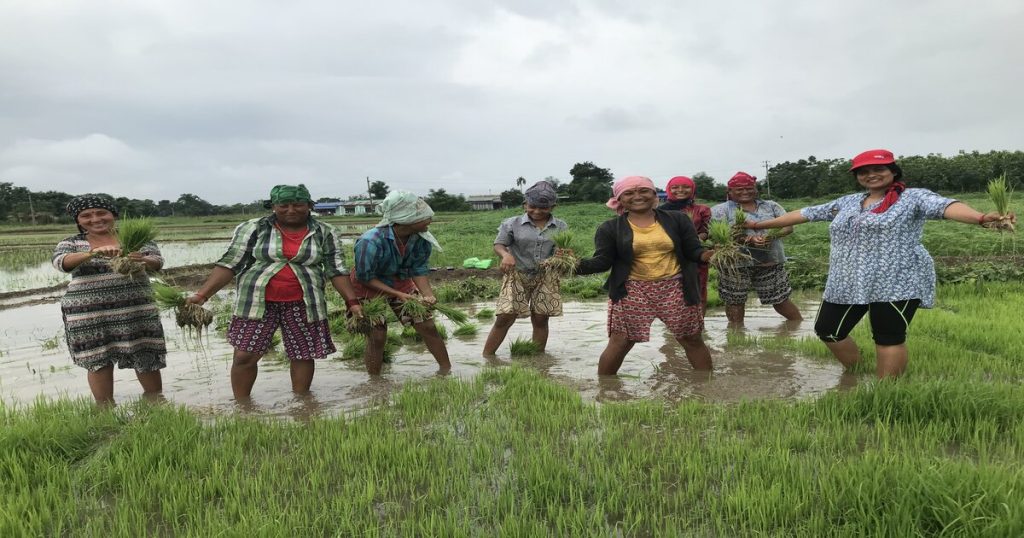
Travel Diaries: A Journey Through Nepal’s Memorable Experiences

Everest Base Camp Trek

Nepal is a land where natural beauty meets deep spirituality. Moreover, from the hot plains of the Terai to the towering peaks of the Himalayas, the country offers travelers countless memorable experiences in Nepal. Lush landscapes, diverse cultures, and centuries-old traditions make Nepal a must-visit destination for anyone seeking adventure, culture, and serenity.

Trekking the Himalayas: Magical Mountains
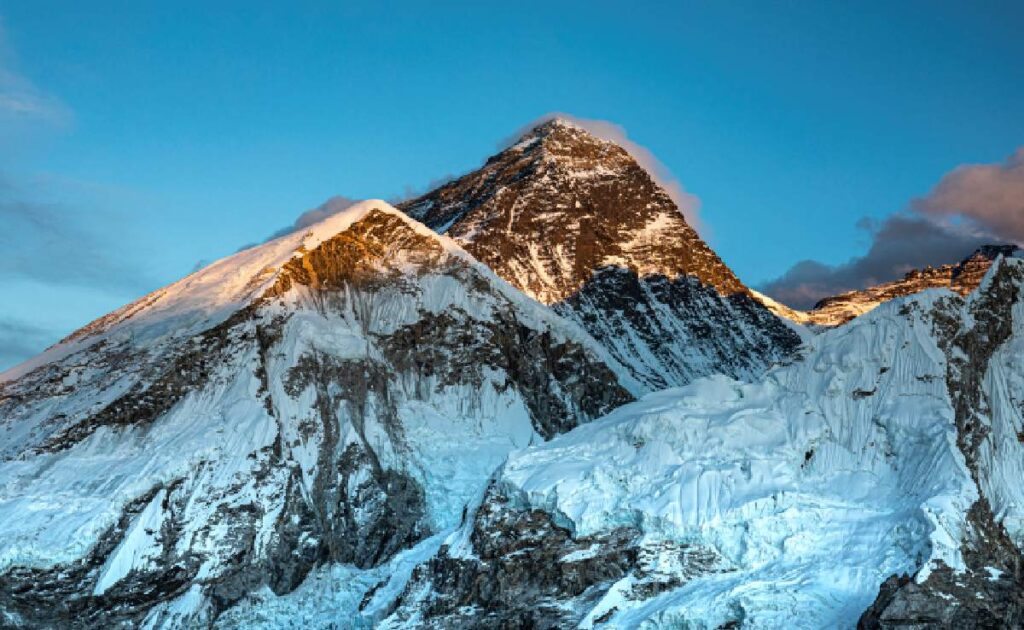
Nepal is home to eight of the world’s ten highest mountains. In addition, every year, travelers arrive to explore high-altitude villages inhabited by Gurungs, Magars, and Sherpas. As a result, trekking in the Himalayas is a feast for the senses, offering stunning views of snowcapped peaks and green valleys. Furthermore, these treks combine physical challenge with breathtaking scenery, making them among the most memorable experiences in Nepal.

Spiritual Journey: Temples, Monasteries & Rituals
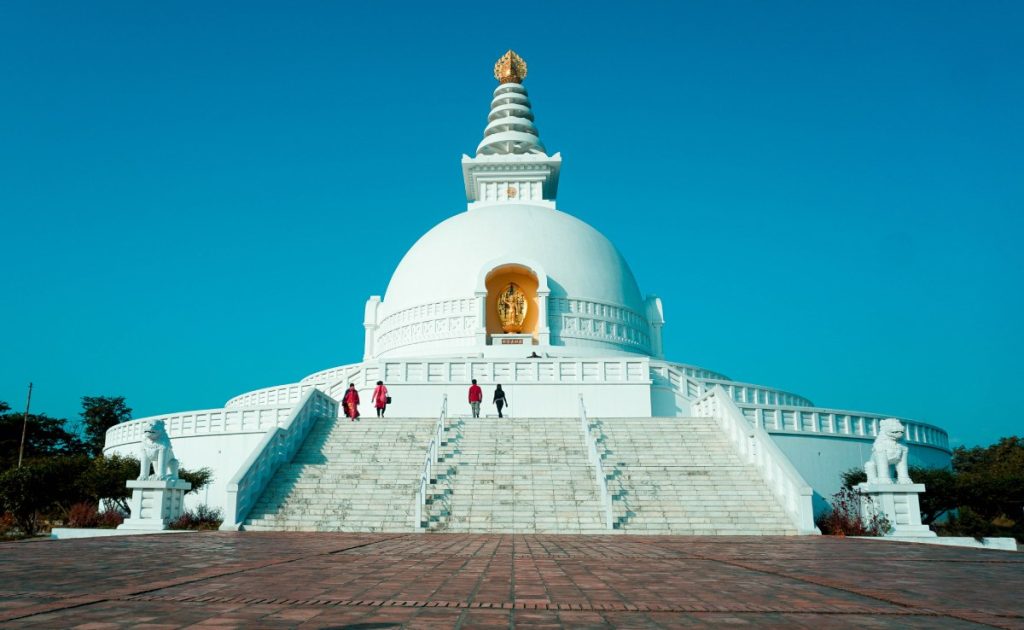
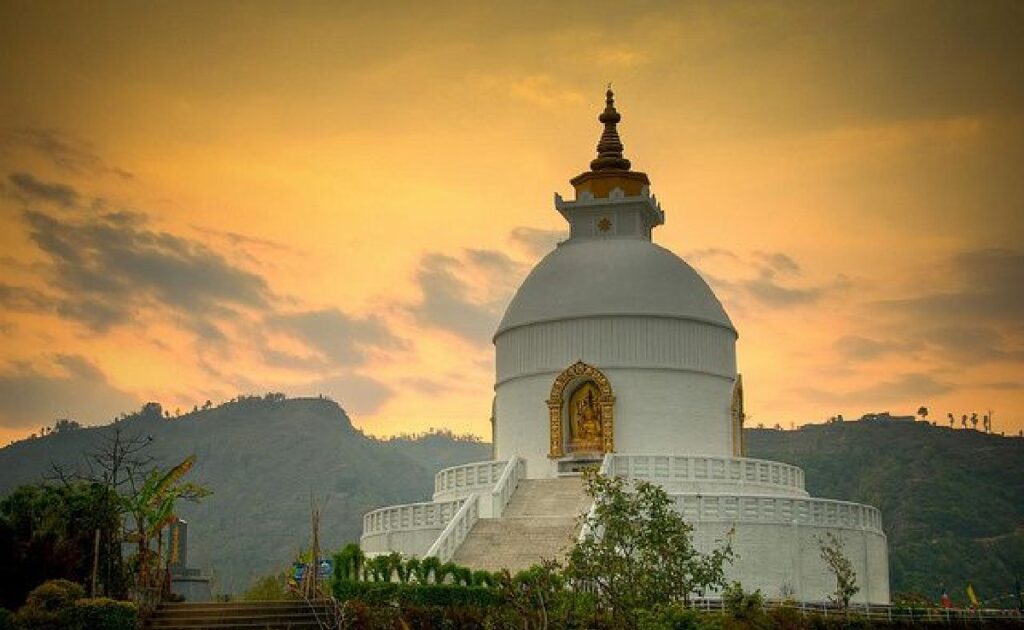
Lumbini Peace Stupa

Religion is deeply woven into daily life in Nepal. Additionally, temples, monasteries, and local rituals create a strong spiritual atmosphere. Visiting Pashupatinath, Swayambhunath, and the quiet monasteries of Lumbini allows travelers to connect with their inner self. Therefore, experiencing local festivals, prayer ceremonies, and sacred rituals is one of the most unique ways to enjoy memorable experiences in Nepal.

Hidden Gems: Off-the-Beaten-Path Adventures
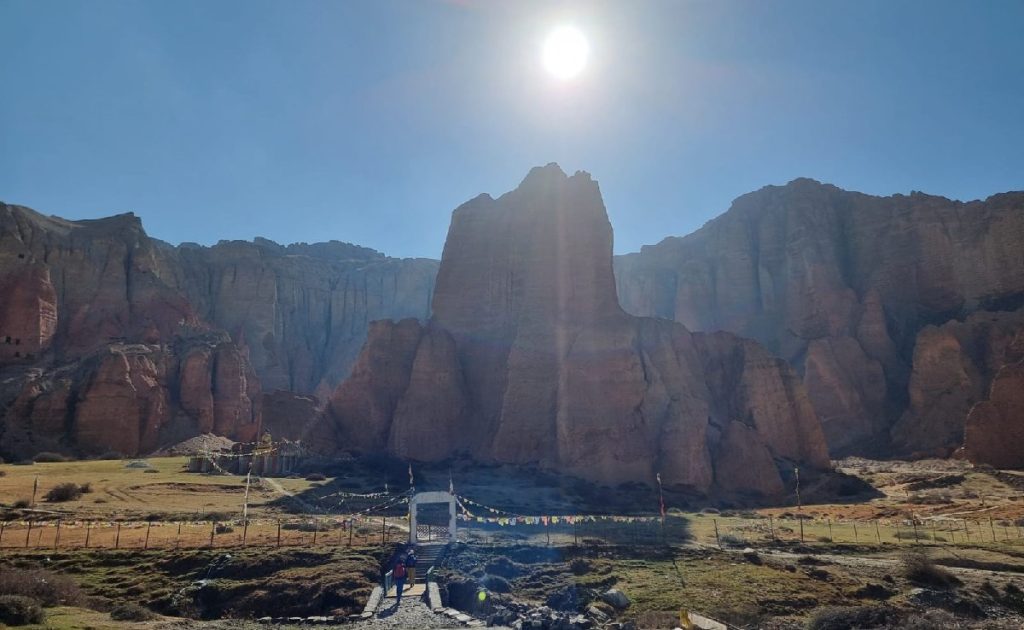
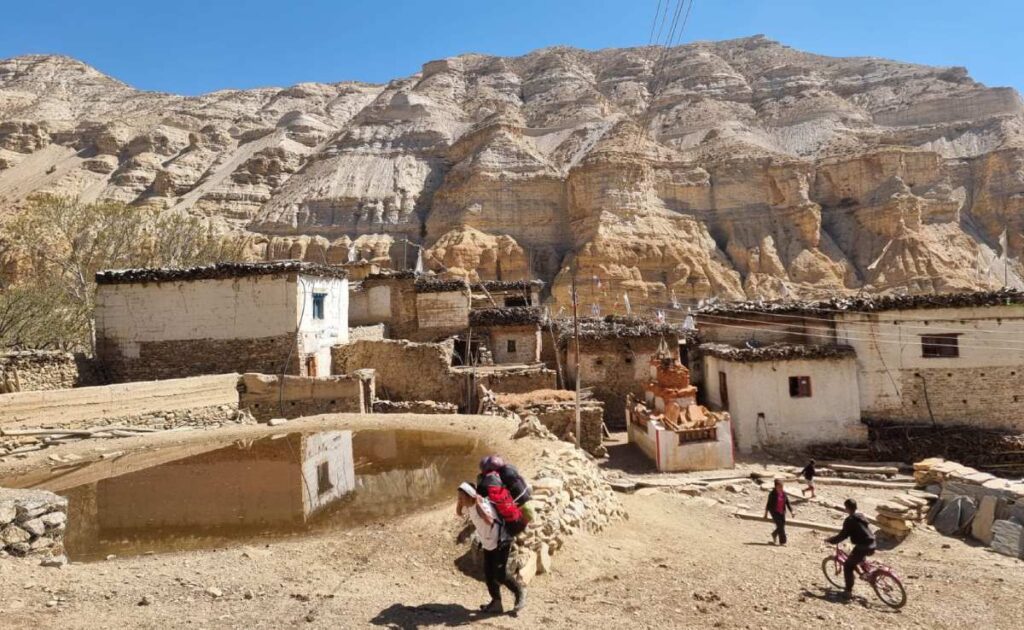
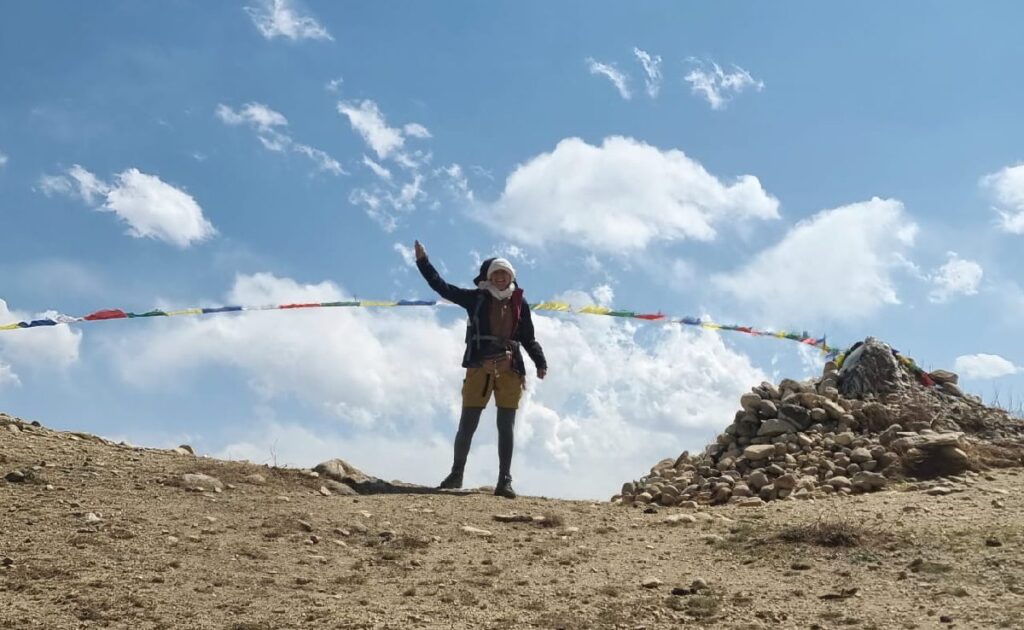
Upper Mustang

Nepal’s rugged landscapes hide many unspoiled destinations. For example, remote areas like the Manaslu Circuit, Rara Lake, Khaptad National Park, Bandipur, Ilam, and Dolpo offer peace, beauty, and authentic cultural encounters. Similarly, exploring these places allows travelers to enjoy solitude, nature, and local traditions in a way few other countries can provide. Off-the-beaten-path adventures are essential for truly memorable experiences in Nepal.

People & Hospitality: Heartfelt Connections

Nepal is home to diverse ethnic communities, including Thakalis, Tharus, Gurungs, and Limbus. Moreover, despite cultural differences, local values of kindness and hospitality bind them together. Travelers are welcomed with warm smiles, generous hearts, and genuine friendliness. As a result, interacting with local communities adds a deeply personal touch, making these moments unforgettable and among the most cherished memorable experiences in Nepal.

Cultural Festivities: Colors, Music & Celebration

Lalitpur the Music City

Nepal celebrates over 50 festivals each year. In particular, major celebrations like Dashain, Tihar, and Holi captivate visitors with vibrant colors, music, and ritual. Traditional jatras, Lhosar, Udhauli, and Ubhauli bring the local culture to life. Consequently, experiencing these festivities allows travelers to witness Nepalese traditions firsthand and enjoy rich cultural experiences in Nepal.

Final Thoughts

From trekking the Himalayas to spiritual journeys, hidden gems, and colorful festivals, Nepal offers countless ways to create lasting memories. Additionally, interacting with warm-hearted communities, exploring serene landscapes, and witnessing ancient traditions ensure every traveler leaves with extraordinary stories. Therefore, planning your trip with these moments in mind guarantees some of the most memorable experiences in Nepal you will ever have.
Nepal Diaries: Nepal in September – Weather, Trekking & Festivals

Nepal in September marks the transition from the monsoon season to early autumn. Rainfall begins to decrease, the landscapes turn lush and green, and travel conditions slowly improve. For many travelers, September offers a calm and rewarding way to explore Nepal before the busy trekking season begins.

The first half of the month may still bring occasional rain. From mid-September onward, mornings become clearer and mountain views start to appear. Daily life in Nepal follows a steady rhythm shaped by festivals and post-monsoon routines. As a result, September feels peaceful, authentic, and naturally vibrant.

Weather in Nepal in September

weather in September

The weather in Nepal in September changes gradually throughout the month. Early September still experiences some monsoon influence, with afternoon showers and occasional evening thunderstorms. As the month progresses, rainfall becomes lighter and less frequent.

In cities such as Kathmandu and Pokhara, daytime temperatures usually stay in the mid-20s°C. Higher-altitude regions feel cooler and more comfortable. Cloud cover slowly lifts, which improves visibility and creates better conditions for outdoor activities and travel.

Trekking in Nepal in September

Many travelers ask if trekking in Nepal in September is possible. The answer is yes.

Trails that remain muddy during peak monsoon begin to dry. Leeches also become less common as rainfall decreases. Some high-altitude treks may need extra care in early September, but conditions improve significantly later in the month.

September suits short treks, village walks, and lower-altitude routes very well. Popular trekking regions reopen fully and remain quieter than in October. Because of this, teahouses offer better availability and a relaxed atmosphere. Clear mornings make the best time for hiking, while afternoons stay warm and comfortable.

Festivals and Cultural Events in September

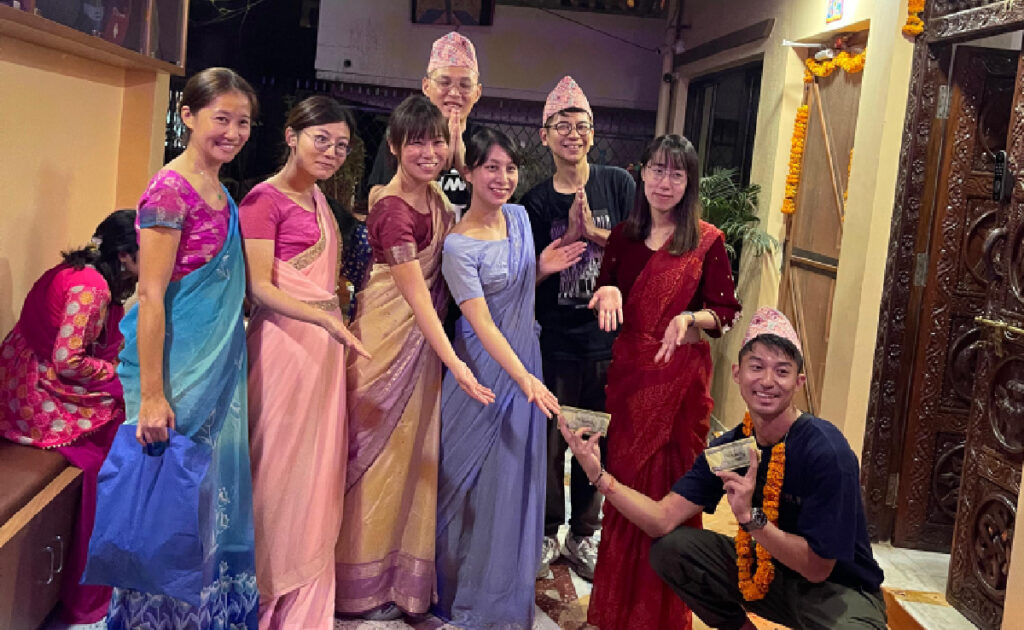
Teej festival - which falls on september
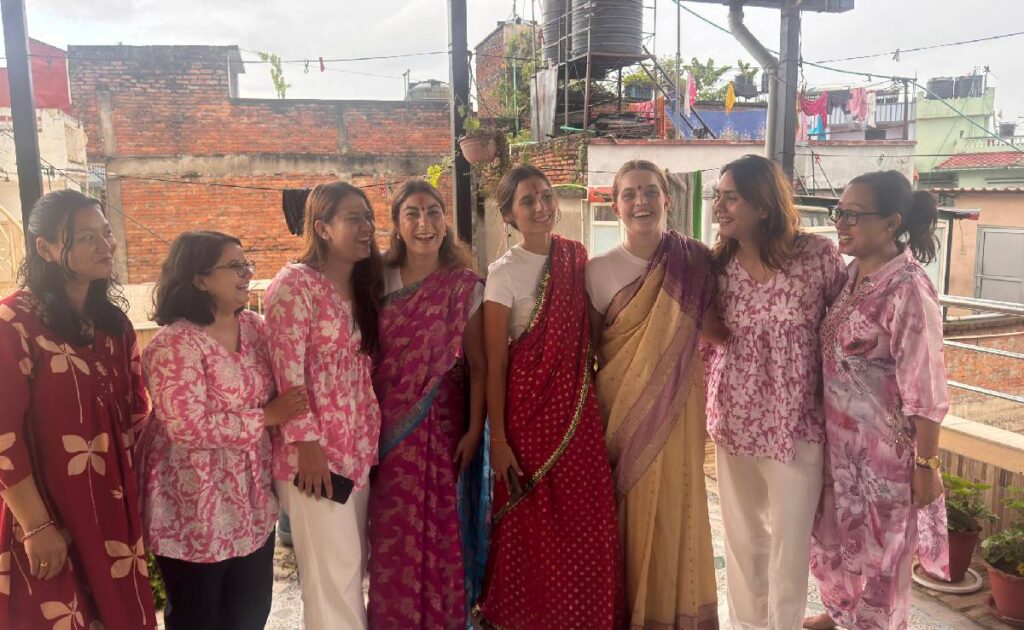
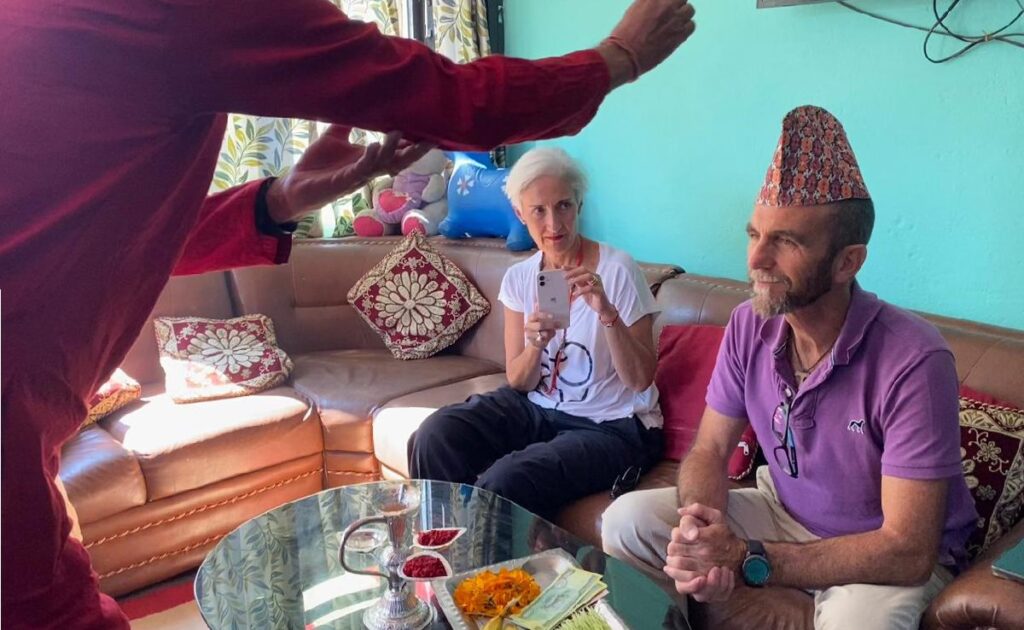
Foreigners celebrating teej frestival in traditional Nepali attire.

September is a culturally rich month in Nepal. Several important festivals take place, offering travelers a deeper connection with local traditions.

Indra Jatra is one of the most significant festivals in the Kathmandu Valley. Locals celebrate the god of rain with masked dances, chariot processions, and traditional music. Streets around Kathmandu Durbar Square fill with color, energy, and ritual performances.

Teej, an important Hindu festival celebrated by women, often falls in September based on the lunar calendar. Women wear red clothing, fast, dance, and visit temples. The festival adds strong emotion and cultural depth to towns and cities.

These events remain largely local and non-commercial, giving visitors a genuine cultural experience.

Wildlife and Nature Experiences

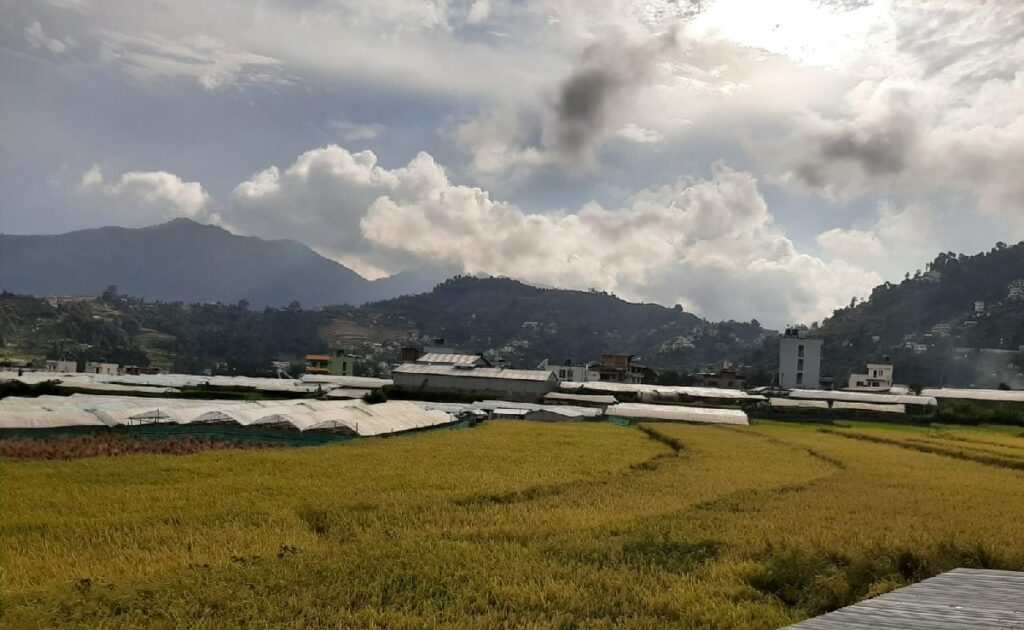
Nepal in September showcases nature at its most vibrant. Hills, forests, and terraced rice fields appear fresh and green after the monsoon rains. Rivers and waterfalls run full, shaping dramatic landscapes across the country.

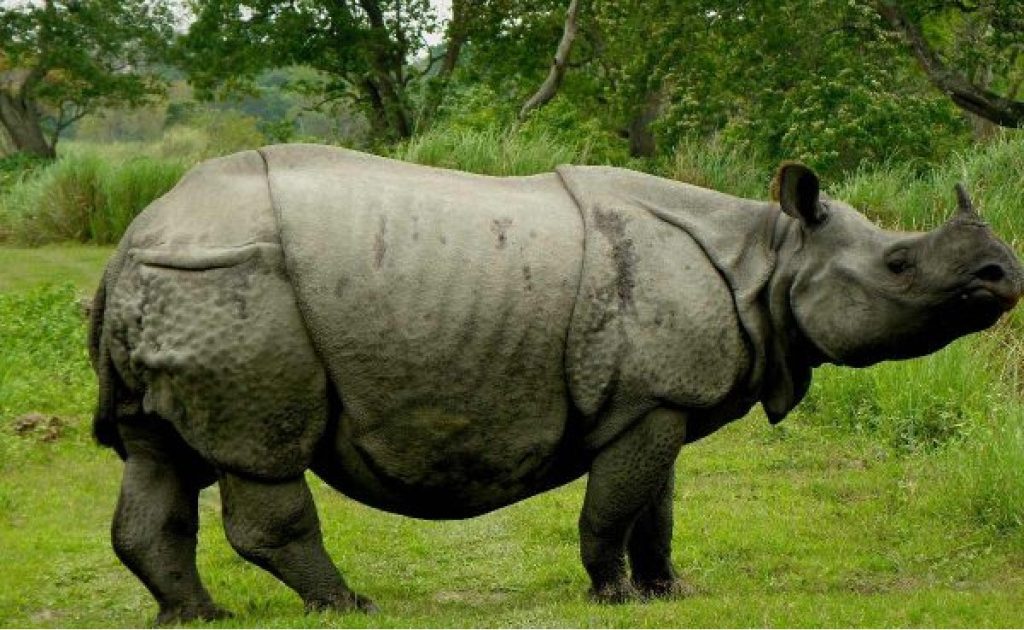
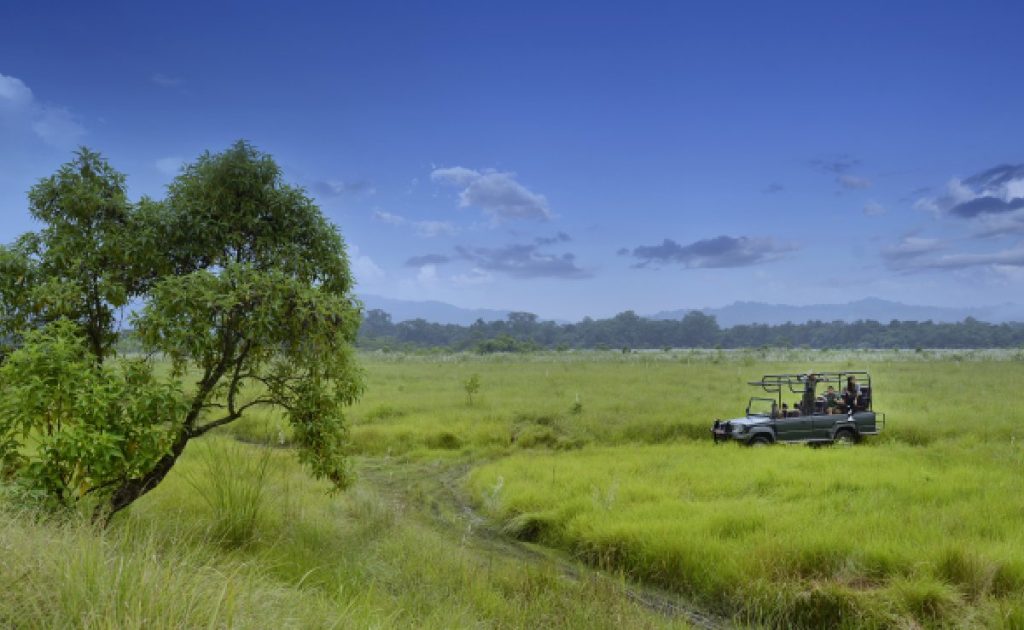
National parks in the Terai, such as Chitwan and Bardia, look greener and more alive. Wildlife activity increases, and birdlife becomes especially active in wetlands and forest areas. While humidity remains high, nature feels energetic and thriving.

This month works well for lakeside walks in Pokhara, forest hikes in Shivapuri, and countryside exploration among farming communities.

Travel Tips for Nepal in September

Flexibility plays an important role when traveling in Nepal in September. Early in the month, rain can still cause minor delays. From mid-September onward, travel becomes smoother and more predictable.

Pack a light rain jacket, quick-dry clothing, and comfortable walking shoes with good grip. Plan outdoor activities early in the morning for the best weather and visibility. Toward the end of the month, accommodation demand increases, so booking in advance helps.

September rewards travelers who enjoy shoulder seasons. It offers comfort, natural beauty, and cultural depth without heavy crowds.

Final Thoughts on Nepal in September

Nepal in September offers a balance of greenery, culture, and improving travel conditions. While skies may not stay blue every day, the country feels fresh, festive, and peaceful. Nature remains lush, and local life continues at a gentle pace.

For travelers who value nature, culture, and quiet exploration, September is an excellent time to visit Nepal. With the right preparation and flexible plans, the month allows you to experience Nepal in an authentic and memorable way.

So, be flexible to weather, pack your necessary gears and book your trip to Nepal during September with Himalayan Circuit.

Nepal Diaries – Trekking, Festivals, and Adventures in May

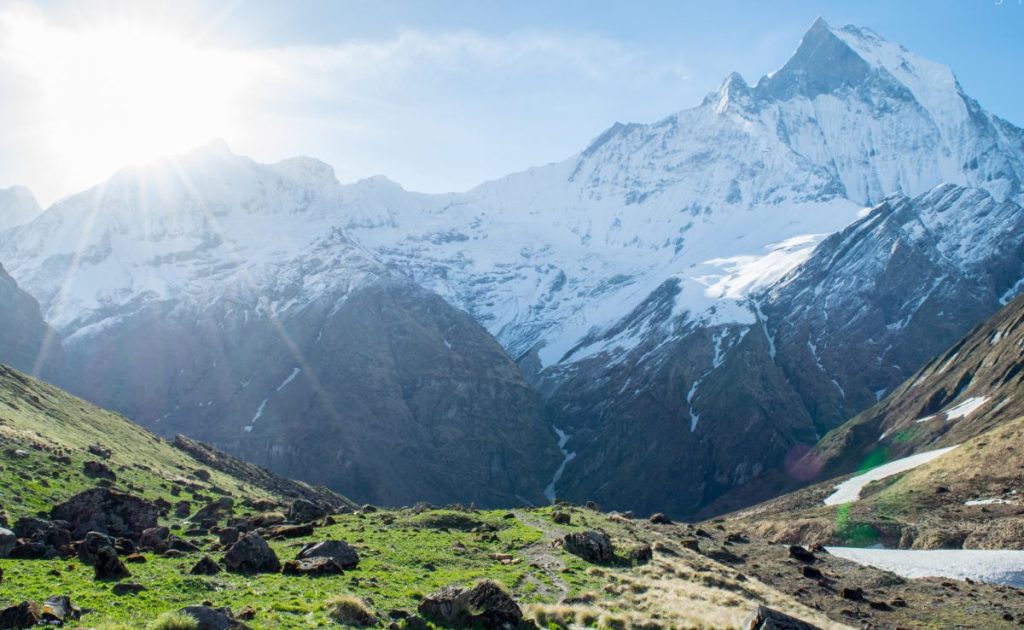
Himalayan peaks in Nepal – Nepal best travel destination

Are you thinking about visiting Nepal in May? You’re choosing one of the best times to explore the country. May sits perfectly between the cold of late winter and the heavy monsoon rains. The mornings are usually clear, afternoons are warm, and the evenings are pleasant.

From colorful festivals to trekking and wildlife adventures, May offers the perfect combination of culture, nature, and adventure. Let’s plan this trip together!

Weather in Nepal in May

May in Nepal is generally warm and a bit humid, especially in the lower lands like Kathmandu, Pokhara, and the Terai plains.

  • Kathmandu: Daytime temperatures range from 20°C to 30°C, while nights remain cool.
  • Pokhara: Slightly warmer than Kathmandu.
  • Terai (Chitwan, Bardiya): Can get very hot, sometimes above 35°C during the day.

In the hills and mountains, temperatures drop as you gain altitude. Compared to winter, the weather is milder. Expect crisp mornings and chilly nights above 3,000 meters.

Trekking & Outdoor Activities

May is ideal for trekking in regions like Annapurna, Everest, and Langtang. Trails are clear, tea-houses are open, and you avoid the busy autumn peak season.

Tips for trekking in May:

  • Start early in the morning to avoid afternoon heat.
  • Afternoon hikes may feel warm and humid, especially at lower altitudes.
  • Shorter treks around Pokhara, like Poon Hill, are perfect this month.
  • Paragliding and boating on Phewa Lake are also great options.

Festivals & Cultural Events

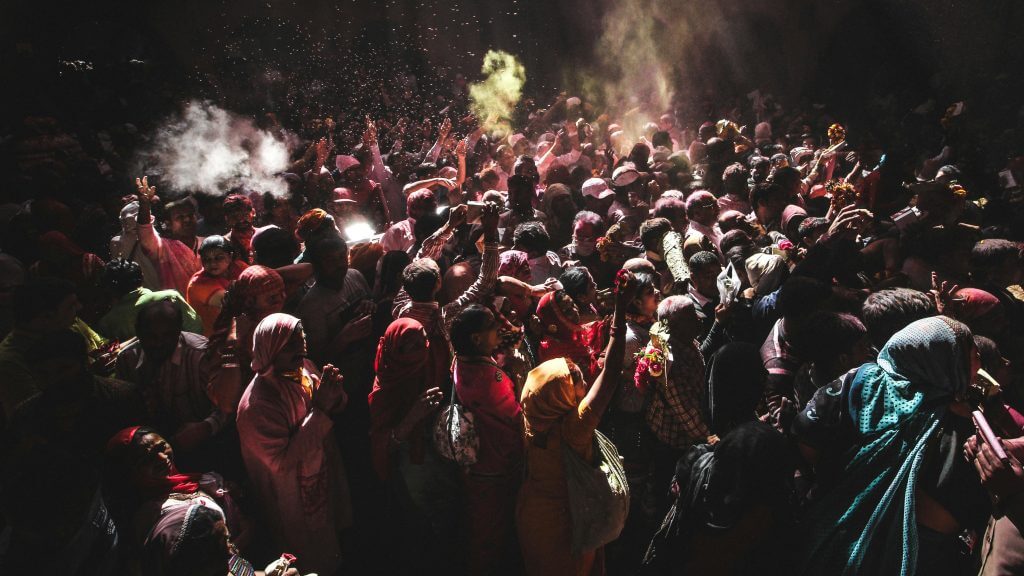
Holi Celebration

Nepal in May is full of colorful celebrations. The most important festival is Buddha Jayanti, celebrating the birth, enlightenment, and death of Lord Buddha.

  • Lumbini: Major celebrations at Buddha’s birthplace.
  • Kathmandu: Boudhanath and Swayambhunath stupas shine with butter lamps, prayer flags, and decorations.
  • Local communities: Many smaller festivals (jatras) involve music, rituals, and traditional dances.

Experiencing these festivals gives you a real taste of Nepalese culture and spirituality.

Wildlife & Nature Experiences

May is lively for nature lovers. National parks like Chitwan and Bardiya are full of sounds from birds and animals.

  • Animals such as deer, monkeys, elephants, and tigers are easier to spot near water sources.
  • Trekking paths and village hills bloom with colorful flowers.
  • Rhododendron blossoms may still be visible, and forests are green and fresh.

Travel Tips for Nepal in May

Here’s how to make the most of your trip:

  • Pack light, comfortable clothes for warm and humid weather.
  • Bring a light jacket or fleece for cooler nights and higher altitudes.
  • A rain jacket is useful because pre-monsoon showers are common.
  • Sunglasses, a hat, and sunscreen are essential.
  • Start hikes early in the day and drink plenty of water.
  • Mosquito repellent is recommended, especially in the Terai.
  • Book transport and accommodation in advance around holidays to avoid crowds.

Final Words

Visiting Nepal in May is all about enjoying warm mornings, clear mountain views, and vibrant cultural life. Trails are quieter than autumn, nature is lush, and festivals make every city and village come alive.

With a little planning and the right travel tips, May offers the perfect mix of culture, adventure, and nature. So, let’s plan your trip together and make it unforgettable!

Nepal Travel News: Explore Lalitpur Music City, UNESCO’s Musical Gem

Lalitpur music city, also known as Patan or Manigal, has long been celebrated for its vibrant festivals, stunning art, and deep spiritual traditions. In 2025, Lalitpur officially earned international recognition as a UNESCO Music City, joining a prestigious network of creative cities worldwide. This designation highlights the city’s rich musical heritage, connecting centuries-old traditions with global appreciation.

A City Where Music Breathes

Solo Travelling in Nepal
Patan Durbar Square

In Lalitpur music city, music is more than performance, it is a way of life. Sacred beats from dhimay and ponga drums blend with melodic chants of Newar Buddhism, shaping festivals, rituals, and everyday moments. One of the most iconic examples is Kartik Naach, Nepal’s oldest musical dance drama, performed annually in Patan’s historic courtyards. Dating back to the 17th century Malla period, this multi-day performance combines masked dance, live traditional music, and spiritual storytelling. Instruments like the naykhin, dhaa, and bhusya create a soundscape that reflects centuries of cultural continuity.

Throughout the year, Lalitpur music city resonates with music during festivals such as:

  • Bungadyah Jatra – devotional music honoring Rato Machhindranath
  • Gumlā Bājā – spontaneous ensemble performances in public squares
  • Indra Jatra and Yenya Punhi – music guiding processions and rituals
  • Newar weddings and guthi ceremonies – ceremonial drumming and folk songs

This recognition celebrates Lalitpur not only as a historical treasure but also as a living center of musical tradition.

Why Visit Lalitpur Music City Now?

Travelers to Lalitpur music city can experience Nepal through sound:

  • Witness spontaneous performances during the Gumlā Bājā festival
  • Explore traditional Newari instrument-making in hidden alleys
  • Visit the Music Museum of Nepal to dive deeper into the valley’s musical legacy
  • Stroll through Patan Durbar Square, a UNESCO World Heritage Site since 1979
  • Attend Kartik Naach, a rare fusion of music, dance, and mythology A Tale of Origins and Legends
Lalitpur the Music City
Experience the magic of Kartik Naach in Lalitpur Music City, where centuries-old music, dance, and mythology come alive.

The name Lalitpur honors a farmer named Lalit, who helped bring God Rato Machhindranath to the valley during a drought. Today, the Bungadyah Jatra, a month-long chariot festival, celebrates this divine arrival with music, devotion, and community spirit.

Part of a Global Creative Movement

Lalitpur now joins a dynamic cohort of cities recognized in 2025, including:

  • New Orleans (USA), Kyiv (Ukraine), Kisumu (Kenya) – Cities of Music
  • Giza (Egypt), Ho Chi Minh City (Vietnam), São Paulo (Brazil) – Cities of Film
  • Aberystwyth (UK), Abuja (Nigeria), Gdańsk (Poland) – Cities of Literature
  • Quito (Ecuador), Rovaniemi (Finland), Kashan (Iran) – Cities of Architecture

 This designation emphasizes culture-led sustainable development, connecting Lalitpur with creative initiatives around the globe.

Nepal: A Creative Powerhouse

With Lalitpur’s recognition as a music city, Nepal now hosts two UNESCO Creative Cities:

  • Kathmandu – City of Film (2023)
  • Lalitpur – Music City (2025)

Together, they position the Kathmandu Valley as a hub of South Asian creativity, blending visual, cinematic, and musical heritage.

Looking Ahead: Global Stage in Morocco

Lalitpur will soon share its rhythms at the 2026 UNESCO Creative Cities Annual Conference in Essaouira, Morocco, a fellow City of Music since 2019. This platform will allow collaboration, idea exchange, and global recognition of Lalitpur’s musical legacy.

Let the music of Lalitpur guide your journey. Come for the temples and art, stay for the rhythms that tell stories of gods, kings, and everyday life.

Festival in Nepal: Tihar Festival Nepal – Five-Day Festival of Lights

Tihar Festival in Nepal

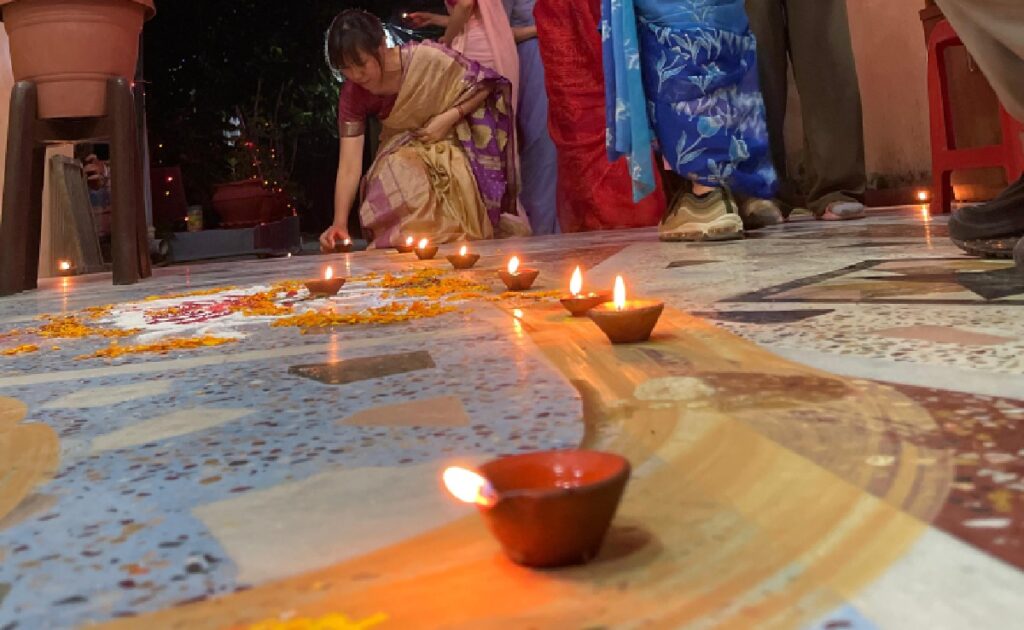
Nepal shines in bright colors, flickering lamps, and joyful celebrations every year during Tihar, the five-day festival that honors life, light, and devotion. Known as the festival of lights, Tihar turns streets, homes, and temples into dazzling displays of marigold garlands, flickering diyos, and colorful rangoli patterns. Also, the festival blends faith, culture, and happiness, reflecting the rich traditions and heart of Nepal.

Celebrating Life and Light

Tihar, also called Deepawali, is a Hindu festival celebrated over five days, each honoring a different part of life. It allows people to show gratitude, respect, and devotion, not only to deities but also to animals and loved ones.

Famous Legends About Tihar

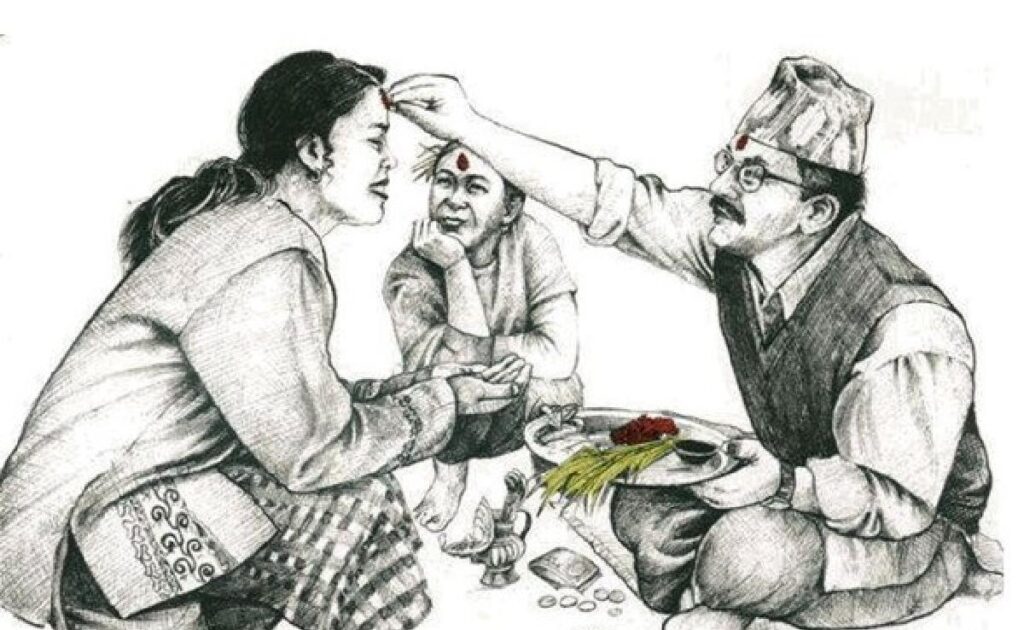
  • The Legend of Bhai Tika: Yamaraj, the god of death, once visited a sister’s home to take her brother’s life. She performed rituals, applied tika, and made offerings with devotion. Impressed by her sincerity, Yamaraj spared her brother’s life. Today, sisters continue this ritual to bless and protect their brothers.

  • The Legend of Laxmi Puja: Goddess Laxmi, the goddess of wealth, visits homes that are clean and well-lit. Families light lamps, decorate with flowers, and prepare offerings to invite prosperity and remove darkness.

  • The Legend of Lord Rama: After Lord Rama defeated Ravana in Lanka, he returned to his kingdom, Ayodhya, along with Sita and Lakshman. The people celebrated their return by lighting rows of lamps throughout the city to welcome them and drive away darkness. This tradition of lighting lamps shows the victory of good over evil and light over darkness, which continues to inspire Tihar’s glowing celebrations.

Tihar in Today’s World

Even in today’s fast-paced world, Tihar remains very meaningful. For example, Bhai Tika teaches the value of family bonds, Laxmi Puja encourages mindfulness and gratitude, and people worship animals including crows, dogs, cows, and oxen to show respect for all living beings. Furthermore, Tihar invites people to slow down, honor relationships, and reflect on the blessings often taken for granted. These long-lasting lessons, expressed through lights, rituals, legends, and songs, keep Tihar alive and meaningful for generations.

The Days of Tihar and Their Celebrations

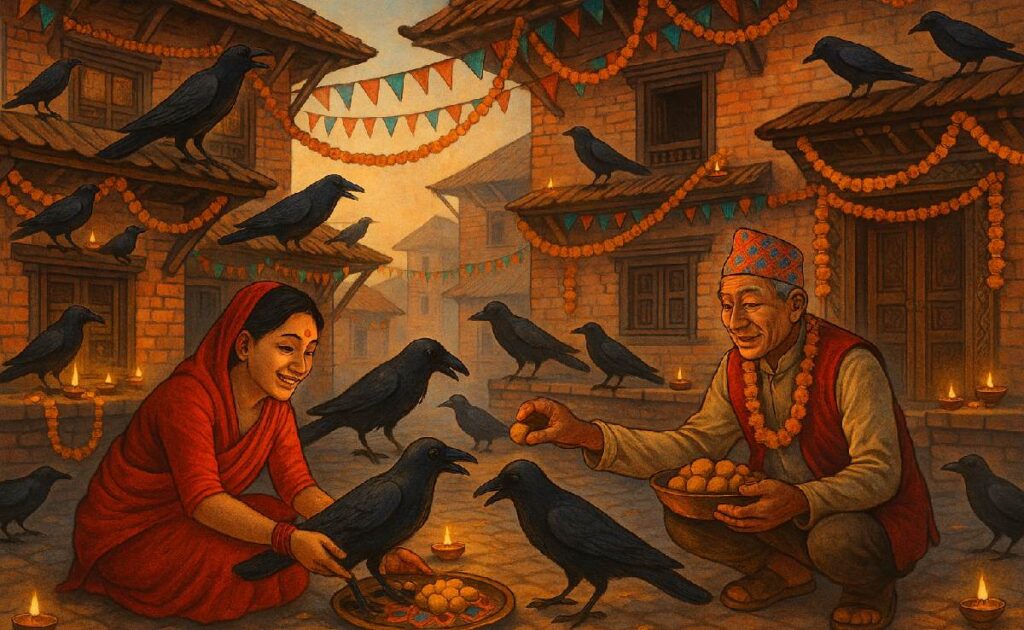
Kaag Tihar (Crow Day)

AI generated picture of Kaag tihar

Tihar begins with Kaag Tihar, dedicated to crows, believed to be messengers of death. People offer sweets and food to crows to ward off bad luck and invite blessings for the year ahead. Also, this ritual reminds us to honor nature and the creatures that share our world.

Kukur Tihar (Dog Day)

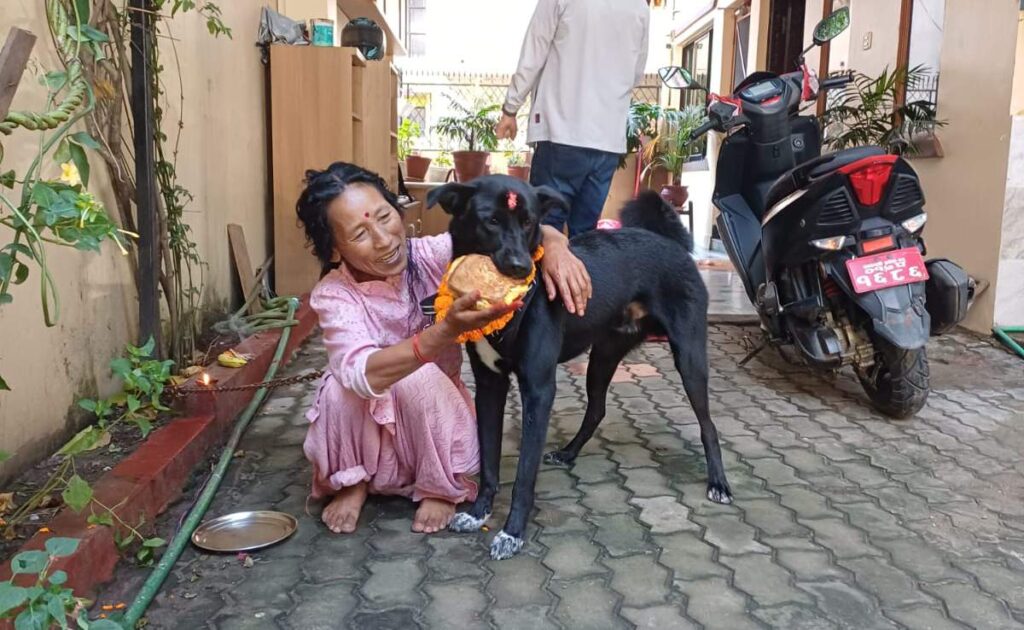
Kukur Tihar celebrates dogs for their loyalty and protection. People decorate dogs with flower garlands, tika, and special treats, showing their important role in our lives. In addition, people express gratitude to these faithful companions, recognizing the bond between humans and animals.

Laxmi Puja (Goddess of Wealth)

In the evening, Laxmi Puja fills homes with light and devotion. Families worship Goddess Laxmi, clean their houses, draw colorful rangoli patterns, and prepare traditional sweets like sel roti to invite prosperity. Laxmi enters only clean and well-lit homes, teaching mindfulness and gratitude.

Govardhan Puja and Mha Puja

Tihar Festival in Nepal
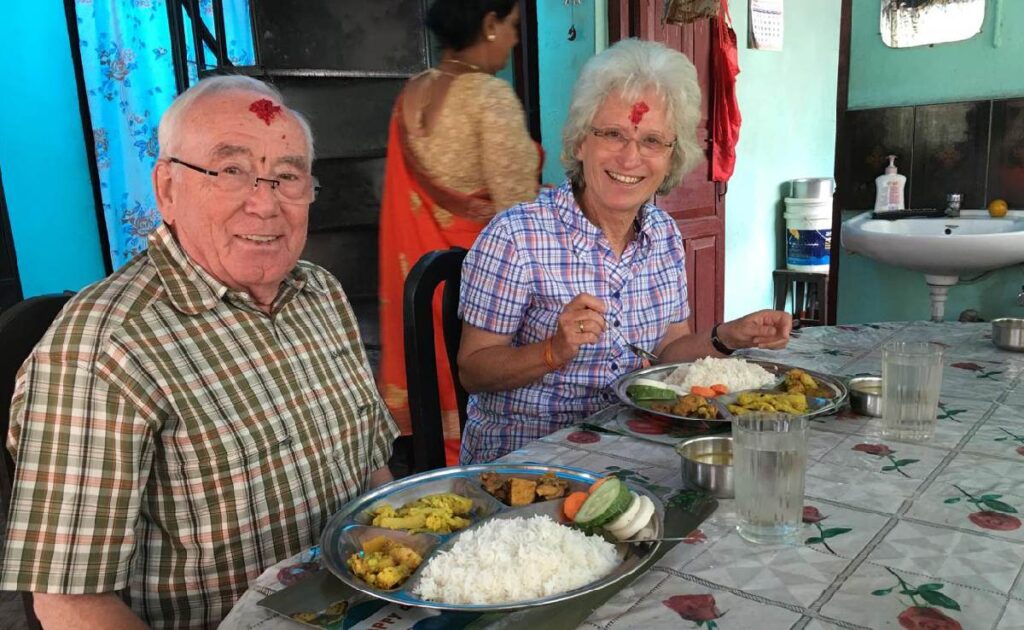
Foreigners are enjoying their time immersing themselves in the vibrant Nepali culture during the Tihar Festival

Govardhan Puja honors oxen for their hard work in agriculture and their role in supporting human life. Among the Newar community, Mha Puja, or self-worship, symbolizes purification, self-respect, and spiritual renewal for the coming year. The day also marks the New Year according to the lunar calendar, which this year turns 1146. The Newar people call it “Nhu Daya Bhintuna”, meaning Happy New Year in their language. These rituals remind people to respect all living beings, honor cultural heritage, and celebrate new beginnings.

Bhai Tika (Siblings’ Day)

The festival ends with Bhai Tika, celebrating the sacred bond between brothers and sisters. Sisters apply multi-colored tika on their brothers’ foreheads, offer garlands, and pray for their health and prosperity, while brothers give blessings and gifts. Furthermore, the day brings laughter, feasts, and family bonding, reinforcing love, care, and protection among siblings.

Tihar 2025 Dates

  • Kaag Tihar (Crow Day): 19 October
  • Kukur Tihar (Dog Day): 20 October
  • Laxmi Puja (Goddess of Wealth): 20 October
  • Govardhan Puja and Mha Puja: 22 October
  • Bhai Tika (Siblings’ Day): 23 October

Why Visit Nepal During Tihar

Experiencing Tihar in Nepal is like stepping into a living cultural masterpiece. Streets sparkle with thousands of oil lamps, neighbourhoods echo with traditional Deusi and Bhailo songs, and homes overflow with warmth, laughter, and delicious Nepali sweets.

Tihar offers a deep experience of real Nepali traditions, rituals, and faith, beautiful sights for photographers and travelers, and unique moments like seeing animal worship, colorful rangoli, and community celebrations. Also, the festival provides a moment of reflection, reminding people of gratitude, respect, and the beauty of human and animal bonds.

Even today, the Tihar Festival of Nepal invites people to slow down, honor relationships, respect nature, and reflect on the blessings often taken for granted. In addition, these long-lasting lessons, expressed through lights, rituals, legends, and songs, keep Tihar alive and magical for generations.

Although this year’s Tihar is already underway, travelers can plan ahead for Tihar 2026. Tentative dates are: Laxmi Puja – 8 November, Govardhan Puja – 10 November, and Bhai Tika – 11 November. Visiting Nepal during the Tihar festival allows people to experience the festival in its full glory, with streets illuminated, songs echoing through neighborhoods, and homes filled with warmth, light, and tradition.

Festivals & Culture: Dashain Festival in Nepal – Celebration of Tradition

As autumn paints Nepal in warm colors, the air becomes crisp, and the country fills with excitement. Meanwhile, streets sparkle with lights, Lingey Ping (bamboo swings) sway in village courtyards, and delicious aromas float through the air. The Dashain Festival in Nepal is the most beloved celebration of the year, bringing joy, family reunions, cultural pride, and spiritual renewal.

In 2025, Dashain begins on September 22 with Ghatasthapana and ends on October 6 with Kojagrat Purnima. Therefore, for travelers, Dashain offers a rare chance to witness Nepal’s soul come alive.

What is Dashain?

Dashain, also called Vijaya Dashami, lasts 15 days. It celebrates the victory of good over evil, honoring Goddess Durga’s triumph over the demon Mahishasura. This victory, therefore, represents righteousness and divine protection.

Although rooted in Hindu tradition, Dashain is celebrated by almost every Nepali, no matter their caste or religion. As a result, it is Nepal’s longest and most important festival, marked by deep devotion, colorful rituals, and joyful gatherings. During Dashain, schools, offices, and shops close, and people travel across the country and from abroad to be with their families.

Dashain’s Celebration Calendar


Dashain follows the Hindu lunar calendar, beginning on the bright fortnight of the month of Ashwin. Each day holds a special meaning:

  • Day 1 – Ghatasthapana (September 22, 2025)
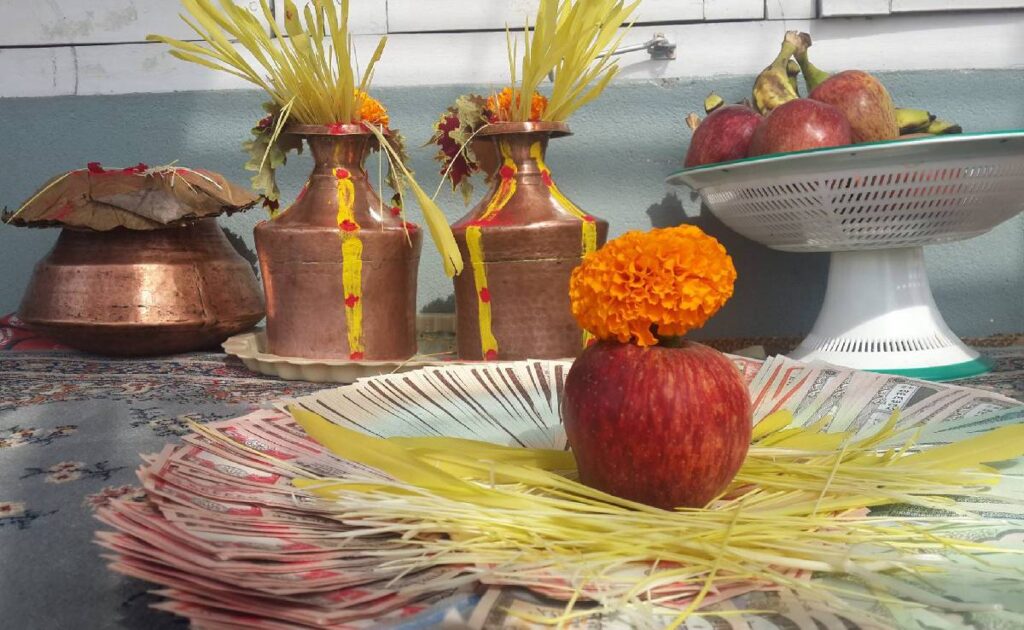
    The festival begins with placing a Kalash (sacred pot) filled with holy water, sown with barley seeds (Jamara) — symbols of blessings and prosperity. Families light oil lamps, prepare sacred spaces (Dashain Ghar), and pray to Goddess Durga.

  • Day 7 – Phulpati (September 29, 2025)
    On Phulpati, sacred flowers, banana stalks, sugarcane, and Jamara travel from Gorkha to Hanuman Dhoka in Kathmandu in a grand procession. This day also marks the start of mass journeys as people return home.

  • Days 8–9 – Maha Ashtami & Maha Navami
    These days honor Goddess Kali, a fierce form of Durga. During this time, rituals include animal sacrifices at temples and Ayudha Puja, where tools, vehicles, and weapons are blessed for protection and success.

  • Day 10 – Bijaya Dashami (October 2, 2025)
    The most important day, Bijaya Dashami, sees elders applying Tika (rice, yogurt, and vermilion) and Jamara on younger relatives’ foreheads. Thus, they offer blessings for health, wealth, and long life. This ritual continues for five days as families visit one another.

  • Day 15 – Kojagrat Purnima (October 6, 2025)
    Dashain concludes with Kojagrat Purnima, a full moon night dedicated to Goddess Lakshmi, the goddess of wealth. People stay awake all night, believing that the goddess blesses the vigilant.

Why Dashain is Special for Travelers

Dashain is not just a festival; it is a reflection of Nepal’s heart and culture.

Cultural Unity

Dashain is celebrated across Nepal — from the hills of Mustang to the Terai plains. In fact, it brings together people of all ethnicities, faiths, and regions.

Family Reunions

During Dashain, families reunite, travel home, and reconnect with traditions.

Spiritual Renewal

It is a time of prayer, reflection, and hope for the year ahead.

Perfect Trekking Season

Dashain falls in autumn — Nepal’s best trekking time. Therefore, clear skies, mild temperatures, and vibrant villages make treks like Annapurna Base Camp, Everest, and Langtang even more magical.

Experiencing Dashain: What to Expect

Travelers can expect:

  • Authentic rituals — witness centuries-old traditions and join families for Tika ceremonies.
  • Festive atmosphere — colorful kites in the sky, bamboo swings in courtyards, music, laughter, and storytelling.
  • Delicious food — enjoy Khasi ko Masu (spiced goat curry), achar (pickles), gundruk ko achar (fermented leafy greens), and Raksi (millet wine).

Tips for Travelers During Dashain

  • Book transport and accommodation early — everything fills up fast.
  • Respect customs — remove shoes at homes and temples, dress modestly, and ask before joining rituals.
  • Join celebrations — locals welcome visitors warmly.
  • Explore beyond Kathmandu — visit Bandipur, Lwang, or Astam for an authentic experience.

Dashain is More Than a Festival — It’s an Experience

Dashain is the heartbeat of Nepal. It is laughter, blessings, music, food, togetherness, and tradition. For travelers, it is a rare chance to truly feel Nepal.

Whether trekking the Himalayas, exploring ancient cities, or sharing a meal with a local family, Dashain offers memories that last a lifetime.

Therefore, pack your bags, open your heart, and come experience Dashain 2025 — Nepal’s grand celebration of culture, family, and spirit.

Nepal Travel News: Best Time to Visit with a Month-Wise Plan

Flute

Wondering about the best time to visit Nepal?

Here’s the truth — every month is the best time to visit in Nepal because it offers something completely different. One moment you’re trekking through snowy Himalayan trails, and the next, you’re dancing in a colorful festival, sipping tea in a peaceful hill town, or spotting rhinos deep in the jungle.

At Himalayan Circuit, we believe that one trip is never enough to truly experience Nepal. That’s why we’ve put together a month-by-month travel guide — showing you the best places to visit, the top festivals to enjoy, and the unique experiences waiting for you throughout the year.

Month Destination/Activity Why Visit? Key Festival(s) Image
January Kathmandu Valley Heritage Tour Crisp air, great visibility, fewer crowds. Swasthani Puja, Maghe Sankranti
February Chitwan National Park Safari Best wildlife viewing during dry season. Maha Shivaratri kathmandu-and-chitwan-10-day-tour
March Annapurna Foothills Trek Colorful hills, clear skies. Holi – Festival of Colors Himalayan peaks in Nepal – Nepal best travel destination
April Bhaktapur & Nagarkot Sunrise New Year celebrations + spring vibes. Bisket Jatra Himalayan peaks in Nepal – Nepal best travel destination
May Bandipur & Gorkha Heritage Tour Cooler hill escape, cultural depth. Buddha Jayanti  Bandpur
June Upper Mustang Trek Rain-shadow region, unique landscapes. Tiji Festival Upper Mustang
July Pokhara Lakeside & Sarangkot Fewer tourists, vibrant nature. Ropain Jatra Ropai Jatra
August Helambu Trek Lush landscapes, fewer crowds. Gai Jatra Chispani
September Langtang Valley Trek Rejuvenated trails, clear skies. Indra Jatra
October Everest Base Camp Trek Peak trekking conditions. Dashain Everest Base Camp Trek
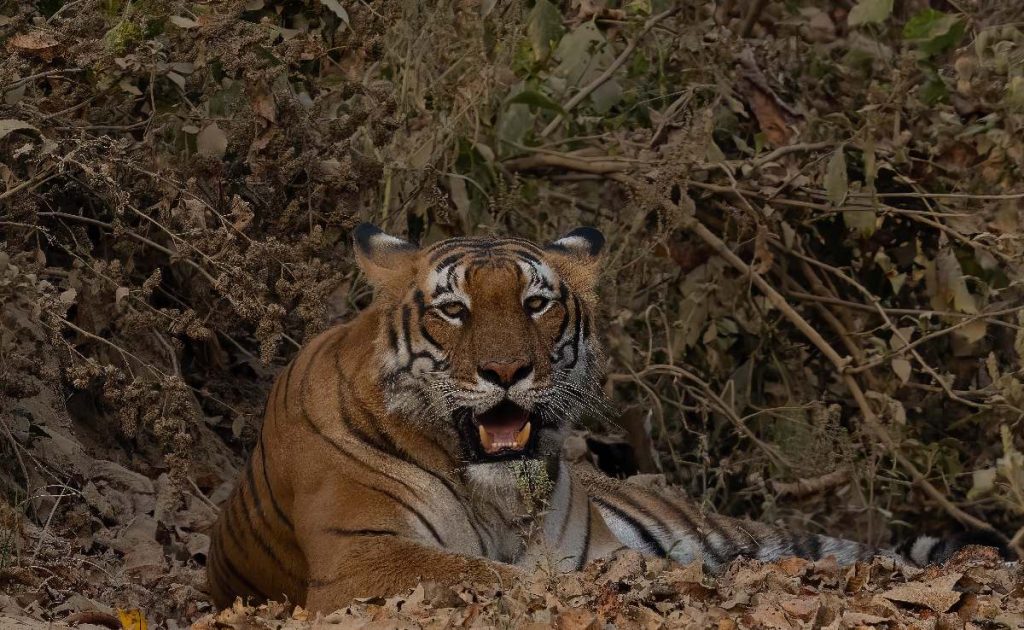
November Lumbini & Bardia National Park Ideal wildlife and spiritual tourism mix. Tihar Tiger in Bardia National Park
December Ilam Tea Gardens & Eastern Hills Winter serenity without the chill. Mani Rimdu Ilam Chiya Bagaan

A Country That Changes With the Seasons

Nepal is more than just Everest and temples — it’s a 12-month journey waiting to unfold. From east to west, each region offers its own magic, shaped by the rhythm of nature and Nepal’s deep-rooted culture. For example, you might be trekking among blooming rhododendrons in March, chasing tigers in the jungles of Bardia in November, or sipping fresh tea in the hills of Ilam in December. No matter when you visit, there’s always something exceptional happening here.

Travel Better with a Local Partner

As a result, planning the right trip at the right time can make your experience even more meaningful. That’s where we come in. As a local tour operator, Himalayan Circuit is your trusted companion in discovering Nepal authentically. Whether you’re coming in spring or winter, we’ll help you plan a journey that aligns with the best each month has to offer. Because here in Nepal — every month is a good month to visit.

Festivals & Culture: Maghe Sankranti Festival Celebration Guide

Maghe Sankranti festival, also known as Makar Sankranti festival, marks the beginning of the auspicious month of Magh in Nepal.  This festival honors the messenger of light, the sun, and marks the beginning of the spring season.

To fulfill their spiritual needs, people bathe in rivers like the Bagmati, Devghat, Dolalghat, Baraha Kshetra, Ridi (Kaligandaki River), Trivenighat, and others during this festival.

Families spend time together during this festival, soaking in the sun and pampering their bodies with food and oil massages – ensuring that they are well-fed and nourished during the winter months.

Maghe Sankranti is celebrated differently by different communities. For some, it marks the beginning of the New Year, while for others; it is the biggest festival of the year.

Religious importance of Maghe Sankranti festival:

It is stated in the Mahabharata that Bhisma Pitamaha, who held immense power and had control over his own death, died on this date. So, people who die on this day are considered to be liberated from the cycle of birth and rebirth. 

Ayurveda and medical science are also important aspects of Maghe Sankranti festival. The food items consumed on this day are balanced foods that strengthen the human immune system.

Weather during Maghe Sankranti while visiting Nepal:

This festival marks the end of the cold month of Poush (December) and the beginning of warmer days. On this day, the sun is supposed to start moving toward the northern hemisphere. 

During Maghe Sankranti, the skies are exceptionally clear, providing warmth to the entire nation. This is a good month for walking and hiking because visibility is good, and rain is less likely than in other seasons.

Caste who celebrate Maghe Sankranti with importance:

  • Hindu Community:

Hindu devotees take holy baths in Nepal’s auspicious rivers during the Maghe Sankranti festival. Also, they worship Lord Vishnu and perform pujas, as well as read the Hindu epic Bhagavad Gita.

Traditionally, families gather and eat meals together on this day. Brahmins and Chhetris celebrate the Maghe Sankranti festival in Nepal by inviting their married daughters and close relatives and offer them special meals.

  • Newar Community:

Maghe Sankranti festival is known as ‘Ghyo Chaku Sanhu’ by the Newar community, and it consists of ghyo (ghee), chaku with samay baji, and remembering the deceased. 

It is believed that taking a holy dip and eating vegetables, yam, sesame seed candy, and ghee on this day makes one healthier, and doing charity makes one happy. Similarly, Mild-hot edible oil is applied to the heads of juniors on this day.

  • Tharu Community: 

The Maghe Sankranti festival is one of the biggest festivals in the Tharu community, and it is also celebrated as New Year in Kailali, Kanchanpur, Banke, Bardiya, and Dang. 

Also known as the Harvest festival of Tharus and Terai, Maghi is celebrated as a joyful time following the hard work of fieldwork. 

During the festival, they perform cultural dances; wear the traditional Tharu clothes, and share food and drinks with family and friends.

  • Buddhist:

Buddhism also considers Maghe Sankranti festival to be important in some way. The Shyakas and Bajracharyas participate in a donating event known as samyak dan on this auspicious day, which typically takes place at Na: pukhu of Bhaktapur. 

  • Kirat Community:

The Maghe Sankranti festival day is celebrated by the Kirat community as ‘Yele Dhung’, which means New Year in Kirat. This day celebrates the invasion of the Kathmandu valley by the Kirant king Yalambar.

Feasts during Maghe Sankranti:

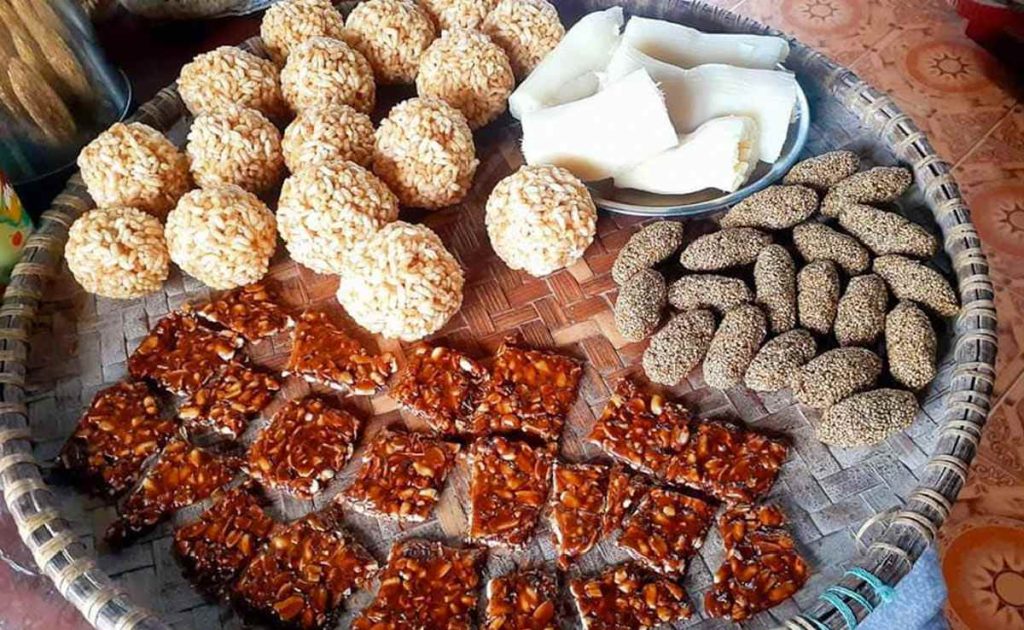
Molasses, ghee, sweet potatoes, cassava, etc, are among the major delicacies prepared during Maghe Sankranti festival in Nepal. The feasts are organized differently by different communities based on their cultures and traditions.

It is believed that the consumption of these foods, i.e. Gheu Chakku, Tilko Laddoo, Spinich, and yam during the cold weather will help us become healthier and warmer.

Places where you can visit during Maghe Sankranti:

  • You can visit Tundikhel in Kathmandu, where people organize various cultural events. 
  • You can visit rivers (such as the Triveni, Bagmati, Mahakali, etc.) that hold religious significance. 
  • You can participate in the bullfighting festival in Nuwakot, where tamed bulls compete against one another under the eyes of many spectators. 
  • Take part in some feasts on the streets of Kathmandu. 
  • Attend a local Tharu feast in Chitwan and take a holy dip in Devghat. 

The festival of Maghe Sankranti is celebrated by wishing a healthy, prosperous future to everyone through various enchantments and religious recitations. 

Get a taste of Nepal’s most exciting and frenetic festival by booking your trip with the Himalayan Circuit.

Ropai Diwas: Unique festival tour of Nepal

ropai diwas

It is extremely difficult to do trekking and extreme activities during the monsoon season. However, tourists from different countries now visit Nepal to enjoy the Rice Plantation Festival (Ropai Diwas) when the monsoon rain falls.

The Ropai Diwas (festival of rice) is one of the traditional festivals of Nepal that occurs on the 15th of the Nepali month Ashad. The day is celebrated with beaten rice and yogurt (known in Nepali as Dahi Chiura). 

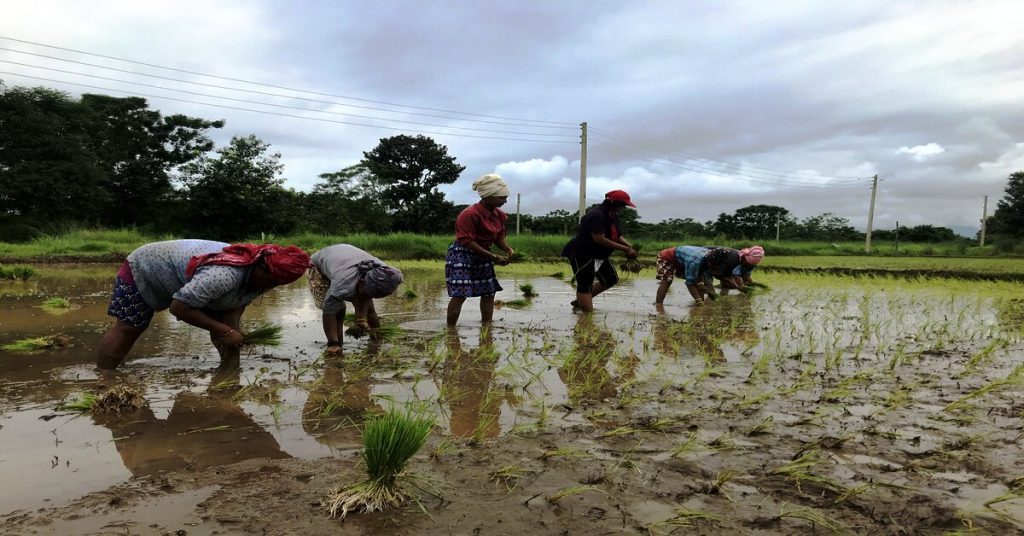
This day holds importance for crop production in Nepal since rice is the main crop and farming is the main occupation. It is now considered a festival where people from all over Nepal plant rice, play with mud, sing, and dance in their respective fields.

Rice plantation is done mainly at the beginning of the monsoon season. However, Asar 15 is a special day and is celebrated as a festival. There is the belief that if someone touches wet mud on this day, they will be healthy, earn good omens, and get recognition.

The festival marks the beginning of the rainy season. Farmers begin planting paddy. Rice plants are planted in fields that are filled with water since rice needs a lot of water. 

To encourage the nation’s rice crops to grow more efficiently, the Government of Nepal has declared the day as National Paddy Day. Many people celebrate this unique festival by playing musical instruments and singing traditional songs.

Why to Celebrate Ropai Diwas (National Paddy Day)?

paddy plantation

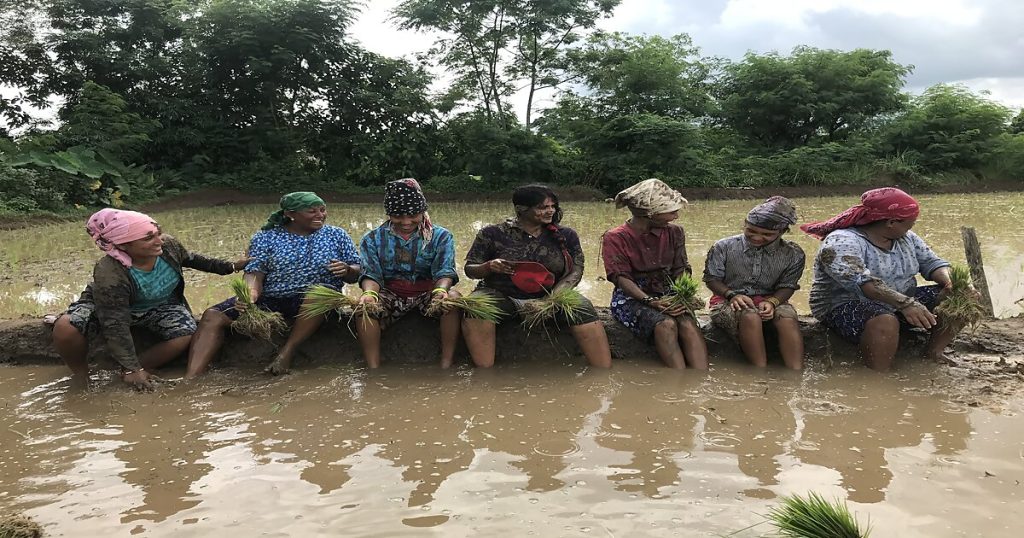
There is a strong connection between Ropain Diwas and people in all parts of the country and it has a profound effect on their social, cultural, and economic lives. Women and men gather in the morning to participate in a parade around their village before going on fields.

The rice plantation stands out as the perfect reflection of the weather, and the great message of happiness. It will be a pleasant experience for you to visit the muddy and wet fields and observe the rice plantations. 

There is mutual work between men and women as various responsibilities are shared. Plowing and arranging drains, leveling the ground, and creating fine mud slurry for planting are the duties of the man, while the woman collects the seedlings and gives them to the fellows who are prepared for planting. 

The day is celebrated by planting the allotted field, running through the muddy fields, splashing around in muddy water, and singing typical folk songs (Asare Geets) that describe the joys and hardships of farming.

Dahi-chiura: Another important norm

The custom of eating Dahi-chiura (beaten rice mixed with curd) is also observed on this day. Farmers and locals still eat this combination to mark Asar 15 even if the planting is not done during this day. Dahi-chiura is traditionally distributed by elders.

Dahi-chiura is a food that is considered important to eat on this day as it gives energy to the body. This combination provides strength, eases, and speeds up the rest of the farming process for tired farmers.

The epics of Ramayan and NepalaMahatmya of Skanda Puran relate stories about dahi-chiura eating culture. After Ravan abducted Sita, Lord Ram, Lakshman, and Hanuman went in search of her. 

Upon reaching a river south of today’s Bhaktapur, they became hungry and ate Dahi-chiura on a banana leaf. Some people believe the same tradition is still followed today as eating Dahi-chiura on Asar 15.

Why should you participate in this festival?

rice plantation

Recently, the festival has been popular with tourists visiting Nepal. Visitors have been enjoying the festival. There will be many other tourists joining you in the muddy water and you will be enjoying the day with the locals and farmers.

In recent years, Ropai Jatras have been organized in various parts of Nepal, especially in and around the capital city, Kathmandu, and the popular tourist destination, Pokhara.

The Ropai festivals are celebrated in places such as Chapagaun, Sakhu, Dhapakhel, Panjauti, Thansing, Bungamati, Kavrepalanchowk, Dhikure, Machhegaun, etc. 

You will be participating in activities such as racing competitions, entertainment-based games, and live Nepali Asare duet songs that will be held throughout the day.

Getting your feet into muddy, slippery fields during a full-fledged rain might not sound appealing; however, it will certainly prove to be an unforgettable experience. 

It is basically a day for you to have fun; you get soaked in the rain, sow rice saplings, play with mud, and turn the field into a dance floor. You will have the opportunity to observe traditional rice farming practices, the use of mutual labor, as well as cultural demonstrations. 

Nepal’s Ropain Diwas holds unique national significance among many other celebrations. By participating in such festivals, you will not only be entertained, but you will also be able to learn about the traditional way of farming.

Participating in this agro tourism experience from the Himalayan Circuit will be an unforgettable experience for you.