Travel Diaries: A Journey Through Nepal’s Memorable Experiences

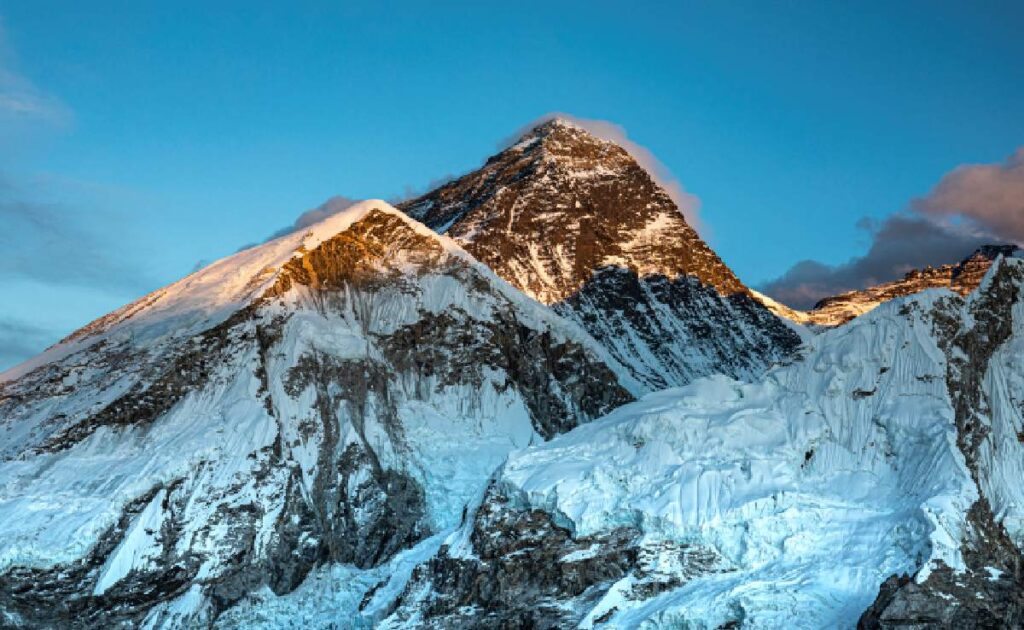
Everest Base Camp Trek

Nepal is a land where natural beauty meets deep spirituality. Moreover, from the hot plains of the Terai to the towering peaks of the Himalayas, the country offers travelers countless memorable experiences in Nepal. Lush landscapes, diverse cultures, and centuries-old traditions make Nepal a must-visit destination for anyone seeking adventure, culture, and serenity.

Trekking the Himalayas: Magical Mountains

Nepal is home to eight of the world’s ten highest mountains. In addition, every year, travelers arrive to explore high-altitude villages inhabited by Gurungs, Magars, and Sherpas. As a result, trekking in the Himalayas is a feast for the senses, offering stunning views of snowcapped peaks and green valleys. Furthermore, these treks combine physical challenge with breathtaking scenery, making them among the most memorable experiences in Nepal.

Spiritual Journey: Temples, Monasteries & Rituals

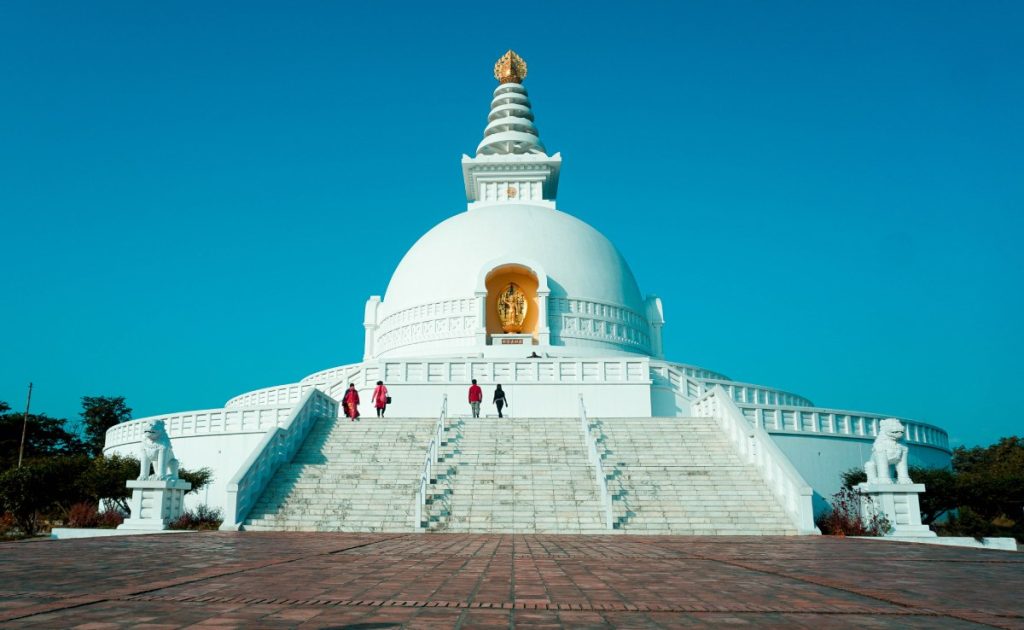
Lumbini Peace Stupa

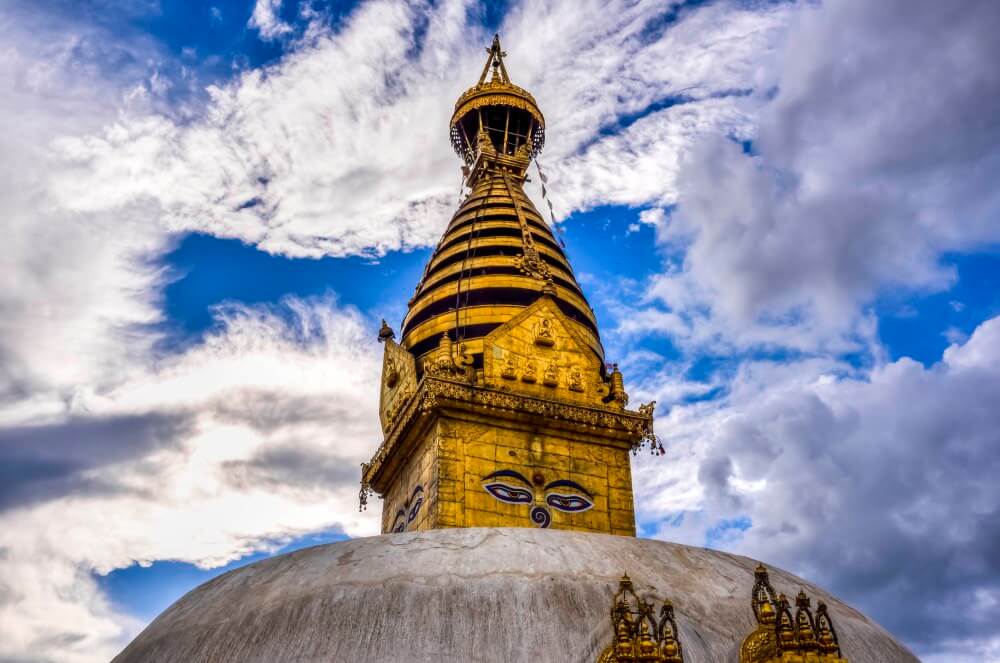
Religion is deeply woven into daily life in Nepal. Additionally, temples, monasteries, and local rituals create a strong spiritual atmosphere. Visiting Pashupatinath, Swayambhunath, and the quiet monasteries of Lumbini allows travelers to connect with their inner self. Therefore, experiencing local festivals, prayer ceremonies, and sacred rituals is one of the most unique ways to enjoy memorable experiences in Nepal.

Hidden Gems: Off-the-Beaten-Path Adventures

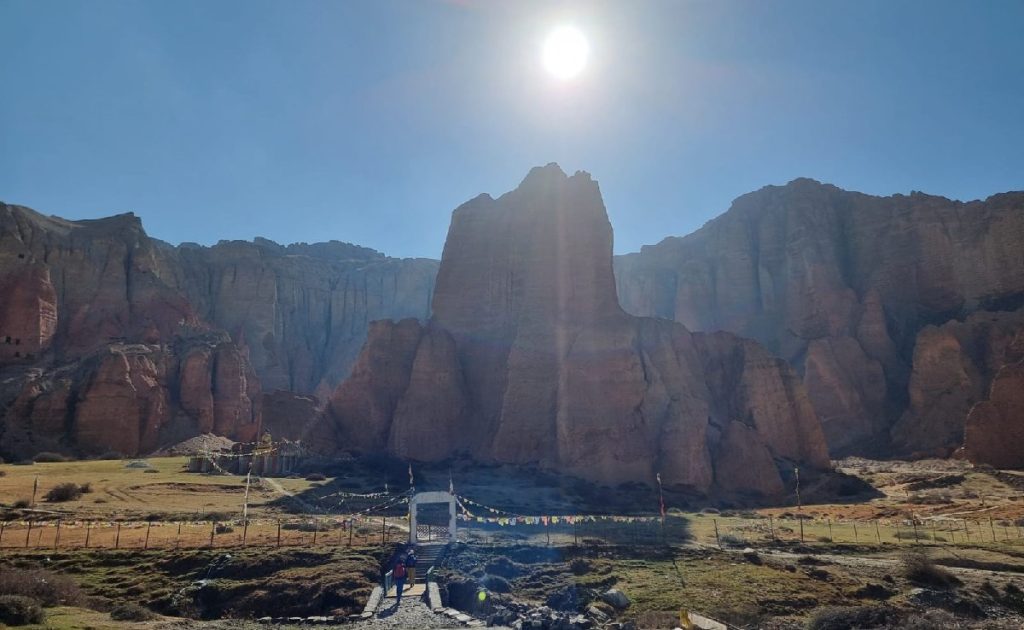
Upper Mustang

Nepal’s rugged landscapes hide many unspoiled destinations. For example, remote areas like the Manaslu Circuit, Rara Lake, Khaptad National Park, Bandipur, Ilam, and Dolpo offer peace, beauty, and authentic cultural encounters. Similarly, exploring these places allows travelers to enjoy solitude, nature, and local traditions in a way few other countries can provide. Off-the-beaten-path adventures are essential for truly memorable experiences in Nepal.

People & Hospitality: Heartfelt Connections

Nepal is home to diverse ethnic communities, including Thakalis, Tharus, Gurungs, and Limbus. Moreover, despite cultural differences, local values of kindness and hospitality bind them together. Travelers are welcomed with warm smiles, generous hearts, and genuine friendliness. As a result, interacting with local communities adds a deeply personal touch, making these moments unforgettable and among the most cherished memorable experiences in Nepal.

Cultural Festivities: Colors, Music & Celebration

Lalitpur the Music City

Nepal celebrates over 50 festivals each year. In particular, major celebrations like Dashain, Tihar, and Holi captivate visitors with vibrant colors, music, and ritual. Traditional jatras, Lhosar, Udhauli, and Ubhauli bring the local culture to life. Consequently, experiencing these festivities allows travelers to witness Nepalese traditions firsthand and enjoy rich cultural experiences in Nepal.

Final Thoughts

From trekking the Himalayas to spiritual journeys, hidden gems, and colorful festivals, Nepal offers countless ways to create lasting memories. Additionally, interacting with warm-hearted communities, exploring serene landscapes, and witnessing ancient traditions ensure every traveler leaves with extraordinary stories. Therefore, planning your trip with these moments in mind guarantees some of the most memorable experiences in Nepal you will ever have.

Nepal Diary: Exploring Nepal Solo – Adventures, Culture & Safety

Solo travel in Nepal is more than a trend—it’s a personal journey filled with freedom, culture, and self-discovery. In 2025, both TripAdvisor and Much Better Adventures confirmed what many travelers already know: Nepal ranks among the best destinations in the world for solo adventurers. With its welcoming people, peaceful atmosphere, and breathtaking landscapes, it offers a rare mix of adventure and serenity. Moreover, the country provides independent travelers with both safety and meaning.

Recognized Worldwide

The global spotlight on Nepal continues to shine.
According to Much Better Adventures, the country holds the #7 spot among the Top Solo Adventure Travel Destinations 2025.
Meanwhile, TripAdvisor ranked Kathmandu #2 on its list of Best Solo Travel Destinations 2025.

Together, these rankings highlight how Nepal perfectly balances natural beauty, adventure, and cultural connection.

Why Nepal is Perfect for Solo Travelers

Safe • Peaceful • Respectful

The cultural value of Atithi Devo Bhava (“Guest is God”) lies at the heart of Nepali hospitality. Solo travelers often experience genuine warmth and respect from locals. While exploring villages or hiking in the hills, you might be offered tea, directions, or even a meal—often given from the heart, with no expectation in return. This kindness fosters a feeling of safety and belonging throughout the journey.

Peace-Loving & Welcoming

People in Nepal are known for their friendliness, calm nature, and sense of community. Violent crime against tourists is extremely rare, and the overall environment feels peaceful and respectful. Furthermore, English is widely spoken in tourist areas, especially among guides and hotel staff, making communication simple.
Additionally, the hostel and guesthouse culture helps solo travelers meet others easily—turning strangers into travel companions.

Top Destinations for Solo Travelers in Nepal

Kathmandu Valley

Solo Travelling in Nepal

Wander through UNESCO World Heritage temples, colorful streets, and spiritual landmarks. You might join a walking tour, learn to cook Nepali dishes, or attend a yoga or meditation class. Because of this variety, Kathmandu offers both excitement and peaceful reflection.

Chitwan & Bardiya National Parks

Set off on thrilling jungle safaris where you can spot rhinos, elephants, and even tigers. These well-organized tours are ideal for solo travelers, as they allow you to join small groups while staying independent. In turn, it’s a wonderful way to connect with both nature and fellow explorers.

Pokhara

The city by the lake offers calm and adventure in perfect balance. Enjoy paragliding, boating, or simply watching sunsets over Machhapuchhre. The lakeside cafés create the perfect setting to meet new friends or enjoy quiet moments alone. Because of its laid-back vibe, Pokhara remains a favorite among solo travelers.

Lumbini

Lumbini Peace Stupa

The birthplace of Buddha invites you into an atmosphere of peace and reflection. This quiet town is ideal for solo visitors seeking spiritual depth and historical insight. Consequently, Lumbini offers a calm escape from Nepal’s busier regions.

Ghorepani–Poon Hill Trek

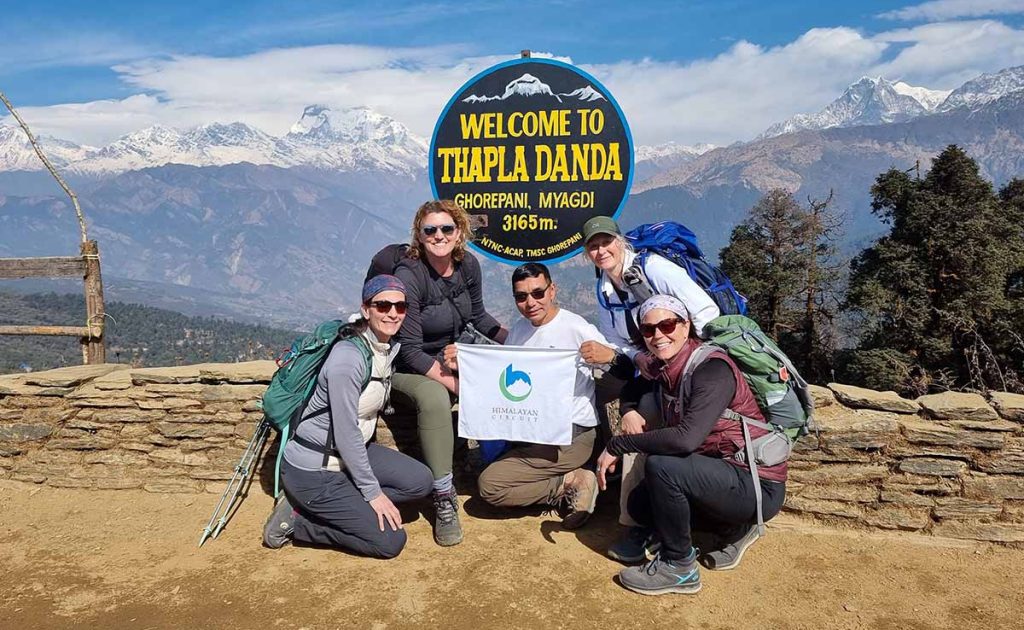
4 Clients with 1 Guide in Thapla Danda

Short, scenic, and sociable—this trek is ideal for independent hikers. Trails are well-marked, and guesthouses are easy to find, ensuring a safe and comfortable experience. Therefore, many solo trekkers choose Poon Hill as their first Himalayan adventure.

Embrace the Nepali Culture

Cultural Etiquette

A simple “Namaste” (palms together) goes a long way in showing respect. Remove shoes before entering temples or homes, avoid pointing feet toward people or sacred objects, and don’t touch anyone’s head. Bargaining in local markets is normal—just smile and stay polite. These small gestures help you connect more deeply with Nepali people.

Food for Solo Travelers

Eating alone in Nepal is easy and enjoyable. Restaurants offer diverse menus, and many street food stalls (choose clean ones) serve delicious, freshly made snacks. Be sure to try dal bhat, momo, and a cup of Masala Chiya (Milk tea with various spices) ! In many cases, sharing a meal leads to friendly conversations with locals or other travelers.

Meeting Fellow Travelers

Hostels, trekking lodges, and cafés are natural meeting spots. Participating in yoga retreats, workshops, or group hikes also helps build friendships on the road. As a result, solo travel in Nepal rarely feels lonely—many travelers leave with new lifelong friends.

Your Solo Journey, Perfected by Himalayan Circuit

Traveling solo doesn’t mean traveling alone. At Himalayan Circuit, we design private, personalized adventures tailored to solo explorers. Our goal is to make every step of your journey safe, smooth, and unforgettable.

  • Tailored itineraries: Crafted to match your interests, pace, and comfort.
  • Trusted local guides: Friendly, knowledgeable, and supportive.
  • Safe stays & transport: Carefully selected for quality and security—including female-friendly guesthouses.
  • Authentic experiences: Meaningful interactions with locals and Nepali culture.
  • 24/7 support: Our team is always available to assist you throughout your trip.

Time to Answer the Himalayas’ Call

If you’ve been dreaming of traveling solo in Nepal, now is the perfect time. Book your flight, arrive in Kathmandu, and let your story unfold. The country has a special way of calling travelers back—again and again—with its mountains, culture, and kindness.

We thank Much Better Adventures, TripAdvisor, and global travel experts for recognizing Nepal as one of the world’s best solo destinations.

Begin Your Solo Adventure with Himalayan Circuit

Are you ready to explore Nepal on your own terms?
Contact us to start planning your Himalayan journey today.
>Travel smart. Travel safe. Travel solo—with us.

Namaste & Welcome!

Unique Experiences: How Federalism Impacts Nepal’s Tourism

Federalism in Nepal

In 2015, federalism in Nepal was officially adopted, marking a significant milestone after years of political challenges. This change introduced a new era of hope and opportunity by decentralizing power among three levels of government: federal, provincial, and local. Each tier now holds distinct responsibilities, including managing development priorities such as tourism—an essential pillar of Nepal’s economy.

Beyond administrative tasks like planning and budgeting, federalism in Nepal has encouraged governments to engage more with local communities to craft policies that reflect regional identities and needs. Consequently, tourism is evolving to become more inclusive and community-driven. No longer confined to traditional hubs like Kathmandu and Pokhara, it is flourishing across Nepal’s diverse provinces.

Understanding Nepal’s Federal Structure

Federalism in Nepal establishes a framework comprising one federal government, seven provincial governments, and 753 local governments, each with clearly defined roles. The federal government oversees national policies, while provincial governments address regional issues. Local governments manage the everyday needs of their communities.

This division enhances service efficiency and accountability, enabling each government level to operate autonomously yet collaboratively. Striking this balance supports national unity while empowering local autonomy, allowing Nepal to effectively serve its diverse population.

The Impact of Federalism on Tourism

Federalism empowers provinces to develop tourism strategies tailored to their unique strengths. This autonomy allows regions to promote local attractions, improve infrastructure, and foster community-based initiatives such as homestays and trained local guides. As a result, tourism is becoming more dispersed and sustainable, offering authentic experiences beyond the well-known destinations.

Below is an overview of how each province is utilizing federalism to shape its tourism landscape:

1. Koshi Province: Adventure and Authenticity

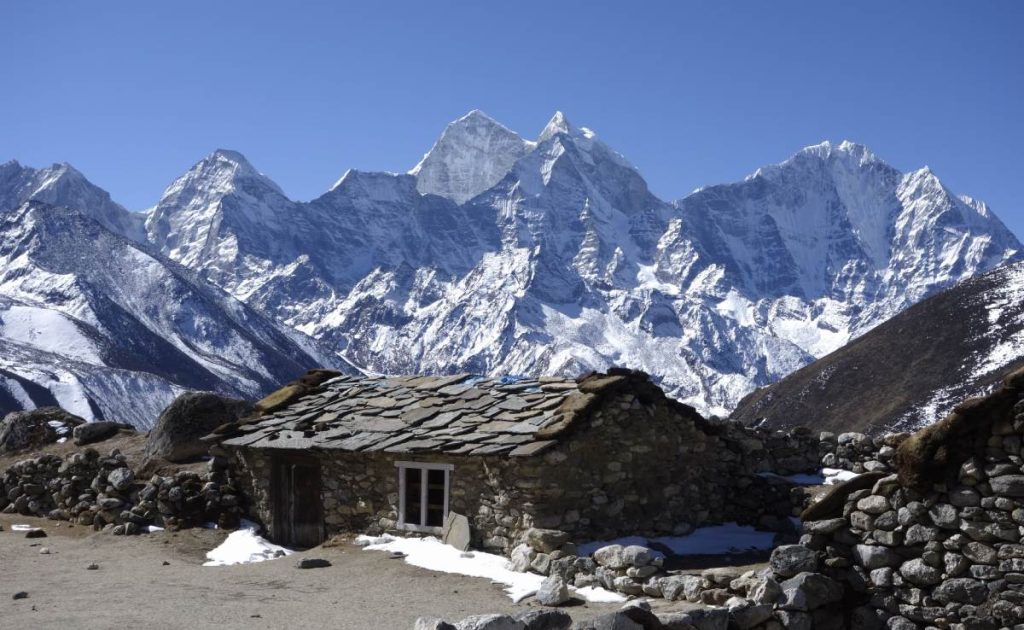
Everest Region Trek: Lukla to Tengboche Adventure
The majestic peaks of the Everest Region lie in Koshi Province.

Home to iconic peaks like Everest, Kanchenjunga, and Makalu, Koshi Province is renowned as an adventure tourism hotspot. However, tourism development here is marked by careful planning and community involvement. Improved infrastructure and connectivity are opening remote areas to visitors, while initiatives like homestays ensure that tourism benefits local residents. This approach preserves the region’s adventurous spirit and fosters meaningful travel experiences.

2. Madhesh Province: Cultural Richness and Wildlife

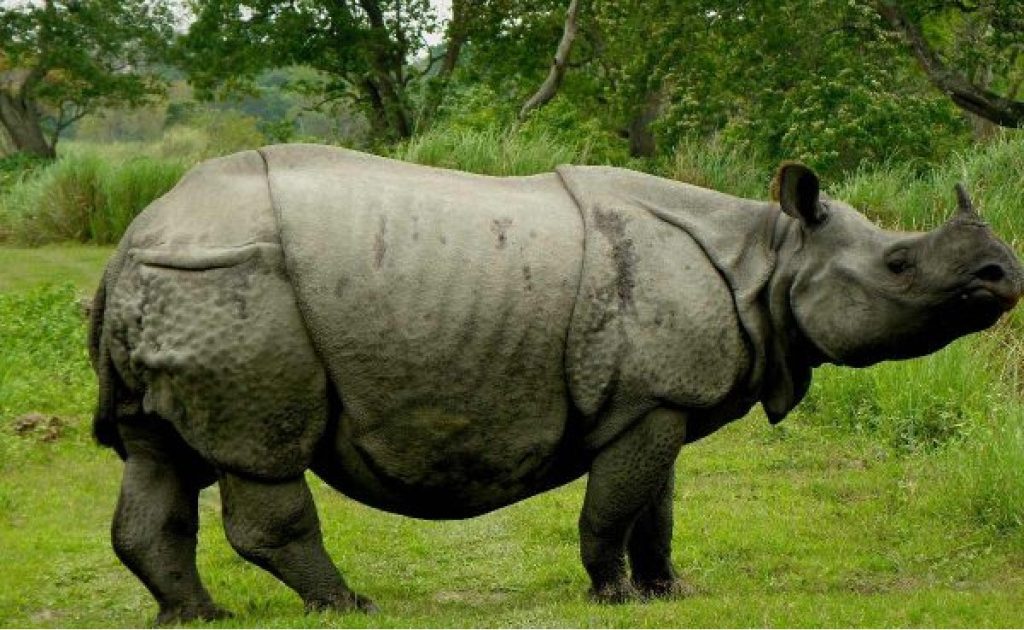
Rhino in Chitwan National Park
The endangered one-horned rhinoceros (Gainda), spotted in Chitwan National Park, which lies in Madhesh Province.

Madhesh Province offers a different but equally valuable tourism experience. Known for its vibrant cultural festivals, historic towns, and warm hospitality, it reflects Nepal’s diverse heritage. The province’s lowland Terai region is home to important wildlife reserves, including parts of the Chitwan National Park, attracting nature lovers and safari enthusiasts. Though tourism here is still developing, Madhesh holds great potential to enrich Nepal’s overall travel offerings.

3. Bagmati Province: Preserving Cultural Heritage

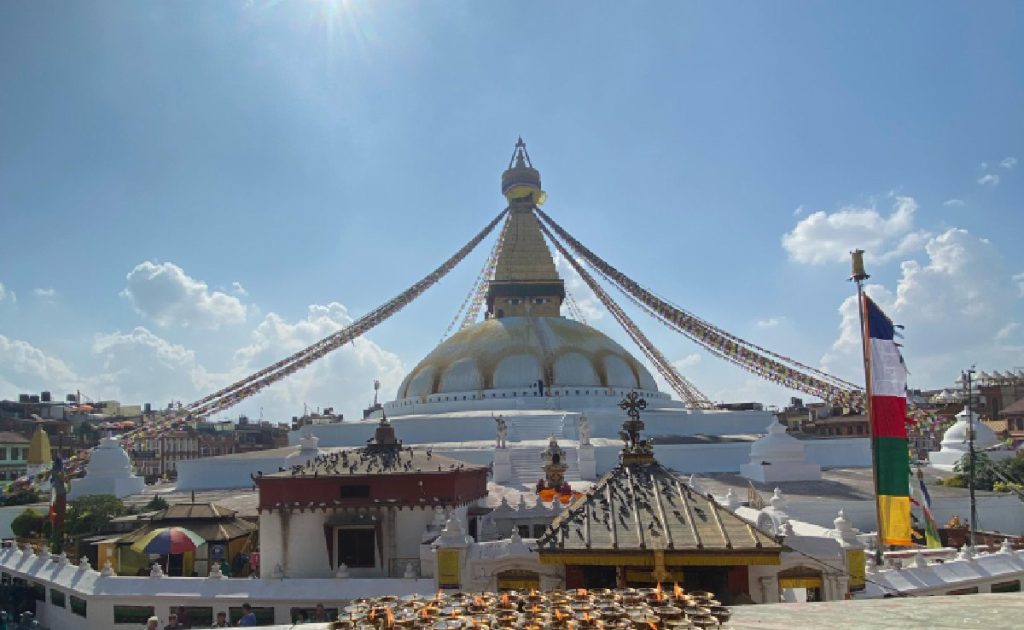
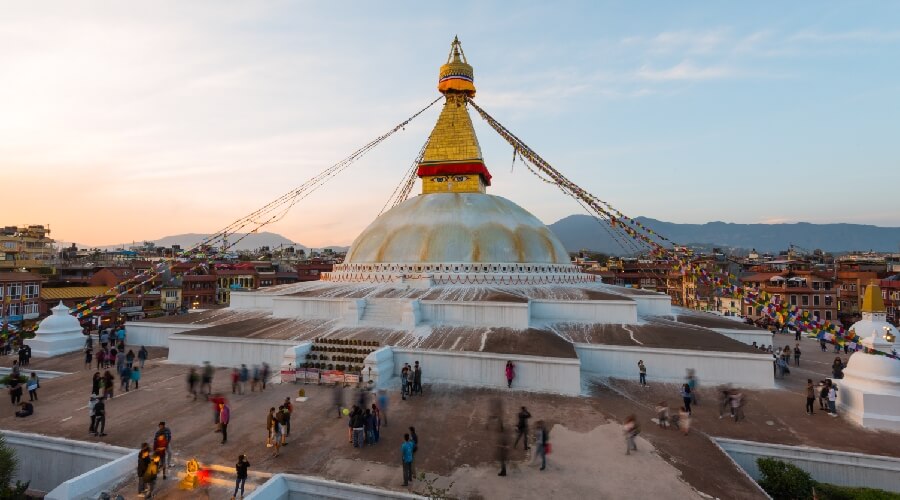
Boudhanath Stupa
 The largest dome-shaped stupa in the world, Boudhanath Stupa, lies in Bagmati Province. 

Bagmati Province, which includes the Kathmandu Valley, is Nepal’s cultural heartland. It boasts ancient temples, palaces, and UNESCO World Heritage Sites that chronicle Nepal’s rich history. Coordinated efforts between provincial and federal authorities have led to restoration projects and enhanced visitor facilities. These developments are helping cultural tourism thrive while safeguarding the valley’s historic character and offering a welcoming environment for visitors.

4. Gandaki Province: Embracing Eco-Friendly Tourism

4 Clients with 1 Guide in Thapla Danda
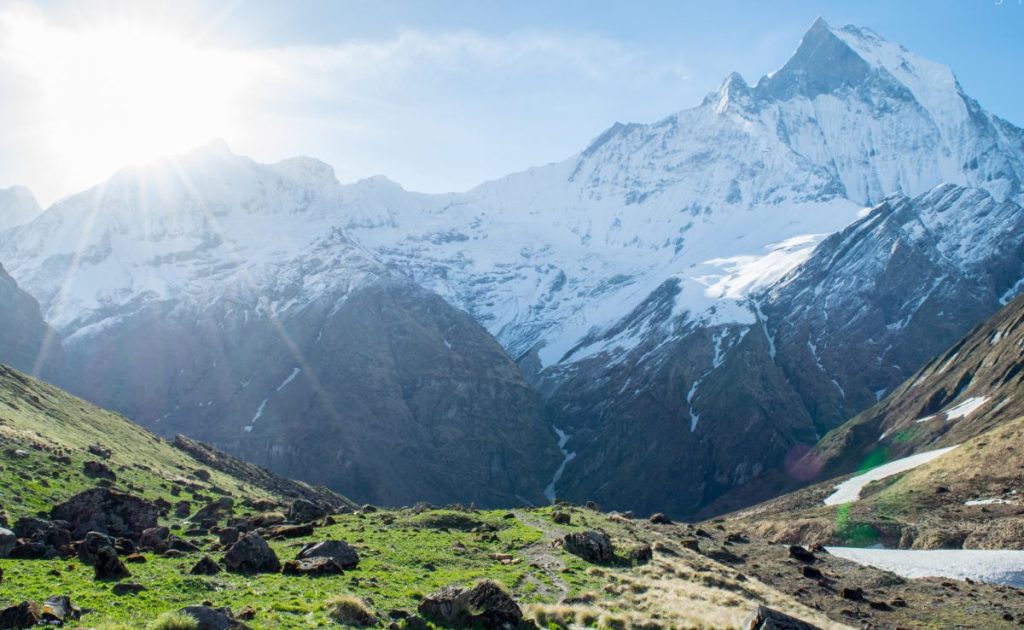
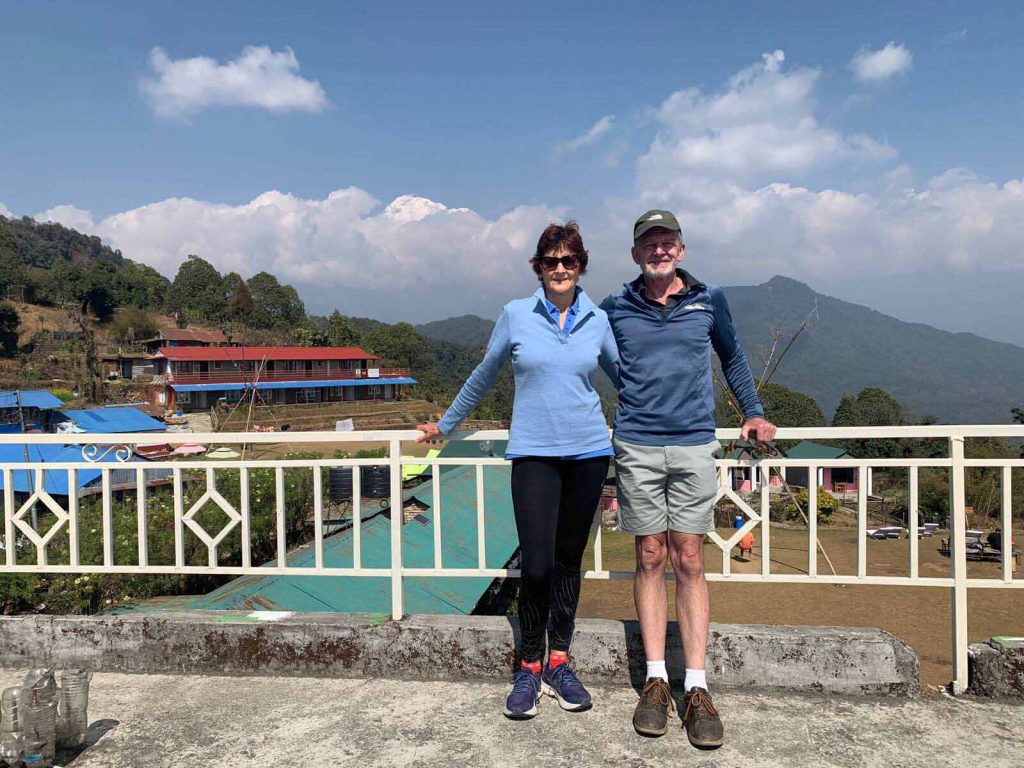
With the Annapurna range behind them, clients enjoy the beauty of Gandaki Province.

Gandaki Province captivates with its natural beauty, from serene lakes to the Annapurna trekking circuit. Here, tourism development prioritizes environmental conservation. Upgraded infrastructure and trekking routes have improved accessibility, while eco-friendly initiatives such as waste management programs and eco-lodges promote sustainable tourism. This balance ensures that the province’s natural charm remains intact for future generations.

5. Lumbini Province: Nurturing Spiritual Tourism

Lumbini Peace Stupa
Located in Lumbini Province, the World Peace Stupa of Lumbini stands as a symbol of harmony and devotion.

As the birthplace of Buddha, Lumbini Province holds profound spiritual significance. It attracts pilgrims and visitors from around the world. Recent investments in transportation, visitor centers, and heritage preservation enhance the visitor experience while respecting the area’s sacred character. This thoughtful development supports a sustainable model that honors Lumbini’s cultural and spiritual legacy.

6. Karnali and Sudurpashchim Provinces: Unlocking Hidden Potential

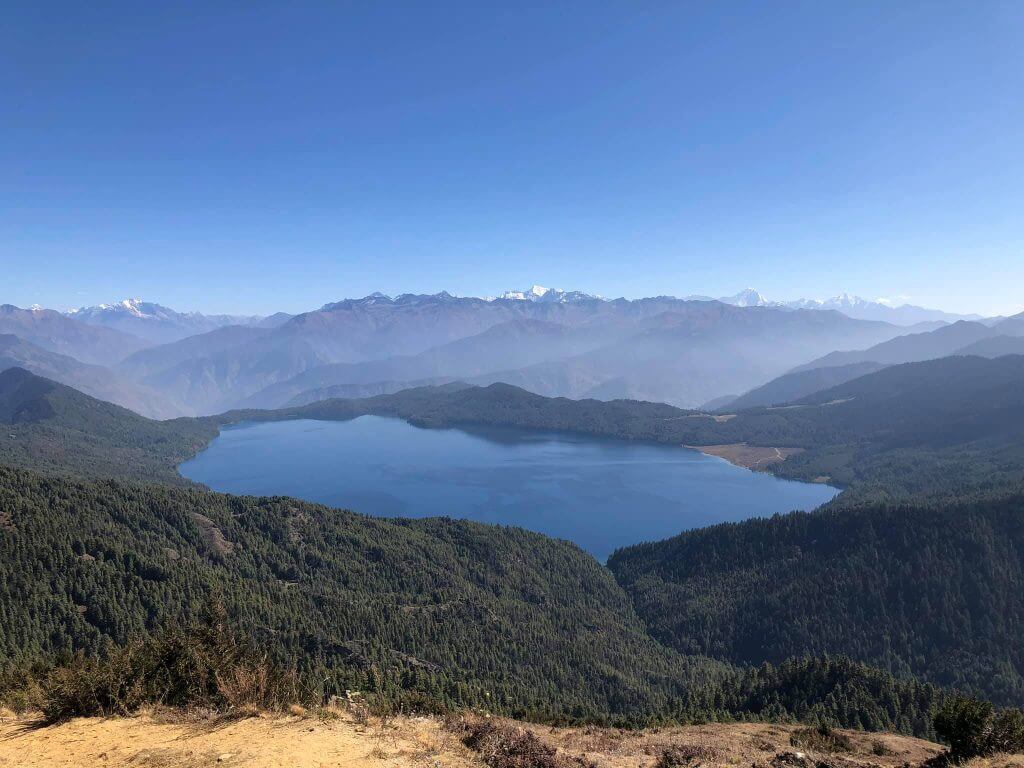
Rara Lake
The largest fresh water lake of Nepal, Rara lake, which lies in the Karnali Province

Karnali and Sudurpashchim, known for their vast rural landscapes and untouched natural beauty, have long remained off the beaten path. Recent infrastructure improvements and community skill-building programs are gradually opening these provinces to tourism. This growth is intentionally paced to preserve cultural integrity and environmental sustainability, fostering inclusive economic development that benefits local communities.

Looking Ahead: A Harmonious Future for Tourism in Nepal

Federalism in Nepal has paved the way for a more balanced and responsible approach to tourism. When all levels of government collaborate effectively, investments can be targeted to revive heritage sites, protect natural resources, and create authentic experiences that showcase each region’s unique character. This unified effort transforms Nepal’s diverse landscapes into a cohesive narrative of sustainable tourism, ensuring that the benefits of growth reach every corner of the country.

If you seek to explore Nepal beyond the usual routes, discover the stories and cultures woven into each province. Experience the country through journeys that reflect its true spirit and local pride.

Nepal Travel News: Best Time to Visit with a Month-Wise Plan

Flute

Wondering about the best time to visit Nepal?

Here’s the truth — every month is the best time to visit in Nepal because it offers something completely different. One moment you’re trekking through snowy Himalayan trails, and the next, you’re dancing in a colorful festival, sipping tea in a peaceful hill town, or spotting rhinos deep in the jungle.

At Himalayan Circuit, we believe that one trip is never enough to truly experience Nepal. That’s why we’ve put together a month-by-month travel guide — showing you the best places to visit, the top festivals to enjoy, and the unique experiences waiting for you throughout the year.

Month Destination/Activity Why Visit? Key Festival(s) Image
January Kathmandu Valley Heritage Tour Crisp air, great visibility, fewer crowds. Swasthani Puja, Maghe Sankranti
February Chitwan National Park Safari Best wildlife viewing during dry season. Maha Shivaratri kathmandu-and-chitwan-10-day-tour
March Annapurna Foothills Trek Colorful hills, clear skies. Holi – Festival of Colors Himalayan peaks in Nepal – Nepal best travel destination
April Bhaktapur & Nagarkot Sunrise New Year celebrations + spring vibes. Bisket Jatra Himalayan peaks in Nepal – Nepal best travel destination
May Bandipur & Gorkha Heritage Tour Cooler hill escape, cultural depth. Buddha Jayanti  Bandpur
June Upper Mustang Trek Rain-shadow region, unique landscapes. Tiji Festival Upper Mustang
July Pokhara Lakeside & Sarangkot Fewer tourists, vibrant nature. Ropain Jatra Ropai Jatra
August Helambu Trek Lush landscapes, fewer crowds. Gai Jatra Chispani
September Langtang Valley Trek Rejuvenated trails, clear skies. Indra Jatra
October Everest Base Camp Trek Peak trekking conditions. Dashain Everest Base Camp Trek
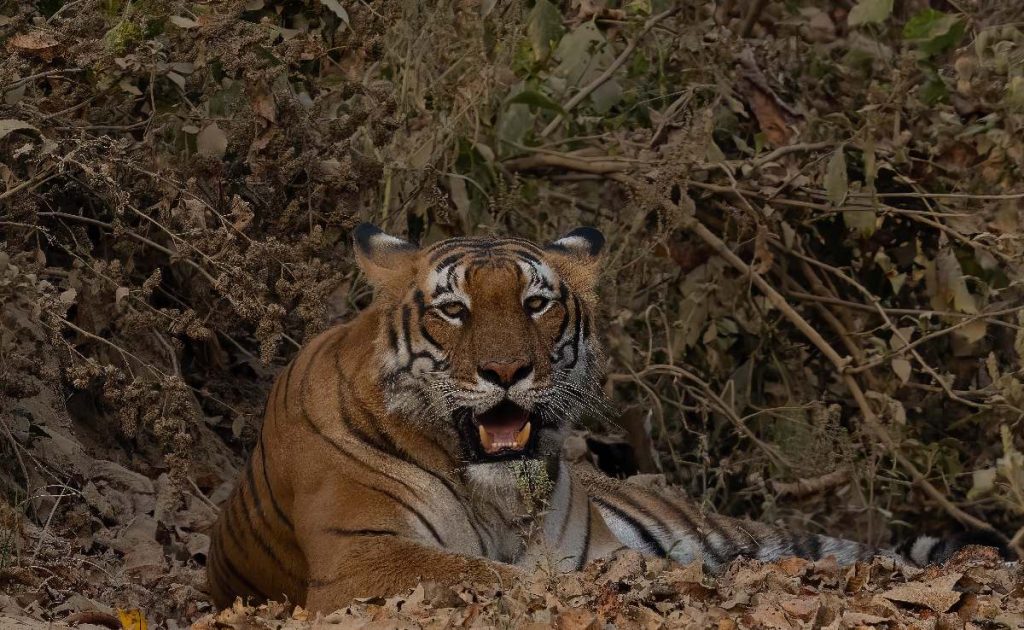
November Lumbini & Bardia National Park Ideal wildlife and spiritual tourism mix. Tihar Tiger in Bardia National Park
December Ilam Tea Gardens & Eastern Hills Winter serenity without the chill. Mani Rimdu Ilam Chiya Bagaan

A Country That Changes With the Seasons

Nepal is more than just Everest and temples — it’s a 12-month journey waiting to unfold. From east to west, each region offers its own magic, shaped by the rhythm of nature and Nepal’s deep-rooted culture. For example, you might be trekking among blooming rhododendrons in March, chasing tigers in the jungles of Bardia in November, or sipping fresh tea in the hills of Ilam in December. No matter when you visit, there’s always something exceptional happening here.

Travel Better with a Local Partner

As a result, planning the right trip at the right time can make your experience even more meaningful. That’s where we come in. As a local tour operator, Himalayan Circuit is your trusted companion in discovering Nepal authentically. Whether you’re coming in spring or winter, we’ll help you plan a journey that aligns with the best each month has to offer. Because here in Nepal — every month is a good month to visit.

Luxury Travel: Ultimate Luxury Trekking & Tours Experience in Nepal

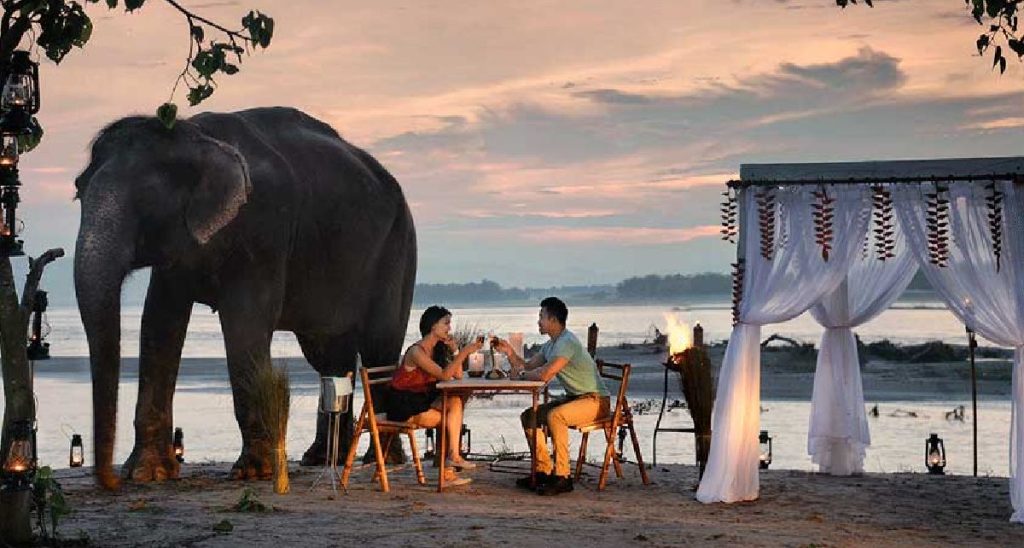
luxury wildlife tour

Are you looking for an unforgettable luxury holiday in Nepal? Whether you want to trek the majestic Everest Base Camp, explore the cultural treasures of Kathmandu, or experience the serene beauty of Pokhara, Nepal offers the perfect blend of adventure and comfort. With Himalayan Circuit, you can enjoy the best trekking and luxury tours in Nepal that combine world-class service, breath taking views, and cultural richness.

Luxury Trekking in Nepal: Explore the Himalayas in Comfort

Nepal is home to some of the world’s most famous trekking routes. However, you don’t have to compromise comfort for adventure. With our luxury trekking packages, you’ll enjoy high-end lodges, delicious meals, and top-notch services while exploring the natural wonders of Nepal.

  1. Everest Base Camp Luxury Trek

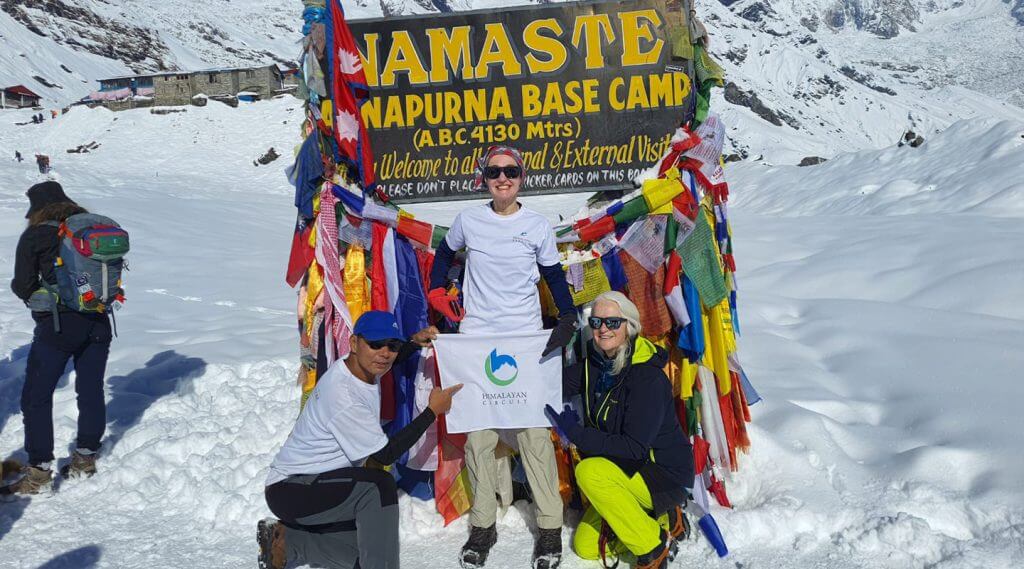
One of the most iconic treks in the world is the Everest Base Camp Trek. This trek brings you close to the world’s highest peak, Mount Everest, offering stunning views of the Himalayas. With luxury trekking options, you’ll stay in luxurious mountain lodges that offer comfortable rooms, hot showers, and gourmet meals. Relax in front of a fire after a long day of hiking, and enjoy the spectacular views of the Everest region.

  1. Annapurna Sanctuary Luxury Trek

The Annapurna Sanctuary Trek takes you through beautiful forests, traditional villages, and the stunning Annapurna mountain range. With a luxury trekking package, you’ll stay in cozy lodges with high-end facilities and personal services. Enjoy panoramic views of the Annapurna range while relishing fine dining and comfort.

  1. Manaslu Circuit Trek – Luxury Adventure

The Manaslu Circuit Trek offers an off-the-beaten-path adventure, showcasing the remote beauty of Nepal. As part of our luxury package, you’ll enjoy boutique lodges, private guides, and exceptional service, ensuring that you experience this less-crowded region in comfort.

Luxury Tours in Nepal: Discover Culture and Nature

If trekking isn’t your thing, don’t worry! Nepal has plenty to offer through its luxury tours. From exploring ancient temples in Kathmandu to going on a wildlife safari in Chitwan, luxury tours allow you to enjoy the cultural richness and natural beauty of Nepal with ease.

    4. Kathmandu Valley Heritage Tour

Kathmandu, Nepal’s capital, is home to several UNESCO World Heritage Sites. Explore Durbar Square, Pashupatinath Temple, and Swayambhunath Stupa (Monkey Temple) with a private guide, and stay in luxury hotels offering the best comfort and service. This tour is perfect for history lovers and those looking to experience Nepal’s vibrant culture.

  1. Chitwan National Park Safari – A Luxurious Wildlife Experience

For a unique adventure, explore Chitwan National Park on a luxury safari. The park is home to rhinos, tigers, elephants, and many other species. Stay in high-end resorts, enjoy a jungle jeep safari, or take a boat ride on the Rapti River. Luxury resorts offer fantastic amenities like spas, infinity pools, and gourmet meals, ensuring a relaxing wildlife experience.

  1. Pokhara Lakeside Luxury Retreat

Pokhara is known for its serene lakes and stunning mountain views. On a luxury tour of Pokhara, stay in lakeside resorts with private villas and enjoy a range of activities like boating on Phewa Lake or paragliding with views of the Annapurna Range. Pokhara offers the perfect mix of relaxation and adventure.

Tailored Luxury Itineraries: Custom Holidays in Nepal

At Himalayan Circuit, we know that every traveler has unique preferences. That’s why we offer tailored luxury itineraries to ensure your holiday is exactly what you dream of. Whether you prefer a quiet cultural tour, an exciting trekking adventure, or a mix of both, we can design your ideal Nepal experience.

What’s Included in Our Luxury Nepal Packages?

  • Private Guides and Porters: Expert guides and friendly porters make your journey smooth and enjoyable.
  • High-End Accommodation: Stay in the best hotels, luxury lodges, and resorts across Nepal.
  • Gourmet Meals: Indulge in delicious meals from top chefs, offering both local and international cuisine.
  • Private Transport: Enjoy comfortable, private vehicles for all your travels.
  • Exclusive Experiences: Take scenic helicopter rides, go on private tours, and enjoy personalized service throughout your trip.

Why Choose Himalayan Circuit for Your Luxury Nepal Holiday?

  • Expert Knowledge: With years of experience in Nepal tourism, we offer the best advice and services.
  • Comfort and Service: We guarantee a smooth and comfortable journey with world-class service at every step.
  • Eco-Friendly and Responsible Travel: We care about Nepal’s environment and local communities and promote sustainable tourism.
  • Tailored to You: Our custom itineraries ensure you have the best holiday experience based on your preferences.

Book Your Luxury Nepal Holiday Today!

Nepal’s stunning landscapes, rich culture, and amazing wildlife await you. Whether you’re looking for an adventure-packed trekking experience or a relaxing cultural tour, Himalayan Circuit offers luxury holidays that combine comfort with unforgettable experiences.

Visit Himalayan Circuit today to plan your dream holiday in Nepal and start your journey of a lifetime.

Nepal Diary: Frequently Asked Questions for Traveling in Nepal

FAQs about traveling to Nepal

Planning a trip to Nepal? At Himalayan Circuit, we are dedicated to making your journey unforgettable. Whether you’re visiting for the first time or returning for more adventure, we’ve put together a list of frequently asked questions (FAQs) about traveling to Nepal to help you prepare. This guide covers everything from visa requirements to travel tips, ensuring your trip to Nepal goes smoothly.

1. Do I need a visa to visit Nepal?

Yes, most international travelers need a tourist visa to visit Nepal. You can obtain a 15-day visa for $30 USD (or the equivalent in Nepali Rupees) upon arrival at Tribhuvan International Airport in Kathmandu or at land border entry points. You can also apply for an eVisa online before your trip via the Nepal eVisa website. Visa extensions are available if you wish to stay longer.

2. When is the best time to travel to Nepal?

Best Time to Visit Nepal: A Quick Guide

The best time to visit Nepal is during autumn (September to November) and spring (March to May). These seasons offer clear skies, mild temperatures, and excellent conditions for trekking, sightseeing, and outdoor adventures.

Autumn (September to November)

Autumn provides crisp weather, fresh trails, and stunning Himalayan views, making it ideal for trekking. It’s also the season for major festivals like Dashain and Tihar, adding a cultural touch to your visit.

Spring (March to May)

Spring brings warmer temperatures and blooming rhododendron forests, perfect for trekking and exploring Nepal’s natural beauty. It’s also the best time for clear views of the Himalayas.

Winter (December to February)

Winter can be cold, especially in higher altitudes, but it’s still great for lower-altitude treks and cultural tours in places like Kathmandu and Pokhara.

Monsoon (June to August)

The monsoon season brings heavy rains, making trekking challenging. However, if you’re focused on cultural sightseeing, the lush landscapes can still be beautiful.

3. What vaccinations do I need before traveling to Nepal?

Vaccinations are recommended for travelers heading to Nepal. Common vaccines include:

  • Routine vaccines: MMR, DTaP, Polio, Flu.
  • Travel-related vaccines: Hepatitis A, Hepatitis B, Typhoid, and Malaria (if visiting high-risk areas). It’s important to visit your healthcare provider 4-6 weeks before your trip. For more information on vaccinations, check out the CDC Travel Health page.

4. What currency is used in Nepal, and how can I exchange money?

The official currency in Nepal is the Nepalese Rupee (NPR), denoted as NRs. Notes are available in denominations of 5, 10, 20, 50, 100, 500, and 1000 rupees, while coins are available in 1, 2, and 5 rupees. While US dollars are accepted in major tourist areas, it’s recommended to use local currency for everyday purchases.

How to Exchange Money in Nepal

You can exchange foreign currency at banks, money exchange offices, or ATMs in cities like Kathmandu, Pokhara, and Chitwan. For the most accurate rates, visit Nepal Rastra Bank or reliable exchange counters.

Using Credit Cards in Nepal

In Kathmandu and other major cities, you can use credit cards (Visa, MasterCard, American Express) at many tourist spots, but cash is preferred in rural areas and remote villages. Always carry enough cash for your trip.

ATMs in Nepal

ATMs are available in larger cities, and most charge a fee (around 500 NPR) for foreign card withdrawals. ATM access is limited in remote areas, so it’s best to withdraw enough cash before heading out.

Cash on Trekking Routes

If you’re trekking in Nepal, cash is king. While some popular trekking routes may have ATMs, they are limited, and fees are high. Carry enough Nepalese Rupees to cover your entire trek.

For up-to-date exchange rates, visit Nepal Rastra Bank.

5. Is Nepal a safe destination for tourists?

Yes, Nepal is generally a safe destination for travelers. The country is peaceful, and the locals are welcoming. However, like any travel destination, it’s important to remain cautious, especially in unfamiliar areas.

Safety Tips for Traveling in Nepal:

  1. Be Mindful of the Monsoon Season
    Mudslides and rockslides are common during the monsoon (June to August), especially in remote regions. Check the weather before trekking.
  2. Stay Safe in Crowded Areas
    Petty theft can occur in busy tourist spots. Keep your belongings secure.
  3. Trekking Safety
    Hire a certified guide for trekking in high-altitude areas and be mindful of altitude sickness.
  4. Respect Local Culture
    Nepal has a rich cultural heritage—respect local traditions and customs to ensure a positive experience.

For more detailed safety advice, check out our Safe Trip Abroad Handbook, available on our website.

Nepal is a generally safe country for tourists, but being cautious and prepared will help you have a worry-free trip.

6. What are the best transportation options in Nepal?

In Nepal, you’ll find several transportation options:

  • Flights: We recommend flying with Buddha Air, which is known for its reliable domestic flights. You can book flights from Kathmandu to Pokhara, Chitwan, and other cities. Visit Buddha Air for more information.
  • Tourist buses: Comfortable and affordable, these buses connect major tourist cities like Kathmandu, Pokhara, and Chitwan.
  • Private vehicles: Great for flexibility and comfort, ideal for group travel.
  • Public transport: Taxis and local buses are available, though they can be crowded and less reliable.

7. What are the food available in Nepal?

Nepal offers a rich and diverse food culture influenced by its many regions and ethnic groups. From traditional Nepali dishes to street food and international cuisine, there’s something for every traveler to enjoy. Here’s a guide to the food in Nepal that you can expect during your visit:

1. Traditional Nepali Cuisine:

  • Dal Bhat: The cornerstone of Nepali meals, dal bhat consists of lentil soup (dal) served with steamed rice (bhat). This hearty dish is often accompanied by vegetables, pickles (achar), and sometimes meat or fish. It’s a nutritious and filling meal that is typically eaten twice daily by locals.
  • Momo: Nepali dumplings, filled with spiced meat (usually chicken, pork, or buffalo) or vegetables, are a popular street food and snack. They can be steamed or fried and are often served with a spicy dipping sauce.
  • Sel Roti: This traditional Nepali rice donut is made from rice flour, sugar, and milk, commonly served during festivals and celebrations.

2. Nepali Street Food:

  • Chatamari: Known as Nepali pizza, chatamari is a rice crepe topped with meat, eggs, or vegetables. It’s a favorite in the Newar community and can be found in Kathmandu and Bhaktapur.
  • Samosas: These fried, triangular pastries are filled with spiced potatoes, peas, and sometimes meat. Samosas are a popular snack and street food throughout Nepal.

3. Spices and Flavors:

Nepali cuisine is flavorful, with an emphasis on spices like turmeric, cumin, garlic, and ginger. Achar, a spicy pickle made from fruits, vegetables, or even meats, is often served alongside meals to add an extra layer of flavor.

4. Beverages in Nepal:

  • Chiya: Nepali tea is typically served with milk and sugar, and it’s a popular drink throughout the day, especially in the morning or during breaks.
  • Raksi: A traditional alcoholic drink made from rice or millet, raksi is commonly consumed during festivals and celebrations.

5. Vegetarian and Vegan Dishes:

Given Nepal’s strong Hindu and Buddhist influences, there are many vegetarian and vegan options. Dishes like vegetable curry, dal, lentils, and spinach-based dishes are widely available and commonly eaten.

6. International Cuisine:

In major tourist cities like Kathmandu and Pokhara, you’ll find international food options, including pizza, pasta, and even fast food chains. However, local Nepali cuisine is the real highlight of your visit.

When visiting Nepal, expect a variety of traditional Nepali foods like dal bhat, momos, and thukpa, along with delicious street food such as chatamari and samosas. Whether you prefer vegetarian or meat-based dishes, Nepal’s cuisine will offer something to satisfy every palate. Be sure to try these local specialties for an authentic food experience!


8. What should I pack for my trip to Nepal?

Packing for Nepal depends on your activities, but here’s a general packing list to help ensure you’re ready for anything, from trekking in the Himalayas to exploring Kathmandu.

1. Trekking Gear

If you’re planning on trekking, make sure to pack:

  • Comfortable hiking boots: Choose sturdy, well-broken-in boots for comfort and protection.
  • Warm clothing: Layering is key, especially in the mountains where temperatures can drop even in summer.
  • Quality backpack: A comfortable, well-fitting backpack is essential for carrying your gear during treks.
  • Sleeping bag: If you’re trekking, a good sleeping bag suitable for the altitude is necessary for comfort and warmth.

2. Clothing

Nepal’s weather can vary greatly by region and altitude:

  • Light clothes for warm weather: Cotton shirts, shorts, and comfortable shoes for lowland and city exploration.
  • Extra layers for cooler mountain temperatures: Fleece jackets, down jackets, and thermals are crucial for the chilly mountain evenings and early mornings.

3. Health and Personal Items

  • Medications: If you’re on any regular medication, make sure to bring enough for your entire trip, as some prescriptions may be hard to find.
  • Sunscreen: The Nepali sun can be intense, especially in higher altitudes. Be sure to pack high-SPF sunscreen to protect your skin.
  • Hand sanitizer: Handy for keeping clean when handwashing facilities are limited.
  • Insect repellent: Especially important if you’re traveling during the monsoon season (June to August) when mosquitoes are more prevalent.

4. Travel Essentials

  • Power adapter: Nepal uses Type C, D, and M plugs, so be sure to bring a universal adapter for your devices.
  • Camera: You’ll want to capture the stunning landscapes, vibrant culture, and historic sites. Don’t forget extra memory cards and batteries.
  • Good map: Whether you’re trekking or exploring cities, a reliable map of Nepal or a trekking guidebook can be invaluable.

5. Other Helpful Items

  • Water bottle: Stay hydrated, especially if you’re trekking in remote areas.
  • Travel insurance details: Always carry a copy of your travel insurance information in case of emergencies.
  • Flashlight or headlamp: Essential for trekking in remote areas where electricity might be scarce.

Your Nepal packing list will depend on your specific plans, but with these essential items for trekking, clothing, health, and travel essentials, you’ll be well-prepared for your adventure. Whether you’re trekking in the mountains or exploring the streets of Kathmandu, make sure you’re equipped for all of Nepal’s incredible experiences!

9. Do I need a guide for trekking in Nepal?

Hiring a licensed trekking guide is highly recommended when trekking in Nepal, especially in remote or high-altitude regions. A professional guide can ensure your safety, enrich your experience, and help you navigate Nepal’s stunning but challenging trekking routes. Here’s why hiring a guide is a smart choice for your trek:

1. Safety and Altitude Sickness Prevention

Trekking at high altitudes in Nepal, such as on the Everest Base Camp trek or the Annapurna Circuit, poses the risk of altitude sickness. A licensed trekking guide is trained to identify symptoms of altitude sickness and implement acclimatization techniques to help minimize risks. Guides also know the proper procedures to follow in case of emergency, ensuring your safety throughout the trek.

2. Local Expertise and Cultural Insights

A licensed guide will offer local knowledge and cultural insights, enriching your experience as you explore Nepal’s mountain villages, temples, and natural beauty. They can explain the region’s history, share local stories, and suggest hidden gems along the trekking trail that you might miss on your own.

3. Navigating Trekking Routes and Trails

Nepal’s trekking routes can be challenging, especially in remote areas with rugged terrain. A certified trekking guide is familiar with the trails and ensures that you stay on the right path. They also help manage difficult sections of the trek, ensuring you don’t get lost or waste time on incorrect routes.

4. Logistics and Permits

Guides handle all the essential logistics of your trek, including arranging permits, accommodation, and meals along the way. Their knowledge of local guesthouses and restaurants will help you find the best places to rest, ensuring a comfortable and stress-free trekking experience.

5. A More Enjoyable Experience

Beyond safety and logistics, a guide makes your trekking experience more enjoyable. They can recommend the best spots for photography, help you engage with locals, and make your trek more culturally immersive. A guide helps you get the most out of your Nepal trek, whether you’re hiking through villages, monasteries, or national parks.

While some trekkers may choose to go solo, hiring a licensed guide for trekking in Nepal is strongly recommended, especially for high-altitude treks or remote regions. Guides enhance your safety, help you prevent altitude sickness, and provide valuable cultural insights that make your trek more memorable. To ensure a smooth and enjoyable experience, it’s always best to book your licensed trekking guide through a trusted agency.

For more information on certified guides, visit the Nepal Tourism Board.

10. How can I prevent altitude sickness in Nepal?

Altitude sickness is common above 2,500 meters (8,200 feet). To reduce the risk:

  • Ascend slowly and allow time for acclimatization.
  • Drink plenty of water and avoid alcohol.
  • If you feel symptoms like headache or dizziness, descend to a lower altitude and seek medical help immediately. For more information, visit the CDC Travel Health page on altitude sickness.

11. How can I stay connected in Nepal?

Staying connected in Nepal is easy, whether you’re in Kathmandu, Pokhara, or the Himalayas. With reliable mobile networks, affordable data plans, and eSIM technology, keeping in touch is hassle-free. Here’s everything you need to know about staying connected in Nepal:

  1. Purchase a Local SIM Card in Nepal

One of the most affordable and convenient ways to stay connected is by purchasing a local SIM card. NTC Nepal (Nepal Telecom) and NCell Nepal offer competitive data plans, voice calls, and SMS services for both short-term and long-term visitors. You can buy a SIM card at Tribhuvan International Airport in Kathmandu, local mobile shops, or service centers in major cities like Pokhara and Chitwan. Be sure to bring your passport for SIM registration.

  1. eSIM Options for Travelers in Nepal

If you have an eSIM-compatible phone, Nepal offers a great option for staying connected without needing a physical SIM card. NTC Nepal and NCell Nepal both provide eSIM services, allowing you to activate local mobile data without the hassle of swapping SIM cards. You can also use global eSIM providers like Airalo, Truphone, or GigSky for international data plans that work in Nepal.

  1. Mobile Network Coverage in Nepal

In major cities like Kathmandu and Pokhara, mobile network coverage is reliable, and you can easily access mobile data and voice calls. However, as you head into more remote areas or embark on trekking routes in the Himalayas, mobile coverage can be spotty. For areas with limited coverage, consider renting a satellite phone for uninterrupted communication.

  1. Wi-Fi Access in Hotels and Cafes

Free Wi-Fi is widely available in hotels, cafes, and tourist spots in cities like Kathmandu and Pokhara. However, Wi-Fi speeds can be slower in more rural areas. In popular tourist spots, you can enjoy free internet access, though it may not always be as fast as you’re used to.

  1. Use Messaging Apps and Social Media

Most messaging apps like WhatsApp, Facebook Messenger, and Viber work well in Nepal, especially if you have mobile data or Wi-Fi. These apps are widely used by locals and travelers alike, allowing for easy communication, including voice calls and video chats.

Whether you’re in a city or trekking through remote areas, staying connected in Nepal is easy with a local SIM card, eSIM service, and reliable Wi-Fi options. eSIM technology offers an added convenience for those with compatible devices, eliminating the need for physical SIM cards. If you’re venturing into the mountains, be prepared for limited mobile coverage and consider satellite phones for communication. With these simple steps, you’ll enjoy seamless connectivity during your Nepal adventure.

For more details on SIM cards, check NTC Nepal or NCell Nepal.

12. What cultural norms should I follow in Nepal?

Nepal is a country steeped in rich cultural traditions and religious customs. As a visitor, it’s essential to respect these local norms to ensure a positive and respectful experience. Here are some key cultural etiquette tips to follow when traveling in Nepal:

1. Remove Your Shoes Before Entering Temples and Sacred Sites

In Nepal, it is customary to remove shoes when entering temples, monasteries, or any sacred sites. This is a sign of respect for the holy space and is an important part of Nepali culture. You may also be asked to remove your shoes when visiting local homes or certain cultural buildings.

2. Greet with Namaste

The traditional Nepali greeting is Namaste, where you press your palms together in a prayer-like gesture and bow slightly. This respectful greeting is commonly used when meeting someone or saying goodbye. It’s a sign of goodwill and respect for others, especially in the context of Nepal’s Hindu and Buddhist traditions.

3. Dress Modestly, Especially in Religious Sites

Nepal is a conservative society, especially in religious and rural areas. Modest dress is important when visiting religious sites like temples and monasteries. For both men and women, covering the shoulders and knees is considered respectful. Avoid wearing revealing clothing in sacred areas or when interacting with local communities.

4. Avoid Public Displays of Affection

Public displays of affection, such as kissing or hugging, are generally not appropriate in Nepal, particularly in more rural or conservative areas. While this may be accepted in some tourist spots, it’s best to refrain from such behavior to respect local customs.

5. Be Mindful of Local Customs and Traditions

Nepal is home to a diverse population with varying ethnic and religious practices. Always be respectful and ask for permission before taking photos of people, particularly in rural areas or sacred spaces. Also, when engaging with local customs, always take care to approach them with respect and openness.

By following these cultural norms in Nepal, you’ll show respect for the country’s traditions and ensure a more fulfilling travel experience. Removing shoes, greeting with Namaste, dressing modestly, and avoiding public affection are just a few ways to honor Nepal’s cultural values. Remember, understanding and respecting local customs will help you connect with the Nepali people and make your trip more enjoyable. For more travel tips and personalized assistance, visit HimalayanCircuit.com and start planning your adventure in Nepal!

13. Is Nepal only for trekkers?

Absolutely not! While Nepal is globally renowned for its trekking adventures, it offers a wide variety of attractions for all types of travelers. Whether you’re interested in culture, wildlife, or simply relaxing in stunning landscapes, Nepal has something for everyone. Here’s what else you can enjoy in Nepal besides trekking:

1. Cultural Tours in Kathmandu Valley

Nepal is rich in history and culture, and the Kathmandu Valley is a treasure trove of UNESCO World Heritage Sites. Explore the ancient cities of Kathmandu, Patan, and Bhaktapur, with their stunning temples, palaces, and Durbar Squares. Discover Nepal’s vibrant art and architecture while learning about its fascinating history.

2. Wildlife Safaris in Chitwan and Bardia National Parks

For nature enthusiasts, Nepal is home to incredible wildlife safaris in Chitwan National Park and Bardia National Park. Experience the thrill of spotting bengal tigers, one-horned rhinoceroses, and a variety of birds and animals. These parks offer unforgettable wildlife experiences, perfect for families and adventure seekers alike.

3. Scenic Boat Rides on Phewa Lake in Pokhara

If you’re looking for a more relaxing experience, enjoy a serene boat ride on Phewa Lake in Pokhara. Surrounded by lush hills and the stunning Annapurna Range, the lake offers a peaceful setting for leisurely activities suhttps://himalayancircuit.com/tour/pokhara-city-tourch as kayaking, fishing, or just enjoying the view.

4. Explore Nepal’s Temples, Monasteries, and Tibetan Settlements

Nepal is home to several temples, monasteries, and Tibetan settlements that offer insight into the country’s rich spiritual heritage. Visit sacred places like the Swayambhunath Stupa (Monkey Temple), Lumbini (the birthplace of Buddha), and the monasteries in the Everest region to deepen your cultural and spiritual connection with Nepal.

5. Adventure Sports and Outdoor Activities

For those seeking adrenaline, Nepal offers a range of adventure sports including paragliding in Pokhara, white-water rafting on the Trisuli River, and mountain biking in the hills. Whether you’re a thrill-seeker or a nature lover, there’s plenty to do beyond trekking.

Nepal is not just for trekkers; it’s a diverse destination with a wealth of cultural, natural, and spiritual experiences. Whether you’re interested in exploring ancient temples, going on a wildlife safari, or enjoying outdoor adventures, Nepal offers something for every traveler.

Start planning your Nepal itinerary today and discover the many faces of this beautiful country!

We hope this FAQ has helped you prepare for your trip. At Himalayan Circuit, we’re here to assist with all your travel needs. If you have any more questions or need help planning your trip, don’t hesitate to reach out.

Get ready to explore the breath-taking beauty, rich culture, and warm hospitality of Nepal!

Top 5 Family Tours of Nepal

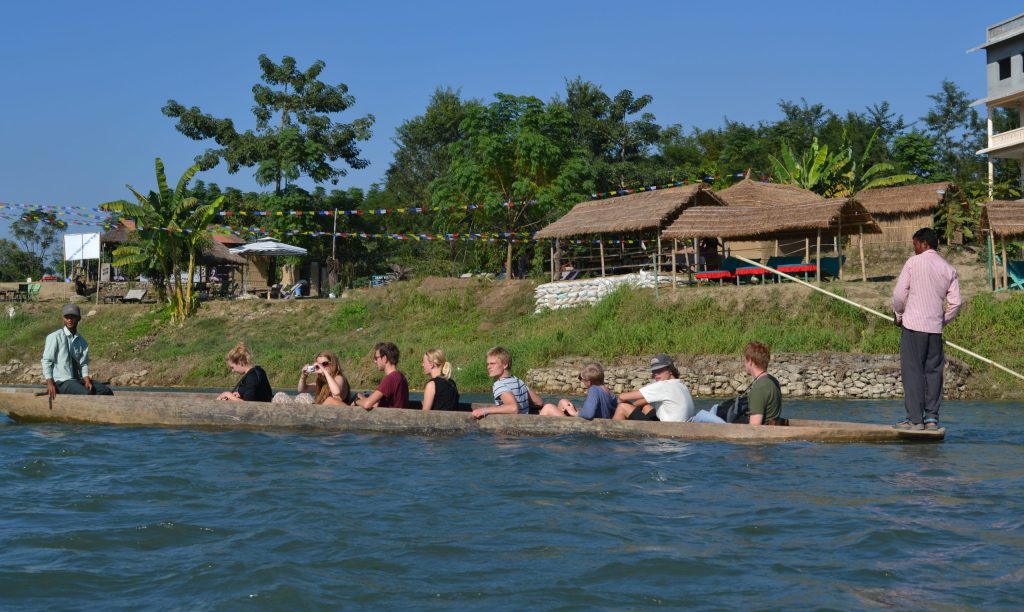
Canoeing

Nepal is an ideal destination for family tours that include ever-smiling, friendly, and hospitable people, rich flora, fauna, and unique cultures and traditions that are unique. Nepal’s most popular destinations for family tours include Kathmandu, Pokhara, Chitwan, and Lumbini.

Children and families can take part in a variety of fun and entertaining holiday activities, such as mountain biking, bunjy jumping, nature walks, canoeing, elephant safaris in Royal Chitwan National Park, cultural tours, boating on Phewa Lake, whitewater rafting, and educational tours.

Family holidays are designed with the children’s interests in mind, as well as making sure everyone has a comfortable stay, relaxation, and good meals. The Himalayan Circuit offers a wide range of tours, from day trips to multi-day excursions led by a tour leader.

In this article, we present a list of the top5 family tours and treks in Nepal:

  • Kathmandu sightseeing Tour with Mountain flight

Mountain Flight

Duration: 2 Nights 3 Days

An affordable 2 night’s 3 days Kathmandu package with a flight to Mount Everest is the ideal choice for family vacations in Nepal. During this short tour, you will encounter the pristine culture of Kathmandu valley, visit UNESCO heritage sites, and experience the Himalayan thrill of flying over thousands of Himalayan peaks. 

Kathmandu day tour provides a blend of culture, history, art, architecture, and nature. This tour is a fun-filled, educational, and safe day tour for children, parents and grandparents, couples, families, and friends who want to discover cultural diversity and beliefs in a safe, enjoyable environment.

  • Kathmandu, Pokhara and Chitwan Tour

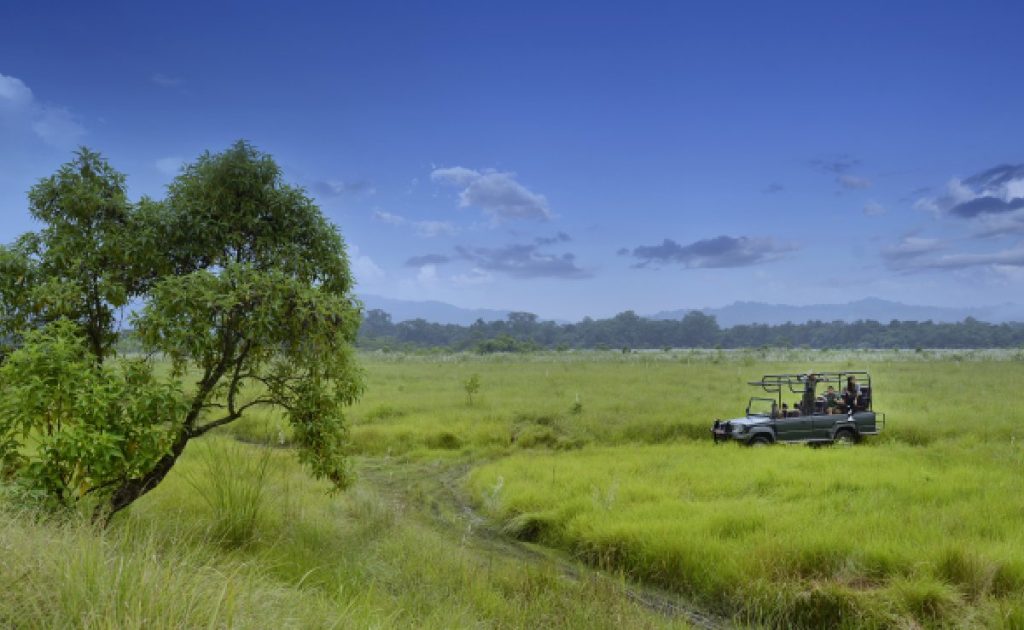
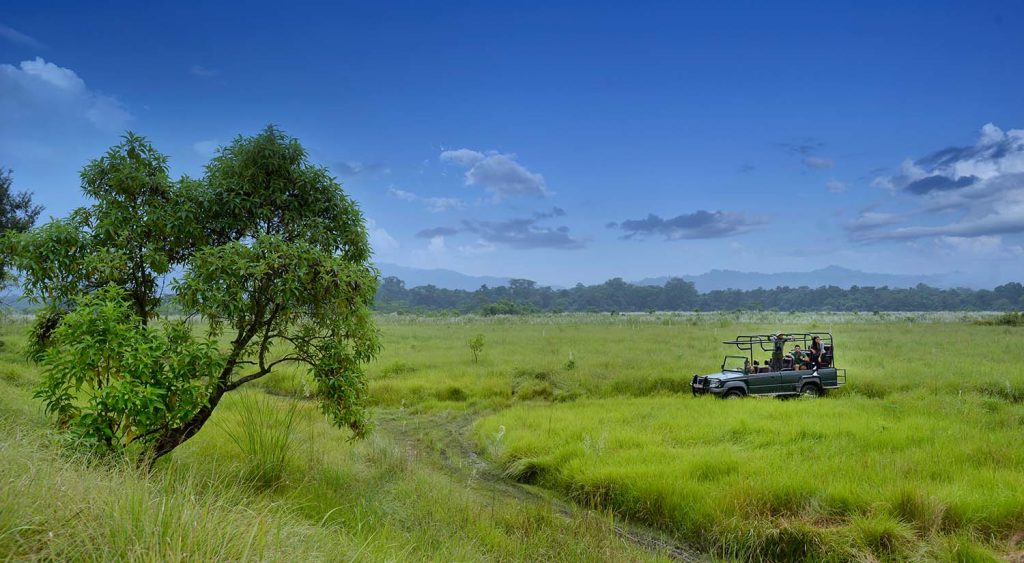
Jeep Safari in Chitwan

Duration: – 7 Nights 8 Days

This Kathmandu, Pokhara, and Chitwan tour offers you a diverse experience in three of Nepal’s most beautiful cities. It offers a spectacular opportunity to see ancient historical sites, scenic natural beauty, and exotic wildlife within a short period of time.  

Kathmandu’s valley is home to many monasteries, temples, and heritage sites including three durbar squares: Kathmandu, Bhaktapur, and Patan. Among the other important sites, you can visit with your family are Pashupatinath temple, Boudhanath stupa, and Swayambhunath stupa.

Phewa Lake, Davis Falls, Begnas Lake, the international mountain museum, and a variety of beautiful scenery make Pokhara one of Nepal’s most picturesque cities. There are also a wide variety of adventure activities available in Pokhara, including bungee jumping, paragliding, ultralight flights, mountain biking, and many more.

There are a number of jungle activities that can be enjoyed in Chitwan, such as elephant riding, jungle walking, canoeing, elephant bathing, and jeep safaris. You can see several rare species in Chitwan national park such as one-horn rhinos, gharials, leopards, Bengal tigers, Indian rock pythons, and many others.

A visit to Kathmandu valley’s cultural heritage sites is complemented by the natural beauty of Pokhara’s mountains and lakes, and a jungle safari in Chitwan National Park is an experience not to be missed.

  • Chisapani, Nagarkot & Dhulikhel Hiking

Chispani

Duration: 3 Nights 4 Days

The Chisapani Nagarkot and Dhulikhel hike is perfect for families, small groups, and travelers seeking short and easy hikes near Kathmandu. The major attractions of the Chisapani Nagarkot Dhulikhel Trekking package include the contrasting landscapes of mountains with villages and terraced farmlands. 

Sundarijal is an hour’s drive from Kathmandu and the starting point for the 3-day hike. Chisapani can be reached after walking for 4-5 hours along the Bagmati River. Stunning sunrise views over the Himalayas combined with wildlife, birds, and pristine nature make it a special place to trek.  

During the journey, you will pass dense forests and quaint villages, and in the background, you will always see the magnificent Himalayan peaks, offering stunning panoramic mountain views. Moreover, you can observe birds, encounter plants, and experience local cultures.

  • Ghorepani & Poonhill Trekking

Poon Hill

Duration: 9 Nights 10 Days

For family groups looking for an easy and short trek, Ghorepani Poonhill trek is one of the best options, as it includes sightseeing in the city, hiking through typical Nepali villages, and trekking Ghorepani Poonhill and Ghandruk. 

A panoramic view of Annapurna and Dhaulagiri mountains is one of the highlights of the Ghorepani Poon Hill Trek. The gradual rise of the sun as it reflects off the mountains in the Annapurna Ranges is one of the attractions of this trek.

Experience the warmth of the locals while passing through the villages of Ulleri, Ghorepani, and Ghandruk while admiring the soaring snow-capped peaks of Annapurna South (7219m), Machapuchare (6993m), Hiunchuli, Annapurna III, Dhampus peak, and Dhaulagiri II.   

  • Kathmandu, Pokhara, Dhampus and Lumbini Tour

2 Couple wit Dhampus in background

Duration: 8 Nights 9 Days

If you wish to explore Nepal’s sightseeing and experience its culture, then the Kathmandu Pokhara Lumbini tour is perfect for you. The Kathmandu, Pokhara, Dhampus, and Lumbini Family Tour offers the cultural splendor of Kathmandu and the natural beauty of Pokhara, the breathtaking mountain views of Dhampus, and the historical beauty of Lumbini.

Kathmandu (1360m) is the capital city and the tourism hub of Nepal, Pokhara is the city of angels the lake city flourished with natural scenery and cultural shrines, and Lumbini is the birthplace of Lord Buddha and one of the holiest places for Buddhism. 

This Kathmandu Pokhara Lumbini tour is a combination of natural sightseeing, cultural excursions, and religious excursions in Nepal. During this tour, you will also see some of the world’s oldest architectural palaces, the birthplace of Lord Gautama Buddha, a panoramic Himalaya view, lakes, and more exotic nature and cultural sites.

With the Himalayan Circuit, you can enjoy a comfortable and flexible family tour. We offer family tours that are easy and kid-friendly for your children, so they can gain progressively more knowledge about Nepal as the journey continues. For families with young children who are looking for more adventure, we offer several other packages according to their needs.

Embracing New Beginnings: Celebrating the Nepali New Year with Joy and Traditions

Flute

New Year opens a new chapter of your incredible story. With every New Year comes new beginnings and the chance to forget about all the negativity of the previous year. The Nepali New Year is a time of joy and celebration for those who reside in Nepal as well as those who visit.

Nepal is the best destination to bring in the new year with a great deal of energy and excitement. Nepali New Year has always been enthusiastically participated and includes joyful activities like parades, street dance, picnic, family gathering and lots of foods. 

There are more than 60 ethnic groups in Nepal, and each has its own unique culture. Nepal celebrates nine different New Years during the year due to its deeply rooted traditions. However, Baishakh 1st is regarded as the national New Year which is celebrated by all.  The country’s official calendar year starts on this day. 

Nepali New Year is also known as Navavarsha in Nepal which falls during the second week of April. Nepali New Year is based on the Nepalese lunar calendar – Nepal Sambat. During this celebration, the entire Nepal celebrates with colorful ornaments & social activities as they greet the New Year.

Festivals celebrated during Nepalese New Year

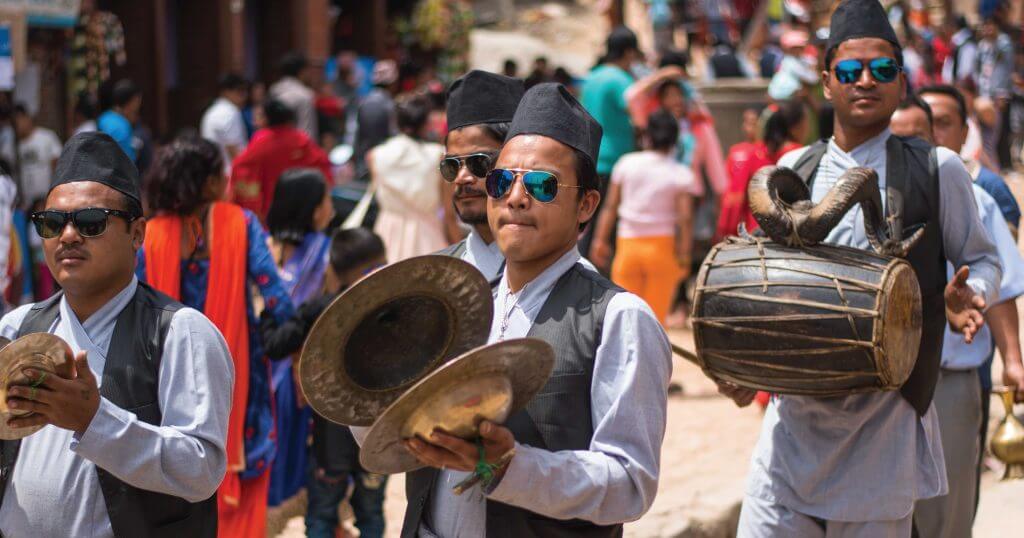
Traditional Instruments

There are a number of festivals and religious events celebrated throughout Nepal, and these events are always celebrated with great pride by the people of Nepal and everyone in the country is eager to participate. A Nepalese New Year celebration accompanies merry activities that include parades, marches, and social gatherings everywhere throughout the country.

Bisket Jatra

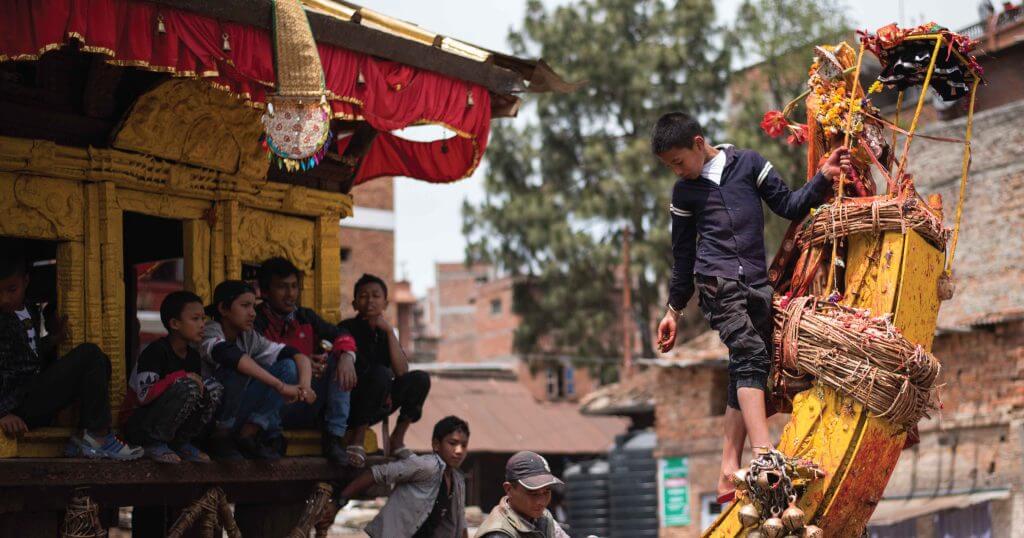
Bisketjatra is the popular festival celebrated during the Nepali New year. This festival commemorates the famous battle of Mahabharata and is celebrated in the city of Bhaktapur. A huge wooden post is set up in the town square that displays frightening images of local deities seated on chariots.

During the Nepali New Year celebration, you can observe a tongue piercing ceremony that takes place in Bhaktapur. One lucky local gets their tongue pierced on this day, and he has to walk around the city holding lit torches on his shoulders while the iron runs through his tongue.You can also see a Palanquin Parade in Thimi, which is similar to something you would see in a historical movie. 

How Nepalese celebrate Nepali New Year?

Pashupatinath temple

Nepali New Year is a day of religious significance to the Nepalese people. Baisakh 1st is a holiday in Nepal and a day of family gatherings. Typically, the locals will go to the temple in the morning to perform puja, which is a ritual offering to gods and goddesses. Families spend the day visiting temples, attending outings and festivals. 

New Year is a day to reflect upon one’s life and make changes for the better. Nepalese people believe that the New Year can help them gain positive energy so that their sorrows and pain can be released and they can obtain happiness and prosperity as the New Year begins. 

How to celebrate Nepali New Year?

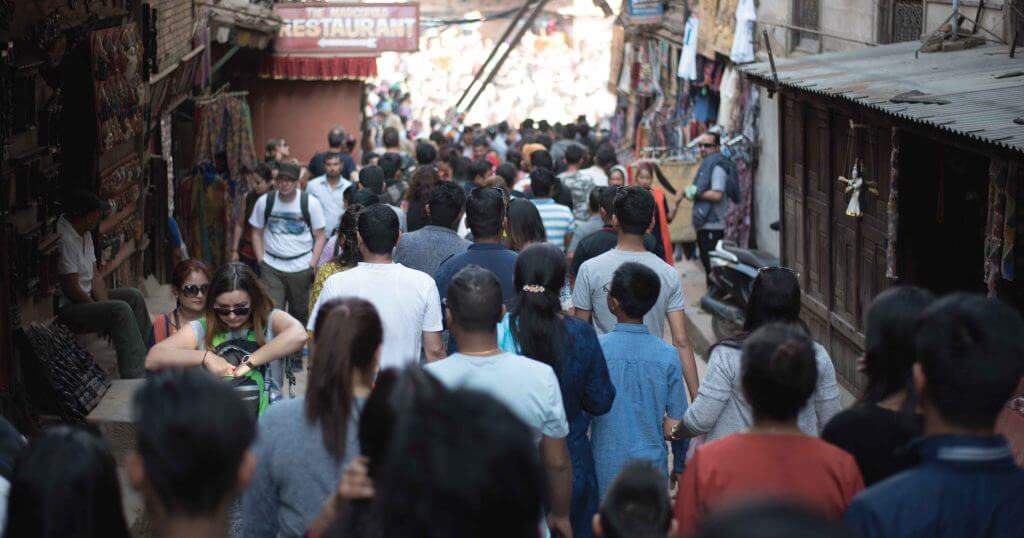
Crowd in kathmandu

Many tourist areas in Nepal celebrate the New Year with great excitement and joy, including Thamel, Pokhara and Sauraha. Bars, hotels and other music venues are full of people who dance, sing and welcome the New Year with enthusiasm. The top bands of Nepal perform live concerts, and various cultural programs are held.

Thamel is the best place to visit on New Year’s Eve for those who love night parties and Nepalese food, as this place turns lively throughout the night with some interesting events. The celebrations start the night before, on December 31.

Paragliding

You can be a part of some exciting and fun activities such as paragliding, sightseeing, hiking, rock climbing, and more to celebrate the Nepali New Year in Pokhara. The streets are decorated with lights, flowers and ornaments, and you can take part in a variety of musical events to ring in the Nepali New Year.

You can also enjoy the sunrise from Sarangkot, Daman and Nagarkot with the spectacular view of the mountains to welcome the Nepali New Year. The New Year is also a good time to plan hiking excursions in Champadevi, Nagarkot, Shivapuri and Chandragiri, which are popular hiking destinations.

Nepali culture and traditions vary a lot and we have different ways of celebrating Nepali New Year. If you are curious about Nepali New Year, we would love to have you join us.

This year, celebrate the Nepali New Year by visiting spectacular palaces, visiting religious sites, trying out some sporting activities or being a part of some street events.

Buddhism Tour in Nepal

A trip to the birthplace of Buddha would be the perfect place for those seeking to understand Buddhism better. Buddhist pilgrimages in Nepal are very popular among travelers looking for paradise and peace. 

Himalayan Circuit invites you on an inspirational spiritual journey of learning more about Buddha’s teachings at a variety of renowned monasteries and stupas.

A Buddhism tour in Nepal is for those who wish to learn more about Buddha, his birthplace, and his teachings, and who wish to meditate with a Lama (spiritual teacher).

Buddhism tours in Nepal will also allow you to witness the age-old religious harmony that persists between Hindus and Buddhists in Nepal despite the adversities it has suffered.

The Buddhism tour in Nepal will provide you with detailed information about Buddha and his philosophy. This pilgrimage tour also provides an opportunity to learn more about the culture and tradition of Buddhism.

Nepal is the birthplace of Lord Buddha and is home to several Buddhist stupas, gompas, chortens, and monasteries, all of which have significant historical importance. It introduces you to the wonders of Kathmandu and Lumbini, as well as Tibetan Buddhism.

You will visit beautiful monasteries, stupas, and the birthplace of Buddha during the tour. A visit to the place where Buddha was born and admiring the enchanting monks definitely inspires peace in everyone’s heart.

Is Nepal the birthplace of Lord Buddha?

Lumbini mayadevi temple

Around 2580 years ago, King Suddhodhan and Queen Maya Devi gave birth to a light of wisdom who, after living a luxurious royal life for 29 years, left the palace to seek answers to human suffering. Afterward, he meditated under the Bodhi tree where he attained divine knowledge to become Buddha.

According to the inscriptions on the Asoka Pillar, built by the Mauryan Emperor Asoka in 249 BC, Lord Buddha was born in Lumbini, within the Terai plains of southern Nepal, in 623 BC.

The archaeological conservation area in Lumbini contains the remains of the Shakya Tank, brick structures in a cross-wall system dating to the 3rd century BC, as well as the Ashoka Pillar with its Pali inscription in Brahmi script.

Stupas (memorial shrines) and viharas (monasteries) dating from between the 3rd and 15th centuries AD provide important information about the origins of Buddhist pilgrimage centers during that period.

Best Buddhist Pilgrimage Sites in Nepal:

Lumbini

Lumbini

The UNESCO World Heritage Site, Lumbini, also known as the “birthplace of Buddha”, is one of the most important pilgrimage sites in Nepal, visited every year by thousands of pilgrims.  

There are numerous temples, museums, and monuments in Lumbini, including the Mayadevi temple, the flame of eternal peace, the sacred Bodhi tree, the old Asoka Pillar, and the Holy Pond “Pusakarini,” where Buddha took his first bath after birth.

You will also have the opportunity to visit other significant Buddhist pilgrimage site including Tilaurakot palace (capital of Kapilbastu), Kudan, Ramgram Stupa, Sagarhawa, Devdaha, and other prominent places in the Lumbini region.

Kathmandu Valley

Bouddhanath stupa

Kathmandu’s surroundings boast hundreds of meditation caves, monasteries, and stupas related to Bodhisattvas, Siddhas, and Buddha. There are meditation caves dedicated to Guru Padmasambhava, Milarepa, Naropa, and Tilopa here. 

Boudhnath and Swayambhunath are the two largest Buddhist shrines in Kathmandu that tourists and pilgrims visit. Both of them are listed on the UNESCO World Heritage List. You will also visit the beautiful Kapan Monastery, considered to be one of the finest in Nepal.

Among the most important Buddhist pilgrimage sites, near Kathmandu are the Maratika cave of Halesi, Pharping and Namobuddha.

Pharping

The village of Pharping, south of the Kathmandu valley, is home to numerous Buddhist monasteries, caves, and temples. The place is a monastic zone with a beautiful myth about Guru Rinpoche visiting it.  

Namobuddha

Namo buddh

Namobuddha Monastery lies on a hill above Dhulikhel in the Kavre district, just outside Kathmandu. A Buddhist devotee is believed to have sacrificed his life at this location to feed a hungry tigress and her cubs, making it a sacred site for Buddhists. There are hundreds of monks studying religious practices at the monastery.

Why should you take a Buddhism tour in Nepal?

Kathmandu Swyambhu

Visiting the birthplace of Lord Buddha, Lumbini, the origin of Buddhism, provides you with the eternal feeling of peace, mystery, and fruitfulness.

The Buddhism tour in Nepal consists of a Buddhist pilgrimage and the opportunity to experience the oldest living Buddhist practices of the Himalayan region.  

This mountainous country has been a haven of Buddhist practices for centuries, making it the best place in the world to go on a Buddhism tour. 

The Buddhism pilgrimage tour in Nepal offers much more than just sightseeing. You will get an opportunity to learn Buddhist meditation and culture, and live a peaceful, non-violent life.

The tour combines natural and cultural aspects of Nepal. In addition to that, you can experience the beauty and natural beauty of the area. There are sights so beautiful that you would be amazed for the rest of your life.

Who should take part on this tour? Is this tour for all or only some people?

Buddhism Tour

You do need any prior experience to participate in this pilgrimage tour. The difficulty level is very negligible and the Buddhism tour in Nepal is very easy to complete. 

Western cultures do not consider Buddhism a religion, but rather a state of enlightenment. You will get to learn and see all the important and significant facts about this belief on the Buddhist culture tour. 

People from all religions can participate in the Nepal Buddhism pilgrimage tour regardless of their age and interest if they are interested in studying, researching, or learning more about Buddha, Buddhism culture, tradition, rituals, and lifestyle.

With this tour, travelers can achieve inner peace, compassion, meditation, and a way of life. The Buddhism tour is ideal for you if you are seeking a peaceful journey to Nepal’s beautiful and historic sites. 

Top 10 places for Himalayas view during Sunrise

Sunrise from mardi

“Every sunrise is an invitation to brighten someone’s day” as Rachelle Goodrich once said. You become more grateful for the earth when you watch a sunrise. Witnessing the sunrise over the Himalayas is one of the most rewarding experiences you can have. 

There were plenty of hill stations and places where one could enjoy a luxurious view, such as sunrises and the majestic Himalayas. You can take in the magnificent & panoramic view fully relaxed and feeling comfortable.

Nepal has eight of the fourteen highest mountains in the world, which makes it a true paradise for outdoor lovers. Below are some of the best places to see the sunrise in Nepal.

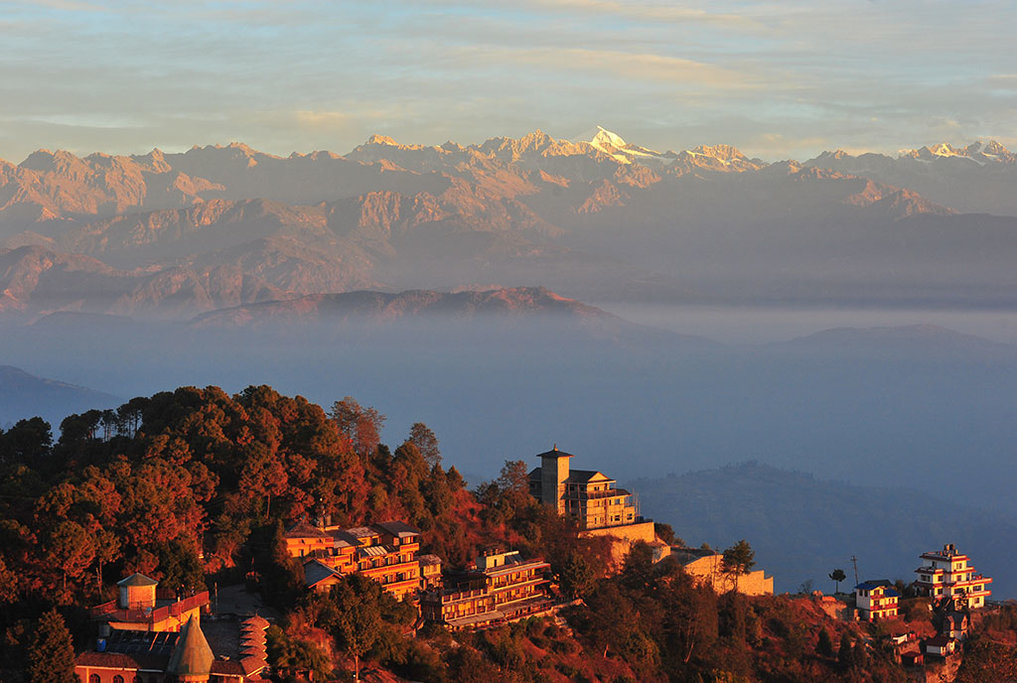
  1. Nagarkot (2,175 m):nagarkotTourists from around the world come to Nagarkot Hill for the breathtaking view of the Himalayas and short overnight walks or hikes near Kathmandu. Many people flock to Nagarkot every morning just to see the first ray of sunlight. It is one of the best places to view sunrises and sunsets.Along with the breathtaking view of Everest, you can also admire Kanchenjunga in the east and Dhaulagiri in the west. This is one of the best places to view the 360-degree views of the Himalayas. 

    Best time to visit:
    The best time to visit is October to April. 

  2. Sarangkot (1,600 m):SarangkotLocated at an altitude of 900 meters, this hill station offers a panoramic view of Himalayan peaks such as Annapurna II (6,937 m), Machhapuchhare (6,997 m), and Dhaulagiri (8,167 m) above Pokhara valley. The golden sunset and sunrise views from Sarangkot are absolutely the best.An exciting moment is watching the sunrise alongside a hundred other unknown faces. You can hear murmurs and small talks along with the camera sound, adding to your excitement about seeing the sunrise. The golden sunset and sunrise views from Sarangkot are absolutely the best.

    Best time to visit:
    The best time to visit is October to April. 

  3. Daman Hill (2344m):Located at an altitude of 2344 meters above sea level, Daman Hills is one of the finest viewpoints in Nepal for viewing the Himalayan range during sunrise and sunset. Your trip to Daman Hill can be completed in one day if you start early in the morning.The Daman viewpoint is one of the closest to Kathmandu and offers an unobstructed view of all the peaks from Dhaulagiri to Mt. Everest. During the winter season, you can enjoy the snow and see the massive Himalayan range.Best time to visit:
    The ideal time to visit Daman is between the months of October and May.
  4. Srinagar Dada, Palpa (1310m):Palpa will leave a majestic impression on you. A major attraction of the area is the beautiful Rani Mahal, a splendid building surrounded by mesmerizing hills. The Srinagar Dada in Palpa has a dreamlike vibe when the sun’s rays scatter across the breezy atmosphere. Srinagar Dada which is a picturesque hill offering a stunning view of the Himalayan mountain range, including Langtang, Dhaulagiri, Mansiri, Ganesh, and Kanjirowa. You won’t even notice how quickly time has passed because the view will be so mesmerizing.Best time to visit:
    The best time to visit Palpa is in April, followed by May and June.
  5. Dhulikhel (1550m):DhulikhelDhulikhel is a majestic place in the Kavrepalanchok district, located along the eastern border of Kathmandu Valley. It is a place where visitors can discover the traditional culture of the Newari people in addition to magnificent views.Dhulikhel is a popular viewpoint where you can see the great landscape of the Himalayan Range and the Midhills. Dhulikhel provides an excellent location to enjoy a night’s sleep and wake up to the sunrise amidst the wide Himalayan range. 

    Best time to visit:
    Dhulikhel is best explored in the spring (March to May) when it is cool and bright and the town is most picturesque. 

  6. Kakani (2030m):A drive of a few hours from Kathmandu will bring you to Kakani, which is the next closest place from Kathmandu for you to see sunrise and sunset over the Himalayas. It is possible to see sunrise and sunset views of Mt. Annapurna, Machhapuchhre, Jugal, Ganesh Himal, Lantang range, Manaslu, and many others.The perfect blend of scenic mountains and wilderness can be felt in a tranquil and serene atmosphere while staying in a comfortable resort or hotel. Kakani is a place full of charm and beauty, a place where people can enjoy nature in harmony with the white snowy peaks in the backdrop. Best time to visit:
    Kakani can be visited almost all year round, except for the wet months during the monsoons from June to September.
  7. Namo Buddha (1750  m):Namo buddhNamo Buddha is one of the most sacred and famous Buddhist sites and is located 40km southwest of Kathmandu. You can see snow-capped mountains, sunrises and sunsets, terraced fields, villages, and forests from here. The Namo Buddha viewpoint also offers a breathtaking view of some of Earth’s tallest mountains, including Mt. Everest, Langtang Ranges, Dorje Lakpa, Ganesh Himal, and Gaurishankar. There is also a great variety of flora and fauna in the region, untouched by modern life.

    Best time to visit:
    Namobuddha is best visited between March, April, and October when you’ll be able to enjoy pleasant weather and little rainfall. 

  8. Antu Danda (1,977 m):Antu Danda is located in Ilam District, in the eastern part of Nepal, at 7,637 feet above sea level, and is one of the most untouched sites in the country. Views of Mount Everest and Kanchanjanga are one of the main features of Antu Danda. Another major attraction of Antu Danda is that the rising sun can be seen from different angles, and it’s like playing hide-and-seek between hundreds of trees of ‘dhupi’ and ‘salla’ during sunrise.Best time to visit: 
    February to May and August to December are the best times to visit Antu Danda.
  9. Bandipur (1030 m):Bandipur is a natural beauty along the way from Kathmandu to Pokhara that is also famous for its Newari culture. Bandipur offers a magnificent sunrise view of Mount Machhapuchhre, Langtang range, Manaslu, and Ganesh Himal.Bandipur village is the ideal ‘rest stop’ because it’s easily accessible from Pokhara and one of the best places to stop near Kathmandu. You can take a break from those bumpy roads by stopping here during a long travel day.Best time to visit:
    Bandipur is best visited between July and September during the monsoon season and between March and May during the summer season.
  10. Chandragiri Hill (2551 m):CHandragiri hillsChandragiri Hill is one of the most popular viewpoints in Kathmandu Valley from which you can enjoy a 360-degree view of the valley and watch the sunrise over the various mountain ranges. With this morning trip out of Kathmandu to Chandragiri, guests will enjoy an overview of the breathtaking Kathmandu Valley from the great heights of a cable car.The cable car station on Chandragiri Hill is 12 km from the center of Kathmandu and 2551 meters above sea level. Enjoy the incredible sunrise and sunset views of Mount Everest, Manasu, Dhaulagiri, Annapurna, Ganesh Himal, and the Langtang range. 

    Best time to visit:
    Chandragiri is best explored and visited during the spring and fall seasons.

The sunrise tour represents a unique fusion of natural and cultural presence in Nepal with the backdrop of a majestic mountain range. They provide the serene atmosphere of Mother Nature and the pleasant beauty of mountains.

Top 10 sacred places of Nepal

Offering tika

Nepal is a secular country where the people of diverse religious belief live in harmony. Nepal’s sacred places have a long history dating back to the days before the country was unified.  

Nepal is believed to be the home to 33 million god and goddess. Temples and religious sites located in different corners of Nepal are dedicated to these god and goddess. There is a strong belief among the Nepalese people that their wish gets fulfilled when they visit the temple and pray. 

The Nepalese people visit these sacred places because they have a deep conviction that God is present there. The religious mythologies attached to the sacred sites have kept them religious to this day.  Devotees offer milk, sweets, fruits, garlands, and bow down to the shrine to seek blessings from the god.

The following are the sacred places in Nepal that Nepalese visit more frequently. 

It was once said that there are more temples in Kathmandu Valley than houses, and more statues of gods and goddesses than residents. The Kathmandu valley is like an open air museum, filled with religious aspects, and people of all cultures live in harmony. The beautiful valley is home to seven UNESCO world heritage sites and is a sacred place for Hindus and Buddhists alike.

The Boudhanath Stupa and Swyambhunath Stupa are sacred Buddhist pilgrimage destinations that attract pilgrims from all over the world. Similarly, Pashupatinath Temple, Changunarayan Temple, Swyambhunath Temple and Budhanilkantha Temple area must visit pilgrimage sites for Hindus. A visit to this city rich with cultural and religious aspects is not to be missed out on.

Lumbini mayadevi temple

Lumbini is the birthplace of Lord Buddha and is one of the holiest places to visit in Nepal. Also listed in World Heritage Sites, Lumbini is home to many eye catching monasteries and Buddhist centers built by various countries with strong Buddhist traditions. 

The site is one of the four sacred sites that Buddha reportedly suggested to his disciples and followers to visit. There are several religiously significant attractions in Lumbini such as the Maya Devi temple, Ashoka pillar and the remains of the Lumbini palace that you should not miss-out visiting.

  • Muktinath Temple

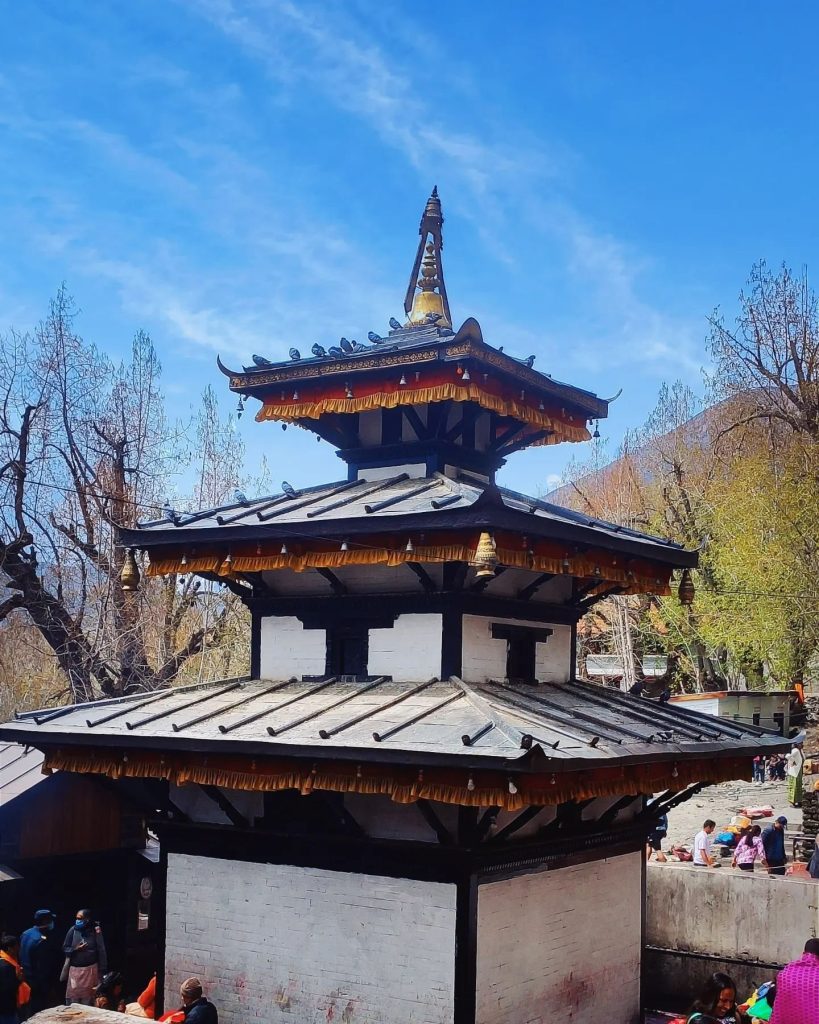
Muktinath Temple (3,710m) is a sacred place to both Hindus and Buddhists located in Mustang district of Nepal. As a symbol of religious symbiosis, this temple represents the fusion of Hindu and Buddhist religion. Devotees visit here with a belief that taking a bath in the 108 waterspouts (Muktidhara), releases all the negativity from their bodies and receive salvation. It is said that the holy shrine has arisen on its own and is also one of 108 Vaishnava shrines.

Gosaikunda Lake

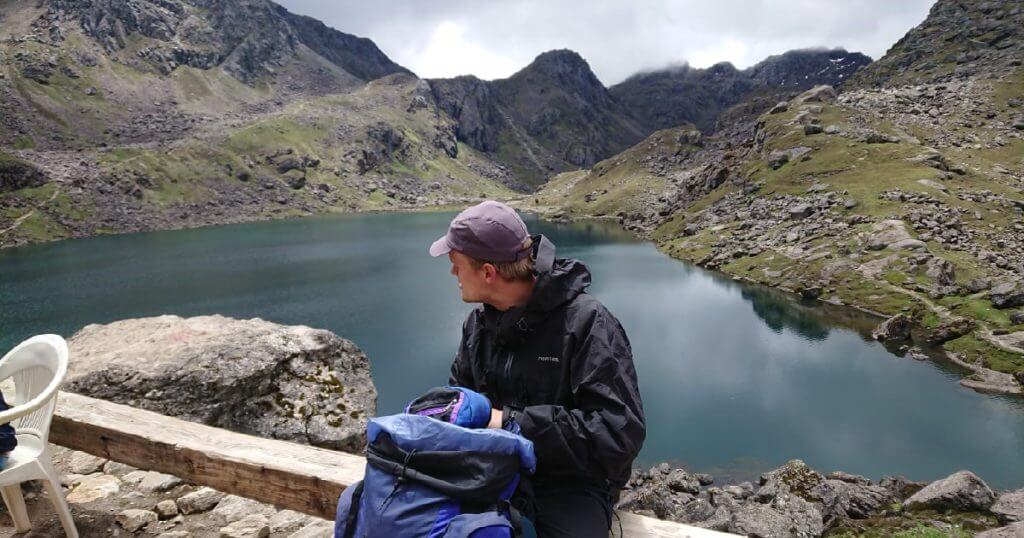
Gosaikunda, located in Langtang National Park, is a holy place for Hindus, and thousands of pilgrims flock here every year during the Janai Purnima and Gangadashahara festivals. According to Hindu mythology, gods Shiva and Gauri lived here. Located 4,380m above sea level, this Hindu pilgrimage site is also a popular trekking destination. 

There are all total 108 holy lakes in this region which makes a visit to this sacred place exciting and spiritual for visitors. Lake Gosaikunda is also one of the major highlights of Langtang trek.

  • Janakpur Dham

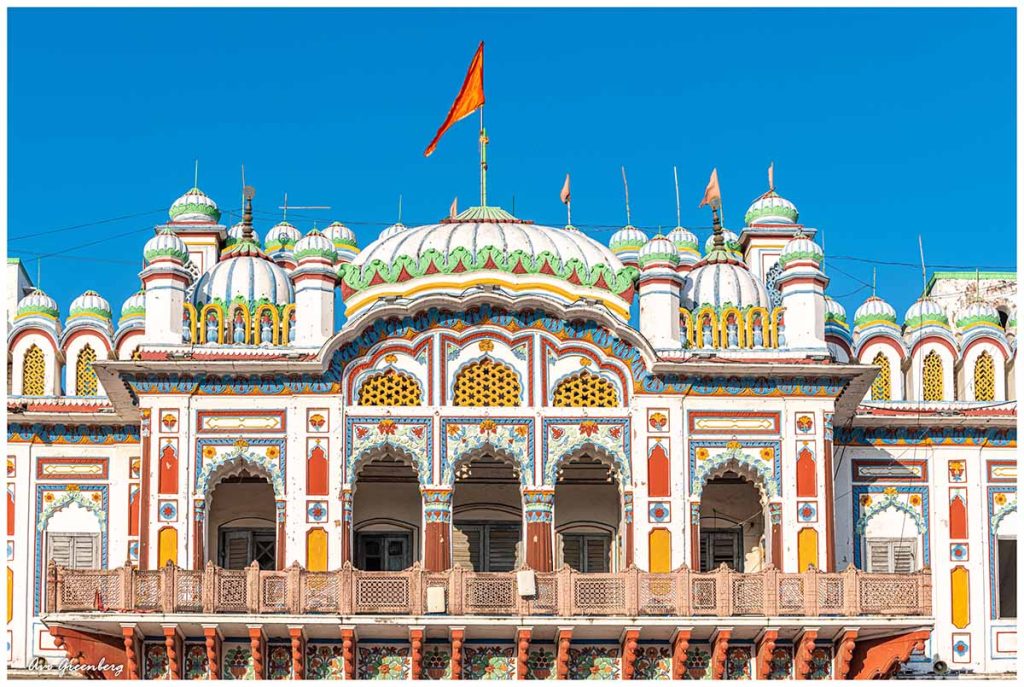
Janakpur is a major pilgrimage site for Hindus because it is the place where Goddess Sita was born and where she married Lord Ram. This sacred place is just not known for beautiful temples and monuments, but also for its arts, rich cultural history, literature and language.  The Janaki Temple dedicated to Goddess Sita, Ram Mandir, Vivah Mandap, Gangasagar and Swargadwar are major attractions for visitors. Hindu pilgrims from all part of Nepal and India visit this holy site due to its religious wealth.  

  • Halesi Mahadev Temple

Halesi Mahadev

Known as Pashupatinath of western Nepal, the Haleshi Mahadev Temple (3,100 ft) in Khotang district is a sacred place to Hindu, Buddhists and Kirantis.  According to traditional beliefs, sinners cannot pass through this passage, but by confessing wrongdoing they will be able to pass. It is said that devotees come from far and wide to worship Lord Shiva, with a belief that Haleshi Mahadev grants prosperity to poor and knowledge and wisdom to ignorant. 

  •  Pathivara Temple

The Pathivara temple is a sacred place for Hindus as well as Limbu people. It is located in Taplejung district at an elevation of 3,794 meters (12,444.32 feet), which is also a secondary route of the Kanchenjunga trek. 

A visit to this sacred place tests our devotion and patience as it offers a thrilling journey to reach the temple. It is believed that Goddess Pathivara possesses supernatural powers and is capable of fulfilling the requests of those who visit her temple and make offerings.

  • Chitwan Devghat

Devghat is a popular pilgrimage site in Chitwan, located at the junction of the Kali Gandaki and Trisuli River. As per Hindu Culture, “Ghat” denotes a sacred place where cremation and last rituals are conducted or performed by the family members or close relatives after the death of Hindu people. 

Devghat is a must-visit sacred place for Hindu followers and spiritual seekers as the area is surrounded with numerous temple, cave, and historical sites. A holy bath here is believed to wash away sins, which draws devotees from far and wide to take a holy bath. 

  • Dolakha Bhimsen

Dolakha Bhimsen popularly known as Bhimeshwor temple lies in Dolakaha district of eastern Nepal. The temple situated in the lap of Mt. Gauri Shankar is regarded as the abode of Lord Shiva and his consort Goddess Parvati. There is a belief that Bhimsen’s statue occasionally emits fluid-like drops, which signals any bad fortune that might happen in the country. Numerous people visit and perform puja in this sacred temple to make god happy. 

  •  Baraha Chhetra (Kshetra)

Baraha Kshetra is a Hindu pilgrimage site in Sunsari district, located at the junction of Sapta Koshi and Koka River. This sacred place is one of the oldest shrines in Nepal, mentioned and glorified in multiple Puranas including Varaha Purana, Brahma Purana, and Skanda Purana and is even included in the epic Mahabharata.

It is believed that the lifting of a stone in front of the temple will determine whether a person is sinless or sinful. It is said that only the persons of virtue can lift the stone. According to Hindu belief, people who have lost their parents must perform sradda (offering to ancestors) at this sacred place so that their parents’ souls will cross the astral River Baitarni and not wander between the heaven and hell. 

All of these fascinating facts about the temple make it a popular pilgrimage site and a must visit sacred place in Nepal. 

Visit the sacred places of Nepal at least once in your lifetime to bring good luck and positivity in your life. 

Adventure Tourism in Nepal

Welcome to nepal

A great destination for adventure lovers, Nepal offers outdoor activities such as trekking, mountaineering, rock climbing, bungee jumping, rafting, canyoning, cannoning, jungle safari, and much more. Nepal has been a unique destination for adventure seekers from around the world for a long time and trekking is still the most popular activity in the country. 

Trekking and exploring Nepal are ideal because of its geographical and natural diversity as well as its wide variety of exotic cultures. A trek in the Himalayas of Nepal provides one with the unique opportunity to observe its cultural facets and take in the breathtaking beauty of nature. This country has an unparalleled natural beauty, as well as a culture that can’t be found anywhere else.

A journey through Nepal offers a variety of exciting adventures, where you can marvel at the surrounding beautiful landscapes and get close to its warm people, from the Gangetic plains and its verdant jungles where Royal Bengal Tigers and one-horned rhinoceros roam, to the Yak and Yeti trails to Mount Everest.

Trekking:

Trekking in Annapurna region

There are thousands of trekkers who travel hundreds of miles every year in Nepal, making trekking one of the most popular activities there. As a world-renowned trekking destination, Nepal boasts a wide variety of routes through villages, forests, national parks, suspension bridges, rivers, valleys, glaciers, and other breathtaking natural features.

You get to experience Nepalese culture, traditions, lifestyle, and cuisine while trekking in remote ethnic villages. You can enjoy amazing views of the Himalayan ranges along the way as you trek in Nepal from its lowlands of the terai region to high mountainous regions.


Each trek in Nepal has its own method of attracting visitors. Nepal offers a number of popular treks, including Annapurna Base Camp Trek, Everest Base Camp Trek, Upper Mustang Valley Trek, Upper Dolpa TrekLangtang Valley Trek, Tilicho Lake Trek, etc.

Paragliding:

Paragliding

Are you looking for a way to make your heart race as you soar high in the Nepalese skies? You should not miss paragliding in Nepal. 

The trip will take you through villages, monasteries, lakes, emerald jungles, and temples with the most incredible views. With Himalayan griffins, eagles, and kites flying around you, you get the sensation of flying like a bird. You can enjoy bird’s-eye views of underneath valleys, landscapes, rivers, forests, etc while floating in the air, giving you lifetime memories.

Among the most popular paragliding destinations in Nepal are Pokhara, Godavari, Chapakharka, Kot Danda, and Bandipur

Bungy Jumping:

Bungee jumping in Nepal is an exciting way to experience some thrills while you are in Nepal. The activity has become increasingly popular in the last few years out of all the activities in Nepal. There are three locations in Nepal where you can Bungee Jump: Bhotekoshi, Pokhara, and Kusma.

A bungee jump is one of the most thrilling experiences one can ever have. Get ready for a free fall, unlike anything you’ve ever experienced before. Both locals and tourists participate in this activity to get thoroughly entertained. The views in Nepal are spectacular, which makes it the perfect place to do bungy jumping.  

Mountaineering:

Mountaineering in Nepal is the most challenging and rewarding adventure you can have in the country. Taking a peak climbing trip in Nepal takes you to Nepal’s Himalayan Mountains, including Mount Everest (8848 m), which is the highest mountain on the planet. Nepal has had eight of the world’s highest peaks and has been the site of some of the most impressive mountaineering achievements. Today, Nepal has 326 peaks that are open for mountaineering.

Nepal is home to thousands of mountaineers who climb big mountains and smaller trekking peaks every year. Under the supervision and instruction of a climbing leader/guide, a mountaineering expedition includes basic climbing skills such as using an ice axe, crampons, and ropes under the same conditions as challenging treks.

Rafting:

Nepal is a paradise for river runners and one of the most popular destinations for rafting. There are various grades of whitewater rafting trips that are perhaps dependent on the interest and choice of the individual. For those seeking long days of adventure, rafting the Sun Koshi and Karnali together is a good option, combined with a safari tour in one of the nearer national parks. Those looking for a smooth run and experience can raft on Trishuli and Seti for short runs.

There are numerous world-class rivers in Nepal that offer thrilling river rafting experiences. Nepal offers stunning mountain scenery, thrilling white water rapids, warm water, and fascinating cultural attractions that make it an ideal white water rafting destination. A pleasant weather and warm water make September to early December and March to June the best time of year to go rafting in Nepal.

Mountain Flight:

Mountain Flight

An exclusive mountain flight tour package in Nepal provides a scenic view of Mount Everest, the highest peak on Earth, and other series of giant panorama Himalayan ranges, and Tibetan plateaus, at a close range up to 5 nautical miles away, with an in-flight duration of 1 hour departing from Kathmandu domestic airport.  Nepal’s mountain flights appeal to a wide range of travelers. 

Mountain flight tours are for travelers who want to see Mount Everest but can’t trek or have a short amount of time for a trek and interested in Mount Everest but can’t go trekking.  It gives you a fantastic view of Mountain Everest (8848m), Gaurishankar (7134m), Cho Oyu (8201m), Lhotse (8516m), Amadablum (6856m), as well as several dozens of other peaks and the Tibetan plateau.

Zip Flyer:

Zip flyer

Embrace your fear of heights and buckle up your belts since Nepal has some of the most thrilling zip lines to explore. Here, you will enjoy minutes of acute thrills and adventure on the steep and long zip lines. Forests surrounded by tall mountain ranges and dark green forests will amaze you. A zip flying experience here is enhanced by nature’s exceptional beauty.

The most popular zip line destinations in Nepal are Sarangkot, Dhulikhel, Bandipur, Kusma, Makwanpur, etc. 

Rock Climbing:

Climbing the natural rock formations or climbing man-made rock walls is a challenging sport in Nepal. Climbers in Nepal benefit from an attractive rock climbing experience that is physically and mentally challenging, testing their strength, endurance, agility, balance, and mental control. If you are looking to experience some cliffhanger activity in Nepal, Kathmandu valley offers a lot of places where you can crawl up vertical cliffs.

You can explore a variety of wild locations throughout the valley while climbing, including birdwatching, and experiencing some of the valley’s wildlife. Several excellent cliffs can be climbed in Nagarjun and Shivapuri hills, which are both within walking distance of the city. The most popular rock climbing destinations in Nepal are Nagarjun forest, Hattiban, Namche Bazaar, Bimal Nagar, and Nagarkot.

Canyoning:

Canoeing

Canyoning typically involves technical descents, such as abseils and rope work, technical climbing or down-climbing, technical jumps, and/or technical swims. Canyoning is often done in remote and rugged locations where narrow gorges are cut into the bedrock stone, which creates multiple drops and gorgeous sculpted walls. 

One of the most exciting and thrilling adventures in Nepal is canyoning, which is performed on the rivers of Nepal. Nepal’s high altitude and unique topography provide a unique experience unlike any other. The sport of canyoning can be extremely difficult or extremely easy, but the emphasis is usually on fun and aesthetics rather than pure difficulty. Nepal’s most popular canyoning destinations are Jalbire, Raindi Khola, and Jagat Khola. 

Community Based Tourism in Nepal

Kathmandu City

Imagine yourself visiting a completely different place from your hometown, with a totally different culture and a lifestyle that you’re completely unfamiliar with. You might find dozens of destinations searching in Google but being part of community-based tourism in Nepal is the best gateway to discover new places and get real life experience of rural lifestyles, preferably in an unspoiled traditional village. Here, visitors can explore the wildlife, local habitats, and be a part of the local culture and rituals. The best way to understand Nepal’s traditions and culture is by visiting its villages.

Community based tourism (CBT) is a form of sustainable tourism that allows travellers to engage with the local communities they visit and learn more about their culture and daily lives. CBT provides travellers with the opportunity to learn about another culture, diversity, customs, language, social norms, cultural beliefs, etc.  This type of tourism in Nepal consists of activities such as home stays, village tours, storytelling, cooking and crafting together and farm visits, etc where visitors can observe the local culture and interact with local community members.  The hospitality and friendly attitude towards tourists makes them feel at home.

Bandipur homestay

Home stays and other forms of community-based tourism are gaining popularity among travellers today given that they provide authentic, unique experiences while also providing value to local communities. There is already a growing niche market as more and more people today are interested in getting to know the local communities and interacting with the local people. Community-based tourism was developed with the objective of alleviating poverty in low-income and minority communities by developing and promoting the local tradition, culture and local resources.  Members of a community join together and take collective actions to achieve all forms of well-being including social, economic, cultural and environmental.

rice plantation

Nepal offers a unique experience for foreign tourists by allowing them to stay with the family as members, and not as guests. These tourists become part of the community during their stay. The villagers greet visitors with flowers, tikas, and even Panche Baza (traditional Nepalese music) in some of the villages. They are also invited to take part in local festivals, rice plantations, production of handicraft works, milking a cow, and even cooking.  People of rural villages in Nepal take pride in talking about their everyday lives and sharing personal stories with guests. The villages in Nepal are also known for their breathtaking views of the Himalayas and beautiful sunrises, which tourists will not want to miss out on. 

Welcome in sirubari

‘Community-based tourism’ originated in Nepal in the Gurung community of Sirubari, Syangja, by developing the village as a model with the purpose of experiencing local life. Homestays including Ghalegaun, Kaulepani, Balthali, Madi village, Machhapuchhre, Ghandruk and Panauti are some of the other popular community based tourism destinations in Nepal. One of the most important aspects of this form of tourism in Nepal is that visitors can experience a completely different environment, breathe fresh air, and eat organic foods and vegetables. Waking up to the sunrise with shining mountains in the background, exploring natural beauty during the day, and engaging in cultural programs in the evening can make anyone forget their home place.

foreigner in chitwan national park

Travelers during hiking, trekking or short tours in different regions of Nepal can engage in different community based activities like purchasing local made products, having a meal at a local tea house lodge or by engaging in cultural programs organized by the local community. Travelers can also participate in cooking with local people as a form of responsible tourism, tasting the local food, learning about traditional recipes, or even taking cooking classes. Taking part in and appreciating local festivals gives the community a sense of pride and inspires people to preserve their culture. The visitor may participate in community projects in various areas, such as parks, health clinics, schools, orphanages, protected areas, libraries, conservation research centers, and protected areas, and an extensive range of other worthy projects. Travelers who are interested in community development can volunteer in the school or instruct local women contributing to their personal growth.

Community-based tourism benefits both hosts and guests, as it enables tourists to gain a true sense of belonging in the community and experience authentic travel, while also ensuring that the revenue generated by tourism stays within the community. Tourism based on the community not only preserves the environment, but also fosters cultural preservation, environmental protection, social responsibility, and enhances livelihoods while enhancing a deeper connection between hosts and visitors.

Traveling to Nepal during the Monsoon season

Trekking in Nepal: Blog Feature Photo

Travelers often like to feel the rain, while others just  get wet. Travelers wait for it to rain and then go out into the street. The experience of traveling in the monsoon rains is truly magical, something that should be experienced by everyone at least once.

Traveling and trekking in Nepal during the monsoon season has a certain charm. In Nepal, the monsoon season begins in June and lasts until August. Monsoons provide the best opportunity to enjoy nature in Nepal and gain the finest travel experience. 

Travel during the monsoon season can provide a number of added benefits including savings on luxury hotels, a greener landscape, smaller crowds, and the chance to attend some of Nepal’s most elaborate festivals. Monsoon brings more spectacular sunrises and sunsets, as well as a better view of the mountains. 

During the rainy season, traveling can be more challenging. Travel plans can change, delays can occur, and there is more water everywhere. However, the monsoon season is one of the most beautiful times of the year, and you can only appreciate its beauty if you witness it in full glory. 

Get ready for this monsoon and visit Nepal with us to enjoy the mischievous sky and fresh air.


Trekking during Monsoon, is it worthwhile?

People are becoming more and more open to the idea of touring and trekking during the monsoon season. Trekking in the monsoon season offers many hidden benefits, such as the lack of crowds, so you can enjoy many places all by yourself. You may want to explore Nepal during the monsoons for a number of reasons.

Beautiful Sunrises: 

Sunrise-Nagarkot

During the night, it usually rains, and in the morning the sky begins to clear. One of the most picturesque sights in the world is when the sun breaks through those rain-bearing clouds, drenching the snow-covered mountains in brilliant colors.

Lush, Green Beauty: 

River and Hills

During the monsoon season, the Nepalese Himalayas are especially beautiful. Throughout the trails, lush vegetation is growing, and flowers are blooming everywhere. The terraced fields look wonderful during this period.

Destinations during the Monsoon season:

  1.   Explore the cultural richness of World Heritage Sites

World Heritage Site in Kathmandu: Swayambhunath

The beautiful heritage sites in Nepal are open and safe to visit throughout the monsoon season.The stone and metal around the temples also make lovely photographs if it’s been raining.

You can traverse the medieval Kathmandu valley for historical, cultural, and religious explorations. It is great for those who are interested in exploring the architecture, cultures, and traditions of Kathmandu, Bhaktapur, and Patan.

Also possible during the monsoon are visits to Lumbini and Chitwan National Parks which are both World Heritage Sites. Travel is not affected during these months either, as flights and transportation remain normal.

  1.   Pokhara

Mountain Ranges in Pokhara

Pokhara is considered one of the most beautiful valleys in Nepal. This valley is located in the Kaski district in the western part of Nepal and is famous for having many beautiful lakes. Thus, Pokhara is also called the City of Lakes’. 

The city also consists of many caves, waterfalls, rivers, hills, mountains, trek and adventurous places, and natural beauty. So naturally, the place offers you a lot to enjoy during the monsoon.

  1.   Chitwan

foreigner in chitwan national park

Chitwan is located 150 km southwest of the capital, Kathmandu; that includes Chitwan National Park (a Natural World Heritage Site), Ranipokhari, Bishazari Lake, Jalbire waterfall, Shiraiculi hill, and many more.  

Chitwan can engage you with activities like elephant ride and bathe, cultural programs by the Tharu community, the sunset view from Narayani riverbank, crocodile breeding centre, and many more during monsoon.

  1.   Upper Mustang

Upper Mustang

Though Upper Mustang is considered the desert of Nepal, a trek in the monsoon is great fun. It is so because the wind in other seasons is menacing and may ruin your trek. It never rains in Mustang but the rain shadow in the monsoon makes the wind less active, which eases the trip and shows the breathtaking art of nature.

  1.   Dolpa

upper dolpa

Rain shadow areas such as Dolpo (upper and lower), Upper Mustang, Nar-Phu Valley, and Upper Manang are ideal for trekking in the monsoon season. They do not experience heavy rainfall.

Moreover, you can see cultural blends, traditional performances, ancient scenery, marvelous scenery, and primitive caves in addition to the unique and varied landscapes, especially during the monsoon season.

  1.   Bandipur

bandipur streets

Located in western Nepal’s Tanahun district, Bandipur is one of the most popular tourist destinations to visit during the monsoon. Aside from the 18th-century houses that have been turned into restaurants, the place also has temples, caves, amazing valleys, and forests, along with natural views of green hills. A special treat during the monsoon season is to watch the sunrises and sunsets.

  1.   Trishuli River

Trihsuli river

If you want to experience the adventurous side of the Himalayas, then the Trishuli River is a great destination. Trishuli River offers a unique opportunity for adventurers to view an incredible glacier while experiencing the natural beauty of the surrounding area during the monsoon season.

The Trishuli River which originates through a forest valley is one of Nepal’s most popular destinations for rafting, kayaking, day trips, and camping. 

  1.   Enjoy Agricultural Activities

Ghandruk-mountain-range

In Nepal, agricultural activities are heavily dependent on the monsoon. Planting corn, planting rice in paddy fields, and other agricultural activities can be enjoyed almost everywhere in the country. Taking part in such activities can give you a sense of how locals live and what they do.

The monsoon season in Nepal is an ideal time for travel, as you can enjoy a lot of activities despite the rain. So, get your bags packed and get ready for your journey.


Nepal’s Adventure Tourism: A Journey into the Unknown

Paragliding and the Machhapuchhre is behind.

Helen Keller once said, “Life is either a great adventure or nothing”. Adventure by its very nature is an unusual, exciting and risk taking activity. It is something where participants can put themselves in a position where they are confronted by challenges and gain something or learn something meaningful from those experiences. Adventure is what every traveler craves these days. Tourism of this nature includes any type of activity that involves adventure and thrills while traveling.

Nepal is surrounded by the Himalayas and has huge potential for adventure tourism. Nepal is the ideal destination for anyone looking to experience true adventure. Relaxing, shopping, or sight-seeing won’t suffice for modern travellers as they seek breathtaking and thrilling experiences. Nepal is the perfect place for those who are ready to challenge their limits with heart pumping activities.

The adventure tourism sector in Nepal has grown quickly in the recent years. It is now a billion dollar industry and Nepal is considered to be one of the top thrill seeking destinations in the world due to its unique culture and diverse landscape. The distinct natural beauty of Nepal with thousands of majestic snowcapped mountains, the Himalayas, forests, rivers, lakes and waterfalls along with natural flora and fauna can be a satisfying tool for adventure lovers.

Aside from the many possibilities in adventure tourism in Nepal; trekking, bungee jumping, paragliding, rafting, hiking, jungle safari, zip-lining, kayaking, etc are the ones that are popular and are available in different parts of the country. 

Existing Adventure Tourism Activities in Nepal

It was mountaineering that opened Nepal to the outside world after the country first opened its doors to climbers in 1949. The appeal of mountaineering grew as many  wanted to scale various Himalayan heights after Sir Ed. Hillary and Tenzing Norgay set their first ever foot on the summit of Mt. Everest in May 1953. Eight of the world’s ten highest peaks are located in Nepal, including Mt. Everest, the highest peak on the planet. There is no surprise that the adventure and challenge that mountaineering brings are still prevalent and continue to draw many foreign visitors year after year.

Nepal is also known as a trekker’s paradise because it features spectacular routes from various geographical regions, ranging from high altitude to easy walking routes. Moreover, trekking in Nepal offers an opportunity to experience Nepal’s ethnic diversity as one passes through picturesque and charming villages in the Everest, Langtang and Annapurna regions.

As a land of numerous world class rivers arising from the melting snow on the Himalayan Terrain, Nepal offers fun and exciting river rafting experiences. Rivers such as the Trishuli, Bhotekoshi, SunKoshi, Marshyangdi, and Karnali offer adventure sports like rafting and kayaking where you can also choose to camp on the riverside while enjoying the culture and natural beauty.

A bungee jump is the ultimate thrill in Nepal, and you can experience it at three different spots, Last Resort, Kushma Bungee Jump, and High Ground Bungee Jump. With a height of 228 meters, Kushma has Nepal’s highest bungee jump and the second highest in the world.

Paragliding is another adventure activity that allows you to fly like a bird in the sky and discover the wonders of nature as you glide over monasteries, temples, lakes, and the jungle along with a spectacular aerial view of the Himalayas. 

Nepal has been a popular mountain biking destination in the world in recent years as it offers incredible scenic views of the sky-dominating peaks, terraces, valleys and hills while racing down the dirt roads. 

Adventure seekers can participate in a variety of other activities. Those who cannot trek to see mountains up close can enjoy a mountain flight to see majestic peaks, glaciers, and valleys. In the same way, canyoning can be an adventurous way to explore Nepalese rivers. Another exciting adventure activity that has gained popularity in recent years is zip-line tours, due to the ultimate thrill it promises. Sport lovers can also challenge themselves while rock climbing which can be experienced in different parts of the country. The backpacking trend is also growing in Nepal as people today prefer traveling independently.  

Nepal has infinite potentiality for adventure seekers as it has a lot to offer those looking for an adrenaline rush through adventure tourism. New destinations and different adventure activities are being explored with an aim to satisfy adventure lovers during off season as well. 

If you never want to get bored, seek some adventure in Nepal.

A Journey of Culture and Adventure

Discover the Magic of Nepal: A Journey of Culture and Adventure

What are you up to right now? Don’t you ever get tired of the same old routine? It’s like you’re stuck in this never-ending loop, right? Well, if you’re itching for a change in your life, you might want to consider this: pack your bags, book a ticket, and hit the road. Explore a place you’ve never been to, meet strangers, and navigate with nothing but a map. You don’t need much stuff; just bring what you’ll likely use along the way. It’s time to embark on an adventure that will inject some freshness into your life, and Nepal might be the perfect destination for just that.

Travel has the power to inject new life into your daily grind. It can offer you a different perspective or even set you on a new path in life. So, if you’re looking for an adventure in an up-and-coming destination, consider Nepal. As a developing country, it’s brimming with exciting and uncharted experiences.

Why should you travel? Well, think about it: from the moment you wake up in the morning to when you lay down to sleep at night, you’re constantly on the move. But those daily routines can become monotonous. We all crave something new, something unexpected, and that’s where travel comes in.

Traveling doesn’t just involve a change of scenery; it’s a chance to break away from the ordinary and immerse yourself in new experiences. It’s a chance to make friends you’d never meet otherwise, to be your true self, and to learn life’s lessons in a unique way. It can even contribute to a healthier, more fulfilling life.

Traveling makes you feel alive. It widens your horizons and nourishes your soul. It’s about discovery, escape, and learning. It’s a challenge to step outside your comfort zone. And if you’re seeking all of these, Nepal is the ideal destination.

Nepal isn’t just one of the best travel spots; it’s the best. Nature has bestowed this country with a bounty of beauty, and its rich culture further enchants visitors. Every year, people from all walks of life come to Nepal to create lasting memories and collect diverse experiences.

There are no age restrictions when it comes to exploring Nepal. Whether you’re an adrenaline junkie craving adventure or someone who just wants to unwind, Nepal has something to offer you. If you wish to bask in nature’s glory, it’s all around you. If you’re keen to immerse yourself in diverse cultures and lifestyles, Nepal’s regions will surprise you with their distinctiveness.

Nepal is a tapestry of cultures and natural wonders. Every corner you turn reveals a new culture, language, and lifestyle. Just as every morning brings a fresh start, every part of Nepal guarantees a unique experience with its distinct food, traditions, and festivals.

Traveling in Nepal is like opening a treasure chest of happiness and excitement. Whether you’re scaling majestic mountains or simply lounging in their shadow, communing with nature or diving into the tapestry of human cultures, Nepal has it all.