Adventure Sports in Nepal: Seti River Rafting Tour

Rafting in Seti River

The Seti River is a stunning river that originates in the Himalayas and flows through the Seti Valley, which is located in western Nepal. The river is an ideal location for rafting, kayaking, and other adventure sports activities, with its gentle rapids and stunning scenery. 

The Seti River Rafting Tour is an excellent option for those who want to experience the thrill of rafting without the intense rapids found on other rivers. The Seti River Rafting Tour is an excellent adventure sports activity suitable for people of all ages and no prior experience is necessary.

The Seti River Rafting Tour takes you to the city of Pokhara, a popular tourist destination known for its stunning views of the Himalayas and its close proximity to many trekking trails. The tour is usually a one or two-day trip, depending on the length of the river section chosen.

The Seti River Rafting Tour in Nepal can be combined with several popular trekking tours, including the Annapurna Circuit Trek, Annapurna Base Camp Trek, Ghorepani Poon Hill Trek, and Langtang Valley Trek

Combining a trek with the Seti River Rafting Tour is a great way to experience the beauty and adventure of Nepal. By combining rafting with trek, you get to experience the best of both worlds and create an unforgettable adventure in Nepal.

After your whitewater rafting trip, you can either fly or drive back to Kathmandu, or you can visit Chitwan National Park or explore the popular Annapurna region by hiking.

The trip is very popular among tourists because it requires very little driving and has more rapids in 90 minutes than some other river trips take three to four days to complete. 

Seti River Rafting Tour Highlights:

The Seti River rafting tour in Nepal offers an unforgettable adventure with beautiful scenery and exciting rapids. Here are some of the tour highlights:

  • Scenic beauty: The Seti River runs through stunning landscapes including lush forests, terraced fields, and beautiful waterfalls. The river also offers you with great views of the Himalayan Mountains, including Annapurna and Fishtail peaks.
  • Exciting rapids: The Seti River has Class II-III rapids, which offer an exciting ride without being too dangerous. The rapids are perfect for both beginners and experienced rafters.
  • Local culture: The Seti River flows through traditional Nepalese villages, providing a chance to experience the local culture and interact with the friendly locals.
  • Wildlife: The river is home to a variety of wildlife, including monkeys, otters, and birds. Lucky rafters might also catch a glimpse of rare species like the red panda or snow leopard.
  • Camping: The Seti River rafting tour includes camping along the river banks, which offers a unique and memorable experience. Relax under the stars, listen to the sound of the river, and enjoy a campfire with fellow rafters.
  • Adventure sport: Rafting on Seti River offers a thrilling adventure sport with loads of excitement. It is a perfect escape from the city and a great way to get your adrenaline pumping.

Seti River Rafting Tour Itinerary:

The tour starts with a brief orientation, safety briefing, and an introduction to the rafting equipment. The rafting guides are highly trained professionals who are experienced in navigating the river and ensuring the safety of their clients. They will provide you with all the necessary safety equipment, including life jackets, helmets, and paddles, and will explain how to use them.

Once everyone is geared up and ready to go, it’s time to hit the river. The first section of the river is gentle, with small rapids that are perfect for beginners. The water is crystal clear, and the scenery is stunning, with lush green forests, rocky cliffs, and beautiful waterfalls. The guides will teach you how to navigate the rapids, and they will help you with your paddling technique.

As you progress down the river, the rapids become more challenging, and the adrenaline rush increases. The Seti River has rapids ranging from grade I to grade III, which makes it ideal for both beginners and experienced rafters. The rapids are not too challenging, but they are enough to provide an exhilarating experience.

The tour also includes a break where you can rest and enjoy the stunning scenery while having lunch. The lunch is usually a buffet-style meal, which includes a variety of local and international dishes. It’s a great opportunity to chat with your fellow rafters and exchange stories of your rafting experiences.

The second section of the river is more challenging, with faster rapids and stronger currents. This section is not for the faint of heart, but it’s an excellent opportunity for experienced rafters to test their skills. The rapids are still not too extreme, but they are enough to provide an intense and exciting experience.

The tour ends with a relaxing float down the river, where you can take in the stunning scenery and reflect on the experience. The guides will provide you with some information about the history and culture of the area, and you can ask them any questions you may have.

Best Season for Seti River Rafting Tour:

The best season for Seti River Rafting Tour in Nepal is from September to December and from March to May, with optimal weather conditions and water levels. However, with proper preparation and guidance from experienced professionals, rafting on the Seti River can be a thrilling experience at any time of the year.

If you’re planning a visit to Nepal, the Seti River Rafting Tour is an excellent adventure sports activity to add to your itinerary. Nepal is a country with a rich cultural heritage and diverse natural beauty, and rafting on the Seti River is a fantastic way to experience both.

Book your trip with Himalayan Circuit for fascinating white water rafting in the Seti river which offers you an adventurous rafting ride, picturesque scenery, and shining Himalayan mountains.

Best Helicopter trips in the Himalayas

There is a popular quote that says, “Sometimes the World from above seems too beautiful, too wonderful, too distant for human eyes to see.” 

With the views of snowcapped mountains, clouds, hills, glaciers, lakes, rivers, and gorges from your transparent individual window on the helicopter tour in Nepal, you feel as if you are traveling in heaven.

Exploring beautiful mountains like a bird from a helicopter ride is an experience that will remain with you forever. Helicopter tour packages help you to reach remote parts of the Himalayas quickly and easily.

This helicopter tour will provide an amazing life-changing experience for those who desire to explore the Nepal Himalayas, Landscape, Biodiversity, Mountain Zones, etc. by focusing on their desire and making their dreams to reality.

Helicopter tours in Nepal have become so fascinating that you can even take a family tour to the world’s highest mountains base camp (Mt. Everest base camp 5363m) or to the lowlands of Terai Chitwan national park (415m) without any difficulty.

Helicopter tour in Nepal does not only offer high Himalayan views, but also includes the chance to explore Buddhist monasteries, Hindu temples, holy lakes, different settlements with different ethnicities, and nomad lands. In one day or within a few hours, you can reach high Himalayan destinations.

Here are the best Nepal Helicopter Tour destinations in terms of facilities, comfort, and amazing views:

  • Helicopter trip to Annapurna Base Camp:

Helicopter in Annapurna Base Camp, and Himalayas Behind

Taking a helicopter tour to Annapurna Base Camp is the fastest way to reach this appealing foothill of the mountain. Starting from Kathmandu, you’ll fly along the northern mountain ranges over diverse terrain.

You will enjoy the panoramic views of Machhapuchhre, Annapurna, and Dhaulagiri while the helicopter takes you east all the way to Annapurna Base Camp. Flying above Nepal’s beautiful and awe-inspiring villages will make you feel as if you’re traveling in heaven.

There is no doubt that you can explore the most beautiful landmark on foot for days, but what a great idea it would be to go up above by helicopter, taking in views from a bird’s eye perspective so that you can take in the entire greatness of it all.

  • Helicopter Trip to Goshain Kunda:

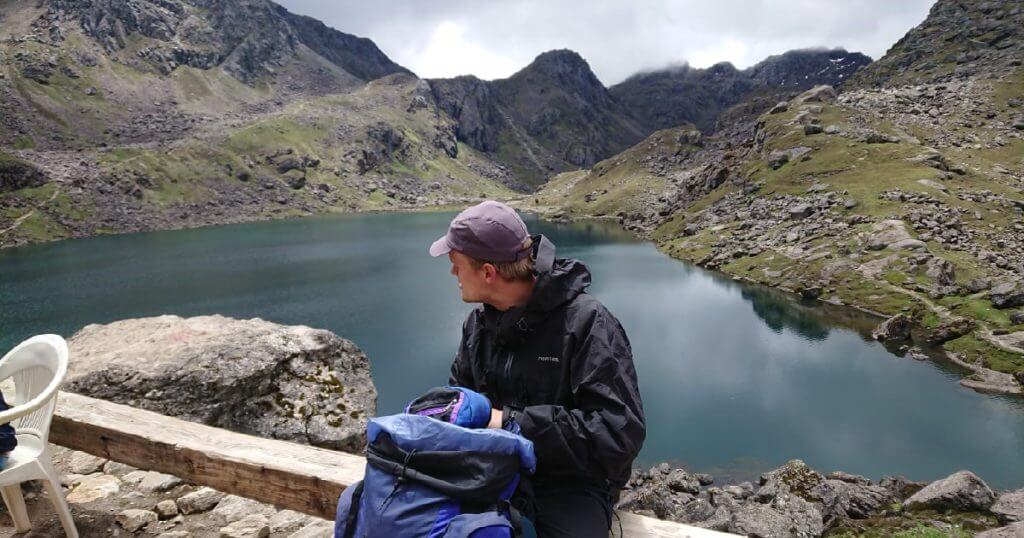
The helicopter trip to Gosaikunda allows you to enjoy Nepal’s breathtaking landscape of the Langtang region in the most comfortable and incredible way. You will get to see many kundas of this region while flying in a helicopter above Gosaikunda Lake. 

The tour starts and ends in Kathmandu after landing at the lake’s bank and a half-hour break is provided at the bank for pujas, havans, and holy baths. Every traveler’s heart will be captivated by the beauty of Gosainkunda and the breathtaking mountain vistas.

The 2 hours Gosaikunda/Lagtang Valley heli tour is designed to offer a lifetime experience to nature lovers and God seekers who do not have the time or energy to trek long distances. The Gosaikunda helicopter tour is suitable for elders and those with limited fitness levels.

  • Helicopter trip to Muktinath:

Heli Trip in Nepal

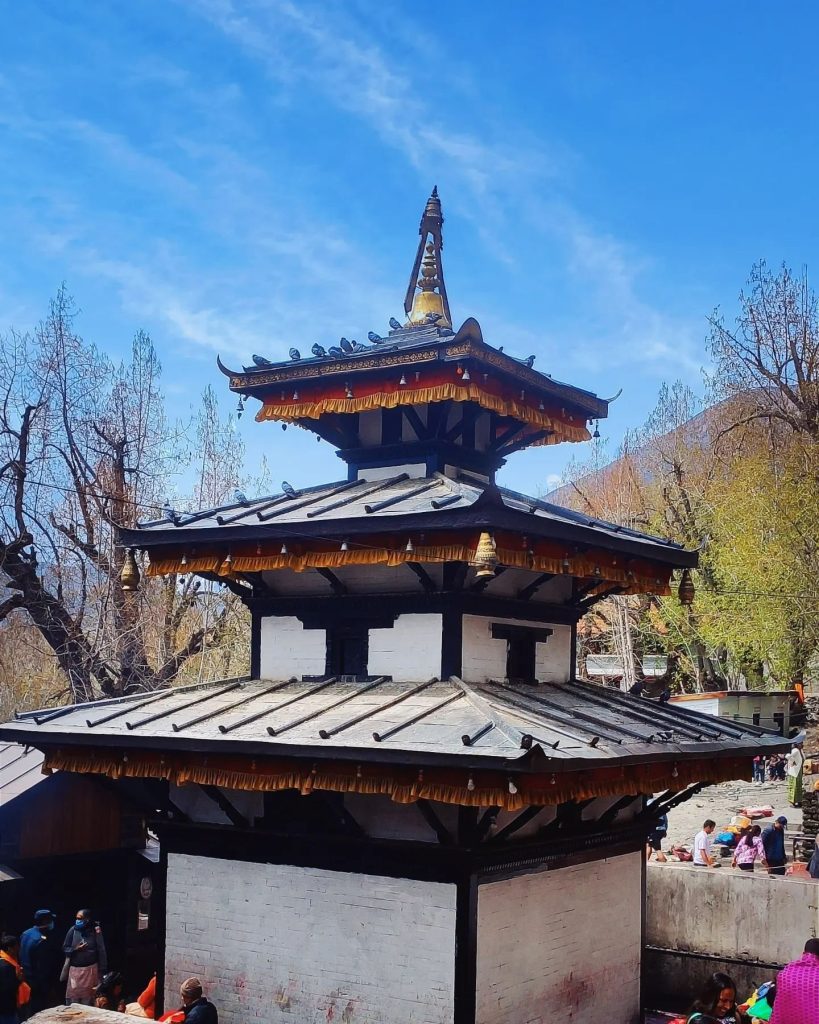
The Muktinath Helicopter Tour is the best option to visit Muktinath Temple without any physical difficulties. A helicopter tour to Muktinath from Kathmandu or Pokhara lets you see snow peaks like Annapurna and Dhaulagiri from high above the beautiful valleys.

This Muktinath Heli tour offers an hour at Muktinath temple, where you can worship Muktinath temple and Jwala Mai Temple,, and admire the beautiful Himalayan scenery. 

The helicopter trip gives you a chance to see the entire Annapurna region, Dhaulagiri range, Pokhara valley, picturesque villages, rivers, and forests.

  • Helicopter trip to Kalapatthar:

Heli Tour to Kalapatthar

It is a truly outstanding experience to take a helicopter tour of Everest Kala Patthar. Flying over the mountainous region feels like being immersed in a paradise that you don’t want to leave.

This helicopter tour is best for those who want to see Mount Everest, Everest Base Camp, and Khumbu Glacier up close but do not wish to walk eight days in order to do so can take a quick helicopter ride to Kala Patthar.

This tour is best suited for families who do not wish to endure the rigors of trekking at high altitudes, and for those with limited time. A bird’s eye perspective of the Everest Region can be gained even by those who have walked this route before.

With helicopter tours, you can travel among the world’s tallest mountains and deepest valleys while also getting incredible views and it’s the perfect solution if you’re short on time.

Take a helicopter trip in Nepal with the Himalayan Circuit to enjoy the luxury and thrill of flying over snow-capped mountains, himalayan glaciers, holi sites, lakes, hills, national parks, and also remote corners of Nepal.


Top 5 Family Tours of Nepal

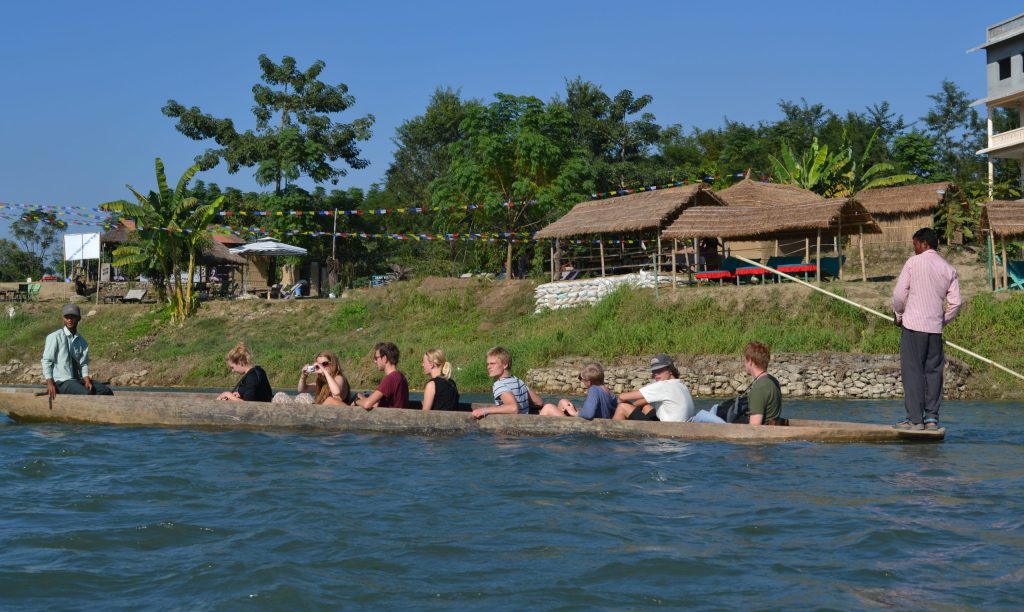
Canoeing

Nepal is an ideal destination for family tours that include ever-smiling, friendly, and hospitable people, rich flora, fauna, and unique cultures and traditions that are unique. Nepal’s most popular destinations for family tours include Kathmandu, Pokhara, Chitwan, and Lumbini.

Children and families can take part in a variety of fun and entertaining holiday activities, such as mountain biking, bunjy jumping, nature walks, canoeing, elephant safaris in Royal Chitwan National Park, cultural tours, boating on Phewa Lake, whitewater rafting, and educational tours.

Family holidays are designed with the children’s interests in mind, as well as making sure everyone has a comfortable stay, relaxation, and good meals. The Himalayan Circuit offers a wide range of tours, from day trips to multi-day excursions led by a tour leader.

In this article, we present a list of the top5 family tours and treks in Nepal:

  • Kathmandu sightseeing Tour with Mountain flight

Mountain Flight

Duration: 2 Nights 3 Days

An affordable 2 night’s 3 days Kathmandu package with a flight to Mount Everest is the ideal choice for family vacations in Nepal. During this short tour, you will encounter the pristine culture of Kathmandu valley, visit UNESCO heritage sites, and experience the Himalayan thrill of flying over thousands of Himalayan peaks. 

Kathmandu day tour provides a blend of culture, history, art, architecture, and nature. This tour is a fun-filled, educational, and safe day tour for children, parents and grandparents, couples, families, and friends who want to discover cultural diversity and beliefs in a safe, enjoyable environment.

  • Kathmandu, Pokhara and Chitwan Tour

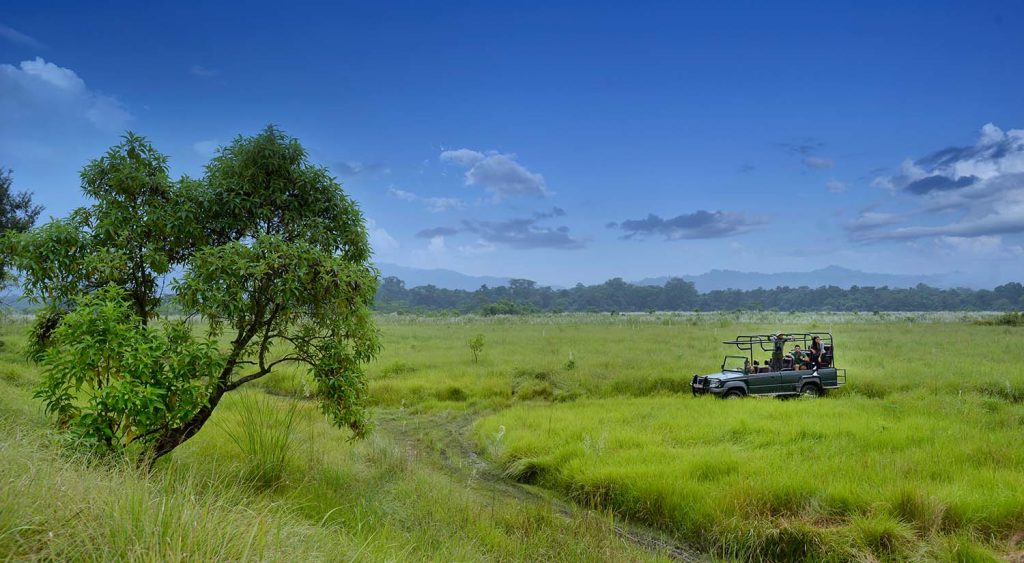
Jeep Safari in Chitwan

Duration: – 7 Nights 8 Days

This Kathmandu, Pokhara, and Chitwan tour offers you a diverse experience in three of Nepal’s most beautiful cities. It offers a spectacular opportunity to see ancient historical sites, scenic natural beauty, and exotic wildlife within a short period of time.  

Kathmandu’s valley is home to many monasteries, temples, and heritage sites including three durbar squares: Kathmandu, Bhaktapur, and Patan. Among the other important sites, you can visit with your family are Pashupatinath temple, Boudhanath stupa, and Swayambhunath stupa.

Phewa Lake, Davis Falls, Begnas Lake, the international mountain museum, and a variety of beautiful scenery make Pokhara one of Nepal’s most picturesque cities. There are also a wide variety of adventure activities available in Pokhara, including bungee jumping, paragliding, ultralight flights, mountain biking, and many more.

There are a number of jungle activities that can be enjoyed in Chitwan, such as elephant riding, jungle walking, canoeing, elephant bathing, and jeep safaris. You can see several rare species in Chitwan national park such as one-horn rhinos, gharials, leopards, Bengal tigers, Indian rock pythons, and many others.

A visit to Kathmandu valley’s cultural heritage sites is complemented by the natural beauty of Pokhara’s mountains and lakes, and a jungle safari in Chitwan National Park is an experience not to be missed.

  • Chisapani, Nagarkot & Dhulikhel Hiking

Chispani

Duration: 3 Nights 4 Days

The Chisapani Nagarkot and Dhulikhel hike is perfect for families, small groups, and travelers seeking short and easy hikes near Kathmandu. The major attractions of the Chisapani Nagarkot Dhulikhel Trekking package include the contrasting landscapes of mountains with villages and terraced farmlands. 

Sundarijal is an hour’s drive from Kathmandu and the starting point for the 3-day hike. Chisapani can be reached after walking for 4-5 hours along the Bagmati River. Stunning sunrise views over the Himalayas combined with wildlife, birds, and pristine nature make it a special place to trek.  

During the journey, you will pass dense forests and quaint villages, and in the background, you will always see the magnificent Himalayan peaks, offering stunning panoramic mountain views. Moreover, you can observe birds, encounter plants, and experience local cultures.

  • Ghorepani & Poonhill Trekking

Poon Hill

Duration: 9 Nights 10 Days

For family groups looking for an easy and short trek, Ghorepani Poonhill trek is one of the best options, as it includes sightseeing in the city, hiking through typical Nepali villages, and trekking Ghorepani Poonhill and Ghandruk. 

A panoramic view of Annapurna and Dhaulagiri mountains is one of the highlights of the Ghorepani Poon Hill Trek. The gradual rise of the sun as it reflects off the mountains in the Annapurna Ranges is one of the attractions of this trek.

Experience the warmth of the locals while passing through the villages of Ulleri, Ghorepani, and Ghandruk while admiring the soaring snow-capped peaks of Annapurna South (7219m), Machapuchare (6993m), Hiunchuli, Annapurna III, Dhampus peak, and Dhaulagiri II.   

  • Kathmandu, Pokhara, Dhampus and Lumbini Tour

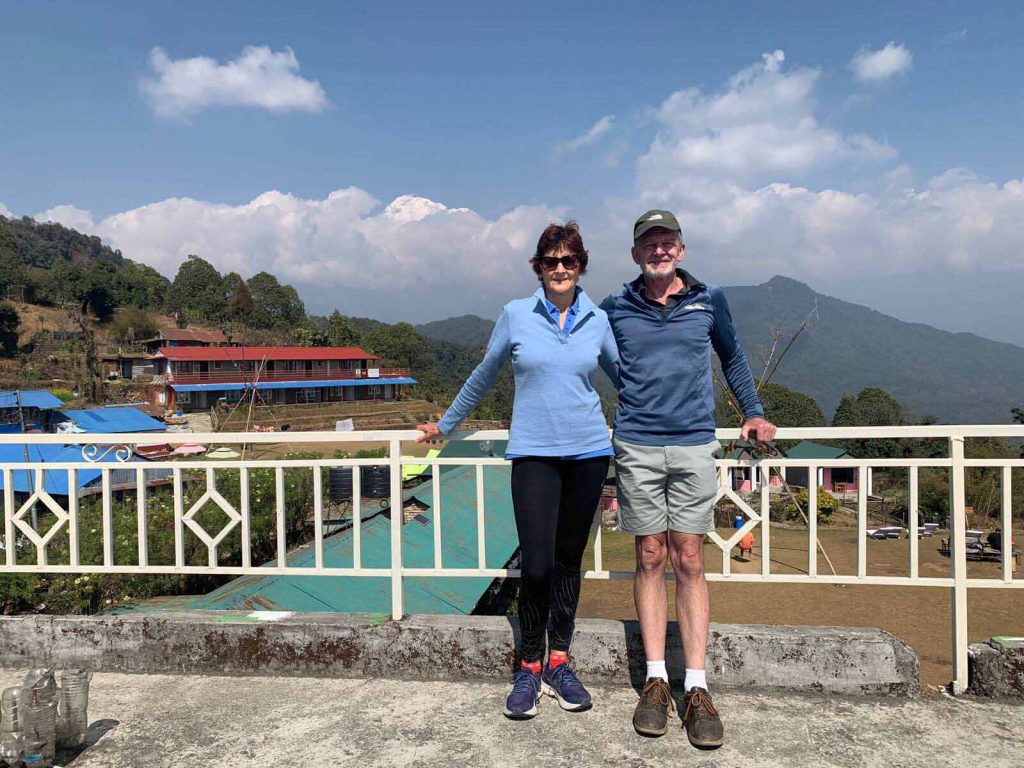
2 Couple wit Dhampus in background

Duration: 8 Nights 9 Days

If you wish to explore Nepal’s sightseeing and experience its culture, then the Kathmandu Pokhara Lumbini tour is perfect for you. The Kathmandu, Pokhara, Dhampus, and Lumbini Family Tour offers the cultural splendor of Kathmandu and the natural beauty of Pokhara, the breathtaking mountain views of Dhampus, and the historical beauty of Lumbini.

Kathmandu (1360m) is the capital city and the tourism hub of Nepal, Pokhara is the city of angels the lake city flourished with natural scenery and cultural shrines, and Lumbini is the birthplace of Lord Buddha and one of the holiest places for Buddhism. 

This Kathmandu Pokhara Lumbini tour is a combination of natural sightseeing, cultural excursions, and religious excursions in Nepal. During this tour, you will also see some of the world’s oldest architectural palaces, the birthplace of Lord Gautama Buddha, a panoramic Himalaya view, lakes, and more exotic nature and cultural sites.

With the Himalayan Circuit, you can enjoy a comfortable and flexible family tour. We offer family tours that are easy and kid-friendly for your children, so they can gain progressively more knowledge about Nepal as the journey continues. For families with young children who are looking for more adventure, we offer several other packages according to their needs.

Budget Friendly Trekking in Nepal

Mountains above clouds

Would you like to experience some spectacular trekking that is budget-friendly? There’s no better place for an affordable high-altitude trekking experience than Nepal, which offers numerous trekking routes all over the country.

Trekking in Nepal’s Himalayas is one of the most rewarding experiences that every person should experience once in their lifetime. Nepal offers a wide range of culture and natural beauty that makes trekking a popular activity.

If you’re planning a trek in Nepal, it might be hard to choose specific treks from so many options. Himalayan Circuit offers you a range of budget treks in Nepal to simplify your search. Check it out:

  1. Mardi Base Camp Trek 

Anyone willing to stretch their legs in the Annapurna’s can take advantage of Mardi’s easy hike to the mountainside. With its tranquility and panoramic views, the trek can be easily completed within four days.

Mardi Trek offers an excellent experience at a very affordable price to its budget-conscious visitors. It is possible to get amazing hotels without blowing your budget.

  1. Kyanjin Gompa Trekking

A leisurely hike can be enjoyed here, as it ascends gradually through rocky farmlands and dense subtropical Langtang forests, making this a suitable place for young and old trekkers alike.

During your Langtang trek, you’ll pass charming waterfalls, explore a Langtang village, and trek over snow-covered mountain peaks such as Yala peak, Langtang Ri, Langtang Lirung, and Motomori peak.

  1. Poon Hill Trek

The Poon Hill Trek is one of the simplest, most popular, and most affordable treks in the Himalayas that begins in Pokhara and ends in Pokhara. With stunning mountain views, incredible hospitality, friendly people, a magical sunrise view, and an easy stone-paved trail, the Poon Hill trek is popular among tourists.

The Poon Hill trek is one of the most stunning viewpoint treks in the Inner Annapurna region of Nepal, offering breathtaking views of the Annapurna range with spectacular sunrises and sunsets within three days of trekking, at 3,200 meters above sea level.

  1. Helambu Round Trek

Helambu Circuit Trekking Trail, which takes you from Sundarijal to Melamchi Bazar of Shivapuri and Langtang National Park in Kathmandu, Nepal, offers everyone the adventure they need in a short circuit trek. The Himalayan Circuit offers the best cost (price) and itinerary for this circuit for 5 to 7 days.

The Helambu Trek is a short, easy, and affordable trek in the naturally and culturally rich Helambu valley. During this trek, you will gain insight into Buddhist culture while enjoying stunning views of Gauri Shankar, Langtang, Ganesh Himal, and the surrounding landscape.

  1. Short Annapurna Base Camp Trek

A strenuous challenging 5 Days Trek to Annapurna Base Camp is the shortest route tailored for young and fit trekkers traveling on budget trips. Explore Annapurna sanctuary in less than a week with the express schedule on the Annapurna base camp trek.

A 5-day Short ABC Trek offers the same excitement of hiking in the Himalayas of Nepal while following the river Modi, passing through the green forest, and passing through villages of Jhinu Danda (Hot Spring), Chhomrong, and the last settlement village Sinwa.

  1. Langtang Valley Trek

This trekking region offers a more leisurely hike than others, as it is the perfect vantage point for old and young trekkers alike, as it ascends gradually through rocky farmlands and dense subtropical Langtang forests.

Your Langtang trek will take you not only past charming waterfalls, but also through a Langtang village and over snow-covered mountain peaks such as Yala peak, Langtang Ri, Langtang Lirung, and Motomori peak.

  1. Lower Everest Trekking to Pikey Peak

If you’re looking for a short (less-discovered) trek in Nepal, this is a great option. If you are very fit or just short on time, this can be completed in 3-4 days. However, a relaxing 6-day trek offers a chance to visit Buddhist temples, gompas, and stupas without the stress of a longer trek.

This trekking route allows you to enjoy an up-close view of Everest and the lower Khumbu region along with the magnificent landscapes of the Khumbu region. A sunset or sunrise view over the giant peaks is so magical that you will remember it for the rest of your life.

  1. Ganesh Himal Trek

Ganesh Himal trek in Nepal’s central eastern region is one of the least explored regions of the Himalayas, situated between Langtang to the east and Manaslu to the west. The trek will take you through a beautiful hidden valley with a variety of cultures and natural sights.

You will be able to see the Ganesh Himal, Langtang, and Annapurna mountains, as well as rich environments and an abundance of wildlife, including berberis, primula, orchids, ferns, Spanish oaks, blue pines, and especially rhododendrons during Spring. 

Traveling with a bulge but interested in trekking in the Himalayas? Get in touch with Himalayan Circuit if you’re looking for the best budget-friendly treks in Nepal.

Embracing New Beginnings: Celebrating the Nepali New Year with Joy and Traditions

Flute

New Year opens a new chapter of your incredible story. With every New Year comes new beginnings and the chance to forget about all the negativity of the previous year. The Nepali New Year is a time of joy and celebration for those who reside in Nepal as well as those who visit.

Nepal is the best destination to bring in the new year with a great deal of energy and excitement. Nepali New Year has always been enthusiastically participated and includes joyful activities like parades, street dance, picnic, family gathering and lots of foods. 

There are more than 60 ethnic groups in Nepal, and each has its own unique culture. Nepal celebrates nine different New Years during the year due to its deeply rooted traditions. However, Baishakh 1st is regarded as the national New Year which is celebrated by all.  The country’s official calendar year starts on this day. 

Nepali New Year is also known as Navavarsha in Nepal which falls during the second week of April. Nepali New Year is based on the Nepalese lunar calendar – Nepal Sambat. During this celebration, the entire Nepal celebrates with colorful ornaments & social activities as they greet the New Year.

Festivals celebrated during Nepalese New Year

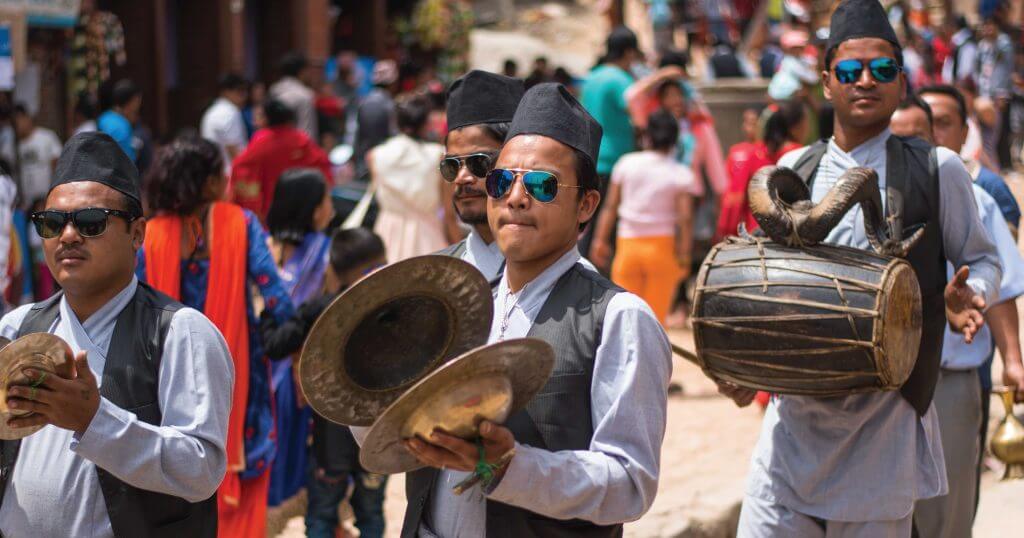
Traditional Instruments

There are a number of festivals and religious events celebrated throughout Nepal, and these events are always celebrated with great pride by the people of Nepal and everyone in the country is eager to participate. A Nepalese New Year celebration accompanies merry activities that include parades, marches, and social gatherings everywhere throughout the country.

Bisket Jatra

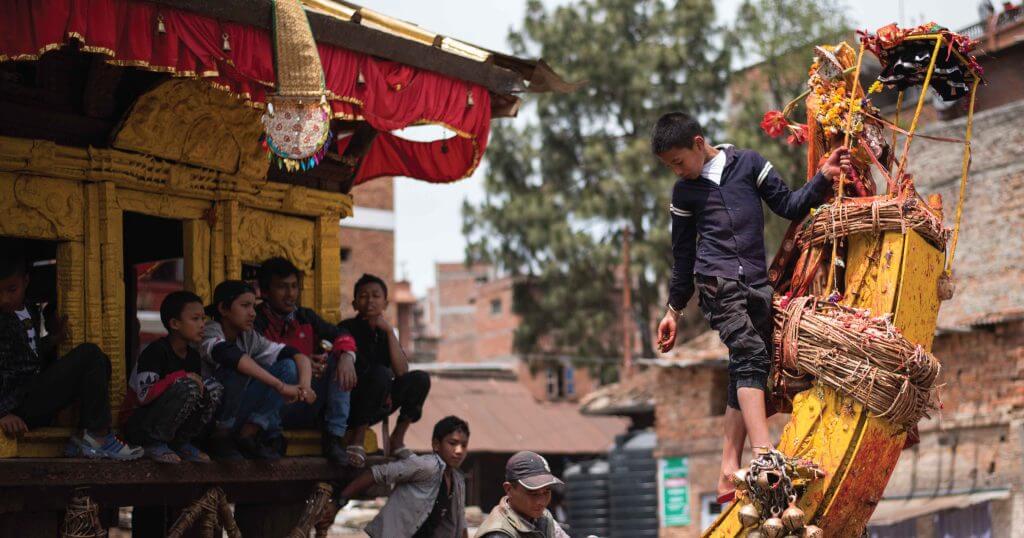
Bisketjatra is the popular festival celebrated during the Nepali New year. This festival commemorates the famous battle of Mahabharata and is celebrated in the city of Bhaktapur. A huge wooden post is set up in the town square that displays frightening images of local deities seated on chariots.

During the Nepali New Year celebration, you can observe a tongue piercing ceremony that takes place in Bhaktapur. One lucky local gets their tongue pierced on this day, and he has to walk around the city holding lit torches on his shoulders while the iron runs through his tongue.You can also see a Palanquin Parade in Thimi, which is similar to something you would see in a historical movie. 

How Nepalese celebrate Nepali New Year?

Pashupatinath temple

Nepali New Year is a day of religious significance to the Nepalese people. Baisakh 1st is a holiday in Nepal and a day of family gatherings. Typically, the locals will go to the temple in the morning to perform puja, which is a ritual offering to gods and goddesses. Families spend the day visiting temples, attending outings and festivals. 

New Year is a day to reflect upon one’s life and make changes for the better. Nepalese people believe that the New Year can help them gain positive energy so that their sorrows and pain can be released and they can obtain happiness and prosperity as the New Year begins. 

How to celebrate Nepali New Year?

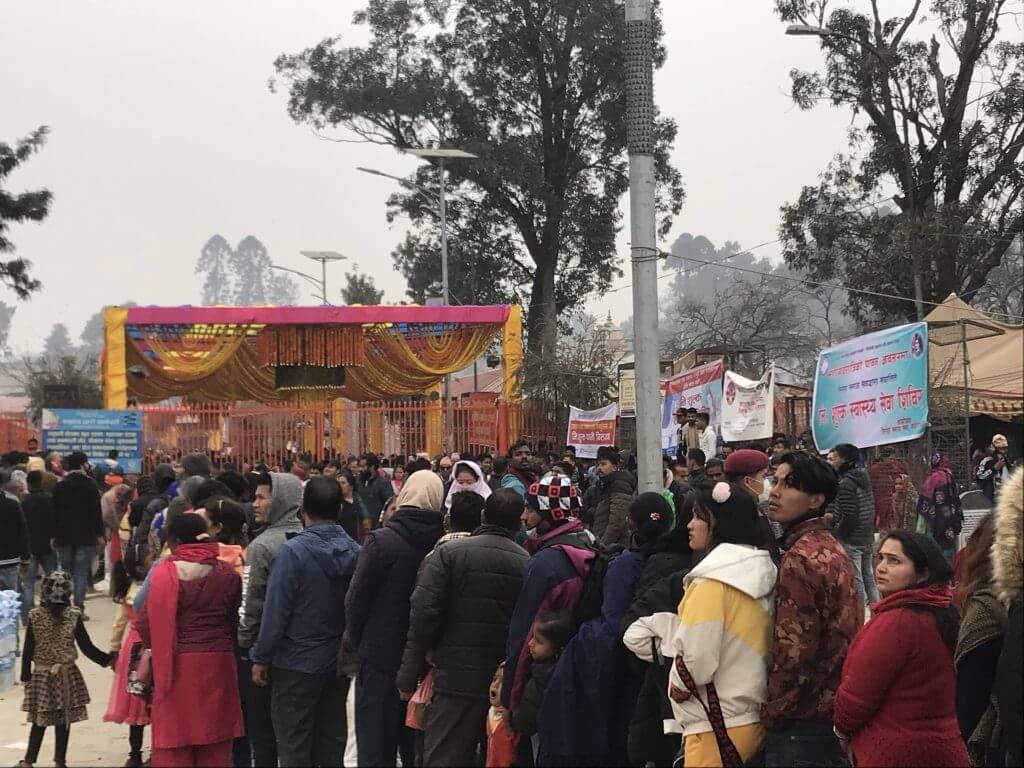
Crowd in kathmandu

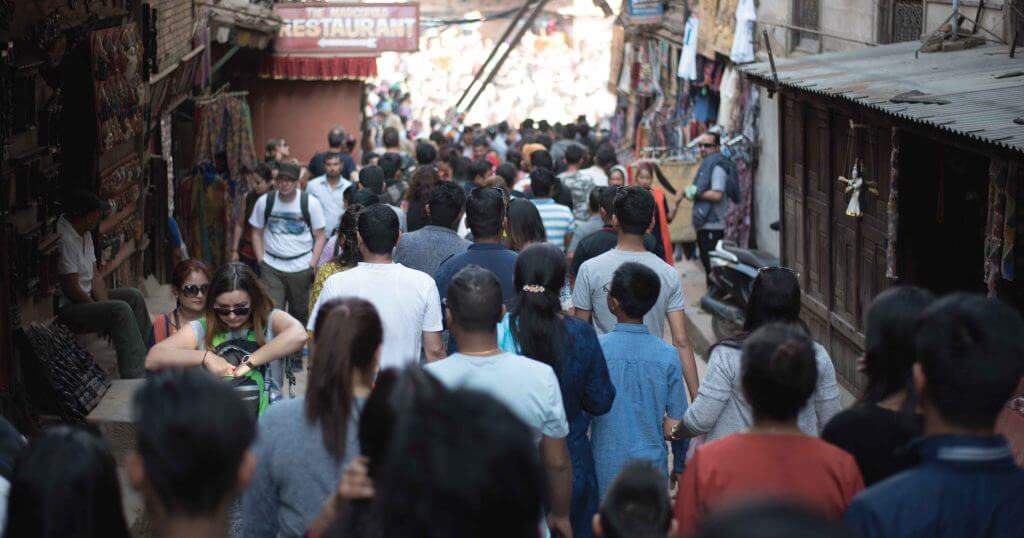
Many tourist areas in Nepal celebrate the New Year with great excitement and joy, including Thamel, Pokhara and Sauraha. Bars, hotels and other music venues are full of people who dance, sing and welcome the New Year with enthusiasm. The top bands of Nepal perform live concerts, and various cultural programs are held.

Thamel is the best place to visit on New Year’s Eve for those who love night parties and Nepalese food, as this place turns lively throughout the night with some interesting events. The celebrations start the night before, on December 31.

Paragliding

You can be a part of some exciting and fun activities such as paragliding, sightseeing, hiking, rock climbing, and more to celebrate the Nepali New Year in Pokhara. The streets are decorated with lights, flowers and ornaments, and you can take part in a variety of musical events to ring in the Nepali New Year.

You can also enjoy the sunrise from Sarangkot, Daman and Nagarkot with the spectacular view of the mountains to welcome the Nepali New Year. The New Year is also a good time to plan hiking excursions in Champadevi, Nagarkot, Shivapuri and Chandragiri, which are popular hiking destinations.

Nepali culture and traditions vary a lot and we have different ways of celebrating Nepali New Year. If you are curious about Nepali New Year, we would love to have you join us.

This year, celebrate the Nepali New Year by visiting spectacular palaces, visiting religious sites, trying out some sporting activities or being a part of some street events.

Trekking during the Holi Festival in Nepal

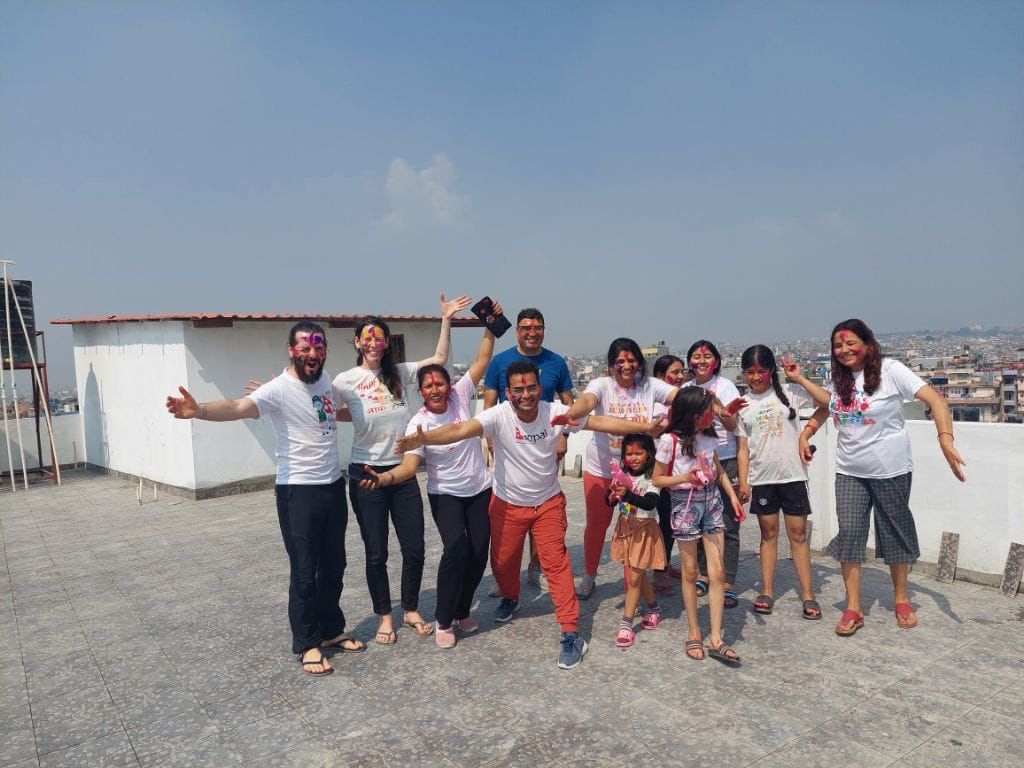
Holi Celebration

Nepal is a land of diverse cultures and traditions, with its unique festivals and stunning natural beauty. One of the most vibrant festivals in Nepal is Holi, also known as the Festival of Colors. This festival celebrates the victory of good over evil and the arrival of spring. 

Trekking during the Holi Festival in Nepal is a unique and unforgettable experience that combines the joy and festivity of Holi with the natural beauty of Nepal’s landscapes. This tour will take you on a journey to some of the best trekking destinations in Nepal during the Holi Festival.

You will witness and participate in the traditional Holi celebrations of different ethnic groups while trekking through remote villages, scenic routes, and diverse landscapes. You will have an opportunity to interact with the locals, explore the culture and traditions of Nepal, and create unforgettable memories.

The Holy festivals in Nepal are celebrated with great enthusiasm and are a wonderful time to explore the country’s rich culture and natural beauty. To learn more about Holi festival tour in Nepal, you can check out our blog Holi Festival Tour in Nepal.

The colorful and joyous festival is celebrated across the country, and it is a perfect time to experience the beauty of Nepal’s landscapes and culture through trekking. The Himalayan Circuit presents the highlights of trekking during the Holi Festival in Nepal and some of the best trekking destinations.

Why Trek During Holi?

Trekking in lust green forst

Trekking during Holi offers a unique and unforgettable experience. Not only can you enjoy the natural beauty of Nepal’s mountains and landscapes, but you can also witness and participate in the festivities of Holi. 

The trekking trails in Nepal are usually less crowded during the festival, as many locals are celebrating with their families and friends. This means you can enjoy a quieter and more peaceful trekking experience, with plenty of opportunities to immerse yourself in the local culture.

Another benefit of trekking during Holi is the weather. Spring is one of the best times to trek in Nepal, as the weather is usually clear and dry. This means you can enjoy stunning views of the Himalayas and other natural landscapes. 

The days are also longer during the spring, giving you more time to explore and enjoy the scenery.

Best trekking destinations during the Holi Festival Tour:

Himalayan circuit offers you the best trekking destinations in Nepal for Holi festival tours:

Everest base camp

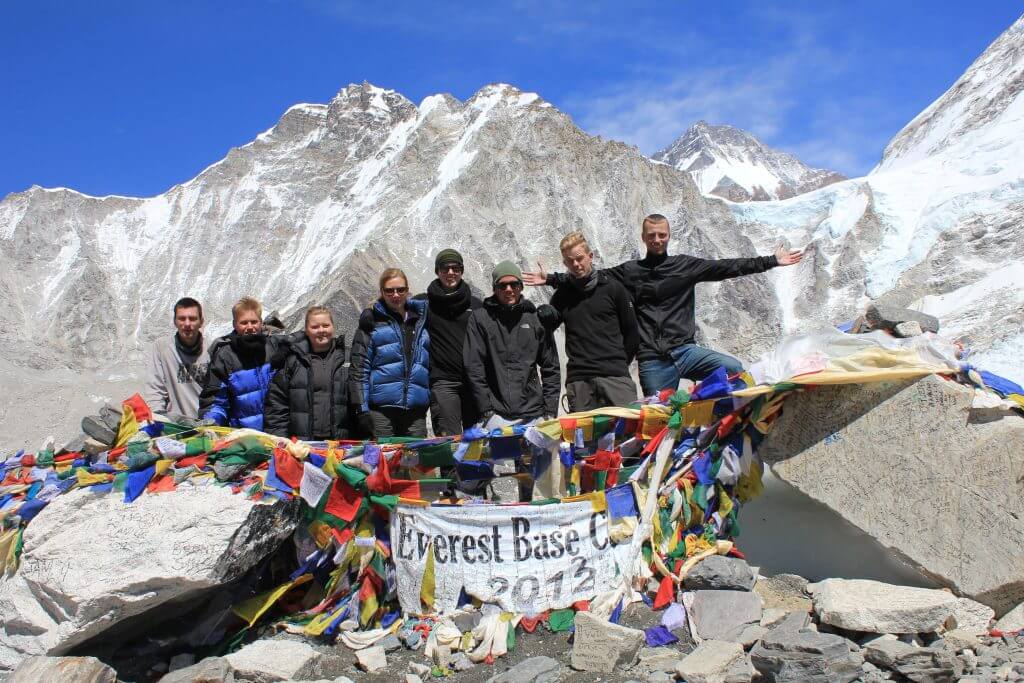
Spring is one of the best times to trek to Everest Base Camp, as the weather is usually clear and dry. The trek takes around two weeks and offers stunning views of the Himalayas, as well as the chance to experience the unique Sherpa culture.

Annapurana Base Camp

This trek is one of the most popular and adventurous treks in Nepal, offering stunning views of the Annapurna range, diverse landscapes, and rich cultural experiences. 

During the Holi Festival, you can trek through remote villages and experience the traditional Holi celebrations of the Gurung and Thakali people.

Langtang Valley

Langtang Valley trek is another great option during the Holy Festival in Nepal. The trek takes around 7-9 days and offers breathtaking views of the Langtang mountain range. You can also experience the cultural traditions of the local communities during the festival.

Upper Mustang

The Upper Mustang region is a remote area in Nepal that is rich in Tibetan culture and history. Trekking in this region is particularly stunning during the Holy Festival, as you can witness local traditions and festivities. 

The trek typically takes around 10-14 days and can be done during the spring or autumn. 

Island Peak

The Khumbu region, located in northeastern Nepal, is home to many of the world’s highest peaks, including Mount Everest. 

This area is particularly beautiful during the Holy Festival, and you can experience local traditions and festivities. The trek typically takes around 10-14 days and can be done during the spring or autumn. 

  • Trek to Tsum Valley:

The Tsum Valley is a hidden gem in Nepal that is rich in Buddhist culture and history. The trek to Tsum Valley is particularly beautiful during the Holy Festival, as you can witness local traditions and festivities. 

The trek typically takes around 14-18 days and can be done during the spring or autumn.

Trekking during the Holi Festival in Nepal is a fantastic way to experience the beauty of Nepal’s landscapes and culture. It is a unique and unforgettable experience that should be on every trekker’s bucket list. 

Nepal offers a variety of trekking destinations, each with its own charm, and during Holi, you can experience the traditional Holi celebrations of different ethnic groups. 

Book your trip with the Himalayan Circuit with the right planning and preparation to create unforgettable memories. So, pack your bags and come to Nepal to experience the best of both worlds!

Holi Festival Tour in Nepal

Holi Colors

Holi is the festival of colors, love, and joy that brings people together and reminds us that life is beautiful. Come together and celebrate Holi this year, forgetting our differences. Let’s celebrate Holi with the colors of love, friendship, and happiness.

The festival of Holi is the festival of color celebrated throughout Nepal that symbolizes unity and integrity among people regardless of their caste, creed, gender, or religion. During this festival, people splash each other with different colors.

The Holi Festival celebration Tour in Nepal will be one of the most exciting experiences for you, since you will be able to experience the vibrant culture and way of life of the people. The festival will take place over two days based on geography, since Nepal is divided into Hills and Tarai (Plain).

Nepal’s streets will be filled with laughter and joy during the Holi festival. There are many Holi celebrations organized by various event companies where you can participate and be a part of the celebration. 

The Holy festivals in Nepal are celebrated with great enthusiasm and are a wonderful time to explore the country’s rich culture and natural beauty. In addition to the main festivities, there are a number of other activities and trekking options that you can combine with your trip.

Treks to Everest Base Camp, Annapurna Base Camp, Langtang Valley, Upper Mustang, and Khumbu Region can be combined with the Holy Festival. To learn more about trekking during Holi, you can check out our blog Trekking during the Holi Festival in Nepal.

Take part in the Holi festivities and enjoy traditional Holi delicacies. Enjoy delicious local foods and drinks. You can also try bhang, a green paste that is made from cannabis, lassi, and other spices, if you are interested.

We can arrange your trip in a way that will allow you to enjoy Holi not only in Kathmandu (Thamel, Basnatapur, and Patan), but also in Pokhara (Lakeside area), Bhotekoshi, and Chitwan.

Tour Highlights:

  • Enjoy the vibrancy of colors and splashes of water at popular places in Kathmandu.
  • Witnessing the richness of culture and values in Nepal is a perfect cultural escapade.
  • A good time to plan high-altitude trekking and day trips in Nepal is before or after Holi.
  • Learn about the customs and traditions of local communities through visits to historic temples and other cultural sites.
  • Hiking, sightseeing, and shopping are all possible activities during the tour.

Why is Holi Celebrated?

Holi Celebration

Nepal has a rich cultural heritage heavily influenced by Hinduism, and many of the festivals and celebrations there have Hindu roots. The Hindu festival of Holi commemorates the victory of good over evil, specifically Lord Vishnu over Hiranyakashyap as well as the arrival of spring and the end of winter. 

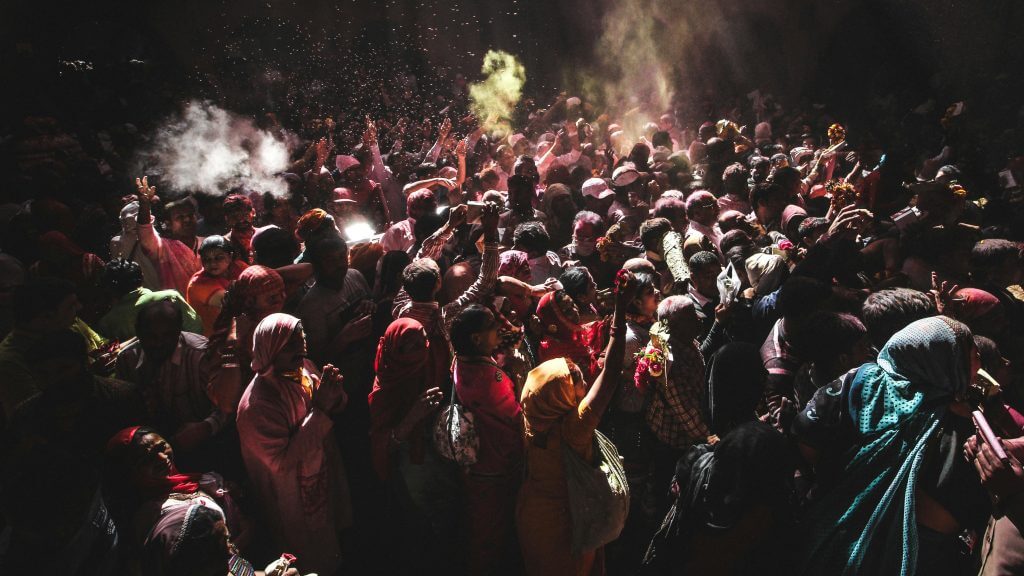
“Holi” is also known as the “festival of colors” or the “festival of love.” A celebration of Holi typically occurs in late February or early March and involves throwing colored powder and water, as well as lighting bonfires. Furthermore, Holi is a time for Nepalese people to come together and celebrate with family and friends.

What to expect at Holi Festival?

Holi celebration nepal

Nepali culture celebrates Holi in a variety of ways, including traditional festivals, concerts, and live music in restaurants and pubs. One of the best places to witness Holi celebrations is Basantapur Durbar Square.

Holi is a wild festival with big crowds, colored dye, water guns, and lots of music, dancing, and partying. The Holi festival is enjoyable and you can participate if you are okay with crowds, colors, and getting wet. 

The best places to visit in Nepal during Holi festival:

Kathmandu Valley:

Holi celebration Basantapur

The best places to visit in Nepal during the Holi festival are Kathmandu, Patan, and Bhaktapur. There are many historical sites and temples in these cities that are renowned for their rich cultural heritage. There is great enthusiasm in these cities for the festival, and you can see colorful and vibrant street celebrations. 

Holi is celebrated in Kathmandu & Patan in the traditional way by playing with colored powder, water, singing, and dancing. Similarly, Bhaktapur is also a great place to visit during the festival since it is known for its traditional Newari culture and people still follow age-old customs and traditions.

Pokhara:

Holi Celebration

Pokhara celebrates Holi with vibrant and colorful displays of traditional music and dance performances, singing, dancing, as well as playing with colored powder and water. 

You can see people smearing colored powder on each other and drenching each other with water on the streets. The streets are decorated with flowers and colorful lights, and you can dance to traditional music.

Visiting Pokhara during Holi is a great idea, since you can enjoy the colorful and vibrant celebration and experience the unique culture of the region at the same time.

Chitwan:

Tharu Culture

A major attraction of the Holi festival in Chitwan is the Tharu Cultural Dance performed by the indigenous Tharu people. It is an opportunity to learn about the culture and traditions of the Tharu people through the colorful and vibrant display of traditional music and costumes.

A popular Holi festival activity in Chitwan is elephant safari, where you can see one-horned rhinoceros, Bengal tigers, and other wild animals. Additionally, you can take nature walks, observe birds, and go on a jungle safari, which is organized in the park.

A colorful and lively celebration of the festival takes place in the Chitwan National Park, where you can experience the beautiful natural scenery and experience the local culture as well. 

Chitwan is an excellent place to visit during the Holi festival, as you can experience the colorful and lively celebration as well as the region’s unique culture and natural beauty.

Participating in the Holi festival celebration in Nepal will be a unique experience for you. The Himalayan Circuit offers a guided Holi festival day tour to experience one of the unique ways to observe and celebrate Nepali Holi.

Maha Shivaratri Festival Tour

Pashupatinath temple

Maha Shivaratri festival is an annual Hindu festival held in the holy temple of Pashupatinath to honor Lord Shiva and Goddess Parvati’s marriage. A Maha Shivaratri festival tour gives you an overview of ancient Hindu culture and traditions, as well as a tour of the centuries-old Pashupatinath Temple.

Shivaratri is also known as “the great night of Shiva” and falls on the new moon of Magh/Falgun according to the Hindu calendar. The festival is mostly observed in Nepal and India, where people remember Shiva, pray, fast, practice yoga, and meditates on ethics.

Traditionally, Lord Shiva is offered Bael or Vilvam leaves during the Shivaratri festival. Also, it is believed that those who fast on this night and pray to Lord Shiva will receive good luck, prosperity, and peace in their lives.

The festival is not only about Puja and Darshan, but also about a vibrant crowd of devotees including gorgeous Sadhu Babas from different parts of the country, who believe that honoring Lord Shiva on this night will lead to a better life for them.

A colorful and naked sadhu sits meditating and posing for photographs while tourists enjoy the ambiance with curiosity. Some Sadhus cover themselves with ashes while others remain completely naked.

There is a constant flow of devotees praying for prosperity, wellness, and sacredness at Pashupatinath temple. “Om Namah Shivay” and “Mahamritunjaya” are chanted by devotees all night long for the victory of light over darkness.

Over a million people visit the Pashupatinath temple during Shivaratri every year, mostly from the Indian subcontinent. The prodigious night of Lord Shiva is one of the most important sectarian festivals of the year, especially for followers of Hinduism.

Tour Highlight:

Sadhus in pashupari

  •       An exploration of a UNESCO World Heritage Site in Kathmandu. 
  •       There is a peaceful, spiritual atmosphere at the Aarti Ceremony.
  •       Experience centuries-old temples, statues, and Shiva lingams.
  •       Witness the devotion of Hindu Sadhus to Shiva and witness their lives.
  •       Enjoy the local ride to the temple premises and observe the faith of the people.
  •       Get a glimpse of the festival’s ritual ceremonies.

How is Shivaratri festival celebrated?

This auspicious day is celebrated by devotees worldwide in accordance with their customs and traditions. Devotees celebrate Maha Shivaratri festival in a number of ways:

  •       Fasting is practiced throughout the night and vigils are kept to contemplate spirituality.
  •       The Hindus worship Lord Shiva by visiting temples and rivers.
  •       During the festival, devotees meditate, chant mantras, sing songs, and listen to stories about Lord Shiva.
  •       Shiva Lingam is worshipped using Bel Patra (a type of bel tree leaf), milk, sandalwood paste, white colored flowers, and Dhaturo (an intoxicating plant).
  •       It is common for devotees to donate food and clothes to the poor after Maha Shivratri pujas.

Significance of Shivratri in Nepal:

Shiv Ling

The significance of Maha Shivaratri festival differs according to legends and traditional lords.

  •       This is the night of the convergence of Shiva and Shakti, which represents the importance of masculine and feminine energy in balancing the planet.
  •       This night is said to be the night Lord Shiva performed his Tandava – a cosmic dance of ‘creation, preservation, and destruction.’
  •       Those living in families observe Maha Shivaratri festival as a celebration of the marriage anniversary of Lord Shiva and Parvati.
  •       Hindu mythology portrays this as the night when Lord Shiva consumed poison in order to save gods and humans. But the poison lodged in Lord Shiva’s throat and eventually turned him blue.

Things You Can Do During Maha Shivaratri festival in Nepal:

  1. Observe the Shivaratri Vrat:Devotee in pashupatiFasting during Maha Shivaratri festival will give you a chance to experience the spiritual aspects of the festival. The Shivaratri Vrat (or Shivaratri Fast) is observed by devotees to seek Lord Shiva’s blessings and strengthen their vows.
  2. Meditate on Mahashivratri:Yoga retreatYou should try staying awake all night during Maha Shivaratri festival and practicing meditation. The constellations appear to be in an auspicious position on Shivaratri.

    It was said in ancient times, “If you cannot meditate every day, do so at least once a year, on Shivratri day, during which you stay awake and meditate.”

  3. Attend aarati:The Sandhya Aarati ritual is performed on the eastern side of Pashupatinath Temple on the banks of the Bagmati River. This sacred ritual is conducted every evening by three temple priests.There are hundreds of people gathered around the podium to witness the ceremony which includes chanting mantras, singing hymns, lighting oil lamps, and playing classical music.

    Taking a walk around the temple and attending this auspicious ceremony will give you a sense of bliss.

  4. Witness the Sadhus:Foreigner with Sadhus in PashupatinathThe Pashupatinath temple is filled with thousands of sadhus and babas on the eve of Maha Shivaratri festival. Take a walk around the temple and you’ll likely see sadhus and baba with matted dreadlocks and ash-smeared faces smoking cigarettes mixed with marijuana.

    Around the temple, you can also see Naga Babas (The Naked Sadhus), who are by far the most fascinating type of Shaivite sadhus. Naga Babas only care about the necessities of life; hence, they pay homage to Lord Shiva by stripping down to their flesh.

As you participate in Shivaratri rituals, you are infused with the spiritual energy of people. This makes you feel like a god among the gods. Make sure you visit Nepal during Maha Shivaratri festival with the Himalayan Circuit to experience the heavenly feeling that surrounds Pashupatinath.

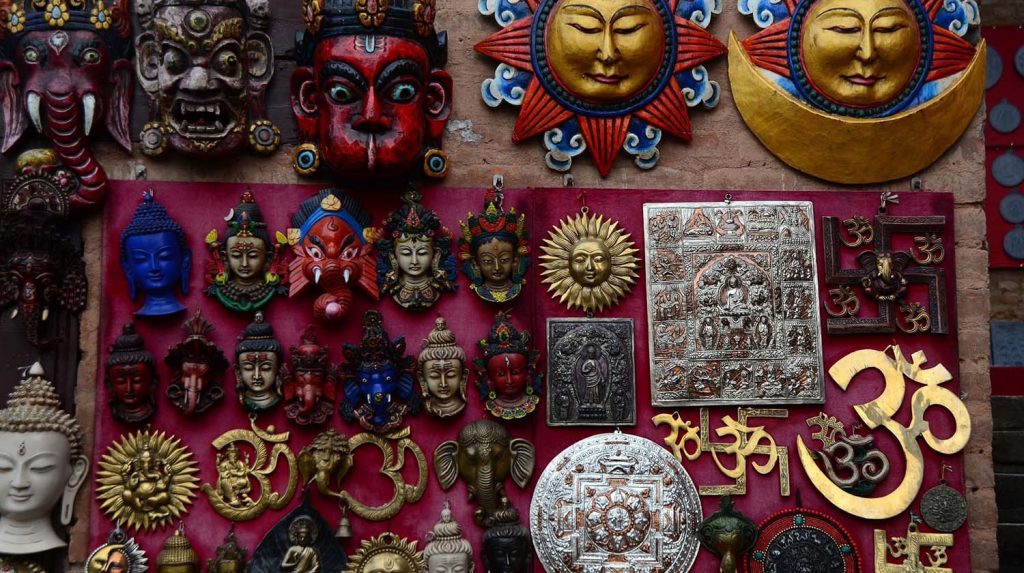
Arts and Crafts in Nepal

Arts and Crafts in Nepal

Leo Tolstoy once stated that “Art is not a handicraft, it is the transmission of feeling the artist has experienced”.  Art plays a crucial role in human life, as it is used to convey human emotions and feelings.

The arts and crafts traditions of Nepal reflect the country’s rich culture and tradition. Two millenniums old Hindu and Buddhist heritage have survived many onslaughts and continue to influence Nepalese art and craft.

The skills and strategies for making handicraft products that have been passed down from generation to generation reveal not only the artistic talent and skill of craftsmen, but also the social, religious, and cultural values prevalent in different regions of the country.

The Nepali handicrafts industry practices and preserves ages-old culture and traditions. More than 20 different handicraft items from Nepal are exported to over 85 countries today, making them among the most popular exports of the country.

Nepalese art and crafts are not only seen in the souvenirs you’d find in the shops, but also in their religious architecture, weapons, sculptures, paintings, weaving, and pottery.

Without further ado, let’s take a quick look at some of Nepal’s arts and crafts:

Stone Statues:

The old and ancient settlements of Kathmandu Valley feature a wide variety of stone sculpture as well as architectural art dating back to centuries. Kathmandu’s medieval temples and durbar squares are open-air museums with beautiful stone carvings of gods, kings, and mythical animals.

There is a wide range of stone arts (such as stone statues, giant stone water taps, stone temples) displayed throughout the streets of Patan, Bhaktapur and Kathmandu that were created by highly acclaimed Nepalese artisans. 

There are now a number of stone sculptures available for purchase. By promoting hand carving and hand finishing arts, the Himalayan circuit aims to preserve the cultural heritage of Nepal and promote the techniques and tools used over hundreds of years by generations of craftsmen.

Thangka- Painting:

Thangkas also known as paubhas (meaning “message from the temple”) are Buddhist paintings of cotton and silk that depicts a Buddhist deity or scene. Paintings of Thangkas are used for devotional and decorative purposes, as well as a tool for teaching. 

There are different symbolic meanings associated with each of the colors, patterns, and designs in Nepalese Thangka paintings. Each painting has a unique message and spiritual benefit to the household in which it resides.

Typically, a Buddhist deity is at the center of a Thangka painting which is surrounded by other religious figures. Thangkas come in a wide variety of styles and represent a number of Buddhist and Hindu deities such as Tara, Buddha, the Wheel of life, and Mandala.

You can participate in the Thangka workshop where painters show you how art is created and its significance.

Wood Carving:

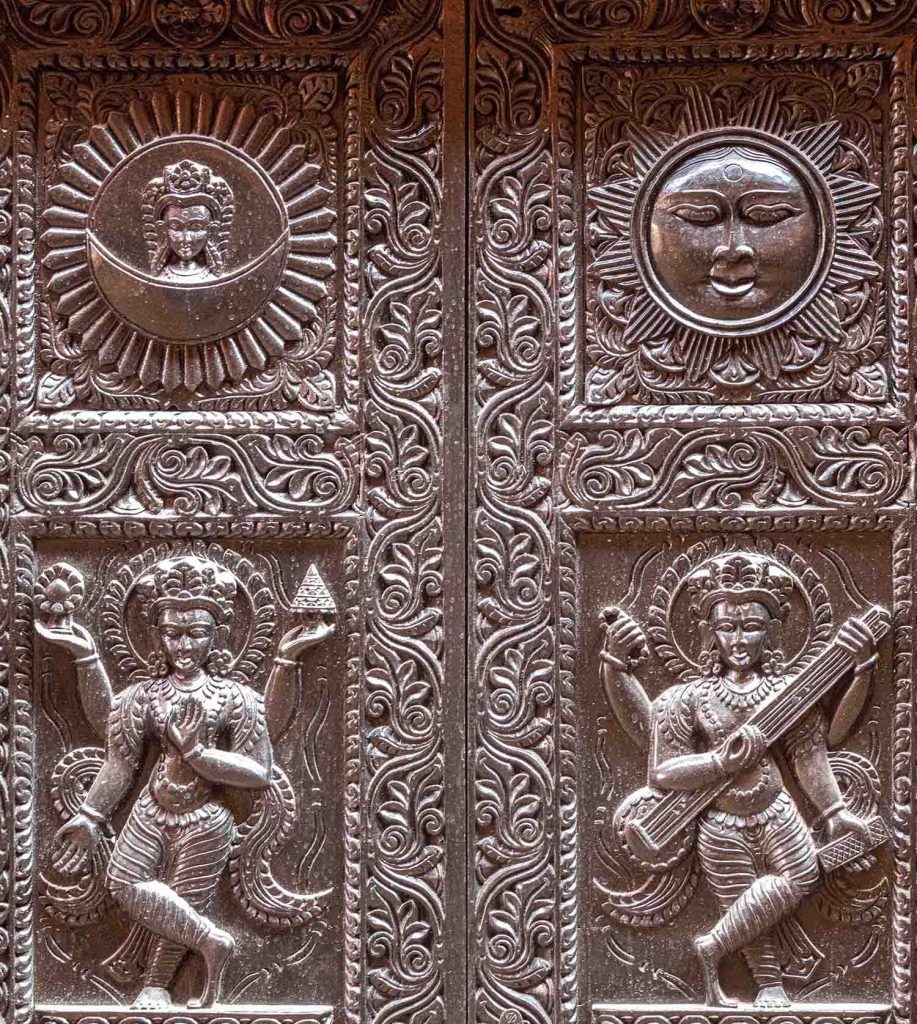
Since ancient times, woodcraft has been a highlight of Nepalese architecture. One of the many examples of this fascinating piece of art can be found in Basantapur, Kathmandu, built in about 1596. 

The designs of the wood carvings mostly depict deities, demons, animals, symbols, and intricate patterns that are drawn from Holy Scriptures and myths of Buddhists or Hindus.

A wide range of wooden pottery and handicrafts are available at Bhaktapur’s pottery markets. A wide variety of wooden items is available, including wooden decor items, wooden flutes, wooden bracelets, and more.

The art of wood-carving is present in literally every corner of Kathmandu. You can see wooden structures in temple columns, pillars and beams, doors and windows in homes and offices, photo frames, furniture, and mirror frames with finely carved figures or intricate patterns.

Shilpakars are one of Bhaktapur’s oldest clans known for their skill in wood carving. Spend the evening with Shilpakar learning more about this heritage through a traditional Nepalese dinner.  

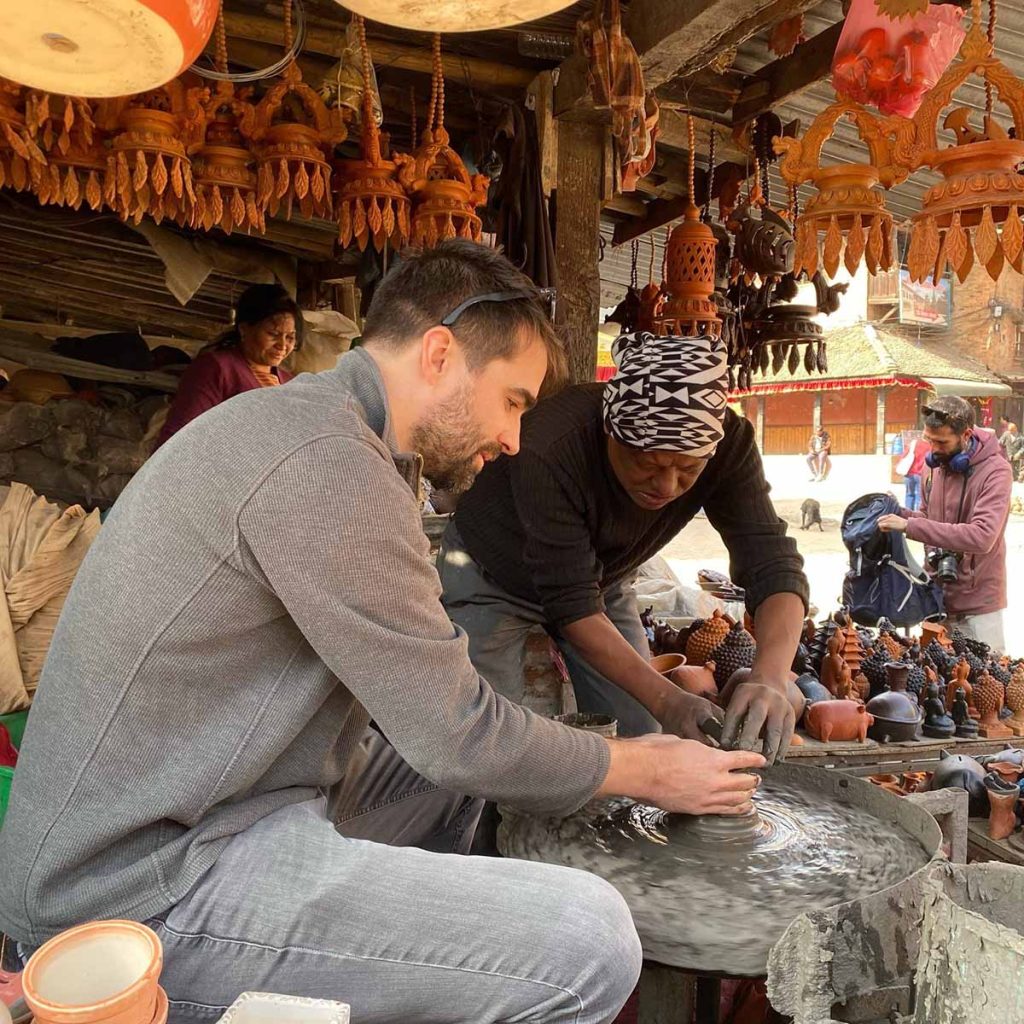
Pottery:

Nepal’s pottery craft is unique and it dates back thousands of years.  Most villages in Nepal use ceramic water pots as a means of collecting, storing, and transporting water. The ceramic vessels also keep the water cool.

The art of Nepali pottery has been passed down from generation to generation. Bhaktapur and Thimi are the major centers of pottery making in Nepal. Thimi is a beautiful town located between Kathmandu and Bhaktapur. 

Most of the ceramics made in Bhaktapur are superior to those made elsewhere because they are mostly made from black clay called Dyo Cha, which means literally “clay of God” and is only found in Bhaktapur. The material is said to be supple and elastic.

Mithila Chitrakala(Mithila Paintings):

Woodcarving mithila

The Mithila paintings usually depict the men and the scenes associated with the ancient epics. The sun, moon, and holy plants such as tulsi are also widely depicted in paintings, as well as royal court scenes or social events like weddings. 

The Mithila Art depicts mythological and religious events in natural colors on paper and cloth. Using natural dyes and pigments, and by adding twigs, brushes, nib-pens, and matchsticks, the painting is characterized by eye-catching geometric patterns.

Mithila images often depict deities such as Vishnu, Ganesh, Radha, Krishna, Sita, and Ram. The Hindu tradition includes ritual content for special occasions, such as births and marriages, as well as festivals, such as Holi, Durga Puja, Kali Puja, Upanayana.

Nepal takes pride in its rich heritage and culture, which are reflected in every piece of art and handicraft produced. Your creative eye will be delighted by some beautifully-crafted pieces of art in Nepal! 

Buddhism Tour in Nepal

A trip to the birthplace of Buddha would be the perfect place for those seeking to understand Buddhism better. Buddhist pilgrimages in Nepal are very popular among travelers looking for paradise and peace. 

Himalayan Circuit invites you on an inspirational spiritual journey of learning more about Buddha’s teachings at a variety of renowned monasteries and stupas.

A Buddhism tour in Nepal is for those who wish to learn more about Buddha, his birthplace, and his teachings, and who wish to meditate with a Lama (spiritual teacher).

Buddhism tours in Nepal will also allow you to witness the age-old religious harmony that persists between Hindus and Buddhists in Nepal despite the adversities it has suffered.

The Buddhism tour in Nepal will provide you with detailed information about Buddha and his philosophy. This pilgrimage tour also provides an opportunity to learn more about the culture and tradition of Buddhism.

Nepal is the birthplace of Lord Buddha and is home to several Buddhist stupas, gompas, chortens, and monasteries, all of which have significant historical importance. It introduces you to the wonders of Kathmandu and Lumbini, as well as Tibetan Buddhism.

You will visit beautiful monasteries, stupas, and the birthplace of Buddha during the tour. A visit to the place where Buddha was born and admiring the enchanting monks definitely inspires peace in everyone’s heart.

Is Nepal the birthplace of Lord Buddha?

Lumbini mayadevi temple

Around 2580 years ago, King Suddhodhan and Queen Maya Devi gave birth to a light of wisdom who, after living a luxurious royal life for 29 years, left the palace to seek answers to human suffering. Afterward, he meditated under the Bodhi tree where he attained divine knowledge to become Buddha.

According to the inscriptions on the Asoka Pillar, built by the Mauryan Emperor Asoka in 249 BC, Lord Buddha was born in Lumbini, within the Terai plains of southern Nepal, in 623 BC.

The archaeological conservation area in Lumbini contains the remains of the Shakya Tank, brick structures in a cross-wall system dating to the 3rd century BC, as well as the Ashoka Pillar with its Pali inscription in Brahmi script.

Stupas (memorial shrines) and viharas (monasteries) dating from between the 3rd and 15th centuries AD provide important information about the origins of Buddhist pilgrimage centers during that period.

Best Buddhist Pilgrimage Sites in Nepal:

Lumbini

Lumbini

The UNESCO World Heritage Site, Lumbini, also known as the “birthplace of Buddha”, is one of the most important pilgrimage sites in Nepal, visited every year by thousands of pilgrims.  

There are numerous temples, museums, and monuments in Lumbini, including the Mayadevi temple, the flame of eternal peace, the sacred Bodhi tree, the old Asoka Pillar, and the Holy Pond “Pusakarini,” where Buddha took his first bath after birth.

You will also have the opportunity to visit other significant Buddhist pilgrimage site including Tilaurakot palace (capital of Kapilbastu), Kudan, Ramgram Stupa, Sagarhawa, Devdaha, and other prominent places in the Lumbini region.

Kathmandu Valley

Bouddhanath stupa

Kathmandu’s surroundings boast hundreds of meditation caves, monasteries, and stupas related to Bodhisattvas, Siddhas, and Buddha. There are meditation caves dedicated to Guru Padmasambhava, Milarepa, Naropa, and Tilopa here. 

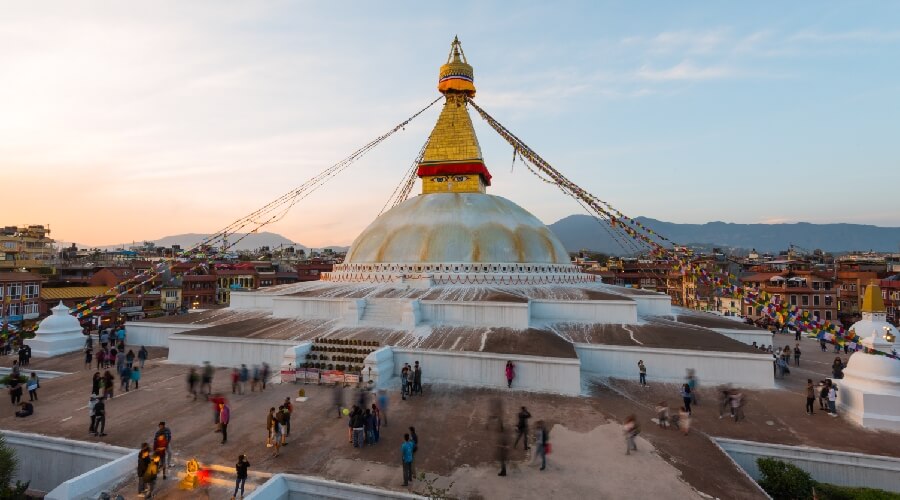
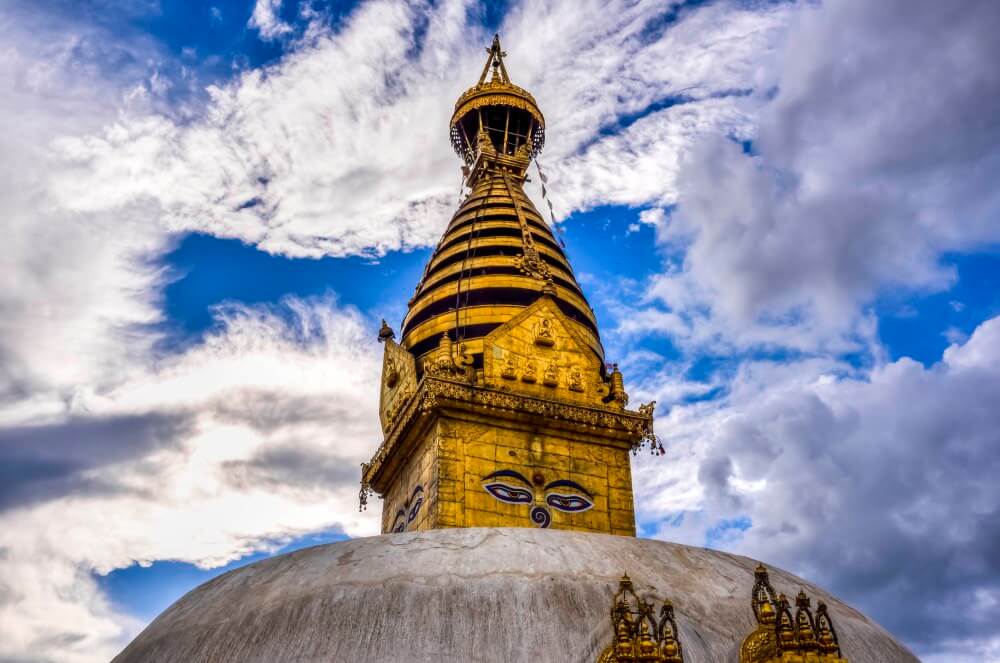
Boudhnath and Swayambhunath are the two largest Buddhist shrines in Kathmandu that tourists and pilgrims visit. Both of them are listed on the UNESCO World Heritage List. You will also visit the beautiful Kapan Monastery, considered to be one of the finest in Nepal.

Among the most important Buddhist pilgrimage sites, near Kathmandu are the Maratika cave of Halesi, Pharping and Namobuddha.

Pharping

The village of Pharping, south of the Kathmandu valley, is home to numerous Buddhist monasteries, caves, and temples. The place is a monastic zone with a beautiful myth about Guru Rinpoche visiting it.  

Namobuddha

Namo buddh

Namobuddha Monastery lies on a hill above Dhulikhel in the Kavre district, just outside Kathmandu. A Buddhist devotee is believed to have sacrificed his life at this location to feed a hungry tigress and her cubs, making it a sacred site for Buddhists. There are hundreds of monks studying religious practices at the monastery.

Why should you take a Buddhism tour in Nepal?

Kathmandu Swyambhu

Visiting the birthplace of Lord Buddha, Lumbini, the origin of Buddhism, provides you with the eternal feeling of peace, mystery, and fruitfulness.

The Buddhism tour in Nepal consists of a Buddhist pilgrimage and the opportunity to experience the oldest living Buddhist practices of the Himalayan region.  

This mountainous country has been a haven of Buddhist practices for centuries, making it the best place in the world to go on a Buddhism tour. 

The Buddhism pilgrimage tour in Nepal offers much more than just sightseeing. You will get an opportunity to learn Buddhist meditation and culture, and live a peaceful, non-violent life.

The tour combines natural and cultural aspects of Nepal. In addition to that, you can experience the beauty and natural beauty of the area. There are sights so beautiful that you would be amazed for the rest of your life.

Who should take part on this tour? Is this tour for all or only some people?

Buddhism Tour

You do need any prior experience to participate in this pilgrimage tour. The difficulty level is very negligible and the Buddhism tour in Nepal is very easy to complete. 

Western cultures do not consider Buddhism a religion, but rather a state of enlightenment. You will get to learn and see all the important and significant facts about this belief on the Buddhist culture tour. 

People from all religions can participate in the Nepal Buddhism pilgrimage tour regardless of their age and interest if they are interested in studying, researching, or learning more about Buddha, Buddhism culture, tradition, rituals, and lifestyle.

With this tour, travelers can achieve inner peace, compassion, meditation, and a way of life. The Buddhism tour is ideal for you if you are seeking a peaceful journey to Nepal’s beautiful and historic sites. 

MICE Tourism in Nepal

people in hall

The Himalayas and natural beauty of Nepal attract many tourists, but what they may not realize is that the country has also been steadily establishing itself as an ideal destination for meetings, incentives, conferences, and exhibitions (MICE) tourism.

MICE are a specific type of tourism involving large groups that are gathered for a specific purpose, usually well in advance. Usually, MICE tourism is geared toward a particular theme, such as a hobby, a profession, or an educational subject. 

Mice Tourism is one of the newest travel trends in Nepal and one of the most promising future industries. MICE are a successful combination of business and tourism. It is well known that the Meetings, Incentives, Conferences, and Exhibitions (MICE) industry is closely linked to the travel and hospitality industry.

MICE travel is a great fit for Nepal as it is a country for all seasons. MICE tours are also popular among corporate travelers who wish to promote their businesses and network with their peers. These are sightseeing tours combined with business meetings at the destination.

In today’s rapidly growing technological market, the MICE industry in Nepal offers many unique ways to boost business relationships with potential partners, investors, and customers, while exchanging innovative ideas. 

How can Nepal Benefit in MICE Tourism?

meeting in hall

As a popular international business meeting destination, Nepal continues to gain popularity among business people around the world. 

In addition to providing excellent conference facilities at par with international standards, top hotels and tour operators have simplified the process of organizing and managing these events.

Several international conferences have been held in Nepal, which is encouraging for hoteliers. The hotel industry says MICE are one of its most profitable segments since it entails the entire hotel package. MICE tourism is flourishing in the country, and hotels are working to create favorable conditions to draw more visitors.

Is Nepal ready to Host Seminars?

signing

Nepal is one of the best destinations for hosting MICE tourism events due to its abundance of hotels, convention centers, and seminar facilities. With the availability of state-of-the-art MICE halls, and well-trained and hospitable staff, visitors from around the globe can organize their MICE Nepal events without hindrance. 

Moreover, the perfect climatic conditions paired with an extraordinary amount of natural and cultural diversity have also raised people’s expectations about organizing MICE events in Nepal.

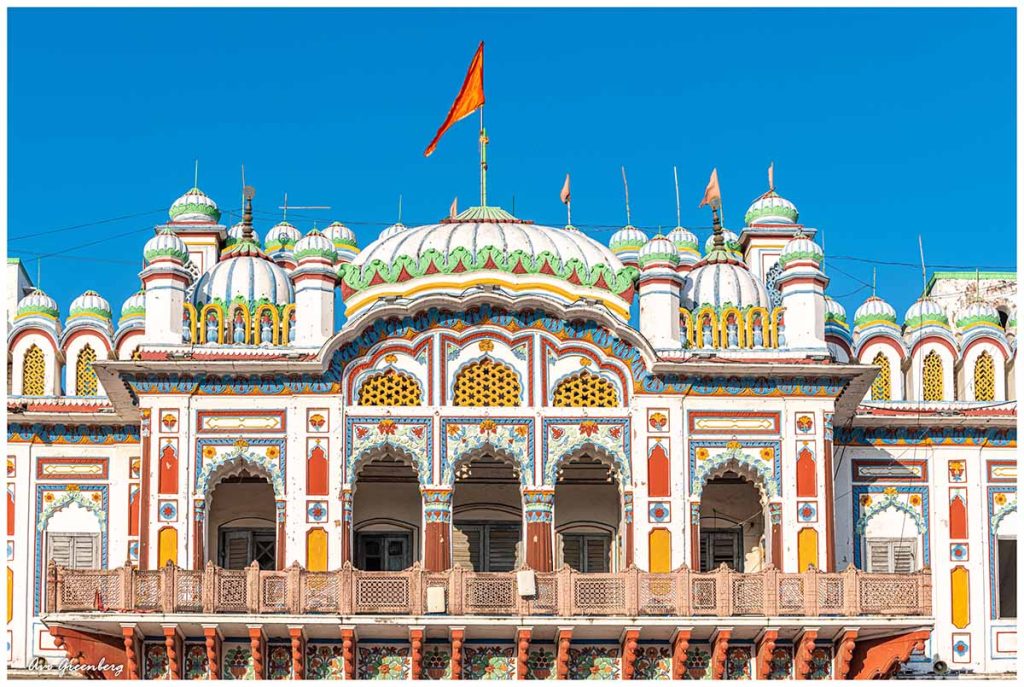
There are different options available in Kathmandu, Chitwan, Janakpur and in Pokhara for organizing MICE tourism events in Nepal. 

Currently, Hotel Hyatt Regency, Hotel Soaltee Crown Plaza, Gokarna Forest Resort, and Fulbari Resort provide better, more affordable, and more up-to-date programs.

Unique benefits of having Nepal as a seminar destination

The country offers hotels, convention centers, and conference facilities with modern amenities. There are many conference centers in Kathmandu and Pokhara, from smaller venues to world-class ones. 

  • Nepal is a peaceful and safe destination. Nepalese people live together in harmony no matter what their differences might be, and they smile even when enduring hardships. For centuries, Hinduism and Buddhism have coexisted peacefully in Nepal.
  • Nepal is a destination that will captivate the delegates’ imaginations. We can design a custom pre or post-tour program to suit their budget and interests.
  • Nepal offers a range of luxury features, including enthralling mountain flights, exquisite cuisine, sightseeing and excursions, entertainment, shopping, and more.
  • A new and exciting destination like Nepal is dreams come true for organizations seeking to offer MICE events at a special location.

How to promote Nepal as a MICE destination? 

Barahi

The MICE industry has grown at a fast rate in this country, following adventure tourism. A number of luxury hotels are available with a variety of event venues in Nepal, making it a perfect destination for MICE tourism. 

The MICE tourism industry will be able to improve its revenues if there is good cooperation among the hotels. In Kathmandu, you will find hotels with convenient conference facilities and options for incentives and team building that not many countries are able to provide.

There are many countries that spend more on MICE than others, and this information is essential to reaching the right audience and planning an effective marketing strategy.

When developing a plan, hotels need to build long-lasting relationships, since this is essential for the MICE market. Hoteliers can expect returning visitors if they manage to impress their clients during MICE events. 

It is no secret that word-of-mouth has become one of the most significant communication tools in the MICE industry, and happy clients will most certainly support and recommend the hotel to their colleagues.

For MICE customers, value for money is more important than price, and they desire unique experiences that offer good value for money.

With its climate, diverse culture, and abundance of luxury hotels that offer multiple meeting venues, Nepal makes the perfect destination for corporate meetings because it offers a perfect blend of business and sight-seeing.

Top 10 places for Himalayas view during Sunrise

Sunrise from mardi

“Every sunrise is an invitation to brighten someone’s day” as Rachelle Goodrich once said. You become more grateful for the earth when you watch a sunrise. Witnessing the sunrise over the Himalayas is one of the most rewarding experiences you can have. 

There were plenty of hill stations and places where one could enjoy a luxurious view, such as sunrises and the majestic Himalayas. You can take in the magnificent & panoramic view fully relaxed and feeling comfortable.

Nepal has eight of the fourteen highest mountains in the world, which makes it a true paradise for outdoor lovers. Below are some of the best places to see the sunrise in Nepal.

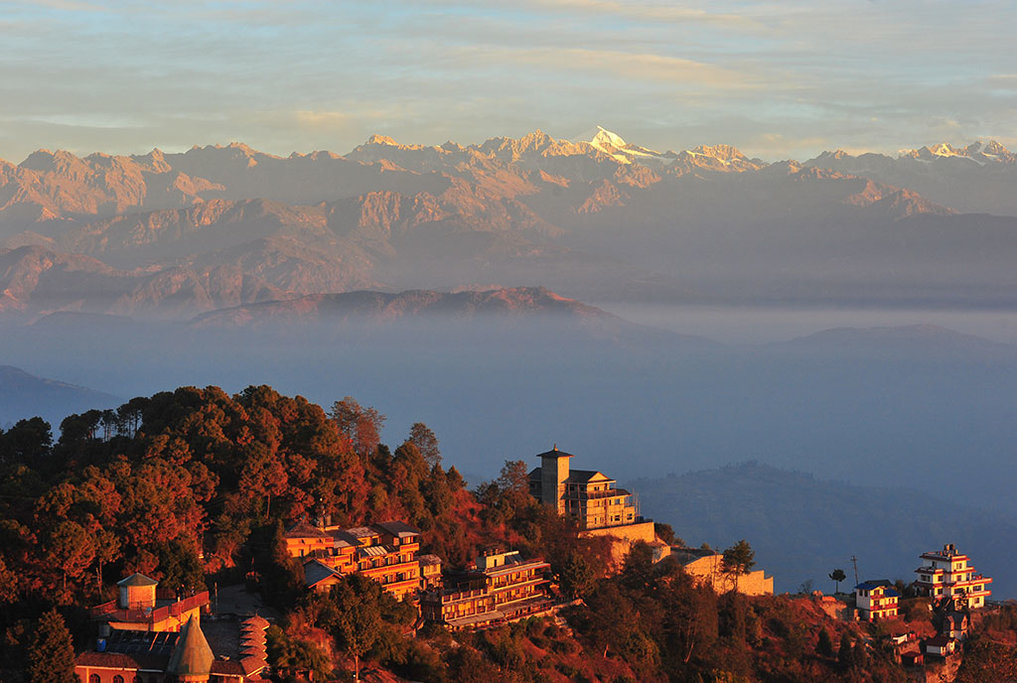
  1. Nagarkot (2,175 m):nagarkotTourists from around the world come to Nagarkot Hill for the breathtaking view of the Himalayas and short overnight walks or hikes near Kathmandu. Many people flock to Nagarkot every morning just to see the first ray of sunlight. It is one of the best places to view sunrises and sunsets.Along with the breathtaking view of Everest, you can also admire Kanchenjunga in the east and Dhaulagiri in the west. This is one of the best places to view the 360-degree views of the Himalayas. 

    Best time to visit:
    The best time to visit is October to April. 

  2. Sarangkot (1,600 m):SarangkotLocated at an altitude of 900 meters, this hill station offers a panoramic view of Himalayan peaks such as Annapurna II (6,937 m), Machhapuchhare (6,997 m), and Dhaulagiri (8,167 m) above Pokhara valley. The golden sunset and sunrise views from Sarangkot are absolutely the best.An exciting moment is watching the sunrise alongside a hundred other unknown faces. You can hear murmurs and small talks along with the camera sound, adding to your excitement about seeing the sunrise. The golden sunset and sunrise views from Sarangkot are absolutely the best.

    Best time to visit:
    The best time to visit is October to April. 

  3. Daman Hill (2344m):Located at an altitude of 2344 meters above sea level, Daman Hills is one of the finest viewpoints in Nepal for viewing the Himalayan range during sunrise and sunset. Your trip to Daman Hill can be completed in one day if you start early in the morning.The Daman viewpoint is one of the closest to Kathmandu and offers an unobstructed view of all the peaks from Dhaulagiri to Mt. Everest. During the winter season, you can enjoy the snow and see the massive Himalayan range.Best time to visit:
    The ideal time to visit Daman is between the months of October and May.
  4. Srinagar Dada, Palpa (1310m):Palpa will leave a majestic impression on you. A major attraction of the area is the beautiful Rani Mahal, a splendid building surrounded by mesmerizing hills. The Srinagar Dada in Palpa has a dreamlike vibe when the sun’s rays scatter across the breezy atmosphere. Srinagar Dada which is a picturesque hill offering a stunning view of the Himalayan mountain range, including Langtang, Dhaulagiri, Mansiri, Ganesh, and Kanjirowa. You won’t even notice how quickly time has passed because the view will be so mesmerizing.Best time to visit:
    The best time to visit Palpa is in April, followed by May and June.
  5. Dhulikhel (1550m):DhulikhelDhulikhel is a majestic place in the Kavrepalanchok district, located along the eastern border of Kathmandu Valley. It is a place where visitors can discover the traditional culture of the Newari people in addition to magnificent views.Dhulikhel is a popular viewpoint where you can see the great landscape of the Himalayan Range and the Midhills. Dhulikhel provides an excellent location to enjoy a night’s sleep and wake up to the sunrise amidst the wide Himalayan range. 

    Best time to visit:
    Dhulikhel is best explored in the spring (March to May) when it is cool and bright and the town is most picturesque. 

  6. Kakani (2030m):A drive of a few hours from Kathmandu will bring you to Kakani, which is the next closest place from Kathmandu for you to see sunrise and sunset over the Himalayas. It is possible to see sunrise and sunset views of Mt. Annapurna, Machhapuchhre, Jugal, Ganesh Himal, Lantang range, Manaslu, and many others.The perfect blend of scenic mountains and wilderness can be felt in a tranquil and serene atmosphere while staying in a comfortable resort or hotel. Kakani is a place full of charm and beauty, a place where people can enjoy nature in harmony with the white snowy peaks in the backdrop. Best time to visit:
    Kakani can be visited almost all year round, except for the wet months during the monsoons from June to September.
  7. Namo Buddha (1750  m):Namo buddhNamo Buddha is one of the most sacred and famous Buddhist sites and is located 40km southwest of Kathmandu. You can see snow-capped mountains, sunrises and sunsets, terraced fields, villages, and forests from here. The Namo Buddha viewpoint also offers a breathtaking view of some of Earth’s tallest mountains, including Mt. Everest, Langtang Ranges, Dorje Lakpa, Ganesh Himal, and Gaurishankar. There is also a great variety of flora and fauna in the region, untouched by modern life.

    Best time to visit:
    Namobuddha is best visited between March, April, and October when you’ll be able to enjoy pleasant weather and little rainfall. 

  8. Antu Danda (1,977 m):Antu Danda is located in Ilam District, in the eastern part of Nepal, at 7,637 feet above sea level, and is one of the most untouched sites in the country. Views of Mount Everest and Kanchanjanga are one of the main features of Antu Danda. Another major attraction of Antu Danda is that the rising sun can be seen from different angles, and it’s like playing hide-and-seek between hundreds of trees of ‘dhupi’ and ‘salla’ during sunrise.Best time to visit: 
    February to May and August to December are the best times to visit Antu Danda.
  9. Bandipur (1030 m):Bandipur is a natural beauty along the way from Kathmandu to Pokhara that is also famous for its Newari culture. Bandipur offers a magnificent sunrise view of Mount Machhapuchhre, Langtang range, Manaslu, and Ganesh Himal.Bandipur village is the ideal ‘rest stop’ because it’s easily accessible from Pokhara and one of the best places to stop near Kathmandu. You can take a break from those bumpy roads by stopping here during a long travel day.Best time to visit:
    Bandipur is best visited between July and September during the monsoon season and between March and May during the summer season.
  10. Chandragiri Hill (2551 m):CHandragiri hillsChandragiri Hill is one of the most popular viewpoints in Kathmandu Valley from which you can enjoy a 360-degree view of the valley and watch the sunrise over the various mountain ranges. With this morning trip out of Kathmandu to Chandragiri, guests will enjoy an overview of the breathtaking Kathmandu Valley from the great heights of a cable car.The cable car station on Chandragiri Hill is 12 km from the center of Kathmandu and 2551 meters above sea level. Enjoy the incredible sunrise and sunset views of Mount Everest, Manasu, Dhaulagiri, Annapurna, Ganesh Himal, and the Langtang range. 

    Best time to visit:
    Chandragiri is best explored and visited during the spring and fall seasons.

The sunrise tour represents a unique fusion of natural and cultural presence in Nepal with the backdrop of a majestic mountain range. They provide the serene atmosphere of Mother Nature and the pleasant beauty of mountains.
Cultural Experiences in Nepal

Welcome in sirubari

‘Thomas Wolfe’ once said that culture is the arts elevated to a set of beliefs. Similarly, a culture is a reflection of its community or nation. You gain a better understanding of life by interacting with people from different cultures. 

A Cultural Tour of Nepal is a unique experience that allows you to see the lives of the local people and the traditions of the region in a real and authentic way. By visiting a spiritual monastery or meeting the Living Goddess in Kathmandu through a cultural tour, you can experience the rich culture of the country. 

With its rich culture, fascinating art, and unique and varied architecture, Nepal is one of the best countries for cultural sightseeing tours. People will be fascinated by the diversity of people, their cultures, languages, and traditions. 

It is home to Hinduism and Buddhism, which are characterized by a wide variety of gods and goddesses, as well as temples, Stupas, and monasteries.

The hospitality culture of Nepal is recognized for its warmth and friendliness. The festivals, rituals, and practices of Nepal are unique and renowned worldwide. 

The Himalayan Circuit Treks and Expeditions organize the most specific programs to allow tourists an opportunity to discover Nepalese culture and its rich heritage, history, and jungle safaris. 

Our cultural sightseeing tour program offers you the opportunity to see almost every ethnic group’s culture, tradition, and manner, as we have 61 ethnic groups and 71 dialects.

The cultures in Kathmandu 

Changunarayan templel

Experience the unique culture and heritage of local villagers and craftspeople, and visit serene, tranquil temples and sacred Buddhist sites while starting your journey from the cultural, religious, and political heart of the Kathmandu valley, known as the “City of Temples.”

The Kathmandu Valley is a melting pot of both Hindu and Buddhist traditions where you’ll find amazing woodcarving, paintings, sculptures, a unique architectural heritage, and traditions filled with color and prayer.

A visit to the valley’s temples and Stupas is the best way to experience the city’s diverse artistic, cultural, and traditional attractions. You can get a deeper sense of Kathmandu’s culture by visiting Pashupatinath templeBoudhanath Stupa, Swayambhunath Stupa, and Changunarayan temple to name some.

The different Durbar Squares of Kathmandu are the next top choices as they offer excellent glimpses into the true and historic culture. It is a real pleasure to observe the world’s finest artifacts and architecture in Bhaktapur Durbar SquareKathmandu Durbar Square, and Patan Durbar Square.

Cultures in Terai Region 

A part of Nepal’s southern lowlands known as the Terai is home to one of the most important Buddhist sites in the world, as well as a most stunning Hindu temple that attracts pilgrims from all over the world.  

Tarai is home to the Tharu people and the Madhesi. Although the culture and lifestyle of these people are unique, Aryan culture and Hinduism heavily influence their social lives. 

There are several ethnic groups in Terai culture and society, including the Tharu, Madhesi, Dhimals, Satars, Muslims, Jhangads, Musahars, and Rajbansi. The way of life, dances, traditions, and death rites of Terai culture make it unique to all people. 

Cultures in Hilly Region 

Kathmandu Swyambhu

The hilly regions of Nepal are home to Nepal’s art, culture, history, and traditions. This region is home to Kathmandu, Nepal’s capital city, as well as major cities such as Bhaktapur, Lalitpur, Gorkha, Pokhara, Tansen, and more. 

People living in the hilly regions include the Brahmin, Chhetri, Thakuri, Rai, Limbu, Tamang, Newar, Gurung, Magar, and Raute. Hinduism, Tibetan Buddhism, and Christianity are the three major religions of the caste groups.

A unique aspect of the hilly region is that one community solves the problems of another. No matter the caste or ethnicity, all communities experience life crisis situations, and all communities celebrate the festivals of one community.

Cultures in Himalayan Region 

mustang

The Bhotia people of Nepal live in the high mountains between 7000 feet and 15000 feet above sea level. They follow Tibetan Buddhism and Shamanism and belong to the Tibeto-Mongoloid race. 

Nepal’s culture and customs in the Himalayas and Mountains are among the finest in the world. Nepal’s mountains and the Himalayas are also known all over the world as a trekking paradise. 

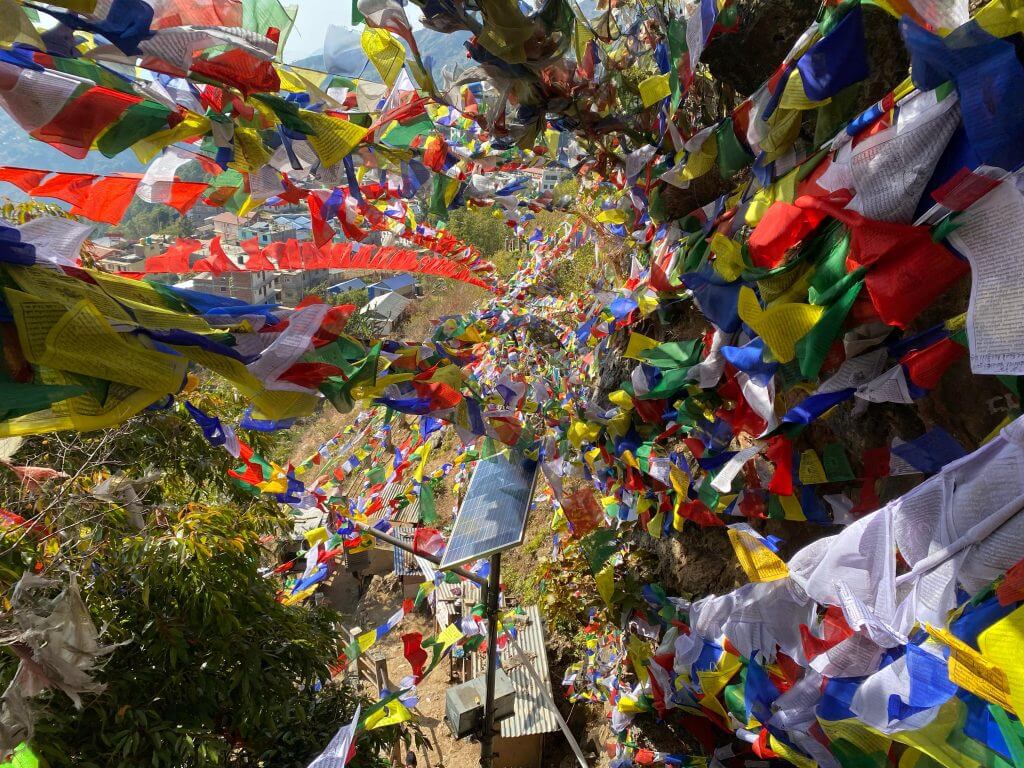
Building Stupas for religious merit and piling pebbles for longevity are common practices in the Himalayan region. Mountain goddesses are adorned with colorful flags before entering the mountains. Flags are seen on the roofs of every home to bring auspicious marks to the family.

A number of festivals are observed in the Himalayan region. Performing the Dumje festival is considered the most important part of the festival because it brings peace to the community. Religious beliefs contribute to bringing peace to people. 

The tours of Nepal aren’t just tours; they’re a glimpse into a culture possessed by profound mysticism to which travelers are invariably baffled. You can experience a rich, vibrant culture through a cultural tour that is more than just a holiday.

Cable Car Tours in Nepal

Cable car tour in Nepal is an easy way to get to the higher hills that offers natural and stunning views of mountains. Cable cars are small rectangular shaped aerial and are operated by gondola lift system in Nepal. 

You will get to experience the breathtaking scenery and atmosphere of the forest, wildlife, and warm hospitality of people on the cable tour in Nepal. You will enjoy the journey of the cable car along with an amazing panoramic view of the Mountain range from the top of the hill and will have a feeling of awe on the ride.

There has been immense support from their customers and visitors within a short period of time, and there are three cable car services that are currently operating, one under construction and many others in the pipeline. 

There are many places in Nepal where Cable Cars can be operated, as most of the temples are located on top of hills around Nepal where pilgrims and tourists come from all over the country each year, including Nepalese and foreigners.

An exciting new cable car service is being constructed in Pokhara by Annapurna Cable Car Pvt Ltd. that enables tourists to enjoy views of snow capped mountain ranges, the World Peace Stupa, Phewa Lake, sunrises and sunsets, and the beauty of Pokhara city. 

Currently, there are 3 operating cable cars in Nepal, here’s a brief overview of the cable cars that are in operation:

Manakamana Cable Car 

The Manakamana Cable Car, which is also the first cable car service in Nepal,  has been in operation since 1998, and is located in Kurintar (104 KMs south-west of Kathmandu). The ride will be thrilling as you cross the Trishuli River and ascend the mountains, gaining 1033 meters in elevation over a distance of 2.3 km (1.7 mi). 

The Manakamana temple dedicated to Goddess Bhagwati is the major attraction. The North side of the temple offers spectacular views of the Annapurna Himalayan range and Manaslu. 

After you reach the top, the area is surrounded by a market featuring shops that offer handicrafts, weapons, and restaurants. Bottom Station also operates a top-notch international restaurant serving local, Indian, and international cuisine.

Why to Visit Manakamana Temple?

Manakamana Temple located in Gorkha at an elevation of 3900ft is a popular Hindu temple known for its fascinating history and belief surrounding the temple. There is a strong belief that visiting this holy site will fulfill the wish of the devotees. As the name implies, ‘Mana’ means desires whereas ‘Kamana’ means wishes.  

Chandragiri Cable Car

Chandaragiri hills

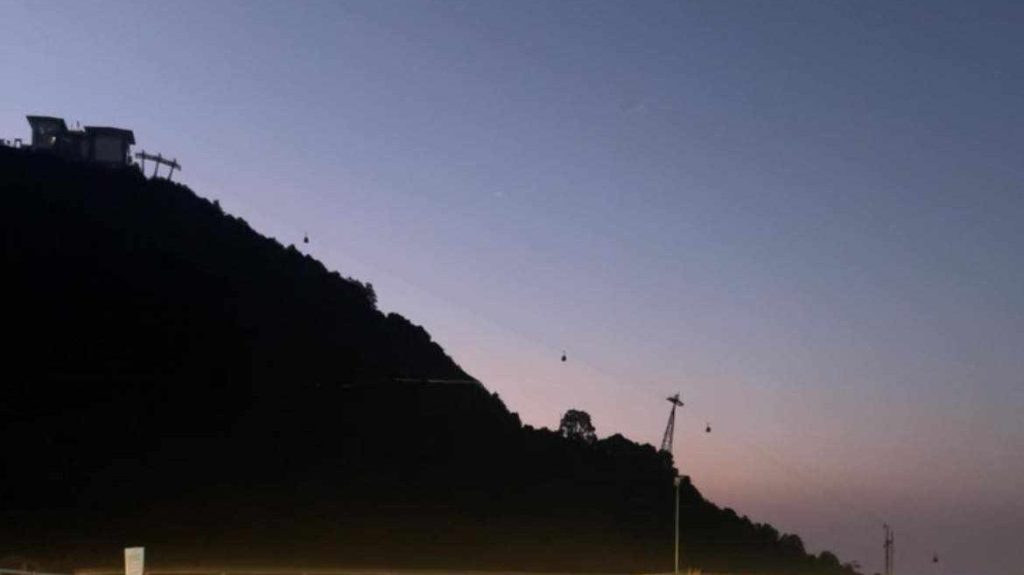
Chandragiri cable car, situated nearby Kathmandu, is a popular destination for domestic and international tourists. The recently opened cable car is around 2.5 KM from the lower station and takes around 8 minutes to reach the top of Chandragiri. 

The majestic view of mountains and natural forests, visit to shopping marts, playground, and children’s park above the hill is a great way to escape monotonous lifestyle and indulge in the leap of natural beauty. You will get to experience the thrill of the cable car and see the beauty of nature up close with the wonderful ride of Chandragiri cable car. 

Why to visit Chandragiri Hills?

CHandragiri hills

Chandragiri hill, situated at an altitude of 2540m, offers you panoramic views of the majestic Himalayas, including the Annapurna and Everest Himalayan Ranges, without the hassle of trekking. Devotees visit here to seek blessing from Lord Shiva in the Bhaleshwor temple located at the top of the hill. 

The hill is also very popular among hikers, who enjoy the Matatirtha-Chandragiri-Thankot hiking trail around Kathmandu Valley. Travelers can also start their journey to the wonderful village of Chitlang in the Makwanpur district of Nepal.

Kalinchok Cable Car

The newly operated Kalinchok cable car runs from Kuri village to Kalinchok temple. Currently, there are four cable cars in operation with the capacity of carrying 10 people at a time. You will see untainted wilderness up-close during the six minute ride to top of the hill. 

Visitors flock to this wonderful place during winter to enjoy the snow and the magnificent view of Mountains, along with the mesmerizing landscape.

Why to visit Kalinchok Temple?

Kalinchok

Kalinchowk Bhagwati Temple is a popular Hindu Shrine situated in Dolakha, Nepal at an elevation of 3755 m above sea level. The Kalinchowk temple located at top of the hill is believed to fulfill the wishes and desires of visitors. The gorgeous view of Mt. Annapurna, Mt. Gaurishankar, Mt. Jugal, Rhododendron forest, different species of birds and animals makes this place worth visiting. 

The stunning views of Himalayas, cool and fresh wind, beautiful forest and warm hospitality of the Nepalese people combine to make Nepal one of the best cable car tour destinations in the world.

Grab the opportunity to witness this natural wonder in your next vacation. 

Top 10 sacred places of Nepal

Offering tika

Nepal is a secular country where the people of diverse religious belief live in harmony. Nepal’s sacred places have a long history dating back to the days before the country was unified.  

Nepal is believed to be the home to 33 million god and goddess. Temples and religious sites located in different corners of Nepal are dedicated to these god and goddess. There is a strong belief among the Nepalese people that their wish gets fulfilled when they visit the temple and pray. 

The Nepalese people visit these sacred places because they have a deep conviction that God is present there. The religious mythologies attached to the sacred sites have kept them religious to this day.  Devotees offer milk, sweets, fruits, garlands, and bow down to the shrine to seek blessings from the god.

The following are the sacred places in Nepal that Nepalese visit more frequently. 

It was once said that there are more temples in Kathmandu Valley than houses, and more statues of gods and goddesses than residents. The Kathmandu valley is like an open air museum, filled with religious aspects, and people of all cultures live in harmony. The beautiful valley is home to seven UNESCO world heritage sites and is a sacred place for Hindus and Buddhists alike.

The Boudhanath Stupa and Swyambhunath Stupa are sacred Buddhist pilgrimage destinations that attract pilgrims from all over the world. Similarly, Pashupatinath Temple, Changunarayan Temple, Swyambhunath Temple and Budhanilkantha Temple area must visit pilgrimage sites for Hindus. A visit to this city rich with cultural and religious aspects is not to be missed out on.

Lumbini mayadevi temple

Lumbini is the birthplace of Lord Buddha and is one of the holiest places to visit in Nepal. Also listed in World Heritage Sites, Lumbini is home to many eye catching monasteries and Buddhist centers built by various countries with strong Buddhist traditions. 
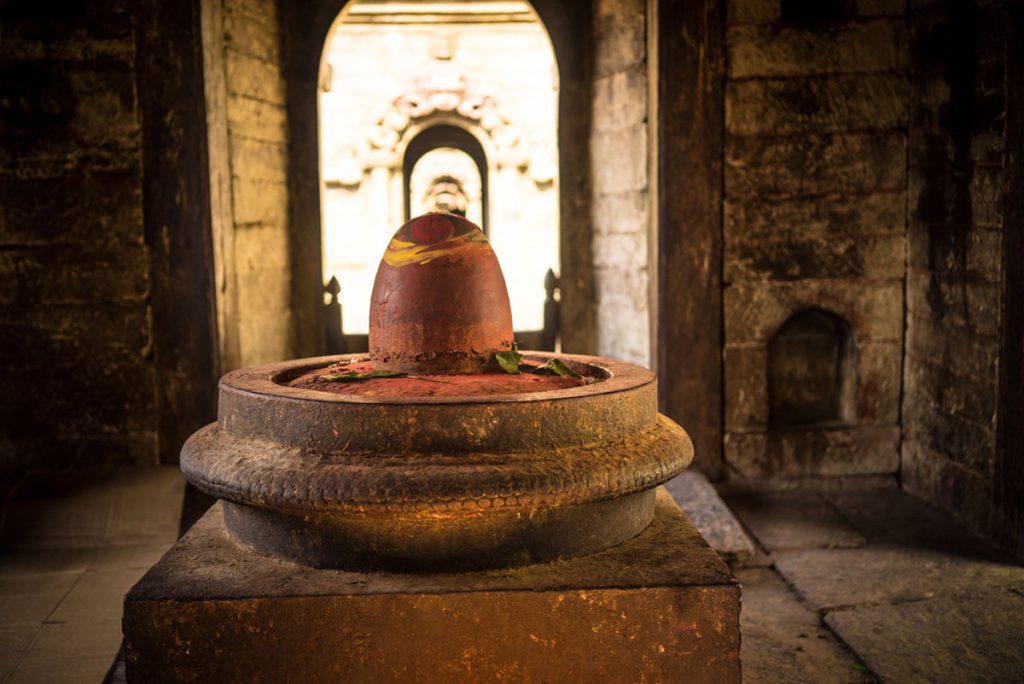
The site is one of the four sacred sites that Buddha reportedly suggested to his disciples and followers to visit. There are several religiously significant attractions in Lumbini such as the Maya Devi temple, Ashoka pillar and the remains of the Lumbini palace that you should not miss-out visiting.

  • Muktinath Temple

Muktinath Temple (3,710m) is a sacred place to both Hindus and Buddhists located in Mustang district of Nepal. As a symbol of religious symbiosis, this temple represents the fusion of Hindu and Buddhist religion. Devotees visit here with a belief that taking a bath in the 108 waterspouts (Muktidhara), releases all the negativity from their bodies and receive salvation. It is said that the holy shrine has arisen on its own and is also one of 108 Vaishnava shrines.
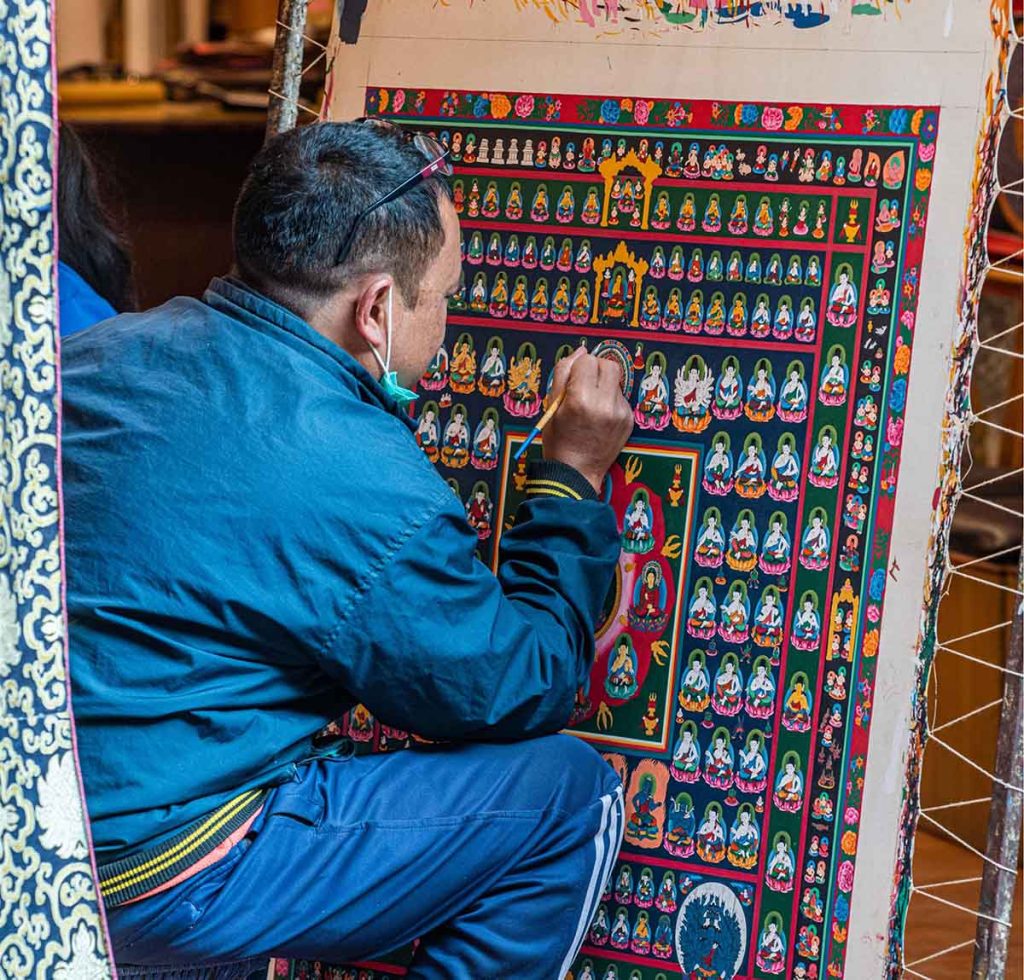
Gosaikunda Lake

Gosaikunda, located in Langtang National Park, is a holy place for Hindus, and thousands of pilgrims flock here every year during the Janai Purnima and Gangadashahara festivals. According to Hindu mythology, gods Shiva and Gauri lived here. Located 4,380m above sea level, this Hindu pilgrimage site is also a popular trekking destination. 
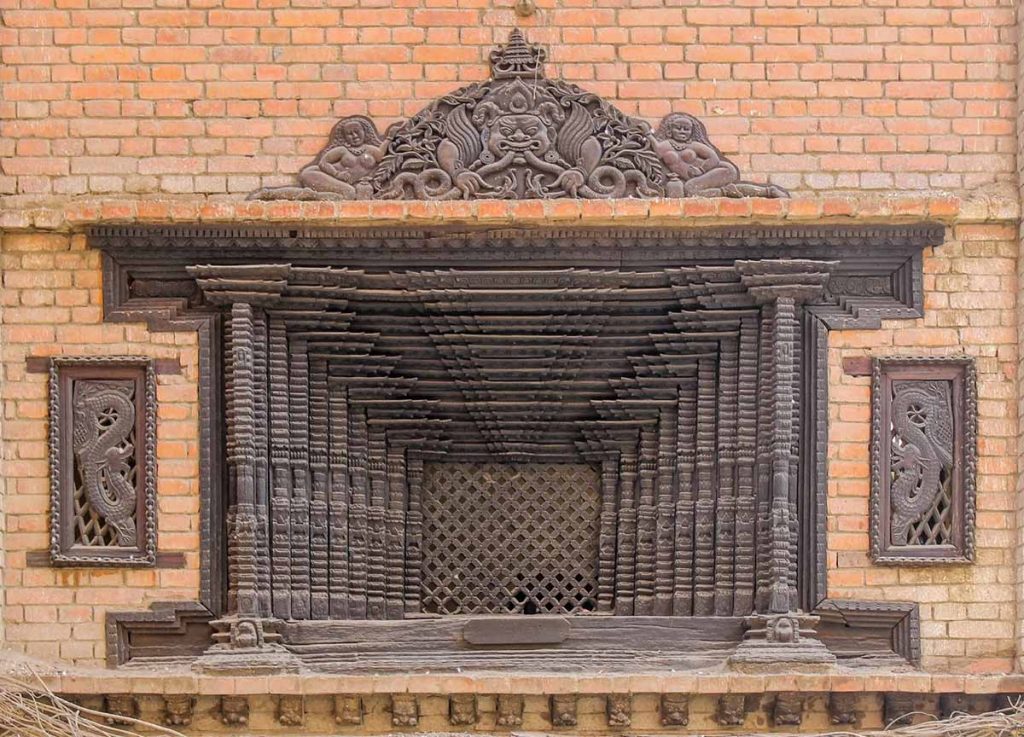
There are all total 108 holy lakes in this region which makes a visit to this sacred place exciting and spiritual for visitors. Lake Gosaikunda is also one of the major highlights of Langtang trek.

  • Janakpur Dham

Janakpur is a major pilgrimage site for Hindus because it is the place where Goddess Sita was born and where she married Lord Ram. This sacred place is just not known for beautiful temples and monuments, but also for its arts, rich cultural history, literature and language.  The Janaki Temple dedicated to Goddess Sita, Ram Mandir, Vivah Mandap, Gangasagar and Swargadwar are major attractions for visitors. Hindu pilgrims from all part of Nepal and India visit this holy site due to its religious wealth.  

  • Halesi Mahadev Temple

Halesi Mahadev

Known as Pashupatinath of western Nepal, the Haleshi Mahadev Temple (3,100 ft) in Khotang district is a sacred place to Hindu, Buddhists and Kirantis.  According to traditional beliefs, sinners cannot pass through this passage, but by confessing wrongdoing they will be able to pass. It is said that devotees come from far and wide to worship Lord Shiva, with a belief that Haleshi Mahadev grants prosperity to poor and knowledge and wisdom to ignorant. 

  •  Pathivara Temple

The Pathivara temple is a sacred place for Hindus as well as Limbu people. It is located in Taplejung district at an elevation of 3,794 meters (12,444.32 feet), which is also a secondary route of the Kanchenjunga trek. 

A visit to this sacred place tests our devotion and patience as it offers a thrilling journey to reach the temple. It is believed that Goddess Pathivara possesses supernatural powers and is capable of fulfilling the requests of those who visit her temple and make offerings.

  • Chitwan Devghat

Devghat is a popular pilgrimage site in Chitwan, located at the junction of the Kali Gandaki and Trisuli River. As per Hindu Culture, “Ghat” denotes a sacred place where cremation and last rituals are conducted or performed by the family members or close relatives after the death of Hindu people. 

Devghat is a must-visit sacred place for Hindu followers and spiritual seekers as the area is surrounded with numerous temple, cave, and historical sites. A holy bath here is believed to wash away sins, which draws devotees from far and wide to take a holy bath. 

  • Dolakha Bhimsen

Dolakha Bhimsen popularly known as Bhimeshwor temple lies in Dolakaha district of eastern Nepal. The temple situated in the lap of Mt. Gauri Shankar is regarded as the abode of Lord Shiva and his consort Goddess Parvati. There is a belief that Bhimsen’s statue occasionally emits fluid-like drops, which signals any bad fortune that might happen in the country. Numerous people visit and perform puja in this sacred temple to make god happy. 

  •  Baraha Chhetra (Kshetra)

Baraha Kshetra is a Hindu pilgrimage site in Sunsari district, located at the junction of Sapta Koshi and Koka River. This sacred place is one of the oldest shrines in Nepal, mentioned and glorified in multiple Puranas including Varaha Purana, Brahma Purana, and Skanda Purana and is even included in the epic Mahabharata.

It is believed that the lifting of a stone in front of the temple will determine whether a person is sinless or sinful. It is said that only the persons of virtue can lift the stone. According to Hindu belief, people who have lost their parents must perform sradda (offering to ancestors) at this sacred place so that their parents’ souls will cross the astral River Baitarni and not wander between the heaven and hell. 

All of these fascinating facts about the temple make it a popular pilgrimage site and a must visit sacred place in Nepal. 

Visit the sacred places of Nepal at least once in your lifetime to bring good luck and positivity in your life. 

Adventure Tourism in Nepal

Welcome to nepal

A great destination for adventure lovers, Nepal offers outdoor activities such as trekking, mountaineering, rock climbing, bungee jumping, rafting, canyoning, cannoning, jungle safari, and much more. Nepal has been a unique destination for adventure seekers from around the world for a long time and trekking is still the most popular activity in the country. 

Trekking and exploring Nepal are ideal because of its geographical and natural diversity as well as its wide variety of exotic cultures. A trek in the Himalayas of Nepal provides one with the unique opportunity to observe its cultural facets and take in the breathtaking beauty of nature. This country has an unparalleled natural beauty, as well as a culture that can’t be found anywhere else.

A journey through Nepal offers a variety of exciting adventures, where you can marvel at the surrounding beautiful landscapes and get close to its warm people, from the Gangetic plains and its verdant jungles where Royal Bengal Tigers and one-horned rhinoceros roam, to the Yak and Yeti trails to Mount Everest.

Trekking:

Trekking in Annapurna region

There are thousands of trekkers who travel hundreds of miles every year in Nepal, making trekking one of the most popular activities there. As a world-renowned trekking destination, Nepal boasts a wide variety of routes through villages, forests, national parks, suspension bridges, rivers, valleys, glaciers, and other breathtaking natural features.

You get to experience Nepalese culture, traditions, lifestyle, and cuisine while trekking in remote ethnic villages. You can enjoy amazing views of the Himalayan ranges along the way as you trek in Nepal from its lowlands of the terai region to high mountainous regions.


Each trek in Nepal has its own method of attracting visitors. Nepal offers a number of popular treks, including Annapurna Base Camp Trek, Everest Base Camp Trek, Upper Mustang Valley Trek, Upper Dolpa TrekLangtang Valley Trek, Tilicho Lake Trek, etc.

Paragliding:

Paragliding

Are you looking for a way to make your heart race as you soar high in the Nepalese skies? You should not miss paragliding in Nepal. 

The trip will take you through villages, monasteries, lakes, emerald jungles, and temples with the most incredible views. With Himalayan griffins, eagles, and kites flying around you, you get the sensation of flying like a bird. You can enjoy bird’s-eye views of underneath valleys, landscapes, rivers, forests, etc while floating in the air, giving you lifetime memories.

Among the most popular paragliding destinations in Nepal are Pokhara, Godavari, Chapakharka, Kot Danda, and Bandipur

Bungy Jumping:

Bungee jumping in Nepal is an exciting way to experience some thrills while you are in Nepal. The activity has become increasingly popular in the last few years out of all the activities in Nepal. There are three locations in Nepal where you can Bungee Jump: Bhotekoshi, Pokhara, and Kusma.

A bungee jump is one of the most thrilling experiences one can ever have. Get ready for a free fall, unlike anything you’ve ever experienced before. Both locals and tourists participate in this activity to get thoroughly entertained. The views in Nepal are spectacular, which makes it the perfect place to do bungy jumping.  

Mountaineering:

Mountaineering in Nepal is the most challenging and rewarding adventure you can have in the country. Taking a peak climbing trip in Nepal takes you to Nepal’s Himalayan Mountains, including Mount Everest (8848 m), which is the highest mountain on the planet. Nepal has had eight of the world’s highest peaks and has been the site of some of the most impressive mountaineering achievements. Today, Nepal has 326 peaks that are open for mountaineering.

Nepal is home to thousands of mountaineers who climb big mountains and smaller trekking peaks every year. Under the supervision and instruction of a climbing leader/guide, a mountaineering expedition includes basic climbing skills such as using an ice axe, crampons, and ropes under the same conditions as challenging treks.

Rafting:

Nepal is a paradise for river runners and one of the most popular destinations for rafting. There are various grades of whitewater rafting trips that are perhaps dependent on the interest and choice of the individual. For those seeking long days of adventure, rafting the Sun Koshi and Karnali together is a good option, combined with a safari tour in one of the nearer national parks. Those looking for a smooth run and experience can raft on Trishuli and Seti for short runs.

There are numerous world-class rivers in Nepal that offer thrilling river rafting experiences. Nepal offers stunning mountain scenery, thrilling white water rapids, warm water, and fascinating cultural attractions that make it an ideal white water rafting destination. A pleasant weather and warm water make September to early December and March to June the best time of year to go rafting in Nepal.

Mountain Flight:

Mountain Flight

An exclusive mountain flight tour package in Nepal provides a scenic view of Mount Everest, the highest peak on Earth, and other series of giant panorama Himalayan ranges, and Tibetan plateaus, at a close range up to 5 nautical miles away, with an in-flight duration of 1 hour departing from Kathmandu domestic airport.  Nepal’s mountain flights appeal to a wide range of travelers. 

Mountain flight tours are for travelers who want to see Mount Everest but can’t trek or have a short amount of time for a trek and interested in Mount Everest but can’t go trekking.  It gives you a fantastic view of Mountain Everest (8848m), Gaurishankar (7134m), Cho Oyu (8201m), Lhotse (8516m), Amadablum (6856m), as well as several dozens of other peaks and the Tibetan plateau.

Zip Flyer:

Zip flyer

Embrace your fear of heights and buckle up your belts since Nepal has some of the most thrilling zip lines to explore. Here, you will enjoy minutes of acute thrills and adventure on the steep and long zip lines. Forests surrounded by tall mountain ranges and dark green forests will amaze you. A zip flying experience here is enhanced by nature’s exceptional beauty.

The most popular zip line destinations in Nepal are Sarangkot, Dhulikhel, Bandipur, Kusma, Makwanpur, etc. 

Rock Climbing:

Climbing the natural rock formations or climbing man-made rock walls is a challenging sport in Nepal. Climbers in Nepal benefit from an attractive rock climbing experience that is physically and mentally challenging, testing their strength, endurance, agility, balance, and mental control. If you are looking to experience some cliffhanger activity in Nepal, Kathmandu valley offers a lot of places where you can crawl up vertical cliffs.

You can explore a variety of wild locations throughout the valley while climbing, including birdwatching, and experiencing some of the valley’s wildlife. Several excellent cliffs can be climbed in Nagarjun and Shivapuri hills, which are both within walking distance of the city. The most popular rock climbing destinations in Nepal are Nagarjun forest, Hattiban, Namche Bazaar, Bimal Nagar, and Nagarkot.

Canyoning:

Canoeing

Canyoning typically involves technical descents, such as abseils and rope work, technical climbing or down-climbing, technical jumps, and/or technical swims. Canyoning is often done in remote and rugged locations where narrow gorges are cut into the bedrock stone, which creates multiple drops and gorgeous sculpted walls. 

One of the most exciting and thrilling adventures in Nepal is canyoning, which is performed on the rivers of Nepal. Nepal’s high altitude and unique topography provide a unique experience unlike any other. The sport of canyoning can be extremely difficult or extremely easy, but the emphasis is usually on fun and aesthetics rather than pure difficulty. Nepal’s most popular canyoning destinations are Jalbire, Raindi Khola, and Jagat Khola.